
In the construction industry, profit margins can be tight, and the cost of materials and services can make or break a project budget. Every general contractor and commercial property owner is looking for an edge. What if you could access the pricing and service levels typically reserved for the largest national firms, without being one yourself? That’s the core idea behind a construction buying group.
A construction buying group, also known as a group purchasing organization (GPO), is an alliance of independent businesses that pool their purchasing needs together. By combining their collective spending, they gain significant leverage to negotiate better prices, terms, and service from suppliers. It’s the classic principle of strength in numbers applied to procurement, and it’s a powerful strategy for boosting your bottom line.
The 2026 Construction Landscape: Why GPOs are Vital Now
The construction market in 2026 is defined by a “Risk Delta”—a widening gap between increasing project complexity and decreasing executive risk appetite. With material inputs for non-residential projects remaining 44% higher than 2020 levels, contractors can no longer rely on the spot market.
Material Category | 2025-2026 Price Trend | Strategic Response |
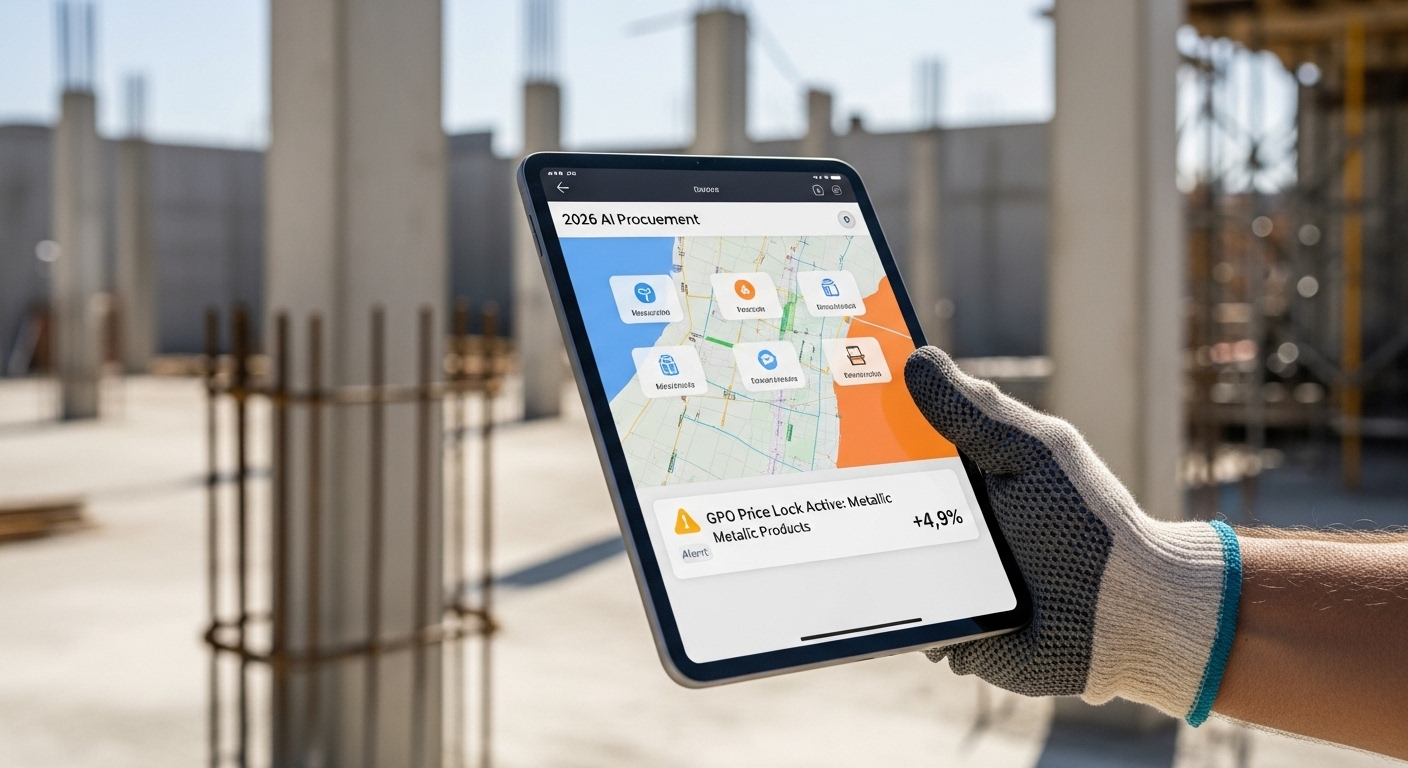
Metallic Products | +5% YoY (Tariff Impact) | GPO Price Locks |
Electrical Fixtures | +4.65% (Data Center Demand) | Priority Supply Access |
Mineral/Aggregates | +8.34% (Logistics Constraints) | Regional Multi-Sourcing |
Labor Productivity | -12% (Shortage Gap) | Admin-Automated Procurement |
How a Construction Buying Group Operates
The process is simpler than you might think. A company joins a construction buying group, often with little or no membership fee, and gains immediate access to a portfolio of pre-negotiated contracts (for example, national supply partners like White Cap).
Here’s the typical workflow:
Join the Alliance: You become a member of a group like the Contractors National Buyer Alliance (CNBA), which has already established a network of high quality contractors. See how strategic alliances elevate contractor success.
Access Tier-1 Contracts: Leverage master agreements that include Index-Linked Pricing and Hedging Clauses. This protects your margins from sudden tariff spikes (currently hitting 50% on certain imported metals) and ensures you are not “locked-in” to a losing number if the market dips.
Purchase at a Discount: You simply buy the materials and services you need from these approved vendors. Because you’re buying under the group’s master contract, you automatically receive the deeply discounted pricing.
This model streamlines procurement. Instead of spending valuable time negotiating with dozens of suppliers, you tap into contracts that are already optimized for price and service.
The Power of Collective Buying and Negotiation
The main engine of any construction buying group is collective buying power. When hundreds of contractors band together, their combined annual spending becomes a very attractive piece of business for suppliers. This leverage is what allows the group’s professional negotiators to secure deals that a single company couldn’t hope to achieve on its own. To understand the broader market forces at play, read our overview on navigating challenges and opportunities in the construction industry.
GPO negotiations go far beyond just the sticker price. They secure comprehensive value, which can include:
Lower Unit Costs: Aggregated volume leads to significant price reductions on everything from concrete and asphalt to fuel and office supplies, and safety gear. If you’re standardizing safety purchases, start with this Construction PPE checklist. Non healthcare GPOs, for instance, saved their members an incredible $4.2 billion in 2022 alone.
Favorable Terms: This includes things like longer price locks to protect against inflation, better payment terms, and reduced shipping fees.
Expert Negotiation: The group’s procurement experts handle the complex negotiation process, saving you time and ensuring you get the most competitive terms available.
Boosting Your Bottom Line: Hard Costs and Rebates
The financial impact of joining a construction buying group is direct and measurable. The two primary benefits are hard cost reductions and valuable rebate programs.
Hard Cost Reduction
Hard cost reduction refers to the tangible, dollar for dollar savings you see on invoices. By purchasing through group contracts, members can lower their direct expenses on materials and equipment. Businesses using GPOs often achieve an average of 5 to 7 percent in annual purchasing cost reductions. For a construction company with significant material spend, this translates into tens or even hundreds of thousands of dollars saved each year.
Rebate Programs
On top of upfront discounts, many groups offer rebate programs. These programs provide members with cash back based on their purchasing volume through the group’s contracts. At the end of a quarter or year, you receive a check for a percentage of what you spent. These rebates can be substantial. One builders group returned a total of $16 million in rebates to its members in a single year, money that goes straight to their bottom line.
Procurement Technology & AI in 2026
In 2026, a construction buying group is more than a discount club; it is a technology partner. Modern GPOs now leverage Agentic AI to provide:
Predictive Demand Forecasting: Identifying material shortages before they halt your job site.
Automated “Should-Cost” Modeling: Benchmarking your quotes against national real-time data to ensure you aren’t overpaying.
ESG & Compliance Tracking: Automated reporting for green building certifications (LEED/Energy Star) which are now standard requirements for most commercial bids.
Beyond the Price Tag: The Strategic Advantages of Membership
While cost savings are a major draw, the most successful members of a construction buying group know that the benefits extend far beyond the budget. Membership offers operational efficiencies, improved supplier relationships, and a powerful professional network.
Vetted Suppliers and Better Service
A top tier construction buying group doesn’t partner with just anyone. They implement a preferred supplier program, carefully vetting vendors for quality, reliability, and value. This means you gain access to a curated list of trusted partners.
Because these suppliers value the group’s business, members often receive superior service, including:
Dedicated Account Managers: Get personalized support from a representative who understands your needs.
Priority Support: Your orders and concerns are treated with higher priority, reducing downtime and delays.
Enhanced Reliability: Preferred suppliers are held to high performance standards, ensuring you get consistent quality and on time delivery.
A Network of Knowledge and Expertise
When you join an alliance like CNBA, you join a community of your peers. This creates invaluable opportunities for knowledge sharing. Members can exchange best practices, discuss market trends, and collaborate on solving common industry challenges. Instead of facing issues alone, you can tap into the collective wisdom of dozens of experienced professionals. This shared intelligence can lead to smarter purchasing decisions, operational innovations, and even new business opportunities through referrals. Explore quick wins and stories on our member video wall.
Streamlined and Smarter Purchasing
Modern buying groups leverage procurement technology to make purchasing easier and more efficient for members. This can include online portals where you can browse contracts, place orders, and track spending. Using these digital tools can reduce internal process costs by about 30 percent by cutting down on manual paperwork and administrative overhead. For a practical example, evaluate software built for the hard business of pavement.
Furthermore, the group often handles product evaluation, assessing new materials and equipment for performance and total cost of ownership. This collective vetting process saves you the time and risk of testing unproven products yourself, ensuring you invest in solutions that are both high quality and cost effective.
Joining an Elite Group: Member Screening
The best purchasing alliances are selective. A quality construction buying group will have a member screening process to ensure its network is composed of reputable, financially stable, and high integrity companies. For example, CNBA requires prospective members to meet defined performance criteria before they can join.
This isn’t about being exclusive for its own sake. It’s about protecting the group’s integrity and leverage. When suppliers know they are dealing with a network of top tier contractors, they are more willing to offer their best pricing and service, which benefits everyone.
Frequently Asked Questions About Joining a Construction Buying Group
What is the main benefit of joining a construction buying group?
The primary benefit is significant cost savings on materials and services through collective buying power. However, members also gain operational efficiencies, better supplier service, and access to a valuable peer network.
How much does it cost to join?
Many buying groups, including some of the most effective ones, have low or no membership fees. Their operational costs are typically covered by administrative fees paid by the suppliers, making it a risk free proposition for new members.
Do I have to buy everything through the construction buying group?
No, participation is usually flexible. Members are not obligated to purchase everything through the group’s contracts. You can pick and choose the programs that offer the best value for your specific needs, allowing you to maintain relationships with other local or specialized suppliers.
What kind of companies join a construction buying group?
Members typically include general contractors, commercial property owners, industrial facilities managers, and other businesses with significant procurement needs in the construction and maintenance space. The common thread is a desire to operate more efficiently and improve profitability.
How are suppliers chosen for the group?
Suppliers are chosen through a rigorous vetting process. A construction buying group evaluates potential vendors on their pricing, quality, reliability, financial stability, and ability to serve members on a national or regional scale. This ensures that only high value, trusted partners become part of the program. For recent partner announcements and program updates, visit our news page.
Recent Comments