
TL;DR
A construction vendor network is the organized system of vetted contractors, subcontractors, suppliers, and service providers that property managers and general contractors rely on to get projects done right. Strong networks reduce delays, prevent budget surprises, and protect against compliance failures. Weak or informal ones lead to missed deadlines and costly rework. This guide covers how vendor networks work, how to use them to find reliable contractors (especially in the Southeast), what to look for when vetting trade partners, and how to avoid the most common hiring mistakes.
If you manage commercial properties, oversee industrial facilities, or run general contracting operations, you already know that finding reliable contractors is one of the hardest parts of the job. A construction vendor network is the system that solves this problem.
It is more than a list of phone numbers or a stack of business cards. A real vendor network is a structured, vetted collection of trade partners, material suppliers, equipment providers, and specialty contractors that have been evaluated and proven through actual project work.
This matters because construction is not a solo act. A typical mid-size project involves 50 to 70 subcontractors and suppliers. For property managers juggling multiple sites across the Southeast, or general contractors coordinating trades on tight timelines, every one of those vendors represents either a reliable link in the chain or a potential point of failure.
Whether you need a concrete crew for a warehouse slab repair in Memphis, an asphalt contractor for a parking lot overlay in Nashville, or ADA compliance work at a retail center in Birmingham, the quality of your vendor network determines whether the project runs smoothly or turns into a headache.
If you’re exploring how procurement alliances connect to vendor networks, that context is useful background for what follows.
Quick Answer: How to Build a Construction Vendor Network That Actually Works
A strong construction vendor network is built through contractor prequalification, ongoing performance tracking, regional relationship development, and multi-trade coordination. The most effective networks include vetted subcontractors, suppliers, and site-work contractors with verified insurance, safety records, proven project history, and local operational capacity.
For property managers and general contractors, the best vendor networks reduce project delays, improve pricing consistency, simplify compliance management, and create faster response times for repairs and capital projects.
The most successful commercial construction vendor networks typically include:
– Regional contractors with local crews and equipment
– Multi-trade self-performing contractors
– Prequalified specialty subcontractors
– Material and equipment suppliers
– Performance tracking systems
– Standardized compliance verification
– Long-term relationship management processes
Weak vendor networks rely on lowest-bid selection and informal referrals. Strong networks operate with structured evaluation systems, documented contractor history, and repeatable procurement standards.
What Is a Construction Vendor Network?
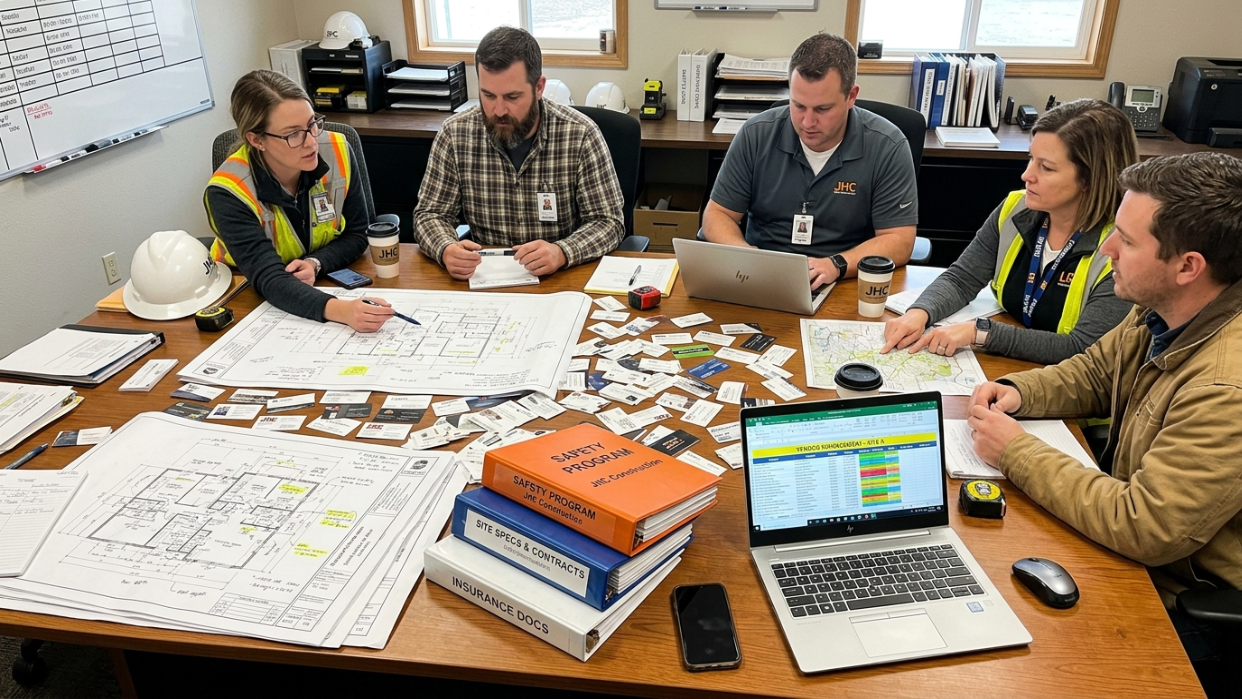
A construction vendor network is the organized ecosystem of third-party contractors and providers that have been evaluated, approved, and maintained for project execution. For property managers and facility owners, this network is what you tap into when a parking lot needs repaving, a foundation needs repair, or a site drainage system needs installation.
The word “organized” is doing heavy lifting in that definition. Many property managers rely on informal referrals, whoever a colleague used last, or whoever shows up first on a Google search. A true vendor network goes further: it involves structured prequalification, documented performance history, verified insurance and licensing, and ongoing evaluation.
Vendor vs. Supplier vs. Contractor: Clearing Up the Confusion
These terms overlap in construction, which causes real confusion when you’re trying to hire the right company.
A supplier provides raw materials or components (ready-mix concrete, asphalt, rebar). A vendor sells finished goods or services directly. A subcontractor is hired by a general contractor to perform a specific trade (concrete work, paving, electrical, plumbing).
In practice, construction professionals use “vendor” as a catch-all for anyone outside the core team who provides goods or services to a project. That’s the convention this article follows.
Types of Construction Vendor Networks (and How to Access Them)
Not all vendor networks are created equal. Understanding the different types helps property managers and GCs choose the right approach for finding contractors.
Private (Internal) Vendor Networks
These are networks built and maintained by a single company, whether that’s a general contractor, a property management firm, or a facility owner with enough project volume to justify the effort. The company defines its own qualification criteria, vets every contractor directly, and controls who gets invited to bid.
Private networks offer the most control. Qualification criteria can be as specific as safety record thresholds, minimum bonding capacity, or proven experience with industrial concrete repair. The trade-off is time and effort. Building a comprehensive private network requires consistent evaluation and enough project activity to keep good contractors engaged.
For property managers overseeing multiple commercial sites across states like Tennessee, Alabama, or Georgia, a private network of trusted regional contractors is worth its weight in gold. The challenge is building one from scratch.
Group Purchasing Organization (GPO) Networks
GPOs aggregate the purchasing power of multiple member companies to negotiate better pricing on materials, equipment, and services. Many are geographically focused, while others concentrate on specific trades or material categories.
For property managers and facility owners, GPOs can connect you with pre-vetted contractors who participate in the network. On average, organizations using a GPO pay about 13% less for supplies than those negotiating independently.
Most GPOs are funded by vendors, not members. Suppliers pay an administrative fee, typically 1 to 3 percent of sales made through GPO contracts. This keeps the cost of participation low for buyers.
Explore how contractor collective purchasing works to understand the mechanics in more detail.
Aggregator and Platform Networks
These are digital marketplaces that connect property owners with contractors. They host requests for bids, allow contractors to submit proposals, and sometimes provide basic vetting tools.
Practitioners on Reddit and property management forums frequently mention the challenge of finding reliable contractors through open platforms. The biggest frustrations are inconsistent responsiveness, uneven quality, and contractors who bid low and then pile on change orders. The barrier to entry on many platforms is a subscription payment rather than a performance track record, which explains the mixed results.
Industry Association and Referral Networks
Trade associations, local builder groups, and professional organizations maintain member directories that function as informal vendor networks. These carry some built-in vetting (members must maintain good standing), but they rarely include performance data or financial screening.
For property managers in the Southeast, regional associations and chambers of commerce can be a starting point, but they should not be the final step in contractor selection.
Private Vendor Networks vs Public Contractor Platforms
Factor | Private Vendor Network | Public Contractor Marketplace |
|---|---|---|
Vetting Quality | High | Varies significantly |
Contractor Accountability | Strong | Often inconsistent |
Pricing Stability | More predictable | Highly variable |
Response Speed | Faster | Depends on platform activity |
Relationship Depth | Long-term | Transactional |
Compliance Oversight | Structured | Often limited |
Emergency Response | Better | Less reliable |
Best For | Commercial portfolios and recurring work | One-time projects |
What Should a Strong Contractor Network Include?
When you’re building or evaluating a vendor network for your properties or projects, a complete network spans multiple categories:
Trade contractors: Concrete, asphalt, electrical, plumbing, HVAC, roofing, painting, landscaping, fencing
Material suppliers: Concrete, lumber, steel, aggregates, specialty materials
Equipment providers: Cranes, excavators, generators, scaffolding
Site service contractors: Storm drainage, curb and gutter, sidewalks, ADA compliance
Specialty consultants: Structural engineers, environmental consultants, safety auditors
Why Multi-Trade Contractors Simplify Your Network
One of the biggest pain points property managers and GCs report is coordinating multiple subcontractors on a single project. A parking lot renovation might require demolition, subgrade repair, stone base installation, asphalt paving, striping, and ADA-compliant ramp work. If each of those trades comes from a different company, you’re managing six schedules, six contracts, and six potential failure points.
This is why multi-trade contractors, firms that self-perform across several disciplines, are so valuable in a vendor network. A single contractor handling concrete, asphalt, site work, and ADA remediation reduces coordination overhead dramatically. It also means one point of contact, one schedule, and clearer accountability.
For commercial and industrial properties in the Southeast, this approach is particularly relevant. Warehouse operators, distribution center managers, and retail property owners often need concrete repairs, asphalt maintenance, and site work done in tight windows to minimize operational downtime.
Why Construction Vendor Networks Matter for Property Managers
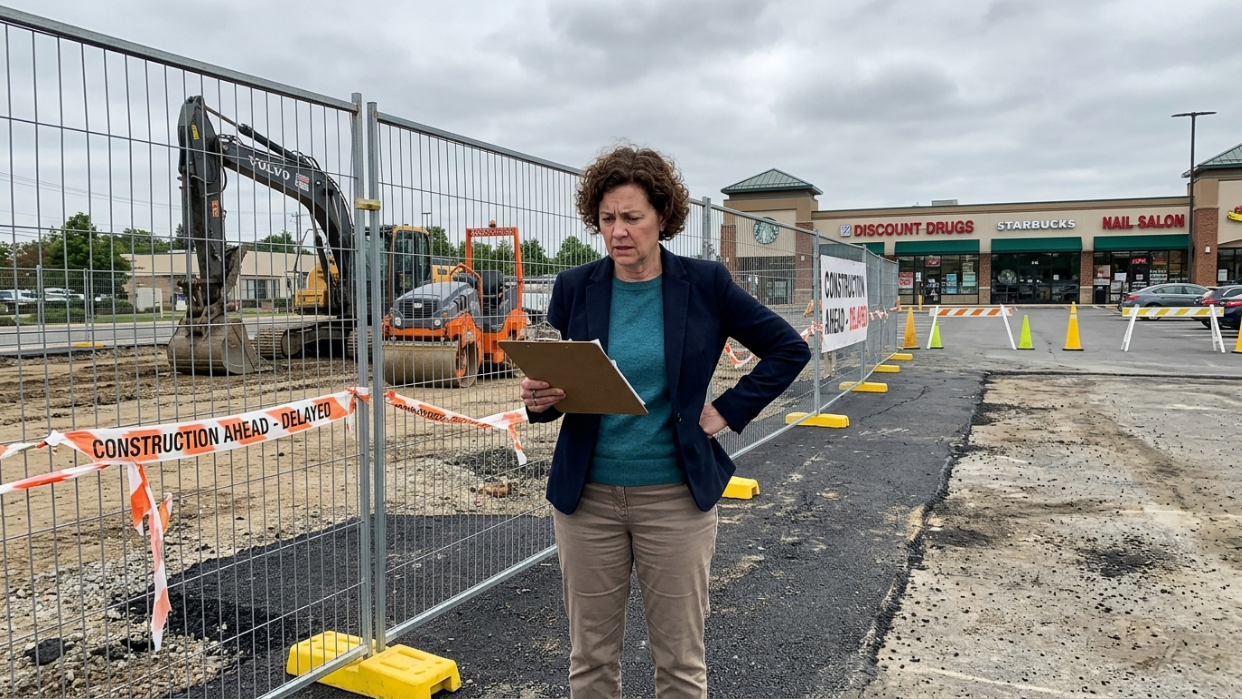
The construction industry has a well-documented problem with project delivery. According to a KPMG report, only 25% of construction projects finish within 10% of their original deadlines. A separate analysis found that 98% of construction projects face delays, with the average project running 37% longer than initially projected.
A 2021 academic study broke down the root causes of construction project delays into four main factors: supply management (21.4%), workforce management (20.8%), project management (17.6%), and climatic conditions (9.3%). Supply management, the domain directly affected by your vendor network, is the single largest contributor.
For property managers and facility owners, this translates into real operational pain. A delayed parking lot repaving means tenants can’t access their spaces. A late concrete repair at a distribution center means trucks can’t load. A failed ADA compliance project means inspection failures and legal exposure.
The benefits of working within a strong vendor network include:
Risk reduction: Pre-vetted contractors carry proper insurance, meet safety standards, and have verified track records
Cost predictability: Established pricing relationships and documented project history reduce surprise change orders
Faster mobilization: Contractors you’ve worked with before can start faster because the relationship and paperwork already exist
Compliance assurance: Working with contractors experienced in ADA requirements, DOT standards, and local codes prevents costly violations
Less downtime: Experienced regional contractors understand how to phase work around your operations
For a deeper look at aligning procurement with project goals, read this guide on construction sourcing strategy.
The Hidden Cost of Poor Vendor Management
Weak contractor networks create operational costs that rarely appear in initial project budgets.
Common hidden costs include:
Tenant disruption from delayed work
Emergency repair premiums
Increased change orders
Repeat repairs caused by poor workmanship
Compliance penalties
Accelerated pavement or concrete failure
Internal management time spent resolving disputes
Revenue loss from operational downtime
For industrial and commercial properties, even a short construction delay can affect logistics schedules, customer access, and lease obligations. This is why experienced property managers prioritize vendor quality over lowest-bid pricing alone.
How to Find and Vet Contractors Through a Vendor Network
Start with Prequalification
Prequalification is the process of verifying that a contractor meets minimum standards before you award them work. It covers financial stability, safety record, insurance, licensing, past project performance, and bonding capacity.
Property managers and GCs make a critical mistake here: they wait until after soft commitments to run due diligence. Consider what happens when you select a paving contractor based on the lowest bid, only to discover mid-project that they don’t carry proper workers’ compensation insurance. You’re exposed to liability, the project stalls, and the replacement contractor charges 25% more.
Key prequalification criteria when evaluating contractors:
Financial stability: Can they fund the project through completion? Check credit ratings, bank references, bonding capacity
Safety record: Review OSHA history and Experience Modification Rate (EMR), especially for industrial or high-traffic site work
Insurance verification: Confirm general liability, workers’ compensation, auto, and umbrella coverage, and verify they’re current
Licensing and certifications: State contractor licenses, trade certifications, DOT prequalification where applicable
Past project references: Have they completed projects of similar scope? A contractor who paves residential driveways is not the right fit for a 200,000 square foot commercial parking lot
Regional presence: Do they have crews and equipment near your properties? A contractor with offices in your market mobilizes faster and costs less than one traveling from three states away
Capacity assessment: What’s their current workload? Can they commit resources to your timeline?
Look for Proven Project History
When evaluating contractors for your vendor network, specific project examples matter more than general claims. Ask for case studies with measurable details: square footage completed, project timelines, types of facilities served.
For example, a contractor who has completed a 200,000 square foot asphalt milling and paving project at a shopping center, or poured 1,700 cubic yards of concrete with 107 tons of reinforcement steel for a school foundation, has demonstrated capacity that a smaller or less experienced firm simply cannot match.
Industrial facilities should pay particular attention to a contractor’s experience with heavy-duty environments. Warehouse slab repairs, dock leveler pit construction, truck ramp installation, and equipment pad work all require specialized knowledge that general paving contractors may not have.
Move Beyond Gut Feel
Practitioners consistently describe the same “before” state. One construction management author put it this way: the old approach to managing vendors relies on gut feel and disorganized email folders. A property manager might call a contractor they worked with years ago, but there’s no record of whether they met deadlines or stayed on budget.
This is the gap that a structured vendor network fills. It replaces memory and habit with documented evidence.
For practical steps on formalizing these relationships, the guide on building contractor vendor partnerships covers relationship-building best practices.
Construction Vendor Network Checklist for Property Managers
Before adding a contractor to your network, verify the following:
Evaluation Area | What to Verify | Why It Matters |
|---|---|---|
Insurance | General liability, workers compensation, auto coverage | Reduces liability exposure |
Licensing | Active state and trade licenses | Prevents compliance issues |
Safety Record | OSHA history and EMR score | Indicates operational discipline |
Financial Stability | Bonding capacity and references | Reduces project abandonment risk |
Regional Presence | Local crews and equipment | Faster mobilization |
Project Experience | Similar facility and project types | Improves execution quality |
Capacity | Current workload and staffing | Prevents scheduling failures |
References | Recent commercial projects | Confirms performance consistency |
Self-Perform Capability | In-house crews vs subcontracting | Improves accountability |
Warranty Support | Response time and coverage | Reduces long-term maintenance risk |
Evaluating Contractor Performance Within Your Network
Finding good contractors is step one. Keeping track of who performs and who doesn’t requires ongoing evaluation.
The Balanced Scorecard Approach
A balanced scorecard evaluates contractor performance across four dimensions:
Relationship: Communication quality, responsiveness, willingness to problem-solve when issues arise on site
Cost management: Pricing accuracy, change order frequency, transparency on material costs
Quality: Workmanship standards, defect rates, how often rework is needed
Delivery: Schedule adherence, milestone reliability, ability to phase work around your operations
This approach prevents the common trap of selecting contractors on price alone. The cheapest bid from a contractor who misses deadlines or delivers shoddy concrete work costs more in the end than a fairly priced contractor with a strong track record.
Key Performance Indicators to Track
Performance ratings: Score quality, communication, and reliability after every project
Schedule adherence: Track on-time completion rates. For property managers with seasonal paving programs or tenant improvement deadlines, this is critical
Compliance status: Insurance expiration dates, license renewals, safety training currency
Responsiveness: How quickly does the contractor respond to emergency repair requests? For industrial facilities, a broken slab or failed drainage system can halt operations
Practitioners in the construction management space are increasingly emphasizing that vendor coordination improves significantly when built on long-term relationships. Established partnerships give property managers a deeper understanding of a contractor’s capabilities and timelines, leading to smoother coordination and faster problem-solving.
One construction management firm expressed it directly: while accuracy, compliance, and cost control remain important, vendor management should go further, toward genuine relationship building. This reflects a broader industry shift from transactional to relational thinking.
How Top Property Managers Structure Vendor Relationships
High-performing property management teams usually organize contractors into three tiers:
Tier 1: Strategic Contractors
These are long-term partners trusted with major capital projects, emergency response work, and recurring site maintenance. They typically handle large-scale paving, concrete, drainage, or structural work.
Tier 2: Specialty Contractors
These vendors handle niche services such as industrial coatings, post-tension slab repair, environmental remediation, or specialized ADA upgrades.
Tier 3: Backup and Overflow Vendors
These contractors provide additional capacity during peak construction seasons or emergency situations when primary vendors are overloaded.
This tiered structure reduces risk by preventing overdependence on a single contractor while still maintaining strong long-term relationships.
The Role of Technology in Vendor Networks
Construction vendor management software centralizes prequalification, compliance tracking, performance monitoring, and payment processing in one platform. For property managers overseeing multiple sites, a proper system replaces scattered spreadsheets with a single source of truth linking every contractor’s history, performance, and compliance status.
The practical impact is significant. One documented case involved a mid-sized company struggling with compliance tracking for over 200 subcontractors. Their manual system resulted in 15 compliance violations per year, delaying projects and increasing liability exposure. A centralized platform eliminated the tracking gaps.
Emerging trends include AI-driven contractor risk assessment, where algorithms predict compliance risks before contracts are signed. As these tools mature, they’ll become standard components of vendor network management.
When implementing digital systems, it’s worth considering the security dimension. Construction firms face growing cyber threats that make secure vendor data management a priority.
How GPOs Help Property Managers Access Better Contractor Networks
Group purchasing organizations can benefit property managers and facility owners, not just contractors. By connecting you with pre-negotiated supplier relationships and vetted trade partners, GPOs expand your access to qualified contractors while potentially reducing material costs on your projects.
The scale of these networks is substantial. As one example, CBUSA operates with approximately 540 builders, 1,200 vendors, and 13 national manufacturers across 33 markets. That breadth creates access to contractors and pricing that individual property owners can’t match on their own.
Trade-offs to Consider
Tony Callahan, a purchasing veteran with over 20 years of experience, offered a candid assessment of buying groups: “Are you willing to share cost information, change from your existing suppliers and trades, and alter your material specifications? If not, you’re unlikely to benefit.” GPOs require some flexibility. If you’re locked into specific contractors or unwilling to consider alternatives, the model may not deliver meaningful results.
Learn more about construction vendor buying groups to evaluate whether this approach fits your needs.
You can also explore how vendor rebate programs create additional financial returns beyond initial price discounts.
Common Mistakes When Hiring Contractors
Skipping prequalification. Running background checks after awarding work creates the scenario described earlier: discovering your contractor is unqualified after the project has started. Prequalify before you commit, not after.
Choosing the lowest bid every time. The cheapest contractor who misses deadlines, delivers poor workmanship, or skips proper subgrade preparation costs more in the end. A 150,000 square foot parking lot paved over bad subgrade will fail in two years instead of ten. Price is one factor in a balanced evaluation, not the whole evaluation.
Hiring contractors without regional presence. A contractor based 500 miles away will charge more for mobilization, respond slower to warranty issues, and struggle to manage local permitting. For property managers with sites across Tennessee, Alabama, Georgia, and the Carolinas, regional contractors with local offices and crews deliver better outcomes.
No performance tracking. Without documented performance history, contractor selection defaults to whoever the property manager remembers working with. This creates inconsistency across properties and makes your network dependent on individual employees’ memories rather than organizational knowledge.
Treating contractors as interchangeable. Construction vendor networks are relationships, not databases. Contractors who feel valued, paid on time, and treated as partners perform better and prioritize your projects when their schedule is tight. This is especially true for specialty work like industrial concrete repair or ADA compliance, where experienced contractors are in high demand.
Using one contractor for everything. Conversely, some property managers try to use a single general handyman contractor for work that requires specialized trades. Industrial joint repairs, post-tension slab work, and storm drainage installation require contractors with specific expertise and equipment. Match the contractor to the work.
To strengthen your approach to cost management across your properties, structured processes beat improvisation every time.
Regional Considerations for the Southeast
Property managers and GCs operating in the Southeast face specific conditions that affect contractor selection:
Climate: Hot summers accelerate asphalt deterioration and affect concrete curing schedules. Contractors experienced in the region understand how to time pours and paving operations around temperature and humidity
Soil conditions: Clay-heavy soils across much of Tennessee, Alabama, and Georgia create subgrade challenges that require proper remediation before paving
Growth pace: Rapid commercial and industrial development across the Southeast means qualified contractors are in high demand. Building relationships before you need them urgently is the single best thing a property manager can do
Regulatory variation: ADA requirements, stormwater regulations, and DOT standards vary by state and municipality. Contractors with multi-state experience navigate this complexity without slowing your project
Having a contractor with offices across the region, say in Memphis, Nashville, Chattanooga, Birmingham, and Huntsville, means faster mobilization, local crews who know the conditions, and the ability to service a multi-site portfolio without hiring a different contractor in every market.
Related Terms
Vendor management: The process of evaluating, onboarding, and coordinating third-party contractors and providers
Subcontractor prequalification: Screening trade partners against financial, safety, and capability criteria before project engagement
Group purchasing organization (GPO): A collective that aggregates purchasing volume to negotiate better pricing
Procurement alliance: A formal agreement between companies to collaborate on purchasing
Supply chain management: The broader discipline of coordinating materials, labor, and logistics from source to project site
Vendor coordination: The day-to-day management of contractor activities, deliveries, and schedules on active projects
How long does it take to build a reliable construction vendor network?
Most property managers and general contractors build strong vendor networks over several years of active project work. While basic prequalification can happen quickly, long-term reliability is proven through completed projects, communication consistency, warranty support, and schedule performance over time.
Should property managers use one contractor for all projects?
Not always. Multi-trade contractors can simplify coordination for concrete, asphalt, drainage, and ADA work, but specialized projects may still require niche expertise. The best vendor networks balance consolidation with specialization.
What software is used for contractor vendor management?
Many property managers use vendor management platforms that centralize contractor prequalification, compliance tracking, insurance verification, bidding workflows, and performance evaluations. Larger organizations often integrate vendor management into procurement or facilities management systems.
Frequently Asked Questions
What is a construction vendor network?
A construction vendor network is the organized system of vetted contractors, subcontractors, material suppliers, equipment providers, and service companies that property managers, facility owners, and general contractors rely on for project execution. It goes beyond an informal contact list by including prequalification data, performance history, compliance documentation, and structured evaluation.
How can property managers find reliable contractors through vendor networks?
Start by prequalifying contractors against clear criteria: financial stability, insurance, safety record, licensing, regional presence, and proven project history. Look for contractors who have completed work similar in scope to what you need. Ask for specific project references with measurable results. Multi-trade contractors who self-perform across disciplines like concrete, asphalt, and site work can simplify coordination significantly.
Why do construction vendor networks reduce project delays?
Supply management is the leading cause of construction project delays, accounting for 21.4% of all delay factors. A prequalified vendor network ensures that contractors have verified capacity, proper insurance, and documented track records, reducing the likelihood of mid-project failures that cascade into schedule overruns and operational disruptions.
What should I look for when vetting a commercial contractor?
Prioritize financial stability, current insurance, state licensing, safety record (especially OSHA history and EMR), and demonstrated experience with your type of facility. For commercial and industrial work, ask about specific project completions: square footage paved, concrete volumes placed, facility types served. Regional presence matters too, as local contractors mobilize faster and cost less.
How do multi-trade contractors benefit property managers?
Multi-trade contractors who self-perform concrete, asphalt, site work, and related services reduce the number of companies you need to coordinate. Instead of managing separate subcontractors for demolition, paving, striping, drainage, and ADA work, you deal with one contractor, one schedule, and one point of accountability. This directly reduces delays and simplifies project management.
How many vendors does a typical construction project involve?
A mid-size construction project commonly involves 50 to 70 tier 2 suppliers and subcontractors. Larger projects can involve significantly more. This volume is precisely why formalized network management matters: the more vendors involved, the more potential points of failure.
What is the biggest mistake property managers make when hiring contractors?
The most damaging pattern is selecting contractors based solely on lowest price without verifying qualifications, insurance, or track record. A low bid from an underqualified contractor leads to rework, delays, compliance violations, and ultimately higher total project costs. Prequalification before bid evaluation prevents this cycle.
Why does regional presence matter when selecting a contractor?
A contractor with local offices and crews near your properties mobilizes faster, responds to emergencies more quickly, understands local soil and climate conditions, and navigates municipal permitting without delays. For property managers with sites across the Southeast, a contractor with multiple regional offices can service your entire portfolio consistently.
Managing commercial or industrial properties across the Southeast and need a contractor who handles concrete, asphalt, site work, and ADA compliance under one roof? Wright Construction operates from five offices across Tennessee and Alabama, with self-perform crews that have completed projects ranging from 200,000 square foot parking lots to heavy industrial slab repairs. Request a project estimate to see how a multi-trade regional contractor simplifies your next project.

Recent Comments