
TL;DR
Bulk materials purchasing in construction means buying supplies in large quantities to lower per-unit costs, a strategy that matters more than ever with material prices up over 43% since 2020. This glossary defines the 18 most important terms contractors need to know, from blanket purchase orders and escalation clauses to GPOs and landed cost. Each term includes a plain-English definition, real numbers, and practical context so you can speak the language of procurement and actually save money doing it.
Quick Answer: How Does Bulk Materials Purchasing Save Contractors Money?
Bulk materials purchasing reduces construction costs by combining larger order volumes with better supplier pricing, lower transportation costs per unit, negotiated rebates, and long-term purchasing agreements. Most contractors save between 7% and 30% depending on the material category, but actual savings depend on cash flow, storage capacity, project pipeline, and supplier negotiations.
For most contractors:
Buy commodity materials in bulk
Use blanket purchase orders for recurring purchases
Join a Group Purchasing Organization (GPO) if annual purchasing volume is too low
Compare landed cost instead of unit price
Avoid overbuying materials that may deteriorate or tie up working capital
The goal is not simply buying more materials—it is lowering total project cost while reducing supply chain risk.
Why This Glossary Exists
Materials now consume 65% to 80% of total construction project expenses. That’s not a typo. On a $2 million project, you’re spending somewhere between $1.3 million and $1.6 million just on stuff that gets installed.
And those costs keep climbing. In 2026, construction material prices are rising 5% to 50% across key categories like steel, lumber, concrete, and copper. The producer price index for construction materials hit 354.9 in April 2026, an all-time peak. Input costs have risen more than 43% since early 2020 with no return to pre-COVID baselines in sight.
Bulk materials purchasing in construction is one of the most direct ways to fight back against those numbers. But the terminology around procurement strategy trips people up. Contractors hear about GPOs, BPOs, escalation clauses, and forward pricing agreements without a clear reference point for what these terms actually mean or how they connect.
This glossary fixes that. Every term below includes a plain-English definition, construction-specific context, and real data where it matters. Bookmark it. Share it with your estimators. Use it the next time you’re negotiating with a supplier.
If you want to jump straight to strategy, our procurement savings guide breaks down how these concepts work together in practice.
When Bulk Purchasing Makes Sense (And When It Doesn’t)
Bulk purchasing is not automatically the cheapest option.
It usually makes sense when:
You have multiple projects using identical materials.
Storage space is available.
Material prices are expected to rise.
Cash flow is healthy.
Suppliers offer meaningful volume discounts.
Bulk purchasing may not make sense when:
Materials deteriorate quickly.
Projects are uncertain.
Cash flow is tight.
Storage costs are high.
Delivery schedules frequently change.
Many contractors find that a hybrid strategy—bulk purchasing commodity items while using just-in-time delivery for specialty products—produces the best overall financial results.
Pricing and Cost Terms
Bulk Purchasing
Definition: Buying construction materials in quantities significantly larger than a single project requires, at a lower per-unit price.
Bulk purchasing is the foundational strategy behind most construction cost savings programs. It works because suppliers give better pricing when they can move more product in fewer transactions. The savings typically range from 7% to 30% depending on the material category, with commodities like aggregates, lumber, and drywall offering the biggest discounts at volume.
Here’s the critical caveat that experienced contractors know well: bulk purchasing only works when you have the cash flow, storage capacity, and project pipeline to actually use what you buy. As one practitioner source put it, “bulk purchases are a great way to get financially healthier, but only when you’re already pretty healthy.” The savings disappear fast if materials sit in a yard deteriorating or tying up capital you need for payroll.
High-volume purchases are most advantageous for contractors with multiple ongoing projects that share the same product requirements, according to Michael Bellaman, former president-CEO of Associated Builders and Contractors.
Economies of Scale
Definition: The cost advantage that occurs when the per-unit price decreases as the total volume purchased increases.
This is the engine behind every bulk materials purchasing construction strategy. A full truckload of aggregates costs less per ton than a partial load because the supplier’s fixed costs (loading equipment, transport setup, administrative overhead) get spread across more units. The same principle applies to lumber packages, concrete batching, steel orders, and virtually every other commodity material.
The practical question isn’t whether economies of scale exist. It’s whether you can reach the volume thresholds where they kick in. That’s where group purchasing comes in.
Landed Cost (Total Landed Cost)
Definition: The complete cost of a material delivered to the job site, including the product price, freight, handling, taxes, duties, and any surcharges.
This is where bulk purchasing decisions go wrong most often. Practitioners on construction forums report that many contractors source from distant suppliers because the base product price looks lower, without calculating the total landed cost. A $2 per unit price advantage means nothing if freight adds $3.50.
Always compare suppliers on landed cost, not unit price. This applies doubly for heavy materials like aggregates, concrete, and steel where transportation costs can be substantial.
For more on managing these numbers across your business, our cost management strategies guide covers the full picture.
Volume Rebate
Definition: A cash-back payment or credit from a supplier after the buyer exceeds a pre-agreed spending or volume threshold within a defined period.
Rebates are different from upfront discounts. You pay full (or near-full) price during the year, then receive money back once you hit certain tiers. In GPO structures, these rebates can be substantial: one construction buying group returned over $2 million in rebate savings to its members in a single year.
The key is tracking your spend accurately. Rebates you qualify for but don’t claim are pure waste. Many contractors miss rebate deadlines or fail to aggregate purchases across job codes to hit thresholds. Our vendor rebates guide explains how these programs typically work.
Inventory Carrying Cost
Definition: The total cost of holding stored materials, including capital tied up, storage space, insurance, deterioration, shrinkage, and handling labor.
This is the hidden cost that makes or breaks bulk materials purchasing construction decisions. The per-unit discount from buying in bulk only saves money if carrying costs don’t eat the savings.
The costs that catch contractors off guard include:
Capital lockup: Cash sitting in a materials yard isn’t earning interest or funding other projects
Deterioration: Lumber warps, drywall absorbs moisture, certain chemicals expire
Shrinkage: On-site theft and damage are real, persistent problems
Double handling: Moving materials from storage to staging to installation adds labor cost
One construction cost management resource warns contractors to consider all of these before committing: “It can be very tempting to buy materials in bulk when a supplier offers you a great price, but it is not always a sound business decision.”
Contract and Agreement Terms
Blanket Purchase Order (BPO)
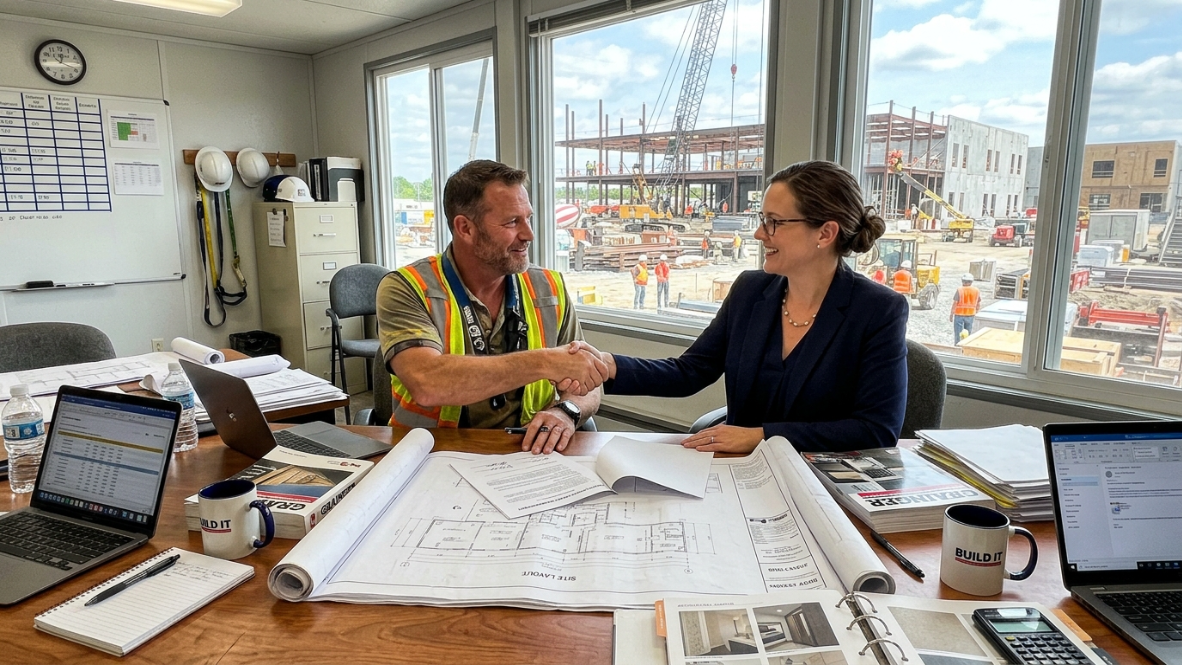
Definition: A long-term agreement with a supplier covering recurring purchases at pre-negotiated prices over a set period, typically quarterly or annually. Also called a standing purchase order, call-off order, or open PO.
BPOs are the workhorse of construction bulk purchasing. Instead of issuing a new purchase order every time you need drywall screws or concrete mix, you establish one agreement that covers all purchases of that item for months. This eliminates repetitive paperwork, locks in pricing, and often puts your orders at the front of the line during shortages.
The numbers are compelling. Buyers using blanket purchase orders can potentially save up to 30% compared to placing individual orders. Construction, manufacturing, and service-based businesses are among the most common BPO users because they need large volumes delivered on an ongoing basis.
If you’re onboarding a new supplier for a blanket order, our vendor onboarding checklist walks through the steps.
Forward Pricing Agreement
Definition: A supplier commitment to hold a quoted price for a defined period (typically 60 to 90 days) in exchange for a purchase commitment from the buyer.
Forward pricing agreements are critical during volatile markets. Some suppliers will hold a price for 60 or 90 days in exchange for a commitment, giving you time to finalize project plans without absorbing price swings.
Not every supplier will agree to these terms when markets are moving fast. If a supplier won’t hold pricing, that’s your signal to negotiate an escalation clause instead. The two tools work as complements: forward pricing for when you can lock in, escalation clauses for when you can’t.
Escalation Clause
Definition: A contract provision that allows adjustments to the contract price when material or labor costs rise beyond a defined threshold.
The escalation clause is the primary contractual defense against material cost volatility. It’s especially important for projects heavy on steel, copper, lumber, asphalt, and PVC, all categories where prices can swing 15% or more in a matter of months.
The warning here is stark. During recent price surges, contractors locked into fixed-price contracts without escalation protection absorbed losses that drove some into insolvency. If you’re bidding fixed-price work, an escalation clause isn’t optional. It’s survival.
A related practitioner tactic: shorten your bid validity window. If your proposals are good for 90 days, you’re carrying 90 days of price risk for free. Cut that to 30 days, or even 15 days during highly volatile periods.
Price Lock
Definition: An agreement with a supplier to hold material prices at a specific rate for a set period, usually tied to a deposit or letter of intent.
Price locks are the defensive play during bidding and pre-construction phases. You’re submitting a bid based on today’s material costs but won’t actually purchase for weeks or months. A price lock protects that gap.
Most price locks require a down payment or commitment letter. Focus them on your highest-spend or most volatile materials first, since locking in the price of copper pipe matters more than locking in the price of joint compound.
Committed Buy (Committed Purchase)
Definition: An agreement within a GPO or buying group where members collectively commit to purchasing a specific volume from a supplier in exchange for discounted pricing.
This is the mechanism that makes group pricing possible. The more members commit to buying a product, the lower the per-unit price drops. Your individual order of 500 units might not move the needle, but when combined with dozens of other contractors making the same commitment, the total volume commands real pricing power.
Understanding committed buys matters because they come with obligations. If you commit to a volume and don’t follow through, you may lose access to that pricing tier or damage the group’s negotiating position.
Buyout
Definition: The process of finalizing and purchasing all subcontracts and supply contracts for a construction project, typically done shortly after contract execution.
In volatile markets, buyout timing directly affects profitability. Faster buyout means less price exposure. Many contractors now prioritize early buyout specifically to lock in pricing before materials costs climb further.
The connection to bulk purchasing strategy is direct: if you’re buying out multiple projects simultaneously, you can combine material needs into larger orders and negotiate bulk pricing across the portfolio. This is where construction bulk purchasing becomes most powerful, not on single projects but across a pipeline.
Purchasing Strategy Terms
Group Purchasing Organization (GPO)
Definition: An entity that aggregates the purchasing power of multiple businesses to negotiate better pricing, terms, and rebates from suppliers.
GPOs are the single most effective tool for small and mid-size contractors who want bulk pricing without individually hitting massive volume thresholds. The data backs this up: GPO members pay about 13% less for supplies than contractors negotiating on their own, and non-healthcare GPOs saved their members $4.2 billion in 2022 alone.
Beyond price savings, GPOs offer a benefit that’s underappreciated: priority fulfillment during shortages. A GPO represents a huge block of business to suppliers, so its members get treated as priority customers. When everyone else is waiting six weeks for delivery, GPO members are more likely to see their orders filled first.
For a construction company with significant material spend, GPO membership typically translates to 5% to 7% in annual purchasing cost reductions. That can mean tens or hundreds of thousands of dollars.
Want to understand how these organizations compare to other models? Our supplier programs guide breaks down seven different program types.
Dual Sourcing
Definition: The practice of qualifying and maintaining at least two suppliers for the same critical material to reduce supply chain risk.
If your sole lumber supplier has a shortage, your project stops. Period. Dual sourcing prevents that. A 2025 survey found that 60% of organizations plan to use dual sourcing by 2026 to make their supply chains more secure.
The trade-off is clear: managing two supplier relationships takes more time and may reduce your volume with each individual supplier, potentially weakening your pricing position with both. GPO membership can offset this by maintaining your aggregate volume even when split across vendors.
For guidance on evaluating potential suppliers, our vendor selection checklist provides a structured process.
Procurement vs. Purchasing
Definition: Purchasing is the transactional act of buying something. Procurement is the full strategic lifecycle: planning, sourcing, negotiation, ordering, logistics, and supplier management.
This distinction matters more than it seems. Purchasing is placing the order. Procurement is deciding what to buy, from whom, at what price, under what terms, delivered how, and managed through what process. Bulk materials purchasing in construction sits within the procurement lifecycle as one tactic among many.
Contractors who treat purchasing as a clerical task instead of a strategic function leave money on the table. The companies saving the most on materials have dedicated procurement thinking, even if they don’t have a dedicated procurement department. Our contractor vendor procurement guide explains how to build that function.
Specification Standardization
Definition: The practice of using the same material specifications across multiple projects to enable consolidated bulk purchasing.
If every project uses different specs for framing lumber, drywall thickness, or fastener types, bulk buying becomes impractical. You can’t combine orders across projects when each one demands something different.
Standardization is the prerequisite for effective construction bulk purchasing. It requires coordination between project managers, estimators, and sometimes designers. Not every material can be standardized (site-specific conditions dictate some choices), but the more you align across your portfolio, the more purchasing power you create.
Bulk Purchasing vs Traditional Purchasing
Factor | Bulk Purchasing | Traditional Purchasing |
|---|---|---|
Unit Cost | Lower | Higher |
Cash Requirement | Higher | Lower |
Storage Needed | Yes | Minimal |
Supply Risk | Lower | Higher |
Flexibility | Lower | Higher |
Freight Cost | Lower per unit | Higher per unit |
Administrative Work | Lower | Higher |
Best For | Multiple Projects | Small Jobs |
Logistics and Planning Terms
Just-in-Time (JIT) Delivery
Definition: A logistics strategy where materials arrive at the job site as close as possible to the installation date, minimizing on-site storage time.
JIT is the opposite of traditional bulk stockpiling. It reduces storage costs, shrinkage, and weather damage, but it increases your dependency on reliable suppliers and predictable schedules. One delayed delivery can shut down a crew.
The trade-off with bulk purchasing is important. JIT works well for custom or specialty items where storage is costly and demand is predictable. Bulk purchasing makes more sense when market conditions favor buying early (rising prices) and the material stores easily (aggregates, structural steel, standard lumber). Many contractors use both strategies simultaneously for different material categories.
Material Takeoff
Definition: The detailed process of calculating the exact type and quantity of every material needed for a project, based on construction drawings and specifications.
Accurate takeoffs are the foundation of smart bulk buying. Overestimate and you waste capital on storage. Underestimate and you pay rush premiums or face project delays.
A commonly missed detail with aggregates: gravel and crushed stone experience significant compaction when installed. If you order enough tonnage to fill the excavated volume loosely, you will fall short once the material is properly compacted. Most experienced estimators add a 5% to 10% wastage and compaction buffer depending on project type and material, but the exact figure varies.
Supply Chain Risk
Definition: The potential for disruption in the flow of materials from supplier to job site, including shortages, delays, quality failures, or sudden price spikes.
Tariffs, logistics disruptions, and megaproject demand have made supply chain risk a permanent planning concern. Cushman & Wakefield estimated that tariff conditions as of April 2026 could raise commercial construction material costs by about 6% from a 2024 baseline.
Bulk purchasing is itself a supply chain risk tool: buying ahead means you’re less exposed to future disruptions. But it creates its own risks (capital lockup, deterioration). The smart move is combining bulk buying with dual sourcing, GPO membership, and escalation clauses for a layered defense.
For a broader look at building supply chain resilience, our contractor vendor strategy guide covers the full framework.
Which Construction Materials Benefit Most from Bulk Purchasing?
Material | Bulk Buying Value | Storage Difficulty |
|---|---|---|
Aggregates | Excellent | Easy |
Lumber | Excellent | Moderate |
Drywall | Good | Moderate |
Steel | Excellent | Easy |
Concrete | Poor | Not practical |
Fasteners | Excellent | Easy |
PVC Pipe | Good | Easy |
Roofing Materials | Good | Moderate |
Electrical Supplies | Moderate | Easy |
Paint | Moderate | Limited shelf life |
Step-by-Step Bulk Purchasing Process
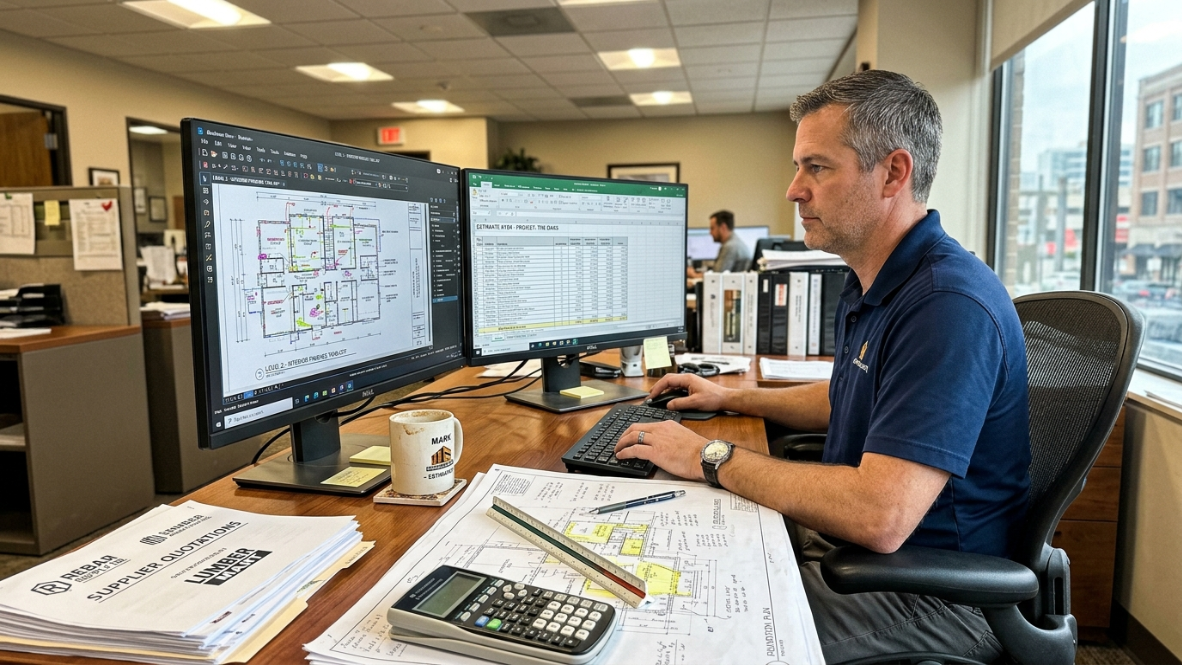
1. Forecast Material Demand
Estimate quantities across all active and upcoming projects.
2. Standardize Specifications
Use common materials whenever possible.
3. Compare Multiple Suppliers
Evaluate total landed cost rather than unit price.
4. Negotiate Pricing
Ask about:
Volume discounts
Rebates
Price locks
Blanket purchase orders
5. Plan Storage
Confirm warehouse capacity and inventory controls.
6. Monitor Usage
Track inventory consumption and reorder points.
Common Bulk Purchasing Mistakes
Understanding the glossary terms is only half the battle. Here are the mistakes that practitioners report most often.
Ignoring landed cost. Buying from a distant supplier because the base price looks 8% lower, then losing that advantage (and more) on freight. Always calculate total delivered cost.
Overbuying without project pipeline. Practitioners on forums like Mike Holt’s report that contractors have played supply houses against each other for years, but the shift to bulk and mail-order alternatives only works when you have consistent demand. Buying 12 months of material for 3 months of projects is speculation, not strategy.
Forgetting carrying costs. Capital costs, deterioration, double-handling, and shrinkage can erase a 10% bulk discount surprisingly fast. Run the numbers on holding costs before committing to large orders.
No escalation protection. Bidding fixed-price work without escalation clauses during a period of 4% to 6% baseline cost escalation is gambling with your margins.
Single-source dependency. The cheapest supplier is only cheap until they can’t deliver. Qualifying a backup source costs time upfront but prevents catastrophic delays later.
Putting It All Together
Bulk materials purchasing in construction isn’t a single decision. It’s a system of connected strategies, contract terms, and logistical choices. The contractors saving 10%, 15%, or more on materials aren’t doing any one thing differently. They’re combining GPO membership with blanket purchase orders, escalation clauses with forward pricing, specification standardization with dual sourcing.
The starting point is knowing the language. The next step is putting it into practice.
Ready to see how group purchasing can lower your material costs? Explore CNBA’s contractor supplier discounts to understand the specific programs available.
Frequently Asked Questions
What is bulk materials purchasing in construction?
Bulk materials purchasing in construction is the practice of buying building supplies in large quantities, often across multiple projects, to secure lower per-unit pricing. It works best with commodity materials like lumber, concrete, aggregates, drywall, and steel where volume discounts are standard.
How much can contractors save through bulk purchasing?
Savings vary by material category and volume, but most sources report 7% to 30% on bulk orders. GPO members specifically save an average of 5% to 15% on materials and supplies. For a contractor spending $500,000 annually on materials, that translates to $25,000 to $75,000 in savings.
What is a Group Purchasing Organization (GPO) in construction?
A GPO aggregates the buying power of many contractors to negotiate pricing and rebates that individual companies couldn’t access alone. Members get pricing comparable to what national builders receive without needing to individually hit large volume thresholds. Non-healthcare GPOs saved their members $4.2 billion in 2022.
When does bulk buying NOT make sense for contractors?
Bulk buying is a poor choice when cash flow is tight, storage is limited, the project pipeline is uncertain, or the materials deteriorate quickly. The carrying costs of holding inventory (capital, storage, insurance, shrinkage) can erase discount savings. If your business isn’t financially stable, tying up cash in materials creates more risk than it eliminates.
What is the difference between a blanket purchase order and a regular purchase order?
A regular purchase order covers a single transaction for a specific quantity. A blanket purchase order establishes terms for recurring purchases over a set period (usually 3 to 12 months) at pre-negotiated prices. BPOs reduce paperwork, lock in pricing, and can save up to 30% compared to placing individual orders.
How do escalation clauses protect contractors?
Escalation clauses allow contract price adjustments when material or labor costs rise beyond a defined threshold. Without one, the contractor absorbs all cost increases on fixed-price work. During the recent period of sustained material inflation, contractors without escalation protection faced losses severe enough to cause insolvency in some cases.
What should contractors calculate when comparing bulk suppliers?
Always compare total landed cost, not just the quoted unit price. Landed cost includes the product price plus freight, handling, taxes, duties, and any surcharges. A supplier 200 miles away with a lower base price frequently ends up costing more than a local supplier once delivery charges are factored in.
Can small contractors benefit from bulk purchasing?
Yes, primarily through GPO membership. Small and mid-size contractors often can’t hit the volume thresholds needed for meaningful bulk discounts on their own. A GPO combines their purchasing volume with dozens or hundreds of other members, giving everyone access to pricing that their individual spend wouldn’t justify.

Recent Comments