
TL;DR
Fleet fuel rebate programs give businesses per-gallon credits on fuel purchases made through specialized fleet cards. Rebates typically range from 2 to 15 cents per gallon, with some diesel-focused programs offering discounts above 40 cents per gallon at in-network locations. For construction contractors, where fuel represents 20 to 35 percent of operating costs, these programs can produce meaningful savings, but hidden fees and volume thresholds can erode the benefit if you’re not careful.
Fleet Fuel Rebate Programs: Quick Answer
Fleet fuel rebate programs reduce business fuel costs by providing fixed or tiered per-gallon rebates when companies purchase fuel with qualifying fleet cards. Most contractors save between 2 and 15 cents per gallon through standard fleet card programs, while heavy diesel fleets using truck-stop networks may save more than 40 cents per gallon at participating locations.
The best fleet fuel rebate program depends on:
Monthly fuel volume
Where your crews buy fuel
Diesel vs. gasoline usage
Fleet size
Card fees
Reporting requirements
Availability of off-highway fuel tax credits
For many construction contractors, the largest savings come from combining fleet rebates with fuel theft controls, IRS Form 4136 tax credits, and group purchasing programs rather than relying on rebates alone.
Fuel is one of the largest recurring expenses for any construction fleet. Between concrete trucks cycling to batch plants, service vehicles running between jobsites, and heavy equipment burning diesel all day, the gallons add up fast. Fleet fuel rebate programs exist to claw back a portion of that spend, but the details matter more than most providers let on.
This guide breaks down what these programs actually are, how the rebate math works, where contractors get tripped up, and how to make sure the savings are real.
If you’re looking for a broader view of how vendor rebate programs work in construction, that guide covers the full picture across material categories.
What Are Fleet Fuel Rebate Programs?
Fleet fuel rebate programs are structured discount arrangements tied to specialized fuel payment cards. Unlike a standard business credit card that might offer 1 to 2 percent cash back on all purchases, fleet fuel cards provide per-gallon rebates specifically on fuel transactions, applied as credits on your monthly statement.
The cards themselves do more than just earn rebates. They function as fleet management tools, allowing business owners to set per-driver spending limits, restrict purchases to fuel-only transactions, and generate detailed reporting by vehicle, driver, or jobsite. But the rebate component is the primary financial draw.
Here’s the core mechanism: every gallon your fleet purchases through the card earns a rebate, usually somewhere between $0.02 and $0.15 per gallon depending on the program and your monthly volume. Some diesel-focused programs at truck stop networks push that figure considerably higher. AtoB reported an average discount of 42 cents per gallon on truck diesel in the second half of 2025, and Comdata users at TA Petro locations have seen discounts around 40 cents per gallon.
The distinction from standard rewards cards is important. A general business card earning 2 percent on a $4.00 gallon of diesel gives you 8 cents back. A well-matched fleet fuel card at a high-volume tier can match or beat that while also giving you spending controls, fuel-type restrictions, and reporting that a Visa or Mastercard reward program never will.
How Fleet Fuel Rebates Work in Simple Terms
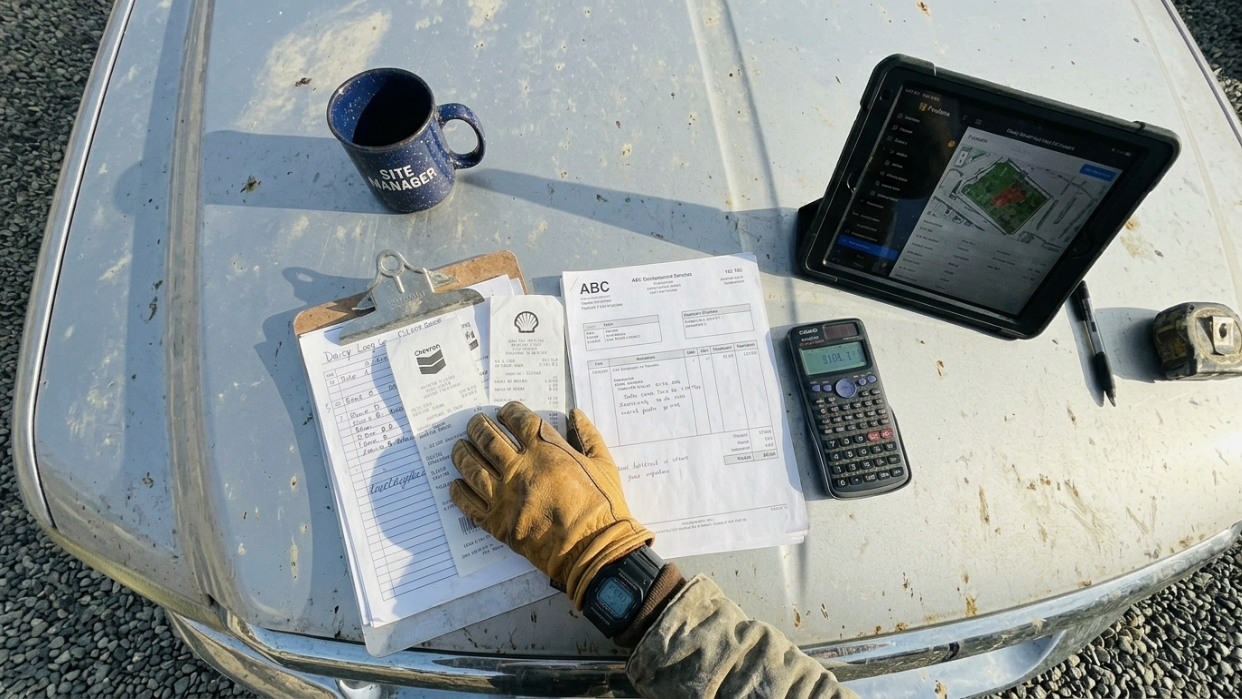
Many contractors confuse fuel rebates with credit card rewards, but they operate differently.
Business Expense | Standard Business Credit Card | Fleet Fuel Card |
|---|---|---|
Fuel purchases | Cash back percentage | Per-gallon rebate |
Driver controls | Limited | Extensive |
Fuel-only restrictions | No | Yes |
Vehicle reporting | No | Yes |
Jobsite tracking | No | Yes |
Fraud monitoring | Basic | Advanced |
IFTA reporting | No | Often included |
How Fleet Fuel Rebate Tiers Work
Most fleet fuel rebate programs use one of two models: flat-rate rebates or volume-tiered rebates. Understanding the difference is essential for picking the right program.
Flat-Rate Rebates
Some programs offer the same per-gallon discount regardless of how much fuel your fleet purchases in a given month. Fuelman, for example, advertises 8 cents on every gallon of diesel or unleaded at over 40,000 fueling locations. The appeal is simplicity: you know exactly what you’re getting from day one.
Flat-rate programs tend to work better for smaller contractors who can’t guarantee high monthly volumes. There are no tiers to miss, no thresholds to chase. This is a form of supplier discount program where the terms are predictable.
Volume-Tiered Rebates
The more common structure ties your rebate rate to how many gallons your fleet consumes each month. WEX, one of the largest fleet card issuers, uses this approach. According to WEX, their tiers work roughly like this:
Monthly Gallons | Rebate Per Gallon (In-Network) |
|---|---|
500 to 2,499 | 3 cents |
2,500 to 4,999 | 4 cents |
5,000 to 6,999 | 5 cents |
7,000+ | Higher tiers available |
Out-of-network purchases with WEX earn significantly less, typically 1 to 3 cents per gallon.
The tiered model rewards scale. A contractor running 20 trucks that collectively burn 6,000 gallons a month lands in the 5-cent tier, which translates to $300 per month or $3,600 annually. That same fleet purchasing just 2,000 gallons would earn only $60 monthly at the 3-cent tier.
Promotional Rates: Read the Fine Print
Several providers offer aggressive introductory rebates that drop after a set period. Shell advertises a 25-cent-per-gallon rebate for the first six months, which then falls to a standard tiered rate of up to 6 cents per gallon ongoing. Valero offers up to 15 cents per gallon for the first 90 days before settling at up to 8 cents.
These promos can be genuinely valuable if you’re aware of the transition. The danger is budgeting around the introductory rate and then facing a sharp drop three or six months later.
Why Fleet Fuel Rebates Matter for Construction Contractors
Fuel is not a minor line item in construction. It’s a structural cost that directly affects project margins.
Research from the American Transportation Research Institute estimates that fuel costs represent 20 to 30 percent of operating expenses for companies that rely on fleets of vehicles and heavy machinery. For diesel-powered construction equipment specifically, fuel can exceed 35 percent of operational costs. The ATRI also reports that the average marginal fuel cost per mile for commercial fleets was 48.1 cents in 2024, or $19.32 per hour.
Those percentages mean that even modest per-gallon savings compound quickly across a fleet. A 5-cent-per-gallon rebate on 8,000 gallons per month saves $4,800 annually. At 10 cents per gallon, that doubles to $9,600.
But the cost picture gets worse before rebates even enter the conversation. Construction leaders estimate that up to 22 percent of fleet payments are lost to fraud or theft. On top of that, 10 to 30 percent of construction equipment fuel consumption is tied to nonproductive idling, equipment running but not doing work.
Fleet fuel cards address both problems. Purchase controls prevent unauthorized transactions, and detailed reporting helps identify idling patterns and consumption anomalies. The rebate is the headline benefit, but the controls and visibility often matter just as much. For a fuller breakdown of where fuel fits within overall construction cost management, that guide covers the full range of controllable expenses.
Example Annual Savings by Fleet Size
Examples help Google extract featured snippets while increasing topical relevance.
Fleet Size | Monthly Gallons | 5¢ Rebate | 10¢ Rebate | 15¢ Rebate |
|---|---|---|---|---|
5 vehicles | 1,500 | $900 | $1,800 | $2,700 |
10 vehicles | 3,000 | $1,800 | $3,600 | $5,400 |
20 vehicles | 6,000 | $3,600 | $7,200 | $10,800 |
40 vehicles | 12,000 | $7,200 | $14,400 | $21,600 |
Types of Fleet Fuel Rebate Programs
Not all fleet fuel cards serve the same type of operation. The four main categories each have trade-offs that matter for construction contractors.
Branded Station Cards
Cards from Shell, Chevron/Texaco, and Valero offer the highest per-gallon rebates, but only at their branded stations. Chevron/Texaco provides tiered rebates of up to 6 cents per gallon at its 8,000+ locations. Valero covers 5,200+ locations with rebates up to 8 cents.
Best for: Contractors whose routes and jobsites align well with a specific brand’s station footprint. If your crews consistently pass Chevron stations on the way to jobs, the higher rebate is worth the network restriction.
Watch out for: Rural jobsites or projects in areas with sparse branded coverage, where drivers end up at out-of-network stations and lose the rebate entirely.
Universal Fleet Cards
WEX and similar providers accept at roughly 95 percent of U.S. fueling stations. The trade-off is lower per-gallon rebates, especially out-of-network. WEX offers 3 to 15 cents in-network but only 1 to 3 cents outside its preferred network.
Best for: Contractors operating across a wide geography with unpredictable fueling patterns. The broad acceptance means drivers don’t waste time hunting for specific stations. These are a type of vendor discount program where convenience is part of the value.
Diesel-Specialized Programs
AtoB and Comdata focus on truck stop networks and heavy diesel consumption. Their per-gallon discounts can be dramatically higher, sometimes 40+ cents per gallon at in-network stops. These programs essentially negotiate cash-price diesel rates and pass the savings to cardholders.
Best for: Fleets with heavy over-the-road diesel consumption, think concrete delivery trucks, asphalt haulers, or any operation logging significant highway miles.
Subscription-Based Models (Emerging)
A newer approach replaces volume thresholds with flat monthly subscriptions. These programs combine partners like Speedway and WEX with cost-control features, giving fleet managers access to nationwide fuel discounts without meeting minimum usage requirements.
Best for: Small fleets of 5 to 15 vehicles that can’t reliably hit volume tiers but still want structured fuel management.
Fleet Fuel Rebate Program Comparison
Provider | Rebate Range | Network Size | Best For |
|---|---|---|---|
WEX Fleet Card | 3 to 15 cents/gal (in-network) | 95% of U.S. stations | Mid-to-large mixed fleets |
Valero | Up to 8 cents/gal (15 cents promo) | 5,200+ locations | Fleets near Valero coverage |
Shell | Up to 6 cents/gal (25 cents promo) | Shell stations nationwide | Brand-loyal operations |
Chevron/Texaco | Up to 6 cents/gal tiered | 8,000+ stations | Western and Southern U.S. fleets |
Fuelman | 8 cents flat on every gallon | 60,000+ stations | Small fleets wanting simplicity |
AtoB | Avg. 42 cents/gal on truck diesel | Cash-price truck stops | Heavy diesel haulers |
Comdata | Up to 40 cents/gal at TA Petro | Truck stop focused | Over-the-road heavy equipment |
Which Fleet Fuel Program Is Best?
Different programs fit different contractor profiles.
Contractor Type | Best Program Style |
|---|---|
1–5 vehicles | Flat-rate card |
5–15 vehicles | Subscription or flat-rate |
15–40 vehicles | Tiered national network |
Heavy diesel fleets | Truck-stop diesel programs |
Multi-state fleets | Universal fleet card with IFTA reporting |
Rural contractors | Largest station network |
What to Watch Out For: Hidden Fees and the Breakeven Trap

This is where fleet fuel rebate programs get complicated, and where most comparison guides stop short.
The FTC Warning You Should Know About
In 2021, the Federal Trade Commission filed a complaint against FleetCor (parent company of the Fuelman brand) for charging customers “hundreds of millions in mystery fees.” According to the FTC, FleetCor “falsely told customers they’d save money,” and the company’s own records showed that customers generally did not achieve the advertised per-gallon savings once fees were factored in.
This isn’t ancient history. It’s a warning that the cents-per-gallon number on the marketing page is not the same as your net savings.
Common Fees That Erode Rebates
The fee structures across fleet fuel card providers typically include:
Out-of-network transaction fees: $0.50 to $2.00 per transaction
Late payment penalties: $35 to $150+
Account setup fees: $25 to $50
Monthly card fees: $2 to $8 per card
Contract cancellation fees: Varies widely
A fleet manager on a practitioner forum noted that if crews spend 20 minutes looking for a “discount” station, or fuel theft gets discovered weeks later, the so-called savings are already gone. Visibility into spending, that real-time ability to catch problems, often matters more than chasing the biggest per-gallon number.
The Breakeven Math
Here’s a calculation that most fleet card marketing materials skip. At $4 per card per month and a $0.03 rebate, each card needs to fuel roughly 133 gallons per month just to cover its own cost. That’s about 4.4 gallons per day. For active construction vehicles, that’s easy to hit. For a supervisor’s pickup that fills up twice a month, it might not pencil out.
At higher rebate rates (like the 15 cents available at EDGE sites through WEX), the breakeven drops to about 27 gallons per month, a much easier bar to clear.
Before signing up for any program, run this math for every vehicle in your fleet. Consider negotiating better vendor pricing on card fees and minimums before committing.
The Small Fleet Disadvantage
Volume-tiered fleet fuel rebate programs structurally favor larger operations. Practitioners on Reddit and fleet management forums consistently report that rebates scaled with volume leave smaller fleets in the lowest tiers. A fleet crossing the 10,000-gallon mark in a month might see 7 cents per gallon, but a contractor with 8 trucks burning 2,000 gallons monthly is stuck at 3 cents.
This matters because the construction industry is full of mid-sized contractors running 5 to 20 vehicles. They’re too big to ignore fuel costs but too small to unlock premium rebate tiers on their own.
Three approaches address this gap:
Flat-rate cards like Fuelman that don’t penalize lower volumes
Subscription-based models that decouple savings from gallon thresholds
Group purchasing arrangements where multiple contractors aggregate volume to qualify for higher tiers
That third option is where purchasing leverage for contractors becomes relevant. A buying alliance pooling fuel volume across 50 member companies can collectively hit tier levels that no single small contractor could reach alone.
2026 Fleet Fuel Rebate Trends
This helps freshness and topical authority.
Contractors evaluating fleet fuel programs in 2026 should be aware of several emerging trends:
More providers are replacing rebate tiers with subscription pricing.
Mobile app fuel authorization is becoming common.
AI-powered fraud detection is reducing unauthorized purchases.
Fleet cards increasingly integrate with telematics platforms.
Electric fleet charging rebates are beginning to appear alongside gasoline and diesel programs.
Digital receipt automation is reducing accounting workloads.
These trends suggest fleet fuel cards are evolving into broader fleet management platforms rather than simple payment cards.
Related Savings Strategies Contractors Often Miss
Fleet fuel rebate programs don’t exist in isolation. Two companion strategies can stack additional savings on top of card rebates.
Off-Highway Fuel Tax Credits (IRS Form 4136)
Construction companies that use diesel in off-highway equipment (generators, excavators, skid steers, anything not driven on public roads) can claim federal fuel tax credits. The federal tax rate on clear diesel is $0.243 per gallon, and gasoline is $0.183 per gallon. These are refunded through IRS Form 4136.
A contractor burning 3,000 gallons of off-highway diesel per month would recover $729 monthly, or $8,748 annually, just from the federal excise tax credit. State-level credits may apply as well. This credit stacks with fleet card rebates since they address different portions of the fuel cost.
Industry tax advisors describe off-highway fuel use credits as one of the most overlooked opportunities in construction. Many contractors either don’t know the credit exists or assume it’s too small to bother with. It’s not.
Group Purchasing for Fuel
Beyond tax credits, contractors can improve their rebate position through collective purchasing. By joining a buying group or procurement alliance, smaller firms pool their fuel volume with other members, qualifying the group for higher-tier rebates that flow back to each participant.
This approach extends beyond fuel into materials, equipment rentals, and other major expense categories. For a full overview of how this model works across construction spending, the construction procurement savings guide covers the strategy in depth.
Interested in how group purchasing could improve your fuel rebate position? Explore CNBA’s contractor vendor programs to see how members access negotiated rates across major spending categories.
How to Evaluate a Fleet Fuel Rebate Program
Before committing to any program, work through this checklist:
1. Calculate your actual monthly gallons per card. Pull three to six months of fuel receipts. Divide total gallons by the number of vehicles. Compare that number to the provider’s tier thresholds.
2. Map your fueling locations. Check whether the in-network stations align with your jobsite geography. A great rebate at stations your crews never visit is worth nothing.
3. Read the fee schedule completely. Ask for a written breakdown of every possible fee: out-of-network charges, late payment penalties, setup costs, monthly per-card charges, and early termination penalties.
4. Run the net savings math. Multiply expected gallons by the realistic (not promotional) rebate rate. Subtract all fees. If the number is negative or marginal for some vehicles, those vehicles shouldn’t carry the card.
5. Compare flat vs. tiered. If your fleet’s monthly volume is inconsistent (seasonal work, project gaps), a flat-rate program may produce more reliable savings than a tiered one where you drop between tiers during slow months.
6. Ask about contract terms. Multi-year lock-ins with cancellation penalties are common. Negotiate shorter initial terms or review your vendor agreements carefully before signing.
7. Check for IRS Form 4136 compatibility. Make sure the card’s reporting breaks out off-highway fuel purchases clearly enough to support your fuel tax credit claims.
Frequently Asked Questions
What is a fleet fuel rebate program?
A fleet fuel rebate program is a discount arrangement where businesses earn per-gallon credits on fuel purchases made through specialized fleet payment cards. The rebate is typically applied as a credit on the monthly statement, with rates ranging from 2 cents to over 40 cents per gallon depending on the provider, network, and purchase volume.
How much can a construction contractor save with fleet fuel cards?
Savings depend on fleet size, monthly gallons, and the rebate structure chosen. A contractor purchasing 5,000 gallons per month at a 5-cent rebate saves $3,000 annually from rebates alone. When combined with reduced fraud (up to 22 percent of fleet payments in construction) and off-highway fuel tax credits ($0.243 per gallon on diesel), total fuel cost reduction can be substantial.
Are flat-rate or tiered rebates better for small fleets?
Flat-rate programs tend to work better for contractors with fewer than 15 vehicles or inconsistent monthly fuel volumes. Tiered programs reward scale, so fleets that can’t reliably hit higher volume thresholds often end up in the lowest tier where savings barely cover card fees.
What hidden fees should I watch for in fleet fuel card programs?
Common fees include out-of-network transaction surcharges ($0.50 to $2.00 per transaction), late payment penalties ($35 to $150+), monthly per-card fees ($2 to $8), account setup charges, and early termination penalties. The FTC’s case against FleetCor demonstrated that these fees can completely eliminate advertised savings.
Can I stack fleet fuel card rebates with off-highway fuel tax credits?
Yes. Fleet card rebates and IRS Form 4136 fuel tax credits address different cost components. The card rebate reduces your purchase price, while the tax credit refunds the federal excise tax on fuel used in off-highway equipment. Construction contractors can claim both simultaneously.
How many gallons per month do I need to break even on a fleet fuel card?
At a $4 monthly card fee with a 3-cent rebate, you need approximately 133 gallons per month per card to break even. At a 15-cent rebate (typical at premium in-network locations), that threshold drops to about 27 gallons per month.
How can small contractors access better fleet fuel rebate tiers?
Small contractors can join group purchasing organizations or buying alliances that aggregate fuel volume across multiple member companies. The combined purchasing power qualifies the group for higher-tier rebates that would be inaccessible to any single small fleet. Subscription-based fuel card models are another emerging option that decouples savings from volume thresholds.
Do fleet fuel cards help with IFTA reporting?
Most fleet fuel card programs generate detailed transaction reports that include gallons purchased, location, fuel type, and date. This data simplifies International Fuel Tax Agreement (IFTA) reporting for contractors operating vehicles across state lines, reducing administrative time and audit risk.

Recent Comments