
TL;DR
Construction budget efficiency in 2026 requires structural advantages, not just tighter spreadsheets. With material input prices posting their steepest monthly jump in four years, contractors need group purchasing alliances for hard-dollar savings, escalation clauses indexed to real benchmarks, weekly earned-value checkpoints, and prefab strategies backed by BIM. This guide covers 15 specific levers (from procurement to execution) with typical impact ranges, practitioner-tested tactics, and the watch-outs that separate real savings from wishful budgeting.
How can construction firms improve budget efficiency in 2026?
To maximize construction budget efficiency in 2026, firms must move beyond spreadsheet tracking to structural cost-saving strategies. The most effective methods include joining contractor buying groups for collective rebate power, implementing symmetric escalation clauses indexed to Bureau of Labor Statistics (BLS) benchmarks, and maintaining weekly Earned Value Management (EVM) reviews. Data shows that integrating BIM-backed prefabrication can reduce package costs by over 10%, while addressing data quality can eliminate up to 14% of rework costs.
Why Construction Budget Efficiency Is Non-Negotiable in 2026
March 2026 delivered the largest monthly increase in construction materials and services prices in four years, driven primarily by diesel surges and rising metal costs source. Tariff noise, fuel surcharges, and supply chain friction show no signs of cooling. AGC economists flagged soaring fuel and metals as a persistent headwind for the rest of the year source.
The firms that hold budget aren’t just hoping for stable prices. They are building systems that convert volatility into predictable unit economics, catching overruns in week two instead of week eight, and capturing every dollar of rebate and procurement advantage available to them.
The 15 levers below are ordered from the fastest procurement wins to the execution and lifecycle strategies that compound over time. Each one includes what it does, who it works best for, what it typically costs, and where it can go wrong.
At-a-Glance: 15 Levers for Construction Budget Efficiency
Lever | Typical Impact | Time to First Result | Best For | Key Risk |
|---|---|---|---|---|
1. Contractor buying group | Hard-cost reductions + cash rebates | 4-8 weeks | GCs, trades with recurring material buys | Purchases bypass negotiated channel |
2. Price certainty (buyouts + escalation) | Margin protection in volatile markets | 2-6 weeks (contract setup) | Material-heavy scopes (steel, electrical) | Subs misuse clauses to fix underbids |
3. SKU standardization | Volume-tier pricing + faster lead times | 6-12 weeks | Repeat-scope owners and GCs | Upfront spec library effort |
4. Rebate capture discipline | Recovery of typically unclaimed margin | 4-8 weeks | Six-figure+ annual category spend | Buyer-of-record disputes |
5. Weekly CPI/SPI reviews | Early drift detection (week 2, not week 8) | 1 week | Any project >$250K | EVM gamed without critical-path focus |
6. Prefab/modular + BIM | Cost decreases >10% on targeted packages | 8-16 weeks (design phase) | Repetitive MEP, wall panels, bathroom pods | Uneven ROI without data standards |
7. Delivery method selection | Lower cost/schedule growth (DB vs. DBB) | Project planning phase | Speed and constructability priorities | Transparency concerns without cost checks |
8. Change-order discipline | Avoid 10-30% productivity loss on affected work | 2-4 weeks | Projects with active scope evolution | Over-rigid processes slow decisions |
9. Data quality and field capture | Reduce rework (14% caused by bad data) | 4-8 weeks | All project sizes | Training investment, not just software |
10. Right-sized contingency | Appropriate risk coverage, less padding | 2-4 weeks (estimate phase) | Owners and GCs at any design stage | Under-contingency on complex scopes |
11. Freight/FSC negotiation | Locked surcharge rates, fewer surprises | 2-6 weeks | High-volume material deliveries | Carrier pushback on index-linked terms |
12. Seasonal procurement timing | Lower unit costs and risk premiums | Seasonal (plan quarterly) | Asphalt, concrete, weather-sensitive scopes | Scheduling constraints |
13. Pavement preservation vs. replacement | Extended asset life, deferred capex | Ongoing program | Large parking/yard/truck court portfolios | Missed timing windows reduce ROI |
14. Early CM/GC involvement + VE | Fewer late RFIs and change orders | Design phase | Projects valuing constructability | VE mistaken for cheapening |
15. Transparent budget KPIs with trades | Visible accountability, fewer surprises | 2-4 weeks | GMP, lump-sum, or target-value contracts | Dashboard fatigue without action protocols |
1. Join a Contractor Buying Group
Best for: GCs, trade contractors, and commercial/industrial owners with recurring materials and equipment purchases across multiple sites.
A contractor buying group aggregates purchasing volume across member companies to negotiate below-market pricing and structured vendor rebates that no single firm could access alone. The math is straightforward: more collective volume means better unit costs and bigger rebate checks.
The impact is real. One builders group returned $16 million in rebates to its members in a single year source. Savings come in two forms: hard-cost reductions on invoices and cash rebates returned periodically.
Cost to implement: Membership-based. CNBA structures its alliance around contractor volume, though specific pricing requires direct conversation.
Key features:
Negotiated pricing on materials, equipment, and supplies
Rebate programs with major manufacturers and distributors
Access to national pricing programs unavailable to individual contractors
Works alongside your existing vendor relationships
Practitioner tip: Practitioners on Reddit report that significant rebate dollars get left on the table when individual purchases bypass negotiated channels. Standardize your SKUs across jobs and centralize purchase orders under group contracts to prevent leakage source.
Watch-outs:
Set clear governance on who receives rebates when subcontractors purchase on your account. Without explicit buyer-of-record rules, money goes missing.
Requires discipline to route purchases through the alliance rather than defaulting to ad-hoc procurement habits.
If you run a multi-site operation or manage recurring material buys, exploring how a buying group works is the single fastest procurement move available. For a broader look at how collective purchasing structures differ, that guide breaks down the options.
2. Lock in Price Certainty With Early Buyouts and Escalation Clauses
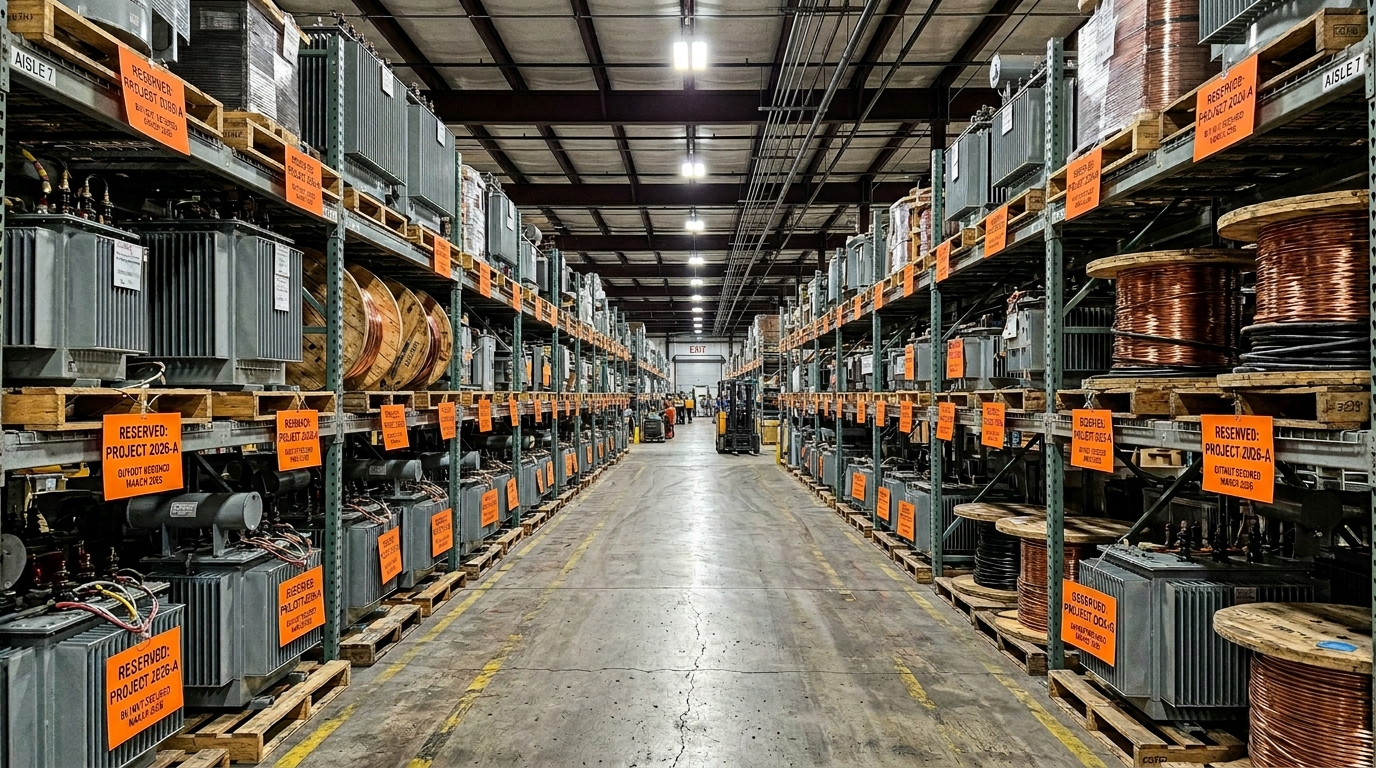
Best for: Projects with material-heavy scopes, especially steel, aluminum, electrical gear, asphalt, and concrete.
Padding contingency to absorb price swings is expensive insurance. Early buyouts on volatile commodities, paired with contract escalation clauses indexed to objective benchmarks (like BLS or DOE indices), transfer risk more efficiently. The ConsensusDocs 200.1 contract language provides a tested framework for time-and-price-impacted materials source.
Typical impact: With ABC and AGC data showing month-to-month input spikes through early 2026, firms without escalation protection are absorbing full margin exposure. Symmetric clauses (prices go up, you’re protected; prices drop, the owner benefits) are increasingly accepted by sophisticated owners.
Cost to implement: Legal review and negotiation time. Some owner education on why fair clauses benefit both sides.
Practitioner tip: One construction manager on Reddit noted that escalation clauses should be calibrated to actual index movement, not used to fix an underbid. Define triggers carefully and exclude causes unrelated to market shifts source.
Watch-outs:
Distinguish clearly between escalation (market-driven) and re-pricing (missed scope). Without that boundary, subs will stretch the definition.
Early buyouts require cash flow planning and warehouse capacity. Buy too much too early and you’re carrying inventory risk.
For a deeper look at how strategic sourcing supports early buyouts, the construction sourcing strategy guide covers the full procurement cycle.
3. Standardize Materials and SKUs Across Your Portfolio
Best for: Owners and GCs running repeatable scopes like retail refreshes, sitework packages, or tenant improvement standards.
When every project manager picks their own preferred fixtures, fasteners, and finish materials, you get fragmented purchasing, inconsistent bid leveling, and zero volume leverage. Standardizing a spec library of approved SKUs across your portfolio concentrates spend with preferred vendors, unlocks tiered volume breaks, and simplifies procurement.
Typical impact: Savings come through negotiated volume tiers, avoided rush freight charges, and faster lead times from suppliers who can forecast your demand. Practitioners on a contractor forum described how even crude volume programs at big-box retailers can produce 30 to 60 percent discounts, while industrial supplier programs offer more durable product and better warranty coverage at scale source.
Cost to implement: Spec library development, buyer alignment across project teams, and vendor onboarding under master agreements. This is a one-time investment that pays forward.
Watch-outs:
Standardization can feel restrictive to project teams accustomed to choosing their own materials. Get buy-in early.
Revisit the approved list annually. Products improve, vendors change, and stale specs leave money behind.
Building strong contractor-vendor partnerships makes standardization easier to sustain over time.
4. Build a Rebate Machine
Best for: Contractors with six-figure or larger annual category spend in concrete, roofing, MEP supplies, or similar recurring materials.
Most construction firms participate in rebate programs. Far fewer actually capture every dollar owed. Industry analysis suggests that a meaningful percentage of potential rebate margin typically goes unclaimed because tracking is manual, reconciliation is inconsistent, and nobody audits the gap source.
A rebate “machine” means three things: negotiate rebate terms into every qualifying vendor agreement, track purchases against thresholds in real time, and reconcile quarterly with formal audits.
Cost to implement: Contracting work, back-office tracking (software or spreadsheet discipline), and periodic vendor audits.
Practitioner tip: Reddit discussions around vendor rebates consistently surface one theme: whoever’s name is on the purchase receipt keeps the rebate. Without explicit governance, GCs lose rebate dollars when subcontractors buy on GC accounts but claim the credits. Centralize the buyer of record source.
Watch-outs:
Cross-border operations need to loop in tax and compliance teams, since rebates can complicate customs valuation.
Rebate tracking without reconciliation is just a to-do list. Set quarterly audit checkpoints with your vendors.
The contractor vendor rebates guide walks through the full mechanics of negotiating, tracking, and collecting rebates. For firms exploring how procurement groups can simplify this process, that resource fills in the structural details.
5. Run Weekly Cost Reviews With CPI/SPI Signals
Best for: Any project exceeding $250K or operating under a tight GMP.
Earned Value Management sounds like a textbook concept, but its practical application is a 15-minute Friday checkpoint. Review hours and cost burned against budget for every active job. Two numbers matter most: Cost Performance Index (CPI) and Schedule Performance Index (SPI), both defined by PMI standards source.
A CPI below 1.0 means you’re spending more per unit of work than planned. Catching that in week two gives you options. Catching it in week eight gives you a problem.
Typical impact: Practitioners on Reddit describe instituting a hard “flag at 70% burn” policy, meaning if a phase hits 70% of its budget, it gets scrutinized regardless of completion percentage. Weekly time capture is the only way to catch a 2x overrun early enough to correct course source.
Cost to implement: Discipline plus light reporting automation. No expensive software required for the basics.
Watch-outs:
EVM can be gamed when it ignores the critical path. A phase may look fine on CPI while blocking downstream work.
Focus on constraint removal, not vanity metrics. The point is action, not dashboards.
6. Prefabricate and Modularize Targeted Scopes With BIM
Best for: Repetitive, high-labor scopes like MEP racks, wall panels, and bathroom pods.
Moving fabrication from the field to a controlled environment reduces waste, cuts rework, and improves cost predictability. The key word is “targeted.” Prefab delivers the strongest budget efficiency improvements when paired with BIM coordination that produces clash-free installation drawings before anything ships.
Typical impact: Dodge Data’s national study found that companies using BIM on 50% or more of their projects reported meaningfully better cost and schedule outcomes from prefab and modular approaches, with some work packages showing cost decreases exceeding 10% source.
Cost to implement: Early design integration, vendor coordination, and BIM investment. The cost is front-loaded; the payoff comes during installation.
Watch-outs:
Not every team sees results. Civil and structural practitioners on Reddit highlight that execution quality and data reliability are the limiting factors, not the concept itself source.
Transportation logistics for prefab components add a cost layer. Factor delivery access and crane requirements early.
Works best for repetitive scopes. One-off custom elements rarely justify the coordination overhead.
7. Choose Your Delivery Method for Budget Performance
Best for: Projects where speed and constructability matter and where the owner can define clear performance criteria upfront.
The delivery method you select has measurable consequences for construction budget efficiency. CII and Pankow Foundation research, analyzing large project datasets from 1998 to 2019, found that Design-Build (DB) shows lower average cost and schedule growth compared to Design-Bid-Build (DBB) source. FHWA studies echo these findings for infrastructure work, showing schedule advantages and modest cost benefits.
Typical impact: DB’s advantage comes from integrated teams that reduce change friction and earlier constructability input that prevents scope creep. The savings aren’t dramatic on any single line item but compound across the project lifecycle.
Cost to implement: Owner procurement process adaptation and team selection.
Watch-outs:
DB is not a budget guarantee. Some practitioners on an architecture forum caution that without independent cost checks, cost transparency can suffer source.
CMAR (Construction Manager at Risk) offers a middle ground for owners who want constructability input but also want competitive subcontractor pricing.
Strong owner criteria and a clear bridging document matter more than which delivery method you pick.
8. Tighten Change-Order Discipline
Best for: Any project with active scope evolution, especially renovation, adaptive reuse, or phased construction.
Change orders aren’t inherently bad. But undisciplined change processes are a primary driver of budget overruns. Transportation industry research links high change-order volume to 10 to 30 percent productivity losses on affected work source. Those losses compound when changes cascade through trades.
The fix is structural: standardize documentation, establish pre-agreed unit pricing where possible, set approval SLAs, and bundle micro-changes to preserve trade pricing.
Practitioner tip: Construction managers on Reddit consistently emphasize a “no surprises” cadence. That means a weekly change-order log review, explicit cutoff dates for converting T&M work to fixed pricing, and ruthless clarity on what is and isn’t a scope change source.
Watch-outs:
Over-rigid processes can slow decision-making during critical path work. Build in an emergency approval track.
Indirect costs (supervision, general conditions) often get missed in change-order pricing. Include them by default.
9. Invest in Data Quality and Field Capture to Cut Rework
Best for: All project sizes, though the payoff scales dramatically on larger or more complex work.
Bad data is expensive. Autodesk and FMI estimated that poor data quality caused 14% of all rework in 2020, totaling approximately $88.7 billion globally source. Poor data and miscommunication have been cited as contributing to 14 to 52 percent of rework causes in U.S. construction.
The solution is not buying more software. It is standardizing forms, updating drawings and models promptly as changes occur, and pushing daily field data (quantities installed, progress photos, issue flags) into a system your office team can act on.
Cost to implement: Training and process hygiene. The tools are often already in place. The discipline is what’s missing.
Watch-outs:
Technology purchases without workflow changes produce expensive shelfware.
Garbage in, garbage out. If field crews don’t trust or understand the system, data quality stays low regardless of the platform.
10. Right-Size Contingency Using Estimate Class and Risk Registers
Best for: Owners and GCs at any design stage who want appropriate risk coverage without over-padding.
A flat 10% contingency on every project is lazy budgeting. AACE International provides estimate classification standards that tie accuracy ranges to the level of project definition source. At construction documents completion, owners commonly carry 5 to 10 percent contingency for well-defined commercial work. Earlier design stages warrant higher contingency because the scope is less certain.
Pairing estimate class with a formal risk register (a list of identified risks, their probability, and cost impact) replaces guessing with structured decision-making. This is one of the simplest ways to improve budget efficiency in construction without changing anything about execution.
Watch-outs:
Under-contingency is just as dangerous as over-contingency. Complex projects, unfamiliar sites, or fast-track schedules demand higher buffers.
Contingency is not profit. Track draws against the register, and don’t raid it for scope additions.
11. Negotiate Freight and Fuel Surcharges as a Budget Line Item
Best for: Contractors with high-volume material deliveries, especially bulk commodities like aggregates, concrete, and steel.
Freight costs are not overhead to absorb passively. They are a negotiable budget line item. With ABC and AGC economists flagging rising diesel and metals costs through early 2026 source, fuel surcharges (FSCs) are hitting every delivery ticket.
Three moves improve construction budget efficiency on freight: lock FSC tables with your carriers and suppliers so surcharges follow a published index rather than ad-hoc markups, consolidate delivery drops to reduce per-trip costs, and negotiate “delivered” pricing that internalizes freight volatility into the unit cost.
Practitioner tip: Freight forums and Reddit discussions show that fuel surcharge practices are widespread and negotiable. Push vendors to publish their surcharge schedules and index them transparently source.
Watch-outs:
Carriers may resist index-linked FSC terms. Come to the table with volume commitments.
Consolidating drops requires coordination between your scheduler and procurement team. Savings evaporate if a missed delivery delays production.
12. Time Procurement to Markets and Seasons
Best for: Asphalt, concrete, and weather-sensitive scopes where pricing and productivity both fluctuate with the calendar.
Buying when diesel and metals prices soften (even briefly) and scheduling weather-sensitive work for productivity windows reduces risk premiums. Asphalt and concrete costs frequently track energy and trucking prices, and 2026 has shown pronounced monthly swings source.
This isn’t about trying to time the market like a day trader. It is about building procurement calendars that account for seasonal patterns. Spring and fall are often the best windows for asphalt work in the Southeastern U.S., for example, because mild temperatures improve compaction quality and crew productivity.
Watch-outs:
Deferring procurement to chase lower prices can backfire if lead times extend or schedules shift.
Seasonal windows are narrow. Miss the window and you’re paying a premium to compress the schedule.
13. Pavement Preservation Over Replacement

Best for: Owners with large parking lot, yard, or truck court assets, particularly in the Southeast where temperature cycles accelerate deterioration.
Systematic crack sealing, sealcoating, and overlay programs extend pavement life and defer capital replacement. FHWA research consistently demonstrates that timely preservation (the right treatment at the right time) delivers the best benefit-cost outcomes across the pavement lifecycle source.
This is portfolio-level construction budget efficiency: spending $1.50 per square foot on maintenance today versus $8 or more per square foot on full-depth replacement in five years. Condition-based timing, where treatments are scheduled based on actual pavement condition ratings rather than arbitrary calendars, maximizes the return.
Watch-outs:
Deferred maintenance does not save money. It accelerates deterioration into the failure zone where only full replacement works.
Not all preservation treatments work in all climates. Sealcoating in the wrong temperature range, for instance, compromises adhesion.
14. Early CM/GC Involvement and Value Engineering With Design Accountability
Best for: Projects where constructability review during design can prevent expensive field changes.
CMAA advises early team formation as one of the top methods to reduce construction costs source. Bringing a CM or GC into the design phase adds constructability perspective, substitution analysis, and realistic cost benchmarking before drawings go to bid.
Value engineering (VE) is a systematic process, not a euphemism for cutting corners. It evaluates function versus cost and identifies where equivalent performance can be achieved at lower expense. The key is design accountability: when VE substitutions are made, the design team must verify that performance criteria are met.
Watch-outs:
VE without owner buy-in creates adversarial dynamics. Present alternatives with clear cost-benefit comparisons.
Late VE (after bids are in) is disruptive and often counterproductive. The window is during design development and construction documents.
15. Use Delivery-Aligned Contracts and Transparent Budget KPIs With Trades
Best for: Projects using GMP, lump-sum, or target-value design where visible accountability prevents overruns.
The contract structure should align with your budget control strategy. A GMP contract without visible KPIs is a cost-plus contract in disguise. Industry guidance consistently links contract type to budget performance, and practitioners argue for real-time visibility into budget variance, backlog of unresolved change orders, and cost-to-complete forecasts source.
Field managers on Reddit emphasize that schedule consistency standards and visible dashboards keep trades accountable. When everyone on the job can see the same numbers, cost surprises become harder to hide source.
Watch-outs:
Dashboards without action protocols create noise. Every KPI should have a defined response trigger.
Transparency works both ways. If you expect trades to share their cost data, be prepared to share relevant project-level information.
The 2026 Efficiency Tech Stack
Budget efficiency is no longer managed in silos. To implement the 15 strategies above, top firms are utilizing:
Real-time Procurement Platforms: To track buying group rebates automatically.
AI-Driven Predictive Estimating: Using historical data to “right-size” contingencies.
Mobile-First Field Capture: Ensuring the 14% of rework caused by bad data is caught at the source.
Where to Start: Three Moves This Quarter
Fifteen levers is a lot. For teams looking to improve construction budget efficiency in the next 90 days, start with three:
Explore a buying group membership. This is the fastest way to access negotiated pricing and rebate programs that your current purchasing volume can’t reach alone. The CNBA purchasing strategy guide outlines how to evaluate whether an alliance fits your operation.
Roll out an escalation clause template. With 2026 material prices as volatile as they are, every new subcontract should include a symmetric escalation clause tied to a published index. Do not wait until you absorb a loss.
Institute a weekly CPI/SPI ritual. Fifteen minutes on Friday. Review every active job’s cost and schedule performance. Flag anything at 70% budget burn. This single habit catches more overruns than any software purchase.
Measure your budget variance delta in 90 days. The firms that make these moves now will carry those advantages through the rest of the year.
The Cost of Inaction: Why Status Quo Fails in 2026
With metal and diesel prices experiencing 4-year record volatility, a “wait and see” approach results in an average margin erosion of 3-5% per project. Firms using the Buying Group + Escalation Clause combo report 2.5x higher resilience against these monthly market swings compared to those using traditional lump-sum bidding.
Frequently Asked Questions
What is construction budget efficiency?
Construction budget efficiency measures how effectively a project or portfolio converts budgeted dollars into completed work with minimal waste, overruns, and rework. High budget efficiency means delivering scope on or under budget through better procurement, tighter cost controls, and smarter execution methods, not by cutting scope or quality.
How much can a contractor buying group actually save?
Savings depend on volume and categories. One builders group returned $16 million in rebates to its members in a single year. Individual firms see both hard-cost invoice reductions and periodic rebate checks. The savings scale with purchasing volume and discipline in routing purchases through negotiated channels.
What is a good contingency percentage for a construction project?
It depends on the estimate class. At construction documents completion, 5 to 10 percent owner’s contingency is common for well-defined commercial work. Earlier design phases, complex scopes, and unfamiliar sites warrant higher contingency. AACE International’s estimate classification system provides accuracy ranges by design maturity level.
How often should project teams review budget performance?
Weekly. Practitioners consistently report that a short Friday checkpoint using CPI and SPI metrics catches cost drift in the first or second week rather than allowing it to compound for months. Any project over $250K benefits from this cadence.
Does Design-Build really cost less than Design-Bid-Build?
On average, yes. CII and Pankow Foundation research across large datasets found that Design-Build shows lower cost and schedule growth compared to Design-Bid-Build source. But DB is not automatic savings. It requires strong owner criteria and independent cost verification to perform at its best.
How do escalation clauses work in construction contracts?
Escalation clauses adjust contract prices based on defined market movements, typically tied to published indices like the Bureau of Labor Statistics Producer Price Index. When material costs rise above a specified threshold, the clause triggers a price adjustment. Fair clauses are symmetric, meaning the owner benefits if prices drop.
What percentage of rework is caused by bad data?
Autodesk and FMI estimated that bad data caused 14% of all rework in 2020, amounting to roughly $88.7 billion globally. Improving data quality through standardized forms, timely drawing updates, and daily field reporting is one of the highest-ROI moves for budget efficiency in construction.
Are fuel surcharges negotiable in construction?
Yes. Fuel surcharges are standard practice in material delivery, and the rates, triggers, and caps are all negotiable. Push carriers to publish their surcharge schedules and index them to transparent benchmarks like DOE diesel price data. Volume commitments give you stronger negotiating position.

Recent Comments