
TL;DR
A preferred vendor program in construction is a formal arrangement where a general contractor, property owner, or insurance carrier pre-selects a group of vendors and subcontractors who meet specific quality, safety, and financial criteria. These programs exist in four main forms: GC subcontractor lists, property owner vendor panels, insurance contractor programs, and group purchasing organizations. Contractors on preferred lists get more consistent work and early bid access, while buyers get faster procurement and lower risk. Understanding how these programs work, and how to get on one, is essential for any commercial contractor looking to grow.
Quick Answer: How Do You Join a Preferred Vendor Program in Construction?
To join a preferred vendor program in construction, contractors typically must:
1. Meet insurance and licensing requirements
2. Submit safety records (EMR, OSHA logs, safety policies)
3. Complete a prequalification application
4. Provide financial statements and references
5. Pass review, audits, or inspections
6. Maintain compliance through annual renewals
Most general contractors, property owners, insurers, and purchasing groups use preferred vendor lists to reduce project risk and speed procurement. Contractors accepted into these programs often receive earlier bid access, repeat work opportunities, and stronger pricing relationships.
What Is a Preferred Vendor Program?
A preferred vendor program is a strategic arrangement where a business identifies and partners with a select group of suppliers who meet predefined criteria for cost, quality, reliability, and performance. In exchange for meeting those standards, preferred vendors receive priority consideration for projects, better contract terms, and a more predictable flow of work.
In construction, the concept takes on particular importance because project outcomes depend so heavily on the subcontractors and suppliers involved. A missed deadline from one trade can cascade through an entire schedule. Poor material quality can trigger warranty claims years later. Preferred vendor programs exist to reduce those risks by creating a vetted pool of partners that a buyer can trust before a project even starts.
You will hear several names for what is essentially the same idea: preferred supplier list (PSL), preferred vendor list (PVL), approved vendor list (AVL), or simply a “prequalified contractor list.” Almost every large business, including prime contractors, maintains one of these lists covering the vendors and subcontractors approved for quality, on-time delivery, and compliance. The terminology varies by company, but the underlying logic is consistent.
If you are a contractor looking to strengthen vendor partnerships, understanding how these programs work from both sides of the table is the first step.
Preferred Vendor vs. Approved Vendor: The Distinction That Matters

These two terms get used interchangeably, and that causes confusion. They are not the same thing.
An approved vendor has met the minimum criteria to do business with a company. They have passed a basic review, their insurance is current, and they are eligible to bid on work.
A preferred vendor has gone further. They have been selected based on superior quality, competitive pricing, and strong customer support. A preferred vendor typically gets first call when work becomes available and may receive better contract terms.
In plain construction terms: an approved vendor can bid on your projects. A preferred vendor gets the phone call before the bid even goes out.
Approved Vendor | Preferred Vendor | |
|---|---|---|
Status | Meets minimum criteria | Exceeds criteria, specially selected |
Bid access | Eligible to submit bids | Gets priority or sole-source consideration |
Pricing | Standard terms | Negotiated, often more favorable terms |
Relationship | Transactional | Strategic partnership |
Volume guarantee | None | Often implied or contractual |
What a Preferred Vendor Agreement Covers
When a preferred vendor relationship is formalized, it is typically captured in a preferred vendor agreement (PVA). This document lays out the terms of the partnership, detailing mutual roles, product standards, delivery expectations, and pricing agreements. In construction, a PVA might also specify insurance requirements, safety standards, response times for emergency work, and performance review schedules.
How Preferred Vendor Programs Work in Construction
The phrase “preferred vendor program” shows up in four distinct contexts within the construction industry. Each one operates differently, but they share the same core principle: pre-vetting partners to reduce risk and improve outcomes.
General Contractor to Subcontractor Programs
This is the most common application. A general contractor builds a list of trade partners (electrical, mechanical, concrete, steel, drywall, and so on) who have been prequalified based on documented criteria. When a new project comes in, the GC pulls from this list rather than starting the vetting process from scratch.
Turner Construction, one of the largest GCs in the country, requires references, Dun & Bradstreet ratings, safety program documentation, three years of safety history, and financial statements before adding a subcontractor to their list. Most large GCs have similar requirements: active general liability insurance, auto insurance, workers’ compensation, applicable business licenses, and sufficient bonding capacity.
The process matters as much as the paperwork. Practitioners on contractor forums emphasize that you need to fill out the vendor evaluation form carefully and then submit to an inspection. One contractor noted that too many subs treat the application as just another formality, when in reality it is the single document that determines whether you get on the list or get passed over.
With construction insurance premiums rising 18% between 2024 and 2026, more GCs are formalizing their prequalification processes. The cost of bringing on an unvetted subcontractor who creates a safety incident or insurance claim has simply gotten too high.
For a deeper look at how procurement fits into a broader strategy, see this guide on construction procurement alliances.
Property Owner and Facility Manager Vendor Panels
Commercial property owners and facility managers run their own version of preferred vendor programs construction teams interact with regularly. Instead of rebidding every roof repair, parking lot repaving, or HVAC replacement, they maintain a curated panel of contractors who have proven themselves through past performance.
Wangard Partners, a commercial real estate firm, provides a useful example. They use a tracking and ranking system to assess and score their contractors, ensuring that only top performers are selected for future projects. What makes their model notable is that it runs in both directions: their preferred vendors are encouraged to rank Wangard as well, so the relationship can improve on both sides.
This two-way accountability is rare but increasingly common among sophisticated property managers. It recognizes that a preferred vendor relationship is a partnership, not a one-sided arrangement.
Insurance Carrier Preferred Contractor Programs
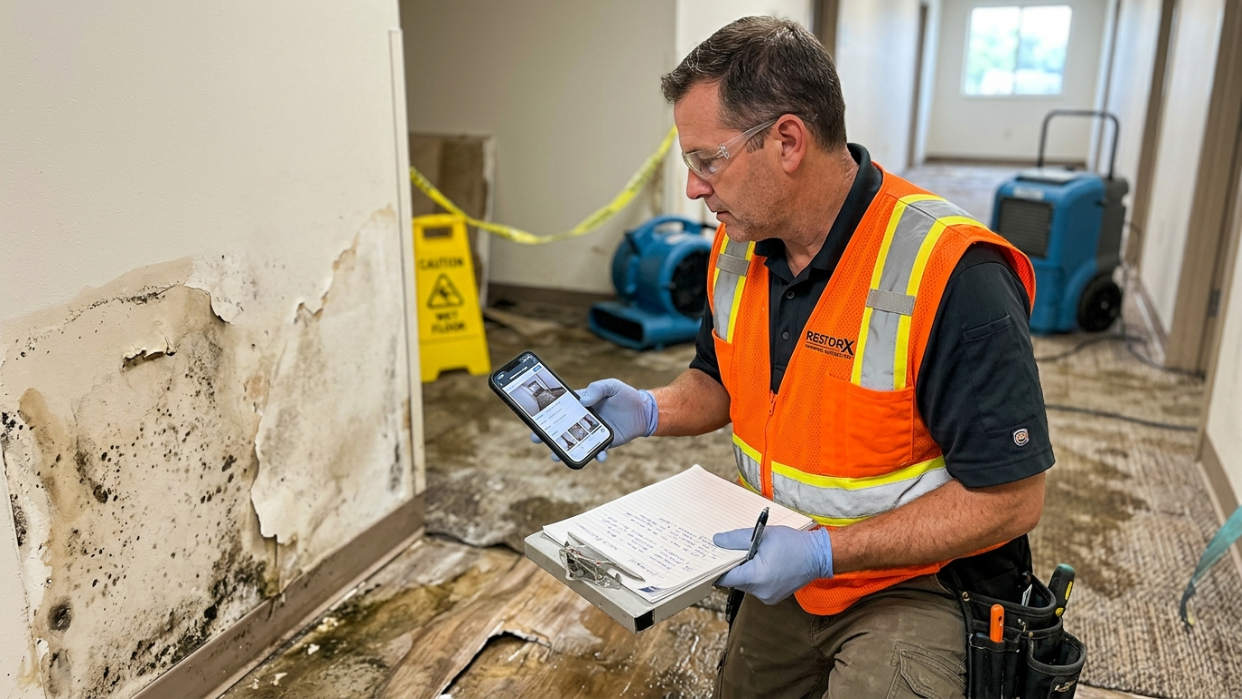
A preferred vendor program in the insurance context is an arrangement between an insurance company and certain contractors or service providers. In exchange for a steady stream of referrals, these vendors agree to follow insurer guidelines, work within pre-approved pricing, and meet strict documentation and timeliness standards.
The model has deep roots. The history of preferred vendor programs in insurance mirrors that of preferred provider organizations (PPOs) in health insurance, which took hold in the 1980s. PPOs allowed insurers to negotiate discounted rates with providers in exchange for channeling patient volume. The same managed-care logic was eventually applied to property restoration and construction work.
However, insurance-driven PVPs have drawn criticism. A public adjuster perspective shared on industry forums argues that the lopsided “preferred vendor” transaction often results in sub-standard or incomplete work for the insured, because vendors attempt to cut corners to keep costs within the insurer’s pre-approved pricing. This tension between cost control and quality is a real concern that contractors and property owners should understand before entering these arrangements.
Group Purchasing Organizations and Buying Groups
The fourth context is less obvious but increasingly important for commercial contractors focused on reducing material costs. Group purchasing organizations (GPOs) pool the buying volume of many independent contractors to negotiate better pricing, rebates, and terms from suppliers and manufacturers.
In this model, the GPO itself maintains a preferred vendor list, but the “vendors” are the suppliers and manufacturers who have agreed to offer discounted pricing to group members. The contractor is the buyer, not the vendor. By joining a GPO or buying group, contractors typically save 10% to 15% on materials and equipment, gain access to annual cash rebates, and can reduce procurement administrative time by up to 60%.
This collective approach to preferred vendor programs in construction deserves its own section below.
Compare Construction Preferred Vendor Program Types
Program Type | Who Runs It | Main Benefit | Main Tradeoff |
|---|---|---|---|
GC Subcontractor List | General contractor | Repeat project invitations | High compliance burden |
Property Vendor Panel | Building owner | Long-term maintenance work | Slower onboarding |
Insurance Program | Insurance carrier | Referral volume | Pricing constraints |
GPO / Buying Group | Purchasing organization | Lower material costs | Limited supplier selection |
What It Takes to Join a Preferred Vendor Program
Whether you are a subcontractor trying to get on a GC’s list or a specialty contractor pursuing insurance program work, the documentation requirements are remarkably similar across the industry.
Common Requirements
Insurance certificates: General liability, commercial auto, and workers’ compensation, with coverage limits that meet the buyer’s minimums
Safety records: Experience Modification Rate (EMR), OSHA 300 logs, and a written safety program
Financial statements: Often two to three years of audited financials, especially for large GC programs
References: Project references from recent comparable work
Licenses and bonding: Current state and local licenses, plus bonding capacity appropriate to the project size
Dun & Bradstreet rating: Some programs, like Turner Construction’s, specifically require a D&B credit rating
Application
↓
Documentation Review
↓
Safety + Financial Screening
↓
Reference Verification
↓
Approval
↓
Preferred List Placement
↓
Annual Renewal
The Prequalification Process
The typical process follows three stages:
Application: Complete the vendor evaluation form with accurate, detailed information. Do not rush this step.
Review and inspection: The buyer reviews your documentation, may conduct a site visit or audit, and checks references.
Ongoing compliance: Getting on the list is not the end. Most programs require annual renewals, updated insurance certificates, and periodic performance reviews.
Practitioners on Reddit have voiced frustration with the volume of preferred vendor programs that require separate signups, each asking for the same documentation through different portals. This pain point has driven the growth of prequalification platforms like ISNetworld, though these come with their own costs. ISNetworld charges subcontractors $875 or more per year to register, which can price out smaller and minority-owned firms.
The upside is measurable: contractors with completed prequalification profiles receive 3.4 times more bid invitations compared to unqualified vendors.
How to Increase Your Chances of Getting Accepted
Not all applicants are evaluated equally. Contractors that get approved faster usually show maturity beyond minimum compliance.
Actions that improve acceptance odds:
Action | Why It Matters |
|---|---|
Keep COIs current | Eliminates procurement delays |
Maintain EMR below industry average | Signals lower risk |
Create a one-page capability statement | Makes review easier |
Standardize project references | Speeds qualification |
Pre-register on major platforms | Reduces friction |
Respond within 24 hours | Demonstrates reliability |
Preferred Vendor Application Checklist
□ General liability insurance
□ Workers’ compensation
□ Auto insurance
□ Safety manual
□ EMR documentation
□ OSHA logs
□ References
□ Financial statements
□ Bonding information
□ Contractor licenses
□ W-9
□ Capability statement
Benefits for Contractors and Subcontractors
Being on a preferred vendor list delivers concrete advantages that go beyond just “getting more work.”
Consistent project flow. When an organization commits to working with a select group of suppliers over the long term, it provides those suppliers with greater visibility into future demand. You can plan crews, equipment, and materials more effectively when you know work is coming. This demand certainty is one of the main reasons contractors pursue preferred status.
Priority bid access. Preferred vendors are likely to get repeat orders and early notification of upcoming projects. In many cases, you get a call before the project is formally bid, giving you time to prepare a stronger proposal.
Reduced bidding overhead. Instead of competing in open bids against dozens of unknown competitors, you are competing within a smaller, vetted pool, or not competing at all on sole-source work. The time and cost of business development drops significantly.
Financial incentives. Some preferred vendor programs, particularly those connected to GPOs, include vendor rebates and volume-based pricing tiers that improve your margins over time.
Stronger relationships. Preferred status creates a working relationship where communication improves and costly misunderstandings decrease. When you know a buyer’s expectations and they know your capabilities, projects run smoother.
Benefits for Buyers: GCs and Property Owners
Preferred vendor programs construction buyers implement deliver their own set of advantages.
Faster procurement. These programs are designed to allow buyers to quickly source goods and services at competitive prices with minimal effort. When you need an electrician for a tenant improvement project next week, you do not want to spend three days vetting candidates.
Risk mitigation. The two primary strategic goals of any preferred vendor program are to streamline procurement by reducing repetitive vetting, and to proactively mitigate supply chain risks by ensuring that all engaged partners are reliable, competent, and compliant with critical standards. In an industry where a single safety incident can shut down a jobsite, this matters enormously.
Better accountability. Working with a list of preferred vendors gives you more control over procurement outcomes. Through established relationships, you get better service quality and clearer communication.
Cost control. Negotiated terms, volume pricing, and reduced change orders all contribute to more predictable project costs. For a detailed look at how this fits into a broader approach, see this guide on construction sourcing strategy.
Potential Drawbacks to Watch For
Preferred vendor programs are not without risk, and anyone setting one up or joining one should go in with eyes open.
Vendor Lock-In and Reduced Competition
Relying on a small list of trusted suppliers means that if one or more of them fail to deliver, the entire business can suffer. A preferred vendor who knows they have limited competition may become complacent on pricing or responsiveness over time. Smart program managers address this by reviewing their lists regularly and keeping the pool large enough to maintain competitive tension.
Compliance Burden for Smaller Firms
The documentation, annual renewals, and platform fees associated with preferred vendor programs create a real barrier for smaller contractors. When prequalification platforms charge $875 or more per year and each GC uses a different system, the cost of maintaining preferred status across multiple programs adds up fast. This is a structural problem the industry has not fully solved.
Quality Concerns in Insurance Programs
As noted above, insurance-driven preferred vendor programs can create a tension between the insurer’s desire to control costs and the contractor’s ability to perform quality work. Contractors who join these programs should carefully review the pricing structure and make sure they can deliver work they are proud of within the agreed-upon rates.
Limited Supplier Choice in GPOs
If you join a group purchasing organization, you are choosing from a pre-vetted list of suppliers. If you have a long-standing relationship with a local vendor who is not part of the GPO, you will not get the group discount with them. For most contractors, the savings on the GPO’s supplier list far outweigh this limitation, but it is worth knowing before you commit.
How Preferred Vendor Programs Connect to Group Purchasing
There is a natural bridge between preferred vendor programs and group purchasing that many contractors overlook. A GPO is, in effect, a preferred vendor program run for the benefit of buyers rather than sellers. The GPO negotiates with suppliers and manufacturers, creating a curated list of preferred vendors who offer discounted pricing to all group members.
For individual contractors, the math is straightforward. Organizations using a GPO pay about 13% less for supplies than those negotiating on their own. In the healthcare sector, where GPOs have been established for decades, the documented average savings is 13.1%. The construction industry is following the same path.
The model works by pooling the purchasing volume of all members to negotiate better pricing, rebates, and terms. A single contractor buying $200,000 in materials per year has limited negotiating power. Pool that with hundreds of other contractors, and suddenly you are negotiating at a volume level that commands national-account pricing.
This is where the concept of purchasing leverage becomes relevant. Preferred vendor programs run by individual companies cap out at whatever volume that one company generates. Collective purchasing removes that ceiling.
For contractors interested in exploring how buying groups build and manage their own preferred vendor lists, this construction buying group guide breaks down the mechanics.
Explore how CNBA helps contractors access preferred pricing through collective purchasing power.
How to Set Up a Preferred Vendor Program
For GCs, property managers, and facility owners looking to create their own preferred vendor program for construction projects, here is a practical framework.
Define your criteria. Start with the non-negotiables: insurance minimums, safety record thresholds, licensing requirements, and bonding capacity. Then add performance-based criteria like on-time completion rates, defect rates, and responsiveness.
Build the evaluation process. Create a standardized application form and a scoring rubric. Decide whether you will conduct site visits or audits. Wangard’s two-way ranking model is worth considering if you want to build genuine partnerships rather than one-sided arrangements.
Communicate expectations clearly. The preferred vendor agreement should spell out everything: pricing terms, response times, documentation requirements, performance review schedules, and grounds for removal from the list.
Review regularly. Most well-run programs conduct annual reviews. Some do quarterly performance assessments. The point is to keep the list current. Vendors who stop performing should be removed, and new vendors who have earned it should be added.
Keep the pool appropriately sized. Too few vendors creates lock-in risk. Too many undermines the “preferred” distinction. For most trades, three to five preferred vendors per category strikes the right balance.
For guidance on procurement best practices that support this kind of program, including KPIs and compliance tracking, additional resources are available.
What Does It Cost to Join a Preferred Vendor Program?
Costs vary depending on program type.
Expense | Typical Range |
|---|---|
Insurance upgrades | Variable |
Prequalification platform fees | $875–$2,500/year |
Bonding increases | Project dependent |
Financial preparation | $500–$5,000 |
Internal admin time | 10–40 hours annually |
While many programs do not charge application fees directly, compliance and administrative costs can become material as contractors scale participation across multiple buyers.
Frequently Asked Questions
Is a preferred vendor list the same as an approved vendor list?
No. An approved vendor list includes every company that has met minimum qualifications to do business with you. A preferred vendor list is a subset of that group, featuring vendors who have been specifically selected for superior performance, pricing, or reliability. Preferred vendors get priority consideration and often better contract terms.
Do I have to pay to join a preferred vendor program?
It depends on the program. Most GC and property owner programs do not charge vendors directly. However, some require registration through prequalification platforms like ISNetworld, which charges subcontractors $875 or more annually. Insurance-driven programs typically do not charge an upfront fee but may require discounted pricing that effectively functions as a cost of participation.
How often are preferred vendor lists reviewed?
Most programs conduct formal reviews annually, though performance issues can trigger a review at any time. Well-managed programs also track performance metrics throughout the year, so the annual review is more of a summary than a surprise. Some property management firms do quarterly assessments tied to specific project outcomes.
Can small contractors get on a preferred vendor list?
Yes, but it requires effort. Small contractors often face higher relative costs for prequalification (platform fees, documentation preparation, insurance upgrades). The key is to focus on programs where your specialty and geographic coverage align with the buyer’s needs. A small concrete contractor with an outstanding safety record and strong references can absolutely earn preferred status with a regional GC, even competing against larger firms.
How do preferred vendor programs connect to buying groups?
A buying group or GPO creates its own preferred vendor list, but in this case the “vendors” are suppliers and manufacturers who offer discounted pricing to group members. For contractors, joining a buying group gives you access to preferred pricing on materials and equipment without having to negotiate individually. It is a different side of the same coin: preferred vendor programs reduce risk for buyers, while buying groups reduce costs for contractors.
What is the biggest risk of a preferred vendor program?
For buyers, the biggest risk is vendor lock-in, where over-reliance on a small pool of vendors leaves you exposed if one underperforms or goes out of business. For vendors, the biggest risk is investing heavily in a program that does not deliver consistent work volume, or agreeing to pricing terms that erode your margins over time. Both risks are manageable with clear agreements and regular reviews.
What documentation do I need to get started?
At minimum, prepare current certificates of insurance (GL, auto, workers’ comp), your EMR or safety history, a written safety program, two to three project references, copies of relevant licenses, and recent financial statements. Having these ready to go before you apply will speed up the process considerably and signal professionalism.

Recent Comments