
TL;DR
Contractor vehicle procurement is the process of acquiring, specifying, financing, and managing fleet vehicles for construction operations. It goes well beyond buying trucks, encompassing upfitting, insurance, fuel, maintenance, and replacement planning. The total cost of ownership for a single commercial vehicle ranges from $50,000 to $180,000 per year, making procurement strategy one of the highest-impact financial decisions a contractor can make. Group purchasing programs and factory ordering can save $4,000 to $14,000 per vehicle off MSRP.
Most contractors think vehicle procurement means walking onto a dealer lot, negotiating a price, and driving away. That misunderstanding costs thousands of dollars per truck, per year, compounding across an entire fleet. Contractor vehicle procurement is a structured process that determines not just which vehicles you buy, but how you buy them, how you configure them for the job, and when you replace them.
Getting this right matters. Getting it wrong quietly drains working capital while your trucks sit in the shop.
Looking to cut procurement costs across your entire operation? Explore our construction procurement savings guide for strategies that go beyond vehicles.
Contractor vehicle procurement is the process of selecting, sourcing, financing, upfitting, and managing work vehicles for construction businesses. Unlike simply purchasing trucks, procurement focuses on reducing total cost of ownership (TCO), improving fleet utilization, maximizing tax benefits, and ensuring every vehicle matches the work it performs.
For most contractors, the best procurement strategy includes:
– Buying vehicles based on lifecycle cost rather than purchase price
– Ordering factory-built configurations when lead time allows
– Comparing buying, leasing, and renting for different fleet needs
– Using cooperative purchasing or fleet discounts whenever possible
– Tracking utilization and maintenance to determine replacement timing
– Planning vehicle specifications before ordering upfits
What Is Contractor Vehicle Procurement?
Contractor vehicle procurement is the strategic process of acquiring, managing, and maintaining a fleet of vehicles essential for construction operations. It covers everything from pickup trucks and service vans to heavy-duty chassis with specialized upfits like dump bodies, cranes, and utility equipment.
The critical distinction: procurement is not the same as purchasing. When construction companies treat the purchase order as the finish line, they miss the bigger picture. True fleet procurement includes tires, insurance, fuel, replacement parts, and maintenance programs, not just the physical asset itself.
This is also different from personal vehicle buying in several important ways. Fleet vehicles are typically stripped down, with minimal options. Practitioners on Quora note that most companies order the cheapest seat coverings, no carpet, and bare-bones interiors because the company will customize to its own needs afterward. A contractor buying a work truck thinks in terms of payload capacity and upfit compatibility. A consumer thinks about heated seats.
For a deeper look at what happens after you acquire the vehicles, see our contractor fleet management guide, which covers ongoing operations and maintenance planning.
Contractor Vehicle Procurement at a Glance
Procurement Element | Why It Matters |
|---|---|
Vehicle Selection | Matches trucks to actual work requirements |
Financing | Controls cash flow and tax strategy |
Factory Ordering | Improves specifications and lowers cost |
Upfitting | Makes vehicles job-ready |
Fleet Discounts | Reduces acquisition costs |
Lifecycle Tracking | Determines replacement timing |
Maintenance Planning | Reduces downtime |
Utilization Monitoring | Prevents owning idle vehicles |
Key Terms in Contractor Vehicle Procurement
Understanding the vocabulary of fleet procurement keeps you from getting outmaneuvered by dealers, lessors, and upfitters. Here are the terms that actually matter.
Total Cost of Ownership (TCO)
TCO is the single most important concept in contractor vehicle procurement. It captures every dollar associated with a vehicle across its full lifecycle: acquisition price, fuel, maintenance, insurance, depreciation, downtime, and eventual resale or disposal value.
The numbers are striking. The median TCO for a construction fleet asset in 2025 is $9,436.69, slightly below the fleet-wide average of $10,168.71. For larger commercial vehicles, total cost of ownership ranges from $50,000 to $180,000 per year when you factor in fuel, insurance, maintenance, depreciation, registration, and driver costs.
Purchase price is often the least important long-term cost. Maintenance and downtime alone account for roughly 32% of total TCO.
Fleet Discount and Preferred Pricing
Volume-based pricing programs offered by manufacturers to businesses that purchase or lease multiple vehicles. Each OEM sets its own threshold. General Motors requires five or more new vehicles in a 12-month period. Toyota asks that a company operate or plan to operate 10 or more (which can include vehicles from different manufacturers). Honda has no minimum threshold at all.
Upfitting
An upfit is the process of modifying a stock work truck with equipment, bodies, or systems so it can perform a specific job. Common construction upfits include service bodies, dump bodies, cranes, liftgates, and utility racks. Costs range from roughly $9,000 for a service body to $85,000+ for a crane or roll-off configuration.
There are approximately 2,000 upfit distributorships serving the market compared to only about 16 major vehicle OEMs, which gives contractors significant options for customization.
Right-Sizing
Matching your fleet size and vehicle specifications to actual operational needs. This matters because average fleet utilization rates sit between 55% and 70%, meaning 30% to 45% of fleet capacity is idle at any given time. Construction firms report up to 40% of their equipment fleet sitting unused. Best-in-class operators push utilization to 80% or 85% through better scheduling and asset sharing.
Vehicle Lifecycle and Replacement Cycle
The planned timeframe for cycling vehicles out of the fleet based on TCO analysis, not just when trucks start breaking down. Assets over 10 years old can cost up to 35% more per mile to operate. A vehicle at 120,000 miles typically costs 2.4 times more per month to maintain than one at 60,000 miles.
For more on managing the full procurement timeline, our construction procurement lifecycle guide walks through each phase in detail.
Cooperative Purchasing and Group Buying
Programs that pool the buying power of multiple contractors to negotiate better manufacturer pricing. Some cooperative networks have saved members more than $50 million on fleet purchases over three years. Average savings range from $4,000 per SUV up to $14,000 per high-end truck off MSRP.
Factory Order vs. Dealer Stock
Factory ordering means placing a custom order directly with the manufacturer rather than buying whatever is sitting on a dealer lot. This approach lets contractors select and customize vehicles for specific job functions while avoiding overspending on unnecessary features. Factory orders may also unlock manufacturer rebates or incentives that are not available on stock vehicles. The trade-off is longer lead time, sometimes months.
How Contractors Acquire Fleet Vehicles
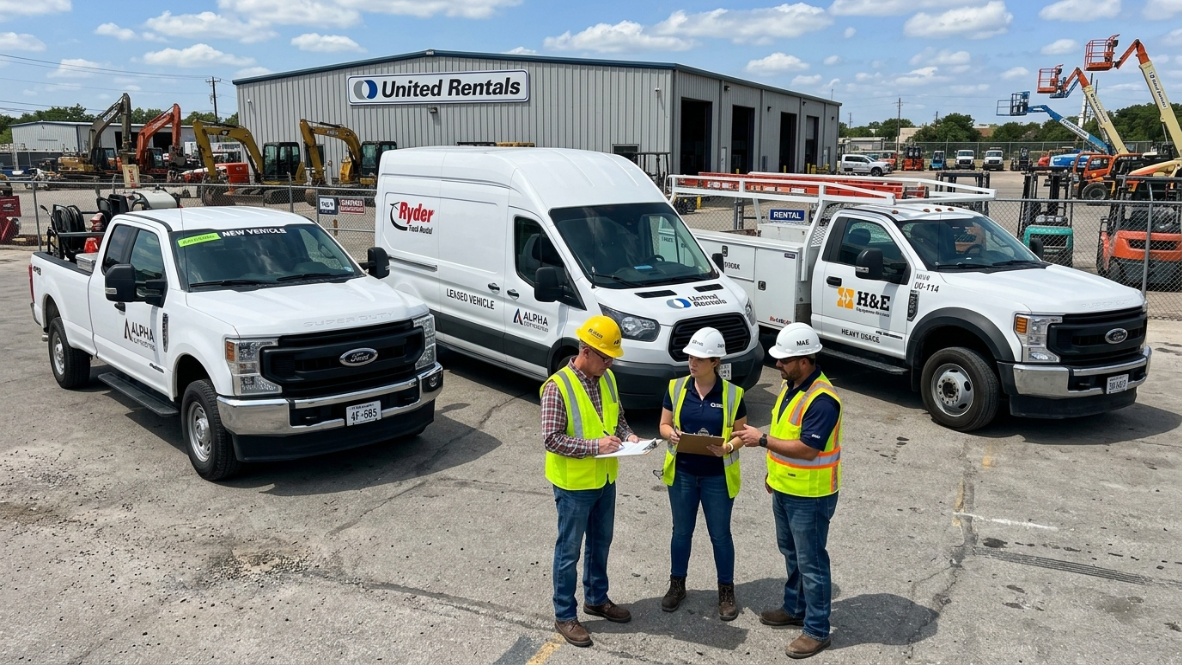
There are three primary paths to getting trucks on the road, and most successful contractors use a combination of all three.
Buying
Ownership gives you complete control. You can modify vehicles however you want, set your own maintenance schedules, and sell them whenever you choose. Buying also provides access to tax depreciation benefits, including accelerated depreciation under Section 179, that can offset significant long-term expenses.
The downside is capital intensity. Tying up $250,000 in depreciating assets limits your liquid capital. Fleet benchmark data from 2024 shows that companies reinvesting that same capital into core operations see a 14% higher return on investment compared to those who buy vehicles outright.
Leasing
Leasing preserves working capital with lower upfront costs and predictable monthly payments. It also keeps your fleet newer and more fuel-efficient, which matters when fuel represents a major TCO component. Operationally, leasing gives you the flexibility to scale fleet size up or down without the complexity of buying and selling trucks.
To control fuel costs on leased or owned vehicles, fleet fuel cards for contractors can produce meaningful savings.
Renting
Renting offers the most flexibility. It works well for testing new engine technology, handling seasonal or uncertain demand surges, and trialing new equipment types before committing to a purchase. For construction contractors who ramp up crews on large projects and scale down between them, rental fills capacity gaps without long-term financial commitment.
What Contractors Actually Do
The buy-versus-lease debate generates strong opinions. Practitioners on contractor forums reveal how sharply real-world approaches differ from what marketing materials suggest.
A contractor running 35 trucks put it bluntly: “Leasing is way more money. We either buy new and finance or buy used and pay cash.” On the other end of the spectrum, an operation with over 200 vehicles takes a different approach entirely: they buy F-250 pickups at such deep fleet discounts that the trucks sell used for close to the original purchase price, rolling the complete fleet every 24 months.
One contractor with about 50 trucks who recently switched to leasing through Enterprise reported that “so far it looks like it will pencil better than buying for us. Plus, Enterprise knows exactly when to turn them over and sell at the best value.” But a skeptical counterpoint from the same forum thread warned: “Every time I run a calculation for clients on what they are getting charged for Enterprise’s leasing, it’s always twice as much as they were told.”
The right answer depends on your fleet size, cash position, maintenance capability, and how long you plan to hold the vehicles. There is no universal best practice.
Procurement Steps for Contractors
Building or refining a contractor vehicle procurement strategy follows a consistent workflow. Here are the six steps that matter.
1. Assess Fleet Needs with Driver Input
Your drivers use the equipment every day, making them the most valuable source of information available. Give them a platform to provide open and honest feedback about what works, what breaks, and what is missing. Audit your current fleet at the same time: Which trucks are underutilized? Which ones are costing more in repairs than they are worth?
2. Define Vehicle Specifications
Determine vehicle type, payload requirements, cab configuration, and upfit needs for each role in your operation. This is where most spec failures originate. Across construction fleets, utilities, and municipalities, the majority of premature truck failures trace back to one issue: the truck was never engineered for the job. Heavy-duty trucks fail early when operational demands exceed the chassis rating.
3. Evaluate Sourcing Channels
Decide between dealer stock, factory orders, used vehicles, and group purchasing programs. Each has trade-offs in lead time, cost, and customization. For help building your overall sourcing approach, our contractor vendor procurement process guide covers the broader methodology.
4. Choose Your Financial Structure
Buy, lease, rent, or some hybrid. Factor in cash flow projections, tax implications (especially Section 179), and how quickly you need the vehicles on site.
5. Place Orders and Manage Upfitting
Negotiate final pricing, place orders, and coordinate upfitting with your chosen distributorship. Upfit coordination is often the bottleneck in contractor vehicle procurement. With 2,000 distributorships to choose from, quality and lead times vary enormously. Using a vendor selection checklist helps standardize this decision.
6. Track Lifecycle Costs for Replacement Timing
Once vehicles are in service, track maintenance costs, fuel consumption, and utilization rates. These data points tell you when to replace, which is almost always before the truck completely breaks down. Most fleet managers replace vehicles 8 or more months too late.
Total Cost of Ownership: What Contractors Actually Pay
Purchase price gets all the attention during contractor vehicle procurement. It deserves the least.
The true cost breakdown for a commercial construction vehicle includes acquisition, fuel, maintenance, insurance, depreciation, compliance, and disposal. Several hidden costs catch contractors off guard:
Downtime. Construction site equipment downtime costs between $2,000 and $10,000 per day, depending on the project and whether the vehicle is on the critical path.
Maintenance escalation. Costs do not climb linearly. They spike. That vehicle at 120,000 miles is not just a little more expensive to maintain than it was at 60,000. It costs 2.4 times more per month. Assets over a decade old cost up to 35% more per mile to operate.
Idle capacity. If 30% to 45% of your fleet sits unused on any given day, you are paying insurance, depreciation, and registration on trucks that produce zero revenue. GPS tracking and telematics can cut fuel costs by 10% to 15% while improving utilization visibility.
For a framework on measuring these costs, see our guide on procurement KPIs and metrics.
Want to reduce fleet costs right now? Our construction fleet cost reduction guide covers proven tactics beyond procurement.
Example Contractor Vehicle Cost Breakdown
Expense Category | Typical Share of TCO |
|---|---|
Purchase / Financing | 15–25% |
Fuel | 20–30% |
Maintenance | 15–20% |
Insurance | 8–15% |
Depreciation | 15–25% |
Registration & Compliance | 2–5% |
Downtime | Highly Variable |
Fleet Discounts and Group Purchasing for Contractors
Volume pricing is the fastest way to reduce per-vehicle acquisition costs, and you do not need a 200-truck fleet to qualify.
OEM fleet thresholds vary by manufacturer. GM sets the bar at five vehicles purchased or leased within 12 months. Toyota requires 10 or more in operation (including vehicles from other brands). Honda has no minimum. Preferred pricing is open to business owners who purchase or lease as few as five vehicles in many cases.
Trade association programs offer another path. Associated Builders and Contractors (ABC) provides Ford fleet discounts to its members. Ford Pro’s fleet incentive program offers invoice credits when businesses purchase new eligible vehicles, including electric models.
Cooperative purchasing alliances pool the buying power of their member networks to negotiate manufacturer discounts that individual contractors could never get alone. These programs have delivered average savings of $4,000 to $14,000 per vehicle off MSRP. Over three years, one cooperative network reported members saving more than $50 million on fleet vehicle and equipment purchases.
Factory ordering should be the default for any contractor procurement strategy that plans ahead. Ordering direct from the manufacturer lets you select exactly the configuration you need, avoid paying for features you will never use, and access rebates that are not typically available on dealer stock.
For a broader look at how contractor supplier discounts work across all categories, not just vehicles, that guide covers the full picture.
Buy vs Lease vs Rent Comparison
Very high-value comparison.
Option | Best For | Pros | Cons |
|---|---|---|---|
Buy | Long-term fleets | Ownership, depreciation benefits | Higher upfront cost |
Lease | Predictable replacement | Lower cash requirement | Mileage limits |
Rent | Temporary demand | Maximum flexibility | Highest daily cost |
Buy vs Lease vs Rent Comparison
Option | Best For | Pros | Cons |
|---|---|---|---|
Buy | Long-term fleets | Ownership, depreciation benefits | Higher upfront cost |
Lease | Predictable replacement | Lower cash requirement | Mileage limits |
Rent | Temporary demand | Maximum flexibility | Highest daily cost |
Common Mistakes in Contractor Vehicle Procurement
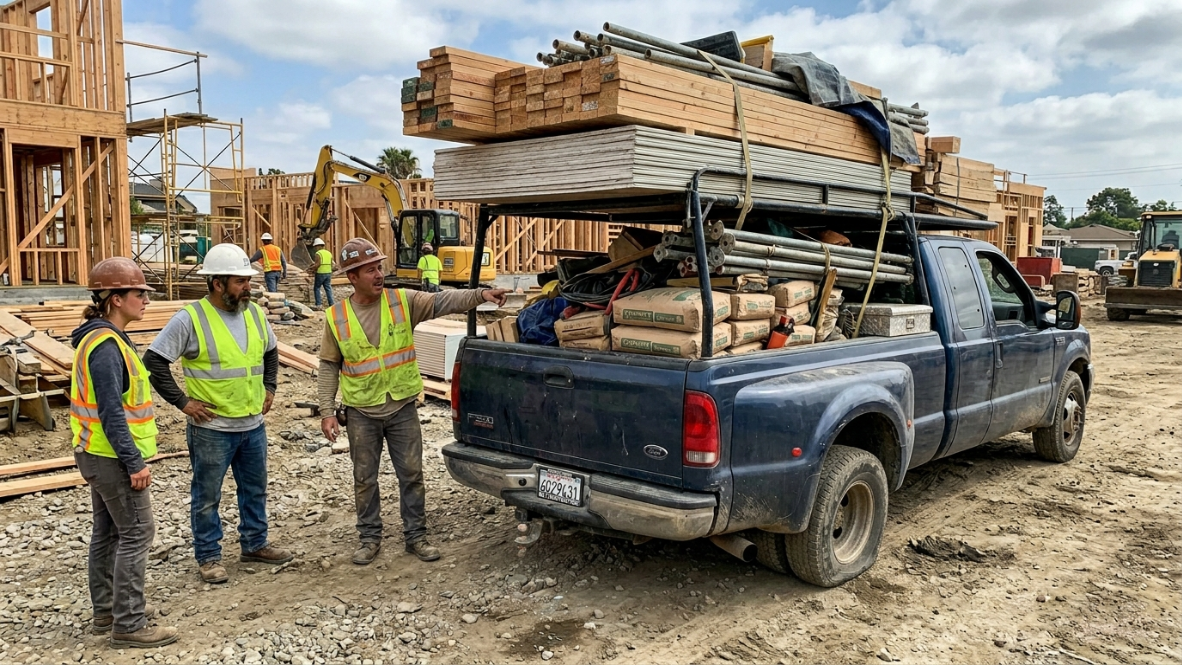
These errors show up repeatedly across construction fleets of every size.
Buying on sticker price alone. A truck that costs $5,000 less upfront but burns more fuel, breaks down more often, and has lower resale value will cost far more over five years. TCO analysis is not optional.
Speccing beyond or below actual job needs. Over-speccing wastes money on capability you never use. Under-speccing is worse. Chassis that are under-engineered for the workload they carry fail prematurely, creating downtime, safety risks, and replacement costs that dwarf whatever you saved on the purchase.
Replacing too late. Most fleet managers know they should have replaced a vehicle 8 or more months before they actually do it. Every month you delay past the optimal replacement point, maintenance costs climb and resale value drops. The combination is punishing.
Ignoring upfit compatibility. Not every chassis accepts every upfit cleanly. Mismatches between the base vehicle and the intended body or equipment create installation problems, warranty issues, and premature wear. Coordinate with your upfitter before you finalize the vehicle order, not after.
Not involving drivers. Drivers know which trucks are underpowered for hill grades on their routes, which cabs are too small for the tools they carry, and which configurations create safety blind spots. Excluding them from the specification process guarantees suboptimal choices.
For more on building a procurement process that avoids these pitfalls, our procurement best practices guide is worth reading.
Section 179 and Tax Considerations
The Section 179 deduction is one of the most powerful tax benefits available to contractors buying fleet vehicles. It allows businesses to deduct up to $1,250,000 of qualifying vehicle purchases in the same tax year, even if the vehicles are financed over time.
This applies to both purchased and, in many cases, leased vehicles. One contractor on a fleet forum noted that after switching from buying to leasing, “we still get the 179 deduct,” which was a deciding factor in the transition.
The deduction applies to vehicles placed in service during the tax year and used for business purposes more than 50% of the time. Heavier vehicles (those over 6,000 pounds GVWR, which includes most work trucks and vans) often qualify for higher deduction limits than passenger vehicles.
Working with a tax advisor who understands fleet depreciation schedules is essential. The difference between standard depreciation and Section 179 treatment can shift the effective cost of a truck by tens of thousands of dollars in year one.
Signs It’s Time to Replace a Fleet Vehicle
Repair costs increasing rapidly
Frequent downtime
Fuel economy declining
Warranty expired
High mileage
Poor utilization
New emissions requirements
Replacement costs now lower than continued maintenance
Frequently Asked Questions
What is the difference between fleet procurement and fleet management?
Fleet procurement covers the acquisition side: specifying, sourcing, financing, and purchasing vehicles. Fleet management picks up from there, handling day-to-day operations like maintenance scheduling, route optimization, compliance, and driver management. Procurement determines what you buy and how you buy it. Management determines how well you use it.
How many vehicles do you need for fleet pricing?
It varies by manufacturer. General Motors requires five or more new vehicles purchased or leased within 12 months. Toyota requires 10 or more in operation. Honda has no minimum threshold. Cooperative purchasing programs can sometimes help smaller contractors access fleet-level pricing they would not qualify for on their own.
Should contractors buy or lease trucks?
There is no single right answer. Buying works best for contractors with strong cash positions, in-house maintenance capability, and a preference for long-term ownership. Leasing suits those who want to preserve working capital, keep fleets newer, and avoid the complexity of resale. Many successful contractors use a hybrid approach, buying core vehicles and leasing or renting for overflow capacity.
What is upfitting and does it affect resale value?
Upfitting is the process of modifying a stock chassis with specialized equipment like service bodies, dump bodies, cranes, or utility racks. The impact on resale value depends on the modification. Standard commercial upfits (service bodies, ladder racks) are generally neutral or positive for resale to other contractors. Highly specialized configurations may narrow your buyer pool.
How much does contractor vehicle procurement actually cost per vehicle per year?
The median TCO for a construction fleet asset is about $9,437 per year. For larger commercial vehicles with driver costs included, the range stretches from $50,000 to $180,000 annually. The wide range reflects differences in vehicle class, utilization rate, fuel costs, and maintenance burden.
When should contractors replace fleet vehicles?
The optimal replacement point is where the rising cost of maintenance and the declining resale value intersect, not when the truck finally will not start. Vehicles past 120,000 miles cost roughly 2.4 times more per month to maintain than those at 60,000 miles. Assets over 10 years old cost up to 35% more per mile. Most contractors wait too long.
Is factory ordering worth the wait?
For planned fleet additions, yes. Factory ordering lets you configure vehicles to exact job specifications, avoid paying for unnecessary dealer-lot features, and access manufacturer rebates that are not available on stock vehicles. The lead time (often 8 to 16 weeks) requires planning ahead, but the cost savings and better vehicle fit are worth it for any contractor running a deliberate procurement strategy.
Ready to reduce what you pay for fleet vehicles and everything else your business buys? See how contractor purchasing cooperatives give contractors the volume pricing power that usually only large national firms enjoy.

Recent Comments