
TL;DR
Construction fleet costs are climbing fast, with diesel above $5.35 per gallon and equipment carrying costs reaching $500 to $800 per day for idle machines. Most contractors only focus on fuel, but the biggest savings come from right-sizing your fleet, fixing procurement gaps, and capturing vendor rebates you probably don’t know you qualify for. This guide covers 12 strategies across every cost bucket, with dollar benchmarks so you can size the opportunity for your own operation.
For a wider look at construction cost management, that guide covers the full picture beyond fleet expenses.
Direct Answer: What Is the Best Way to Reduce Construction Fleet Costs?
Construction fleet cost reduction starts by improving equipment utilization rather than simply reducing fuel consumption. Most fleets save the most money by combining utilization tracking, preventive maintenance, fuel management, telematics, and procurement savings.
For most contractors, the highest-return improvements are:
Priority | Strategy | Typical Impact |
|---|---|---|
1 | Right-size underutilized equipment | Frees capital and lowers ownership costs |
2 | Preventive maintenance | Reduces breakdowns and repair expenses |
3 | Idle reduction | Lowers fuel consumption immediately |
4 | Fuel purchasing controls | Prevents theft and captures rebates |
5 | Fleet telematics | Improves visibility across every cost category |
Instead of optimizing a single expense category, contractors should evaluate every ownership, operating, maintenance, insurance, and procurement cost together. Companies that improve all major cost drivers often reduce annual fleet expenses by 15% to 30%.
Why Construction Fleet Costs Keep Rising
Diesel fuel now averages more than $5.35 per gallon, up from $3.66 in 2025. Parts inflation hasn’t slowed. Insurance premiums keep ticking up. For most construction companies, fleet-related expenses represent one of the largest controllable cost centers, yet the typical response is to focus on fuel alone and hope the other nine cost buckets take care of themselves.
They don’t.
Construction fleets typically run at just 62% to 68% utilization, meaning a third of your equipment capacity generates zero revenue on any given day. Variable operating costs land just under $300 per vehicle per month for higher-mileage drivers. Assets over 10 years old cost up to 35% more per mile to operate than properly-aged replacements. And skipping inspections can trigger downtime costing $760 or more per vehicle per day.
The good news: construction fleet cost reduction doesn’t require replacing everything or buying expensive software. It requires addressing all the cost buckets systematically, starting with the ones your competitors ignore.
At-a-Glance: 12 Construction Fleet Cost Reduction Strategies
# | Strategy | Primary Cost Bucket | Typical Savings | Time to ROI | Complexity |
|---|---|---|---|---|---|
1 | Right-Size Your Fleet | Ownership/Utilization | $200K–$800K in freed capital | 3–6 months | Medium |
2 | Preventive Maintenance | Repair/Downtime | 8–12% total fleet cost reduction | 1–3 months | Low |
3 | Attack Idling Waste | Fuel | $50K–$100K/yr (40-truck fleet) | 1–2 months | Low |
4 | Optimize Fuel Procurement | Fuel/Procurement | 5–15% fuel spend recovery | 1–3 months | Low |
5 | Deploy Telematics | All categories | 15–25% operational cost reduction | 3–6 months | Medium |
6 | Train Operators | Fuel/Safety | 15–30% fuel efficiency gain | 1–2 months | Low |
7 | Group Purchasing for Supplies | Parts/Tires/Consumables | 10–25% on fleet supplies | Immediate | Low |
8 | Negotiate Insurance with Data | Insurance | 15–25% premium reduction | Next renewal | Medium |
9 | Capture Vendor Rebates | All procurement | 3–15% per category | 1–3 months | Low |
10 | Lifecycle Planning | Depreciation/Maintenance | 35% cost-per-mile reduction | 6–12 months | Medium |
11 | Multi-Trade Coordination | Mobilization/Fleet Size | Varies by project | Ongoing | High |
12 | Fleet Management Software | All categories | 400–700% ROI in 24 months | 3–6 months | Medium |
Where Construction Fleet Costs Actually Come From
One of the biggest mistakes contractors make is assuming fuel is the largest fleet expense. In reality, ownership, depreciation, maintenance, insurance, labor, and downtime frequently exceed fuel costs over the life of an asset.
Cost Category | Typical Share of Fleet Costs | Reduction Opportunities |
|---|---|---|
Fuel | 20–35% | Idle reduction, purchasing controls |
Maintenance & Repairs | 20–30% | Preventive maintenance |
Depreciation | 15–25% | Lifecycle planning |
Insurance | 5–12% | Driver safety data |
Tires & Parts | 8–15% | Group purchasing |
Downtime | Highly variable | Preventive maintenance, utilization |
Administration | 3–8% | Fleet software |
1. Right-Size Your Fleet With an Own vs. Rent Audit
Best for: Contractors carrying $200K+ in underutilized equipment assets.
This is the single biggest construction fleet cost reduction lever, and it’s the one most contractors skip. Everyone talks about fuel. Few talk about the excavator sitting in the yard costing $500 to $800 per day in insurance, storage, depreciation, and financing while generating nothing.
McKinsey research (via MapTrack) found that up to 40% of construction equipment fleets sit idle at any given time. Industry benchmarks place optimal utilization between 70% and 85%, meaning most construction fleets operating below 60% are carrying $200,000 to $800,000 in underutilized assets.
The own-vs.-rent decision has a clear threshold: most fleet managers use 60% to 70% utilization as the break-even benchmark. Own equipment that consistently exceeds 70% utilization. Rent everything else.
This isn’t just theory. In one documented case study, a fleet averaging 40% idle time was spending $1.2 million annually on rental equipment to cover perceived shortages. After deploying fleet tracking, they increased utilization by 35%, saved $500,000 annually, and retired 10 redundant units worth $1.8 million in recovered capital.
Practitioners on forums consistently recognize the problem but struggle to break the habit. One asset manager admitted his company “was keeping assets too long… the mentality was we own the equipment, we don’t owe anything on it and, although it’s not getting much utilization, we’ll keep it as a spare.” That sentimental attachment to paid-off equipment quietly bleeds money.
Action steps:
Run a 90-day utilization audit on every asset
Flag anything below 60% utilization for rental replacement analysis
Adopt a hybrid rent-and-own model: 72% of contractors in 2024 rented machinery in the previous year, up from 69% the year prior
Construction Fleet Cost Reduction KPI Dashboard
Every fleet should monitor a small group of KPIs monthly. Tracking these metrics makes it easier to identify hidden costs before they become expensive problems.
KPI | Target |
|---|---|
Equipment utilization | 70–85% |
Fleet availability | Above 95% |
Preventive maintenance compliance | Above 90% |
Cost per mile | Trending downward |
Cost per engine hour | Stable or declining |
Fuel cost per hour | Monitored monthly |
Idle percentage | Under 15% |
Maintenance cost per asset | Below fleet average |
Accident rate | Continuous improvement |
2. Implement Preventive Maintenance Programs

Best for: Fleets still running primarily reactive, break-fix maintenance schedules.
Reactive repairs cost 3 to 9 times more than preventive maintenance. That multiplier alone should end the debate, but the downstream costs are even worse. When a critical piece of equipment goes down on a construction site, project delays cost between $2,000 and $10,000 per day in idle labor, missed milestones, and subcontractor penalties.
The math on shifting maintenance strategy is straightforward: every 10% shift from reactive to preventive maintenance reduces total fleet costs by 8% to 12%. MaintainX customers report a 32% average reduction in unplanned downtime and a 37% increase in mean time between failures after implementing preventive maintenance programs.
For a 25-truck construction fleet spending roughly $500,000 annually on maintenance, that 10% shift translates to $40,000 to $60,000 in direct savings, not counting the avoided downtime penalties.
One real-world example: a 35-vehicle construction fleet cut maintenance spend from $620,000 to $410,000 in year one using AI-driven predictive maintenance. That’s a $210,000 annual reduction.
Fleet maintenance is one component of broader operational cost savings, and fixing it creates a foundation for every other strategy in this list.
Action steps:
Move from calendar-based to engine-hour-based PM scheduling for construction equipment
Digitize inspection checklists so nothing gets missed ($760/day downtime risk per skipped inspection)
Track maintenance cost per asset to identify money pits early
3. Attack Idling Waste
Best for: Any fleet without active idle-monitoring policies (which is most of them).
Idling is the single largest controllable fuel expense on construction sites, and it’s worse than most people think.
Geotab data from three million fleet vehicles shows the median heavy-duty truck idles 1.8 hours per day. That adds up to 1,200 to 1,500 liters of diesel burned annually from idling alone, per vehicle. A typical commercial truck burns 0.6 to 1 gallon of fuel per hour at idle. Scale that across a 40-truck fleet idling two hours per day, and you’re wasting roughly 29,000 gallons per year, approximately $100,000 at current fuel prices.
The tricky part in construction is distinguishing productive PTO idling (running a concrete pump, operating a crane) from pure waste idling (truck sitting with engine running while the operator takes a break). Without monitoring, managers can’t tell the difference, so they either ignore the problem entirely or crack down too aggressively and create operator resentment.
Action steps:
Install idle-monitoring telematics and set baseline measurements for 30 days before implementing policies
Create clear idle-time thresholds (e.g., 5 minutes maximum for non-PTO idling)
Share idle reports with operators weekly, not monthly, so feedback loops stay tight
4. Optimize Fuel Procurement and Management
Best for: Contractors buying fuel without spend controls, fleet cards, or volume pricing.
Beyond how much fuel you burn, how you buy fuel matters enormously. Industry data consistently shows that 5% to 15% of fleet fuel expenditure is wasted through unauthorized personal use, theft, and fuel card fraud. A Texas construction company discovered $35,000 in annual fuel theft within 90 days of implementing fuel management software. That’s not a rounding error.
Diesel fuel costs constitute more than 35% of diesel-powered construction equipment’s operational costs. At those percentages, even small procurement improvements compound fast. Fleet fuel cards with spend controls, per-gallon rebates, and purchase restrictions (fuel-only, specific station networks) are the baseline.
But individual contractors rarely have enough volume to negotiate meaningful fuel card rebates or bulk pricing on their own. This is where contractor buying groups change the equation. Through collective purchasing volume, buying alliances negotiate fuel card rebates and bulk pricing that single companies simply can’t access.
Action steps:
Implement fleet fuel cards with driver-specific PINs and gallon-per-transaction limits
Audit 90 days of fuel transactions for anomalies (weekend fills, overfills exceeding tank capacity, off-route purchases)
Explore buying group fuel programs for volume-based rebates
Explore fleet fuel card options and how buying groups negotiate better rates for members.
5. Deploy Telematics and Fleet Tracking
Best for: Fleets still managing equipment allocation through phone calls and gut feeling.
You can’t cut what you can’t measure, and telematics is the foundation technology that makes every other construction fleet cost reduction strategy work. GPS tracking, engine diagnostics, driver behavior monitoring, and utilization reporting all flow from the same basic platform.
The numbers are convincing. Fleet operators implementing GPS tracking typically report 10% to 15% fuel savings through reduced idling, optimized routes, and elimination of unauthorized vehicle use. Construction companies more broadly see a 15% to 25% reduction in operational costs within the first year of implementing fleet management software.
The cost? Mid-range fleet management systems in the U.S. typically run $25 to $45 per vehicle per month. For a 30-vehicle fleet, that’s $750 to $1,350 per month. Against potential savings of $50,000 to $150,000 annually, the ROI calculation isn’t close.
One practitioner insight that shows up repeatedly in online discussions: “Without real-time tracking, equipment allocation was based on phone calls, memory, and gut feeling. The fleet wasn’t short on equipment, it was short on visibility.” That pattern describes a huge number of construction companies.
Action steps:
Start with GPS location and engine diagnostics as the minimum viable deployment
Expand to driver behavior monitoring and utilization dashboards in phase two
Require 90 days of data collection before making fleet-sizing decisions
Fleet Cost Reduction Formula
Many contractors know costs are increasing but struggle to calculate where money is being lost.
A simple fleet cost calculation is:
Annual Fleet Cost = Ownership Costs + Fuel + Maintenance + Insurance + Labor + Downtime + Administrative Costs − Rebates − Procurement Savings
Each strategy in this guide reduces one or more parts of that equation. Measuring every category separately makes it easier to prioritize improvements with the fastest return on investment.
6. Train Operators on Fuel-Efficient Driving Behavior
Best for: Fleets where driver behavior varies widely and no scorecard system exists.
Driver behavior is the largest controllable variable in fuel spend, bigger than vehicle selection and sometimes bigger than route optimization. Aggressive driving (hard acceleration, excessive speed, harsh braking) reduces fuel efficiency by 15% to 30% on highways and 10% to 40% in stop-and-go traffic.
For a 25-truck fleet spending $200,000 annually on fuel, coaching the bottom quartile of drivers to match the fleet average can save $30,000 to $60,000 per year. That’s faster and cheaper than replacing vehicles.
Motive’s surveyed customers report saving 20% annually on fuel expenses through a combination of tracking and behavior coaching. The key is making driver feedback specific, timely, and tied to incentives rather than punishment. Weekly scorecards work better than monthly reprimands.
The behavioral friction here is real. Operators often resist being tracked, viewing telematics as surveillance rather than a tool. The most successful fleet managers frame it around safety and equipment longevity, not just cost cutting.
Action steps:
Set up driver scorecards ranking idle time, hard braking events, and fuel economy
Coach bottom-quartile performers monthly with specific, data-backed feedback
Consider small incentive programs (gift cards, recognition) for top-performing drivers
7. Use Group Purchasing for Parts, Tires, and Supplies
Best for: Contractors buying fleet consumables at list price without volume agreements.
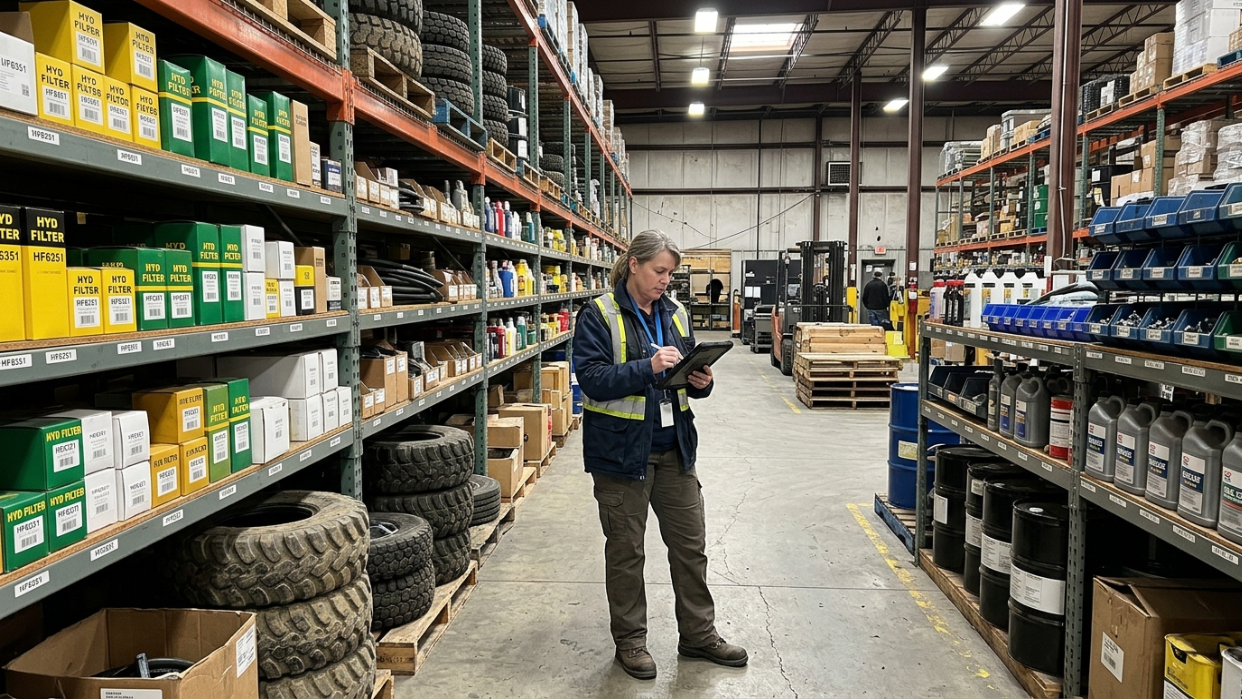
This is the cost lever most contractors completely ignore. Individual construction companies overpay for fleet consumables (tires, lubricants, filters, brake components, safety gear) because they lack the purchasing volume to command real discounts. The parts counter at your local dealer doesn’t give volume pricing to a company buying 20 oil filters.
Organizations that use group purchasing organizations (GPOs) save 10% to 25% annually across various spending categories by tapping into collective buying power. Volume-based discounts on parts and supplies range from 3% to 15% depending on spend level and category.
For a construction fleet spending $150,000 annually on parts, tires, and consumables, that’s $15,000 to $37,500 back in your pocket without changing a single operational practice. You’re buying the same parts from the same types of suppliers, just at better prices.
For an in-depth look at contractor supplier discounts, including how to qualify and what categories offer the deepest savings, that resource breaks down the mechanics.
No competing article on construction fleet cost reduction covers procurement strategy in any depth. They treat it as if the purchase price of parts and supplies is fixed. It’s not.
Action steps:
Audit your annual fleet supply spend by category (tires, lubricants, filters, brake parts, safety equipment)
Compare your current pricing against GPO-negotiated rates
Prioritize the highest-spend categories first for maximum dollar impact
Ready to see what buying group savings look like for your fleet supply categories? Start with the comparison.
8. Negotiate Fleet Insurance Using Telematics Data
Best for: Contractors approaching their next insurance renewal with 90+ days of fleet safety data.
Insurance is one of the fastest-growing fleet cost buckets, and most contractors accept their premium as non-negotiable. It’s very negotiable, especially if you have data.
Moving to a “preferred risk” category can trigger 15% to 25% premium reductions immediately. Telematics and driver safety data can help cut fleet insurance premiums by up to 22%. And preventing even one serious crash saves more than $70,000 in direct costs, not counting the premium increase that follows.
The NHTSA reports that 43% of vehicle accidents are related to tire failure, which means documented tire inspection programs and maintenance records directly support your case to underwriters.
Here’s how to approach it: collect 90 or more days of telematics data showing driver behavior scores, idle reduction trends, and incident rates. Present this to your insurance broker before renewal, not during it. Give them time to shop your risk profile across multiple carriers. The combination of documented safety programs and hard data separates you from contractors who just fill out the standard application.
Fleet insurance is one component of broader contractor overhead reduction, and it’s one of the few areas where data directly translates to lower premiums.
Action steps:
Start collecting telematics safety data at least 90 days before your next renewal
Document all driver training programs, inspection protocols, and maintenance procedures
Ask your broker specifically about telematics-based discount programs
9. Capture Vendor Rebates You’re Probably Missing
Best for: Any contractor who doesn’t have a dedicated person tracking rebates across fleet supply purchases.
Most contractors don’t track or claim all available rebates on fleet-related purchases. Tire manufacturers, lubricant suppliers, parts distributors, and fuel card companies all offer rebate programs, but the qualification thresholds, filing deadlines, and documentation requirements are deliberately complex. Suppliers count on most buyers not filing.
GPO members accessing rebate programs see measurable margin improvement because the buying group handles rebate tracking and filing as part of their service. Fuel, parts, and equipment rebates compound across categories. A contractor spending $300,000 annually across fleet supply categories might be leaving $15,000 to $45,000 in unclaimed rebates on the table.
Our detailed guide on construction vendor rebates walks through how to identify, qualify for, and capture rebates across every major fleet supply category.
Action steps:
Assign rebate tracking to a single person (not “everyone,” which means no one)
Review all current supplier programs quarterly for new rebate tiers
Consolidate spending where possible to hit volume thresholds that unlock higher rebate percentages
10. Extend Asset Life Through Lifecycle Planning
Best for: Fleets replacing equipment based on age alone, or holding equipment until it dies.
The cheapest mile is the one driven on a well-maintained, properly-aged vehicle. Not the oldest one in the fleet, and not necessarily the newest.
Assets over 10 years old cost up to 35% more per mile to operate. But dumping equipment too early wastes capital too. The sweet spot requires tracking total cost of ownership per asset and setting replacement triggers based on cost-per-mile trends rather than arbitrary age or mileage cutoffs.
The full cost of operating a construction fleet hit approximately $2.26 per mile in 2024 for typical fleets. When individual assets consistently exceed that benchmark by 20% or more, it’s time to rotate them out, regardless of how much emotional attachment the crew has to that particular backhoe.
Action steps:
Track cost per mile (or cost per engine hour) for every asset, including fuel, maintenance, insurance, and depreciation
Set a replacement trigger at 120% of fleet average cost per mile
When replacing, factor in the full ownership cost of new equipment versus extending maintenance on existing units
Common Construction Fleet Cost Reduction Mistakes
Even experienced contractors often reduce savings by making avoidable mistakes.
Replacing equipment based only on age
Equipment should be replaced based on total ownership cost rather than years in service.
Measuring fuel without tracking utilization
A fuel-efficient fleet can still be unprofitable if expensive equipment sits idle.
Ignoring procurement
Contractors frequently negotiate equipment purchases but overlook recurring expenses like filters, lubricants, tires, and fuel cards.
Delaying preventive maintenance
Small maintenance issues become expensive emergency repairs when inspections are skipped.
Buying software before fixing processes
Fleet software improves visibility but cannot solve inconsistent maintenance, poor utilization, or weak procurement practices.
11. Reduce Fleet Size Through Multi-Trade Coordination
Best for: General contractors and owners managing multiple subcontractors per project.
This strategy is less about managing your existing fleet and more about needing fewer vehicles and pieces of equipment in the first place. Every subcontractor who shows up to a project brings their own fleet: trucks, trailers, equipment, fuel needs, and parking requirements. Fewer subs means fewer vehicles on site, lower mobilization costs, and less idle equipment.
Where possible, consolidating trades under fewer contractors who self-perform multiple scopes directly reduces fleet-related costs at the project level. This is especially true for site work, concrete, and paving, where a single multi-trade contractor can eliminate the coordination overhead (and fleet duplication) of managing three or four separate subs.
For a broader perspective on how operational efficiency strategies reduce project costs, fleet consolidation through trade coordination is one of the most practical applications.
Action steps:
During preconstruction, evaluate scope packages for consolidation opportunities
Prioritize contractors who self-perform multiple trades
Quantify the fleet reduction (fewer mobilizations, fewer fuel deliveries, less site congestion) when comparing bids
12. Use Fleet Management Software as the Central Nervous System
Best for: Contractors implementing multiple strategies from this list who need a unified platform.
Fleet management software connects all 11 strategies above. Without it, you’re running maintenance schedules on spreadsheets, tracking fuel with receipts, and estimating utilization from memory. Each of those is a cost leak.
Construction fleet management software costs $25 to $45 per vehicle per month. Against the savings documented throughout this article, the return typically hits 400% to 700% within 24 months. Fleet management systems deliver 10% to 15% fuel savings through route optimization and behavior monitoring alone, before accounting for maintenance, utilization, and insurance improvements.
The key is choosing a platform that integrates maintenance scheduling, fuel tracking, utilization reporting, and inspection management in one system. Separate tools for each function create data silos that defeat the purpose.
For contractors exploring fleet management approaches, that guide covers selection criteria, implementation timelines, and what to prioritize first.
Action steps:
Start with a platform that covers GPS tracking, maintenance scheduling, and fuel monitoring as core features
Add driver behavior monitoring and inspection workflows in phase two
Set quarterly reviews to measure actual ROI against projected savings
Putting It All Together: Where to Start
Not every contractor can implement all 12 strategies simultaneously. Here’s a practical priority order based on speed of payback and implementation difficulty:
Month 1 to 3 (Quick wins):
Join a buying group for fleet supply discounts (Strategy 7)
Audit fuel transactions for waste, theft, and unauthorized use (Strategy 4)
Implement idle-reduction policies (Strategy 3)
Month 3 to 6 (Foundation building):
Deploy telematics across the fleet (Strategy 5)
Shift maintenance scheduling from reactive to preventive (Strategy 2)
Run a 90-day utilization audit (Strategy 1)
Month 6 to 12 (Optimization):
Present telematics data to insurance underwriters at renewal (Strategy 8)
Track and capture vendor rebates systematically (Strategy 9)
Implement lifecycle cost tracking for replacement planning (Strategy 10)
A 25-truck construction fleet that addresses all 12 cost buckets can realistically target $150,000 to $400,000 in annual savings. The procurement strategies alone (fuel management, group purchasing, and rebate capture) can account for $30,000 to $75,000 of that total, and they’re the easiest to implement because they don’t require behavioral change from operators or major technology investments.
Explore national pricing programs to see how collective purchasing volume translates into immediate fleet supply savings.
Construction Fleet Cost Reduction Checklist
Use this checklist to evaluate whether your fleet is controlling every major cost category.
Audit utilization every quarter
Review own-versus-rent decisions annually
Schedule preventive maintenance by engine hours
Monitor idle time weekly
Use fleet fuel cards with purchase controls
Review telematics reports monthly
Compare supplier pricing annually
Track available rebates
Benchmark insurance before renewal
Measure cost per mile and cost per engine hour
Replace assets using lifecycle costs rather than age
Review fleet KPIs every month
Frequently Asked Questions
What is the biggest driver of construction fleet costs?
Equipment ownership and utilization, not fuel. While fuel gets the most attention, the carrying cost of underutilized equipment ($500 to $800 per day for a $150,000 excavator sitting idle) typically outweighs fuel waste. Construction fleets run at just 62% to 68% utilization on average, meaning a third of fleet capacity generates zero revenue.
How much can telematics save a construction fleet?
Construction companies typically see a 15% to 25% reduction in operational costs within the first year of implementing fleet management software. For a 30-vehicle fleet, that translates to roughly $50,000 to $150,000 in annual savings against a technology cost of $750 to $1,350 per month.
What utilization rate justifies owning vs. renting construction equipment?
Most fleet managers use 60% to 70% utilization as the break-even point. Equipment consistently above 70% utilization should be owned. Anything below 60% is almost always cheaper to rent. The hybrid rent-and-own model is now standard practice: 72% of contractors rented machinery in 2024.
How much do group purchasing organizations save on fleet supplies?
Organizations using GPOs typically save 10% to 25% annually on fleet-related spending categories including tires, lubricants, parts, and fuel cards. Volume-based discounts range from 3% to 15% depending on spend level and category. For a fleet spending $150,000 annually on supplies, that’s $15,000 to $37,500 in savings.
How much fuel does construction equipment waste through idling?
The median heavy-duty truck idles 1.8 hours per day, burning 1,200 to 1,500 liters of diesel annually from idling alone. A 40-truck fleet idling two hours daily wastes approximately 29,000 gallons per year, roughly $100,000 at current fuel prices. Between 5% and 15% of total fleet fuel spend is typically wasted through idling, unauthorized use, and theft.
Is preventive maintenance really worth the investment for small fleets?
Yes. Reactive repairs cost 3 to 9 times more than preventive maintenance, and every 10% shift from reactive to preventive reduces total fleet costs by 8% to 12%. Even a small fleet of 10 to 15 vehicles can save $20,000 to $40,000 annually. The risk of skipping inspections is real too: asset downtime costs $760 or more per vehicle per day.
How can I reduce fleet insurance costs?
Collect 90 or more days of telematics safety data and present it to your insurance broker before renewal. Telematics data can reduce fleet insurance premiums by up to 22%, and achieving “preferred risk” classification triggers 15% to 25% premium reductions. Preventing even one serious crash saves more than $70,000 in direct costs.
What’s the fastest construction fleet cost reduction strategy to implement?
Joining a buying group for fleet supplies is the fastest because it requires no technology deployment, no behavioral change, and no capital investment. Savings on tires, parts, lubricants, and fuel cards begin with your next purchase order. After that, implementing idle-reduction policies and auditing fuel transactions for waste are the next-fastest wins.
Recent Comments