
TL;DR
Construction vendor onboarding is the formal process of verifying, documenting, and integrating vendors (subcontractors, suppliers, equipment providers) before they begin work on a project. It covers everything from insurance verification and license checks to safety orientation and ERP activation. Done well, it protects schedules, reduces compliance risk, and builds a foundation for long-term procurement efficiency. Done poorly, it delays projects, exposes general contractors to OSHA citations, and drives good subcontractors to competitors.
Considering how vendor onboarding fits your broader procurement strategy? Start with our construction procurement lifecycle guide for a full picture of where onboarding sits in the process.
What is Construction Vendor Onboarding?
Construction vendor onboarding is the process of verifying, insuring, and integrating subcontractors and suppliers into a construction project before they begin work. It ensures vendors meet legal, safety, and insurance requirements and are fully activated in procurement systems.
In most construction firms, onboarding is required before a vendor can receive a purchase order, access a jobsite, or begin work.
What Is Construction Vendor Onboarding?
Construction vendor onboarding is the documented sequence of checks, verifications, and system integrations that qualify a vendor to perform work on your project or within your organization. It transforms a selected vendor from “awarded the contract” to “cleared to mobilize.”
In construction, the term “vendor” covers a wide range of participants. Subcontractors, material suppliers, equipment rental companies, logistics partners, inspection agencies, and specialty consultants all fall under this umbrella. Each brings distinct risks if not properly vetted before they touch the jobsite.
The process is sometimes called supplier onboarding or contractor onboarding. Regardless of the label, it serves the same purpose: confirming that every entity working on your project meets your administrative, legal, safety, and operational requirements.
Administrative vs. Operational Onboarding
A complete onboarding system covers two dimensions:
Administrative onboarding focuses on paperwork and compliance: W-9 collection, insurance certificates, business licenses, tax identification, and contract execution.
Operational onboarding addresses jobsite readiness: safety orientations, logistics scheduling, tool and equipment inspections, communication protocols, and crew certifications.
Most onboarding failures happen because organizations treat these as separate tracks that never converge. A vendor can be fully papered up in the accounting system but never receive a safety induction, or vice versa. Both dimensions need to be completed before a purchase order is released or a crew steps on-site.
Construction Vendor Onboarding Process Flow
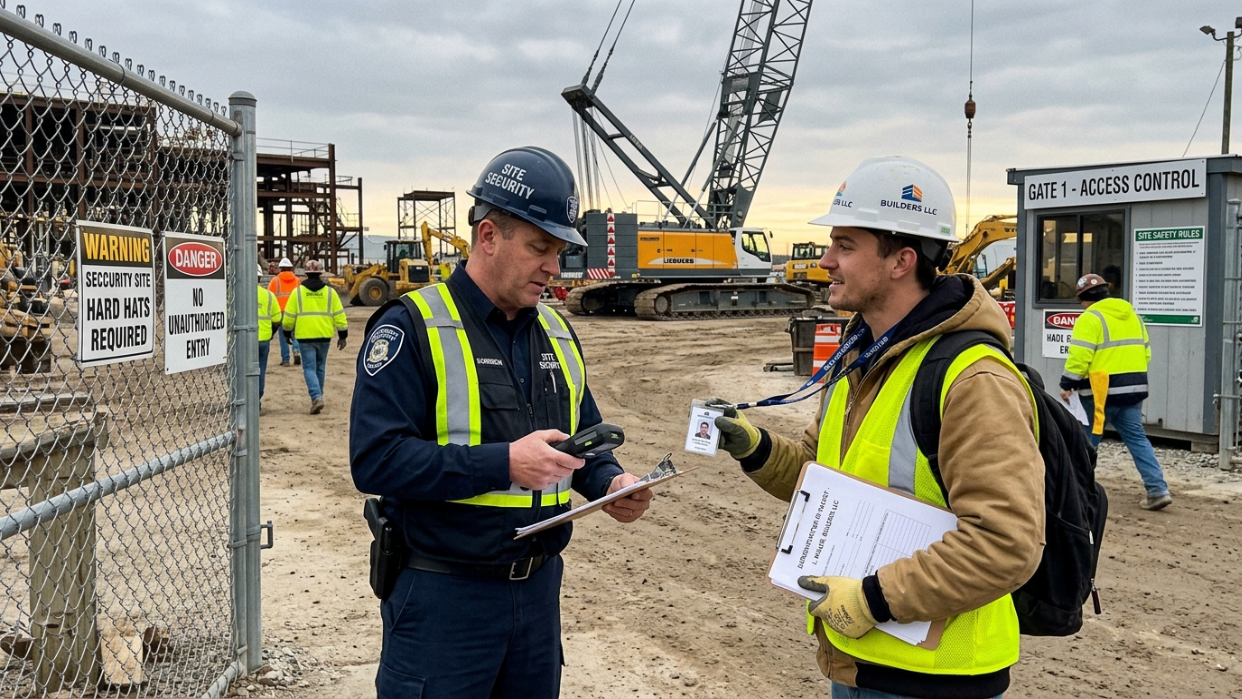
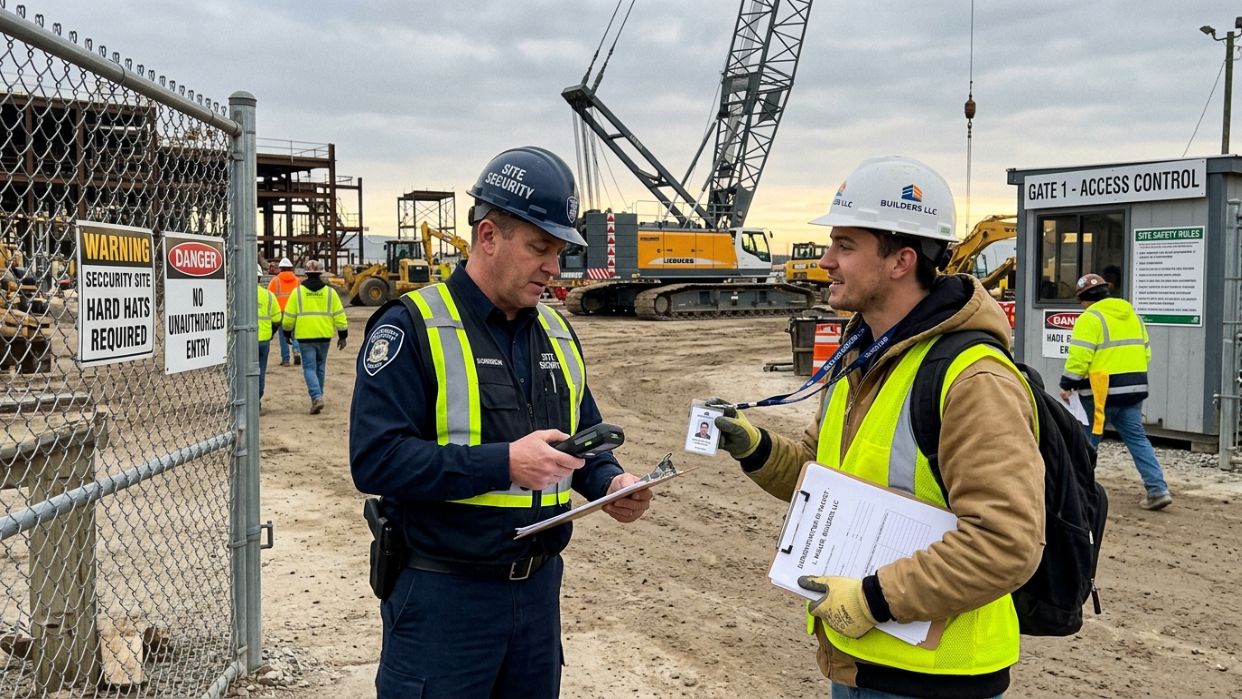
Most construction onboarding systems follow a structured flow that moves vendors from selection to jobsite readiness.
Step-by-Step Workflow
Vendor selection / award
Data collection & registration
Insurance & compliance verification
Contract execution
Safety induction
ERP / system activation
Jobsite clearance approval
This sequence ensures that no vendor reaches the jobsite without completing both compliance and operational readiness requirements.
Construction Vendor Onboarding vs. Prequalification
This distinction trips up a lot of people. Prequalification and onboarding are related but different stages in the vendor lifecycle.
Prequalification is the screening step. It evaluates whether a vendor has the qualifications, capabilities, financial stability, and safety record to be invited to bid on your work. It happens before contract award.
Onboarding is the activation step. It integrates the selected vendor into your systems, confirms compliance with project-specific requirements, and prepares them for actual work. It happens after contract award (or during the award process).
Prequalification | Onboarding | |
|---|---|---|
When | Before bidding | After selection/award |
Purpose | Filter out unqualified vendors | Activate qualified vendors for work |
Key question | Can this vendor do the job? | Is this vendor ready to start? |
Outcome | Approved bidder list | Cleared for site access and PO release |
There’s also a third concept worth distinguishing: vendor credentialing. While prequalification asks “Can they do the job on time and at the right price?”, credentialing asks “Are they properly insured, licensed, and legally cleared to be on our property?” Credentialing is essentially a subset of onboarding focused specifically on risk documentation.
Strong prequalification reduces friction during onboarding. When you’ve already verified a subcontractor’s EMR, financial statements, and trade certifications during the vendor sourcing phase, onboarding can focus on project-specific requirements rather than re-verifying basic competency.
Core Steps in the Construction Vendor Onboarding Process
Based on synthesis across industry standards and practitioner experience, construction vendor onboarding follows six core steps. The order matters, because each step builds on the previous one.
Step 1: Information Collection and Registration

Gather all foundational data from the vendor: business entity type, EIN or tax identification number, primary contact information, trade classifications, and references. This creates the vendor record that everything else attaches to.
For a deeper look at how this fits into vendor procurement best practices, that guide covers the full sourcing-to-selection pipeline.
Step 2: Insurance and Documentation Verification
This is where construction vendor onboarding diverges sharply from generic vendor setup. A Certificate of Insurance is not just a checkbox. Practitioners report that not all COIs are created equal, and verifying the details matters enormously.
At minimum, you need:
W-9 (current year, matching the legal entity on the contract)
Certificate of Insurance with general liability, auto liability, workers’ compensation, and umbrella/excess coverage
Additional insured endorsement naming your company and/or the project owner
Primary and non-contributory language where required by contract
Trade-specific licenses (electrical, plumbing, structural steel, etc.)
A common real-world example: on a mid-rise residential project, a veneer subcontractor’s COI showed $1M in limits but lacked the additional insured endorsement. The vendor was allowed on-site pending an updated COI, but the delay cost two days of schedule.
Step 3: Compliance Verification
Beyond insurance, compliance verification checks legal and regulatory eligibility. This includes state contractor license verification, SAM.gov checks for federal projects, debarment list reviews for public contracts, and confirmation that the vendor isn’t on any exclusion lists.
For projects with specific bonding requirements, this step also confirms that the vendor’s surety capacity matches the scope of work. Understanding common procurement risks in construction helps frame why this step is non-negotiable.
Step 4: Contract Execution
Once a subcontractor is selected, the next step is executing a subcontractor agreement that defines scope, schedule, payment terms, insurance requirements, change order procedures, and dispute resolution mechanisms. These contracts protect both the general contractor and the subcontractor against various types of construction risk.
The contract should reference the onboarding requirements explicitly so that compliance obligations are contractual, not just procedural. For guidance on structuring these agreements, see our article on drafting contractor-vendor agreements.
Step 5: Safety Induction
A contractor safety orientation introduces subcontractors to site-specific hazards, emergency procedures, PPE requirements, and the prime contractor’s safety rules before they begin work. This is not optional.
OSHA’s 29 CFR 1926.21(b)(2) requires instruction for “each employee” in the recognition and avoidance of unsafe conditions. OSHA interprets this to include contract workers on multi-employer sites. The controlling employer can be cited for hazards affecting subcontractor employees if they failed to take reasonable steps to prevent exposure. A contractor orientation is one of those reasonable steps.
As of January 2025, OSHA penalties stand at $16,550 per serious violation and $165,514 per willful or repeated violation. These numbers make the safety induction step one of the highest-ROI activities in the entire onboarding process.
Step 6: System Integration and PO Activation
The final step creates the vendor in your ERP or accounting system with correct tax classifications, assigns payment terms, and configures purchase order approval paths. This is the administrative “go live” moment.
A critical rule: do not release a purchase order until the vendor shows as fully onboarded in the system with a compliance package that meets project requirements. Splitting the difference (letting work proceed while paperwork catches up) is how GCs end up with uninsured vendors on active jobsites.
Construction Vendor Onboarding Timeline (Typical Duration)
Phase | Activity | Average Duration |
|---|---|---|
Vendor Registration | Basic onboarding forms + W-9 | 1–3 days |
Documentation Collection | COI, licenses, certifications | 5–10 days |
Compliance Review | Insurance + legal verification | 3–7 days |
Contract Execution | Subcontract agreement signing | 2–5 days |
Safety Induction | Site orientation & training | 1–2 days |
ERP Activation | Vendor setup in procurement system | 1–3 days |
Total Average Timeline: 4–6 weeks
Required Documents for Construction Vendor Onboarding
Every project has its own requirements, but here’s the baseline document checklist that applies across most commercial construction:
W-9 (Request for Taxpayer Identification Number)
Certificate of Insurance with required endorsements and limits
Workers’ compensation certificate
State contractor license (verified, not just a copy)
Trade-specific certifications (welding certs, crane operator licenses, etc.)
OSHA 300A log (injury and illness summary)
Experience Modification Rate (EMR) letter
Signed subcontractor agreement
Safety manual or safety program documentation
Banking information for ACH payments (with fraud verification protocol)
Bonding capacity letter (for applicable scopes)
Minority/disadvantaged business certifications (if applicable)
Public projects, federal work, and owner-specific requirements often add layers. Some owners require drug testing program documentation, environmental compliance records, or specific training certifications like OSHA 10 or OSHA 30.
Construction Vendor Onboarding Software & Tools
Many construction firms reduce onboarding delays by using digital procurement and compliance systems.
Common Categories of Tools
ERP systems (vendor master data + PO activation)
Vendor management platforms (compliance tracking)
Document automation tools (COI collection + validation)
Safety management systems (training + certification tracking)
What Good Systems Do
Automatically flag expired insurance
Standardize onboarding checklists
Track vendor compliance status in real time
Reduce manual email/document chasing
Integrate onboarding with purchase order approval
Why Construction Vendor Onboarding Matters
Schedule Protection
According to the TEAM 2026 Contractor Compliance Bottleneck Survey, 76% of contractors have had their planned start date delayed by clearance-to-work issues. A subcontractor cannot step onto the jobsite until they are fully onboarded and compliant. If onboarding takes two weeks, that’s two weeks where critical path work isn’t happening.
The same survey found that 94% of contractors blame process issues, not the requirements themselves, for chronic site access delays. The bottleneck isn’t asking for a COI. It’s the back-and-forth to get the right COI.
OSHA Compliance on Multi-Employer Sites
OSHA’s multi-employer worksite policy means general contractors carry liability for conditions affecting subcontractor employees. Proper vendor onboarding, particularly the safety induction, is the documented evidence that the controlling employer took reasonable steps. Without it, citation risk increases dramatically.
Financial Risk
ACH fraud is a persistent threat in construction. Any vendor bank detail change must be verified by a second party through a known contact method, not via the same email thread that requested the change. Onboarding is where you establish verified banking information and the protocols for updating it.
Subcontractor Retention
Here’s a stat that should concern every GC: 39% of contractors have actively avoided working for a specific site or operator due to a frustrating onboarding experience. The best subcontractors have options. If your onboarding process requires them to create accounts on expensive platforms (ISNetworld charges subcontractors $875+ per year just to register), navigate confusing portals, or submit the same documents repeatedly, you’re shrinking your bidder pool.
Building strong vendor relationships starts with a painless onboarding process. Explore strategies for construction vendor partnerships that keep your best subs coming back.
Common Challenges in Construction Vendor Onboarding
Incomplete Documents from Smaller Subcontractors
Smaller subs often lack a dedicated administrative function. They submit expired COIs, outdated W-9s, or insurance certificates that don’t match the legal entity on the contract. This is the single most frequently cited operational bottleneck in vendor onboarding. The fix isn’t demanding perfection upfront. It’s providing clear, specific checklists with examples so that a one-person office knows exactly what to submit.
COI Gaps and Missing Endorsements
Insurance verification is where onboarding most often stalls. The certificate might show adequate limits but miss the additional insured endorsement, or list the wrong project. Practitioners on Reddit and construction forums consistently flag COI issues as the number one source of onboarding delays, especially when the sub’s insurance agent isn’t responsive.
Manual Processes That Extend Timelines
The average vendor onboarding takes 4 to 6 weeks according to industry benchmarks. APQC’s data shows a median of just 3 calendar days to set up a supplier in a procurement system, meaning the other 25+ days are consumed by document chasing, corrections, and approvals. One global construction materials company improved onboarding time from 50 days to 8 days by automating workflows. Automated onboarding workflows can reduce administrative overhead by up to 60%.
For firms looking to reduce these bottlenecks, improving operational efficiency across the board tends to have a compounding effect on onboarding speed.
Tier-2 Sub-Vendor Blind Spots
One of the biggest challenges on large projects is ensuring that onboarding doesn’t stop at the first tier. A GC may onboard their direct subcontractors successfully, but the subcontractors’ own vendors (material suppliers, labor brokers, specialty installers) can slip through the cracks. This creates compliance exposure that the GC may not discover until an incident occurs.
Common Mistakes in Construction Vendor Onboarding
1. Starting onboarding after contract execution
Delays mobilization and compresses schedule buffers.
2. Treating onboarding as “just paperwork”
Leads to safety and compliance gaps on-site.
3. Not validating insurance endorsements properly
One of the biggest hidden liability risks in construction.
4. No standardized checklist
Creates inconsistent onboarding across projects.
5. Poor communication with subcontractors
Results in missing or incorrect documentation submissions.
6. Allowing PO release before full clearance
Increases uninsured work exposure risk.
How Vendor Onboarding Connects to Procurement Efficiency
Most guides treat vendor onboarding as a compliance exercise. It is that, but it’s also a procurement asset.
Every vendor you onboard generates data: insurance limits, bonding capacity, safety records, payment history, responsiveness during the documentation phase. That data feeds directly into performance dashboards and procurement KPIs that make future decisions easier and faster.
Standardized onboarding across projects reduces per-project overhead. Instead of reinventing the process for each job, a consistent onboarding framework lets procurement teams focus on exceptions rather than rebuilding from scratch.
Better vendor data also translates to better negotiation position. When you can show a subcontractor their on-time completion rate, safety record, and payment history across multiple projects, the conversation shifts from adversarial price haggling to partnership-based vendor price negotiation.
Contractors with structured onboarding processes are 70% more likely to complete projects on time and within budget, according to FlowForma’s analysis. That’s not just a compliance win. It’s a margin win.
The long-term payoff is the ability to build preferred vendor programs where your highest-performing vendors get streamlined re-onboarding, priority scheduling, and volume-based pricing. The onboarding process is where that relationship begins.
Best Practices for Faster, Better Onboarding
Risk-based tiering. Not every vendor needs the same level of scrutiny. Segment vendors into low, medium, and high-risk categories based on their trade, scope of work, and site exposure. A concrete formwork subcontractor with 40 workers on-site needs deeper vetting than a door hardware supplier shipping to a warehouse.
Front-load requirements. Communicate onboarding requirements during the prequalification or bid stage, not after award. Fewer insurance and bonding surprises occur when subcontractors receive an onboarding packet with specific thresholds before they submit their bid. Treat onboarding requirements as part of the procurement package.
Self-service portals. Vendors prefer portals where they can upload updated COIs, manage banking information securely, and track pending approval items. Self-service reduces friction for both parties and frees procurement staff to handle exceptions instead of chasing routine paperwork.
Start early. Begin the vendor invitation process 2 to 3 weeks before the project starts. This buffer prevents compliance bottlenecks from delaying mobilization.
Use conditional onboarding for materials. For fast-moving material purchases, consider a conditional onboarding status that allows limited purchase orders for non-site-affecting goods while requiring full onboarding for any vendor performing site work.
Want to connect onboarding improvements to measurable cost savings? Our guide on construction procurement savings shows how procurement process improvements translate to margin gains.
Frequently Asked Questions
How long does construction vendor onboarding typically take?
The average is 4 to 6 weeks, though well-organized companies complete it in under two weeks. APQC benchmarks show the system setup itself takes about 3 days; the rest of the time is consumed by document collection, corrections, and approvals. Automation and clear upfront communication are the two fastest ways to compress this timeline.
Is vendor onboarding required by OSHA?
OSHA doesn’t use the phrase “vendor onboarding,” but 29 CFR 1926.21(b)(2) requires that each employee (including contract workers) be instructed in the recognition and avoidance of unsafe conditions. On multi-employer worksites, the controlling employer has an obligation to take reasonable steps to prevent hazardous exposures to all workers, including those employed by subcontractors. A formal safety orientation during onboarding satisfies part of that obligation.
What’s the difference between vendor onboarding and vendor management?
Vendor onboarding is the initial activation process that gets a vendor cleared to work. Vendor management is the ongoing relationship: performance tracking, compliance renewals, payment administration, and strategic evaluation. Onboarding is a one-time event per project (or per vendor relationship); management is continuous.
Can onboarding start before a contract is signed?
Yes, and in many cases it should. Preliminary onboarding activities like collecting insurance certificates, verifying licenses, and distributing safety materials can begin during the negotiation phase. This front-loading reduces the gap between contract execution and mobilization. However, ERP activation and purchase order release should wait until the contract is fully executed.
What documents are most commonly missing during construction vendor onboarding?
The additional insured endorsement on the COI is the most frequently missing document, followed by updated W-9s and trade-specific license copies. Smaller subcontractors tend to submit generic insurance certificates that don’t reflect the endorsements required by the project’s contract terms.
How does vendor onboarding affect project schedules?
Significantly. Survey data shows that 76% of contractors have experienced start-date delays caused by clearance-to-work issues, and poor vendor coordination can reduce overall site productivity by up to 20%. Every day a subcontractor waits for onboarding clearance is a day of lost production on the critical path.
Should GCs charge subcontractors for onboarding platform access?
This is a contentious topic. Some platforms charge subcontractors directly ($875+ per year in some cases), which creates resistance, particularly from smaller firms. Practitioners on construction forums argue that GC-funded portals with self-service access produce better compliance rates and wider bidder pools. The cost of the platform is usually trivial compared to the cost of delayed mobilization or a shrinking vendor base.
How do you handle onboarding for tier-2 sub-vendors?
The most effective approach is to make tier-2 compliance a contractual obligation in the subcontractor agreement. Require your first-tier subcontractors to apply the same onboarding standards (or a defined subset) to their own vendors, and include audit rights so you can verify compliance. On large commercial projects, some GCs require first-tier subs to submit a list of their key sub-vendors with basic compliance documentation as part of the onboarding process.

Recent Comments