
In the world of commercial construction, your margins are won or lost in the details. While project execution gets the spotlight, the behind the scenes work of construction supplier sourcing is often what separates a profitable job from a problematic one. Getting the right materials, from the right partners, at the right price isn’t just about making a few phone calls anymore. It’s a strategic function that can give you a serious competitive edge.
Many contractors are still stuck in a cycle of traditional, reactive purchasing. A need arises, a few quotes are gathered, and the cheapest option is chosen for that single transaction. A modern, strategic approach to construction supplier sourcing looks at the bigger picture, transforming procurement from a simple cost center into a powerhouse of value creation and risk management. This guide will walk you through the key concepts, processes, and strategies that define best in class sourcing today.
For many growing contractors, building a sophisticated in house sourcing department isn’t feasible. That’s where a group purchasing alliance like the Contractors National Buyer Alliance (CNBA) comes in. CNBA allows commercial contractors to band together, leveraging their combined buying power to access top tier pricing and programs that are usually reserved for the largest national firms. It’s a way to implement many of these advanced practices effectively.
2026 Construction Sourcing Takeaway: Effective construction supplier sourcing in 2026 has moved from transactional bidding to Strategic Value Management (SVM). To protect margins against 2026 market volatility, contractors must prioritize three pillars: Predictive Spend Analytics to forecast price shifts, Dual-Sourcing to mitigate supply chain fragility, and Automated Prequalification to ensure ESG and financial compliance. By moving from “lowest price” to “Total Cost of Ownership (TCO),” firms are realizing average cost reductions of 12–18%.
Strategic Sourcing vs. Traditional Purchasing: A Fundamental Shift
Let’s start with the basics. The way you buy things falls into two main camps: traditional purchasing and strategic sourcing. Understanding the difference is the first step toward optimizing your construction supplier sourcing.
What is Traditional Sourcing?
Traditional sourcing is the classic, transactional way of buying. It’s reactive, focusing on immediate needs and almost always prioritizing the lowest upfront price. A project manager needs concrete, they call three local suppliers, and they go with the lowest quote for that specific job.
While simple, this method has major drawbacks. It often ignores the total cost of ownership, overlooks supplier reliability, and misses out on the immense savings that come from volume and long term relationships. Chasing a rock bottom price can backfire spectacularly if it leads to poor quality materials, late deliveries, or a supplier who can’t stand behind their product, causing costly rework and delays.
The Power of Strategic Sourcing
Strategic sourcing, in contrast, is a proactive, long term approach. It focuses on optimizing the total value you get from your suppliers, not just the price on a single invoice. It’s a data driven process that involves analyzing your spending, understanding the supply market, building strong partnerships, and managing risks.
The results of this shift are significant. Companies that adopt strategic sourcing have seen cost reductions of 10 to 20% on goods and services. They also cut down on the manual effort of managing suppliers by up to 50% through better processes. It’s about moving from one off deals to building a resilient and cost effective supply chain.
The Strategic Sourcing Process: A Step by Step Playbook
Effective construction supplier sourcing doesn’t happen by accident. It follows a structured, repeatable process. While it can be detailed, the core journey is a logical progression from understanding your needs to managing supplier partnerships.
Spend Analysis and Analytics
You can’t optimize what you can’t see. The process begins with spend analysis, which is a deep dive into your company’s expenditure data. The goal is to answer critical questions:
What are we actually buying?
Who are we buying it from?
How much are we spending with each supplier and in each category?
Are different teams buying the same things from different suppliers at different prices?
This process, often powered by spend analytics software, turns raw purchasing data into actionable intelligence. It’s common for a spend analysis to uncover savings from 2% to 25% in many categories simply by highlighting chances to consolidate suppliers or eliminate off contract “maverick” spending. In fact, more than half of companies now use large scale spend analytics tools to get this crucial visibility.
Supply Market Analysis
Once you understand your own spending (the internal view), the next step is supply market analysis (the external view). This involves researching the market dynamics for the goods and services you buy. You’ll investigate:
The Supplier Landscape: Who are the key players? What is their capacity and market share?
Market Trends: Are prices for key commodities (like steel or asphalt) rising or falling?
Competitive Forces: Is it a buyer’s or a seller’s market?
This intelligence equips you to build a smarter sourcing strategy. For example, if you know a raw material price is trending down, you can push for price reductions. If you know a market has many competing suppliers, you have more leverage in negotiations.
Supplier Discovery and Prequalification
Armed with market knowledge, you can begin supplier discovery, the process of actively identifying potential new suppliers beyond your usual list. Broadening your options fosters competition and builds resilience—see the best buying groups for contractors for options that expand your supplier bench. Successful supplier discovery can lead to cost savings of more than 20 percent per category by introducing new, competitive players.
Before you invite new suppliers to bid, however, it’s wise to use supplier prequalification. This is a screening process to ensure potential partners meet your minimum standards for things like:
Financial stability
Technical capability and experience
Safety records (E.g., EMR, TRIR)
Quality certifications (like ISO 9001)
Prequalification saves a massive amount of time by weeding out unqualified bidders early, ensuring you only evaluate proposals from competent and reliable companies.
RFX Management and Should Cost Analysis
RFX management refers to formally soliciting bids through a “Request for X”, which could be an RFI (Information), RFP (Proposal), or RFQ (Quotation). This is where you engage the market. A well managed RFX process has clear requirements, allowing you to compare supplier proposals on an apples to apples basis.
To truly level up your negotiating power, you can use should cost analysis. This technique involves breaking down a product or service into its core cost components (materials, labor, overhead, profit) to calculate what it should cost. If a supplier quotes you a price that’s significantly higher than your should cost model, you have a data backed starting point for negotiation. This method can reduce total system costs by 5% to 15% by identifying inefficiencies or inflated margins.
Supplier Evaluation, Negotiation, and Contract Award
When proposals come in, you need a structured way to assess them. Supplier evaluation criteria are the metrics you use to score and compare suppliers. While price is important, a holistic evaluation also includes:
Quality: Do their products meet specs? What is their defect rate?
Delivery: Can they deliver reliably and on time?
Service: How responsive is their support team?
Total Cost of Ownership (TCO): What is the full lifecycle cost? (More on this later).
Once you’ve selected a top contender, the negotiation and contract award phase begins. This is where you finalize terms. Great negotiation isn’t just about hammering down the price; it’s about securing value in areas like warranties, payment terms, and delivery guarantees. The final agreement is formalized in a signed contract.
Supplier Relationship Management and Contract Lifecycle Management
The work isn’t over when the contract is signed. Supplier Relationship Management (SRM) is the ongoing process of working collaboratively with your key suppliers to drive continuous improvement. This includes regular performance reviews, joint problem solving, and identifying opportunities for innovation. Companies with strong SRM programs often generate post-contract financial savings are typically 2–6% of annual spend with a supplier, with a fifth achieving 8% or more from their suppliers over the life of the relationship.
This is supported by Contract Lifecycle Management (CLM), which is the process of managing your contracts from creation and execution through to renewal or termination. Good CLM ensures that the value negotiated in the contract is actually realized and that you remain in compliance with all terms.
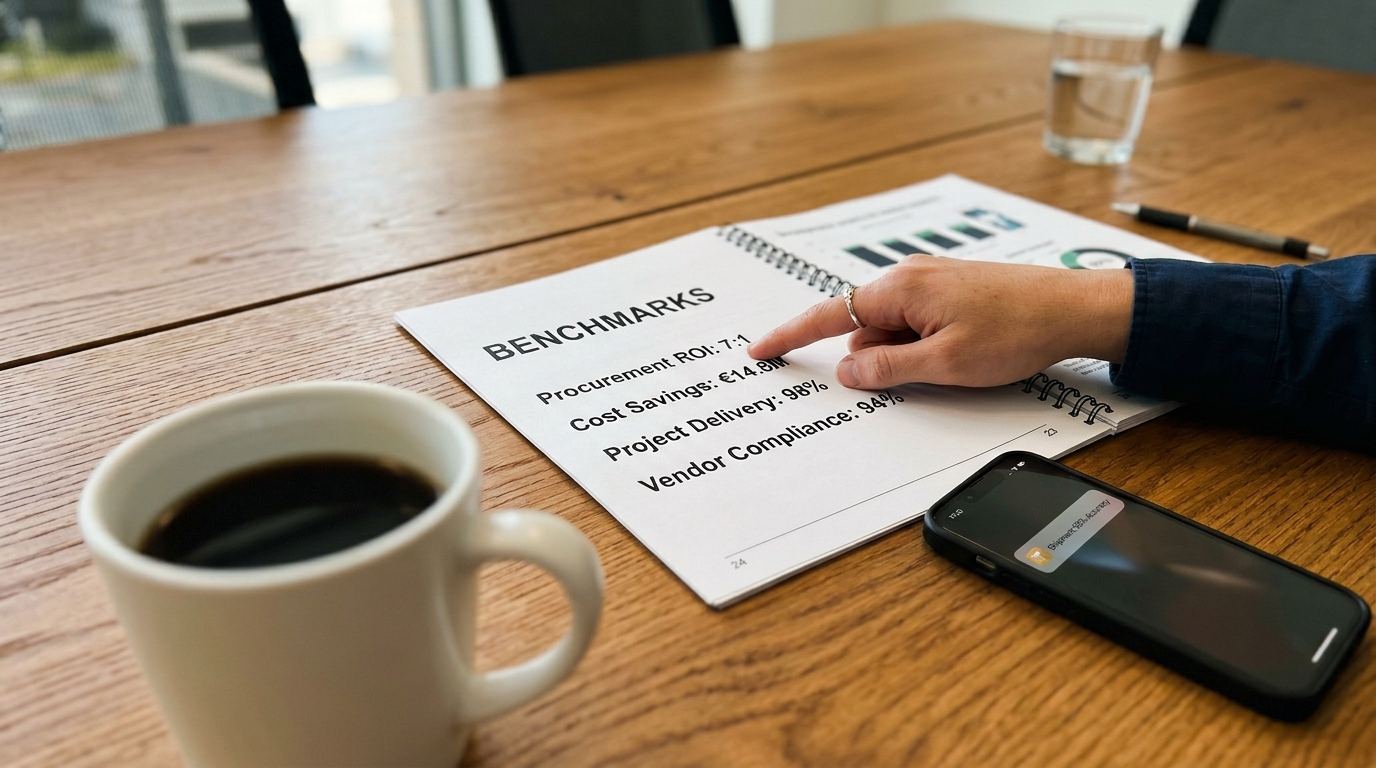
Key Procurement Benchmarks for 2026
To stay competitive, your sourcing department should measure performance against these updated industry benchmarks.
Metric | 2026 Industry Average | Top Quartile Goal |
Procurement ROI | 4:1 | 7:1 or higher |
Spend Under Management | 65% | >85% |
Supplier Lead Time Accuracy | 88% | >95% |
Maverick (Off-Contract) Spend | <15% | <5% |
Digital Order Processing Rate | 70% | >90% |
Advanced Sourcing Concepts for Contractors
Beyond the core process, several advanced strategies can further enhance your construction supplier sourcing efforts.
Category Management
Category Management is an approach where you group similar items (e.g., “Concrete Materials,” “Safety Equipment,” “Fleet Vehicles”) into “categories” and manage each one with a dedicated strategy. A category manager becomes an expert in that specific market, developing deep insights that lead to better sourcing decisions and supplier partnerships.
Total Cost of Ownership (TCO)
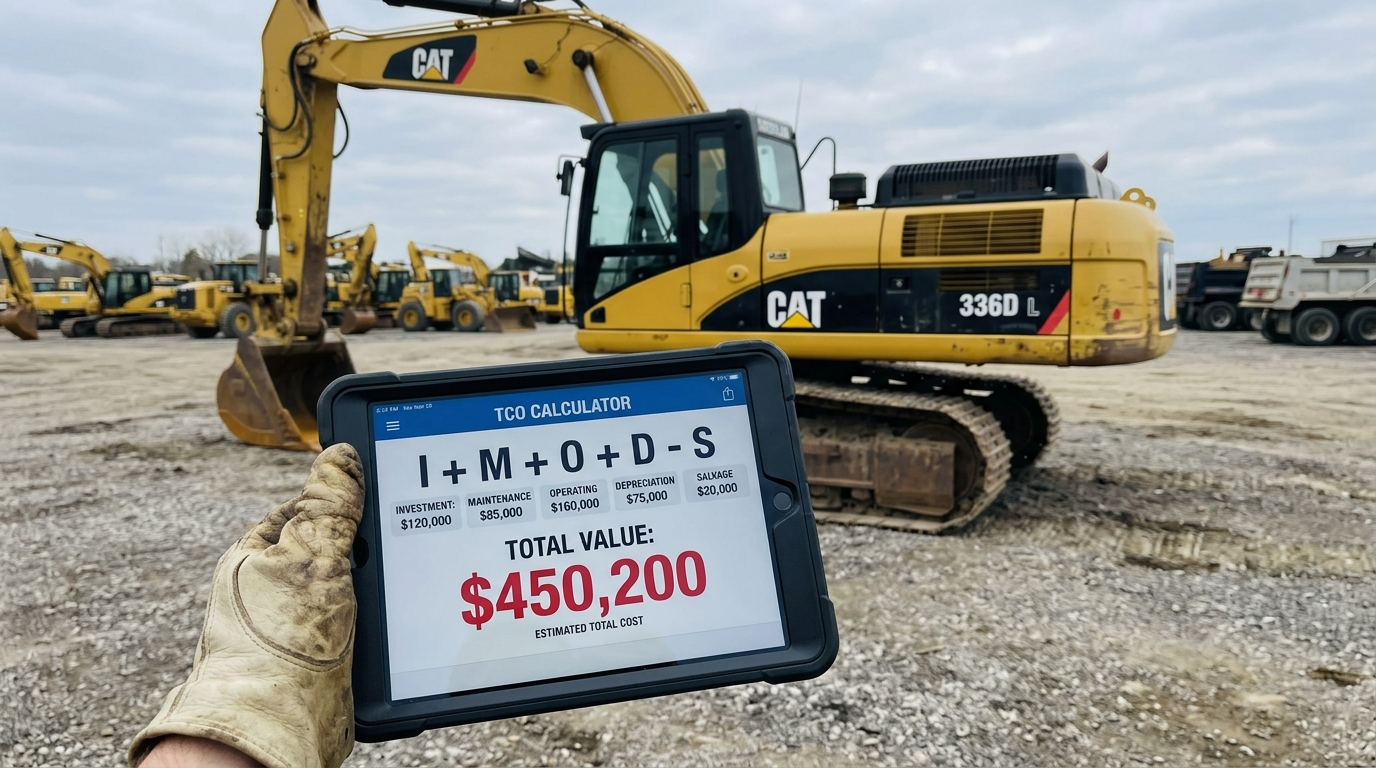
As mentioned, smart sourcing looks beyond the sticker price. Total Cost of Ownership (TCO) is a framework for calculating the full cost of an asset over its entire life. For a piece of construction equipment, this would include:
Initial purchase price
Fuel and energy costs
Scheduled maintenance and repairs
Downtime costs from breakdowns
Operator training
Disposal or resale value
TCO Formula for Equipment:
TCO = (I + M + O + D) – S
I: Initial Purchase Price
M: Maintenance & Repairs
O: Operating Costs (Fuel, Labor)
D: Downtime/Inactivity Costs
S: Salvage/Resale Value
A cheaper machine might have a lower purchase price, but if it guzzles fuel and is constantly in the shop, its TCO could be far higher than a more expensive, reliable alternative.
Long Term Contract vs. Spot Purchase
A long term contract establishes an ongoing relationship with a supplier over a set period, often with pre negotiated pricing and volume commitments. This provides price stability and supply security. A spot purchase, by contrast, is a one time buy on the open market. While flexible, spot buying leaves you vulnerable to price spikes and supply shortages. A strategic mix of both can be effective.
Dual Sourcing and Risk Management
Relying on a single supplier for a critical material is a huge risk. Dual sourcing is the practice of having at least two approved suppliers for the same item. This provides a backup if one supplier has a disruption and creates healthy competition that keeps both suppliers on their toes.
This is a key part of a broader sourcing risk management strategy. Proactive risk management involves identifying potential threats in your supply chain (like geopolitical instability, supplier financial distress, or logistics bottlenecks) and having contingency plans in place. This includes ongoing supplier risk monitoring to catch warning signs before they become full blown crises.
Sustainable Sourcing and ESG
Today, sourcing decisions are increasingly influenced by Environmental, Social, and Governance (ESG) factors. Sustainable sourcing means considering the environmental and social impact of your purchasing. This could involve choosing suppliers who use recycled materials, have fair labor practices, or are committed to reducing their carbon footprint. This isn’t just good for the planet; it’s also becoming a requirement for winning work with many clients.
Project Delivery and Sourcing Models in Construction
The way a construction project is structured has a huge impact on construction supplier sourcing. Understanding different construction procurement methods is key.
Design Build Sourcing: This popular method combines design and construction into a single contract with one entity. This integrated approach fosters collaboration and can dramatically speed up projects. In fact, research shows design build projects are delivered, on average, 102% faster than traditional design bid build projects.
Management Contracting: In this model, an owner hires a management contractor to oversee and coordinate all the work, which is performed by numerous specialist subcontractors. This allows for a fast start on site, as construction can begin before the entire design is complete, making it ideal for complex or time sensitive projects.
Partnership or Joint Venture Sourcing: This involves two or more companies teaming up to bid on and deliver a project. By pooling resources, sharing risks, and combining expertise, contractors can tackle larger and more complex jobs than they could alone. Group purchasing organizations like CNBA are a powerful form of partnership sourcing, allowing members to achieve benefits collectively that are impossible individually. If you’re looking to upgrade your purchasing power, exploring an alliance like CNBA is a smart strategic move.
The Rise of Agentic AI and Blockchain in Sourcing
In 2026, manual tracking is being replaced by autonomous systems.
Predictive Market Intelligence: AI agents now monitor global commodity fluctuations in real-time, suggesting “buy” windows for steel or timber before price spikes hit.
Blockchain for Material Provenance: Use blockchain ledgers to verify the origin and sustainability certifications of materials, ensuring compliance with new green building regulations.
Automated RFx Scoring: Tools now automatically rank RFP responses based on your historical TCO data, removing human bias from the selection process.
The Role of Technology and Governance
Modern construction supplier sourcing is enabled by technology and guided by clear governance.
E Sourcing Platforms: These are software tools that help automate and streamline the sourcing process, from running online RFPs and reverse auctions to managing contracts and supplier performance.
Sourcing KPIs and Governance: You need to measure what matters. Key Performance Indicators (KPIs) like “cost savings,” “spend under management,” and “supplier on time delivery” help you track the effectiveness of your sourcing program. Governance provides the rules and policies that ensure the process is followed consistently and fairly.
Change Management for Sourcing: Shifting from a traditional purchasing mindset to a strategic one requires a cultural change. Change management is the process of guiding your team through this transition, providing the training, communication, and support needed to ensure new processes are adopted successfully.
Ultimately, a sophisticated approach to construction supplier sourcing is no longer a luxury, it’s a necessity for thriving in a competitive market. By embracing these strategies, you can reduce costs, mitigate risks, and build a supply chain that becomes a true competitive advantage.
For contractors in the Southeast, you don’t have to build this capability all on your own. Learn more about how CNBA helps its members implement these sourcing best practices and gain the purchasing power of a national player.
Frequently Asked Questions
1. What is the first step in improving construction supplier sourcing?
The most crucial first step is conducting a thorough spend analysis. You need to understand exactly what you’re buying, who you’re buying it from, and where the money is going. This data provides the roadmap for all other strategic sourcing activities.
2. How can a smaller construction company improve its sourcing power?
For small to mid sized contractors, joining a group purchasing organization (GPO) or a buyer’s alliance like CNBA is one of the most effective strategies. By pooling their purchasing volume with other contractors, they can access pricing and terms typically reserved for very large firms.
3. What’s the main difference between sourcing and procurement?
Think of sourcing as the strategic, upfront work and procurement as the tactical execution. Sourcing involves the entire process of analyzing spend, finding and vetting suppliers, and negotiating contracts. Procurement is the operational part of that, including the day to day activities of placing orders, receiving goods, and processing payments.
4. Why is Total Cost of Ownership (TCO) so important in construction?
TCO is critical in construction because so many purchases are long term assets, like heavy equipment, or have significant downstream cost implications, like building materials. A cheaper brand of roofing might save money upfront but fail prematurely, leading to enormous warranty and repair costs that far exceed the initial savings. TCO helps you make smarter, more durable investment decisions.
5. What are the key KPIs to track for sourcing success?
Key Performance Indicators (KPIs) for a construction supplier sourcing program often include realized cost savings, percentage of spend under management (i.e., strategically sourced), supplier on time delivery rate, supplier quality and defect rates, and procurement process cycle time.
6. Is the Design Build method always the best choice for sourcing construction services?
Not necessarily. While Design Build offers proven advantages in speed and cost certainty, its suitability depends on the project. For very straightforward projects where the design is simple and complete, the traditional Design Bid Build method might still be effective at generating competitive bids. The best method depends on the project’s complexity, timeline, and the owner’s risk tolerance.

Recent Comments