
TL;DR
Construction fleet cost management covers every expense tied to owning and operating vehicles and heavy equipment, from acquisition through disposal. The median total cost of ownership for a construction fleet asset in 2025 is $9,436.69, and uncontrolled fleet costs can erode contractor profits by up to 25%. This glossary defines the 25+ terms contractors need to track, measure, and reduce fleet spending, with real benchmarks for each.
Construction fleet cost management is the discipline of tracking, controlling, and optimizing all expenses associated with a contractor’s vehicles and heavy equipment. It covers direct costs like fuel and maintenance, indirect costs like downtime and administrative overhead, and strategic decisions like when to replace aging assets.
This glossary is built for contractors, fleet managers, and project managers who operate equipment under harsh, high-wear jobsite conditions. Construction fleets face challenges that standard vehicle fleets simply don’t: extreme duty cycles, multi-site deployments, seasonal utilization swings, and equipment that depreciates differently than over-the-road trucks.
Only 28% of fleet operators currently track total cost of ownership. That means most contractors are flying blind on one of their largest expense categories. This reference fills that gap with plain definitions, real numbers, and construction-specific context.
For a broader operational framework, see our contractor fleet management guide.
Construction Fleet Cost Management at a Glance
Construction fleet cost management is the process of measuring and reducing every cost associated with owning and operating construction vehicles and heavy equipment throughout their lifecycle.
For most contractors, the largest fleet expenses include:
Cost Category | Typical Impact |
|---|---|
Fuel | Largest variable expense (often 30–35%+ of operating costs) |
Maintenance | Increases sharply as equipment ages |
Depreciation | Largest ownership cost during early years |
Downtime | Can exceed $760 per vehicle per day before indirect losses |
Insurance | Fixed annual operating expense |
Administrative overhead | Often overlooked but significant for larger fleets |
Contractors typically improve fleet profitability by:
Tracking Total Cost of Ownership (TCO)
Monitoring preventive maintenance compliance
Reducing idle time
Using telematics and fleet software
Replacing assets at the optimal lifecycle point
Benchmarking fleet performance against industry averages
Key takeaway: Fleet cost management is not simply reducing expenses—it is optimizing the total lifecycle cost of every vehicle and piece of equipment while maximizing utilization and uptime.
Table of Contents
Core Financial Terms
Fleet Cost Categories
Measurement and Performance Terms
Technology and Tools
Risk and Loss Terms
Core Financial Terms
Construction Fleet Cost Management
The systematic process of tracking, controlling, and optimizing every expense tied to operating a fleet of construction vehicles and heavy equipment. This includes direct costs (fuel, maintenance, operator wages) and indirect costs (downtime, compliance penalties, administrative overhead).
Why it matters: In construction, uncontrolled fleet costs can erode profits by up to 25%. Fleet spending is often the second or third largest line item for contractors, behind labor and materials, yet most companies lack a structured approach to managing it.
Total Cost of Ownership (TCO)
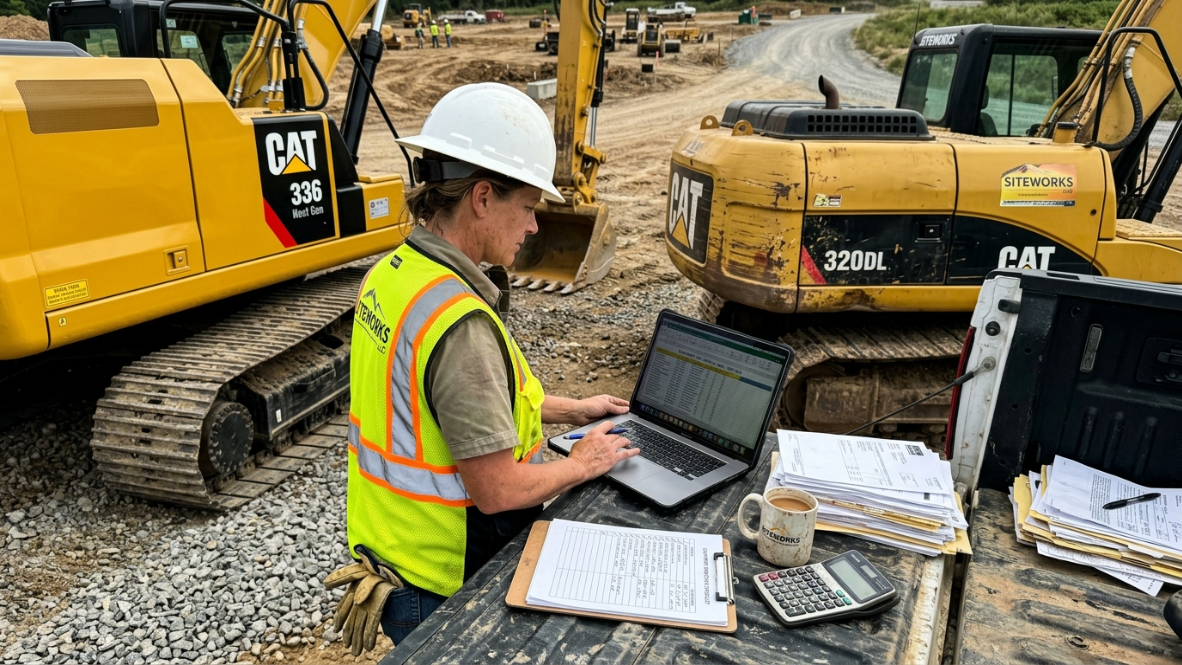
The complete financial picture of owning and operating a piece of equipment across its entire service life. TCO goes far beyond the purchase price to include financing, fuel, maintenance, repairs, depreciation, insurance, and disposal value.
Why it matters: The median TCO for a construction fleet asset in 2025 is $9,436.69, slightly below the fleet-wide average of $10,168.71. Despite its importance, only 28% of fleet operators track TCO. Contractors who ignore it tend to make poor replacement decisions and overspend on aging equipment without realizing it.
Common confusion: Many contractors equate TCO with purchase price. A cheaper piece of equipment can easily cost more over its lifetime due to higher maintenance, worse fuel efficiency, or a shorter usable life.
Cost Per Mile (CPM)
A key performance metric that calculates the total cost to operate a vehicle for every mile it travels. CPM factors in fuel, maintenance, depreciation, and other recurring expenses.
Why it matters: Construction fleets currently average about $0.23 per mile, slightly below the national fleet average. Tracking CPM over time reveals whether a specific truck or piece of equipment is becoming uneconomical, often months before a major breakdown forces the issue.
Fixed Costs
Expenses that remain constant regardless of how much a vehicle or piece of equipment is used. Examples include lease or loan payments, insurance premiums, licensing and registration fees, and technology subscriptions.
Why it matters: Fixed costs set the baseline expense for every asset in your fleet. Even a vehicle sitting idle in the yard still accrues fixed costs, which is why utilization tracking is so important for construction fleet cost management.
Variable Costs
Expenses that fluctuate based on how much and how intensely equipment is used. Examples include fuel consumption, maintenance and repairs, tolls, and operator overtime.
Why it matters: Variable costs are where most day-to-day savings opportunities exist. A dump truck running an extra 200 hours per month on a high-utilization project will see variable costs spike, and that spike needs to be captured in job costing, not buried in general overhead.
For a broader view of controlling both fixed and variable expenses, explore these construction cost management strategies.
Capital Expenditure (CapEx)
One-time, upfront investments in acquiring fleet assets. For contractors, CapEx covers vehicle purchases, heavy equipment acquisitions, and the costs of putting new assets into service (transport, accessories, initial outfitting).
Why it matters: CapEx decisions lock in costs for years. A higher upfront investment in a more reliable, fuel-efficient machine often produces significant savings over its lifecycle, while a bargain purchase can quietly drain budgets through elevated maintenance and early replacement. Contractors looking to reduce acquisition costs should consider construction procurement savings strategies like group purchasing and volume pricing.
Operating Expenditure (OpEx)
Recurring, ongoing expenses required to keep fleet assets running. OpEx includes fuel, maintenance, repairs, insurance, operator wages, and administrative costs.
Why it matters: OpEx is where construction fleet cost management plays out on a daily basis. Unlike CapEx, which happens once, OpEx compounds over thousands of hours. Small inefficiencies (excessive idling, skipped preventive maintenance, fuel card abuse) add up fast across a fleet of 20, 50, or 100 units.
Fixed Costs vs Variable Costs
Fixed Costs | Variable Costs |
|---|---|
Insurance | Fuel |
Loan payments | Repairs |
Licensing | Maintenance |
Fleet software | Tires |
Registration | DEF |
Vehicle taxes | Operator overtime |
How Construction Fleet Costs Are Calculated
One of the biggest misconceptions in construction is that purchase price determines equipment cost. In reality, ownership costs are spread across the entire life of the asset.
A simplified Total Cost of Ownership calculation looks like this:
Total Cost of Ownership = Acquisition + Fuel + Maintenance + Repairs + Insurance + Administrative Costs + Financing − Resale Value
Although every contractor calculates costs differently, most fleet managers group expenses into three categories:
Ownership Costs | Operating Costs | Hidden Costs |
|---|---|---|
Purchase price | Fuel | Downtime |
Depreciation | Maintenance | Idle labor |
Financing | Tires | Lost productivity |
Insurance | Fluids | Emergency rentals |
Registration | Parts | Schedule delays |
Understanding these categories helps contractors compare equipment fairly and avoid focusing only on purchase price.
Fleet Cost Categories
Acquisition Costs
The total cost of purchasing a vehicle or piece of equipment and placing it into active service. This includes the purchase price, sales tax, delivery charges, initial accessories, telematics installation, and any required modifications for jobsite use.
Why it matters: Acquisition price impacts TCO more than most contractors assume. E&Y research found that economies of scale influence acquisition costs significantly. Larger fleets negotiate better pricing with dealerships. Smaller fleets can fight back by purchasing more strategically, improving cost forecasting, and joining contractor supplier discount programs.
Benchmark: Small fleets (under 20 vehicles) pay measurably more per unit than fleets over 100 vehicles, not just on acquisition but on every cost category downstream.
Fuel Costs
The expense of diesel, gasoline, DEF, and other consumables required to operate fleet vehicles and equipment. For diesel-powered construction equipment, fuel costs constitute more than 35% of total operational expenses.
Why it matters: Fuel is the single largest variable cost for most construction fleets. It is also the cost category most vulnerable to theft, waste, and price volatility. Geographic location alone can swing monthly fuel costs by 15%. A pickup running in New York regularly costs about $330 per month to operate, while the same model in Texas sits closer to $280.
For a deeper look at fuel programs and savings tactics, see our guide to contractor vehicle fuel savings.
Maintenance Costs
All expenses related to keeping vehicles and equipment in working condition, including scheduled service, parts replacement, fluid changes, tire replacements, and unplanned repairs.
Why it matters: Maintenance costs increase exponentially as assets age. Research from E&Y shows the steepest jumps occur in the first year (break-in issues) and again around year seven. According to Automotive Fleet data, repair costs average $14.80 per vehicle in year one and climb to $68.62 per vehicle after three years. For heavy equipment, top-performing construction fleets spend less than $5,200 per vehicle per year on maintenance, compared to an industry average of $7,800.
The practitioner blind spot: Fleets without CMMS software underestimate maintenance costs by 20 to 40%. Each repair looks small in isolation. Contractors see individual invoices for filters, hoses, and brake jobs but never aggregate them to see the real cost curve. This is the most common reason fleets replace equipment too late.
Downtime Costs
The total financial impact when a vehicle or piece of equipment is out of service, including not just the repair bill but all surrounding disruption: idle operator wages, delayed project activities, emergency subcontractor fees, and extended site overhead.
Why it matters: Skipping inspections and deferring maintenance can result in unplanned downtime costing $760 or more per vehicle per day. Most fleets dramatically undercount downtime costs because they only record the repair invoice. The actual disruption typically multiplies the repair cost by 3 to 5 times. A $2,000 hydraulic pump failure on an excavator can easily become a $10,000 event when you factor in the idle crew, the rental replacement, and the schedule slip.
Depreciation
The decline in an asset’s value over time due to age, wear, and obsolescence. In construction fleet cost management, depreciation is both an accounting concept (for tax purposes) and a real economic cost that affects replacement timing.
Why it matters: Vehicle TCO follows a U-shaped cost curve. Early years are dominated by depreciation and finance costs. The middle years represent the lowest total cost period. Late years see rapidly increasing maintenance and downtime costs. Assets over 10 years old can cost up to 35% more per mile to operate. Understanding this curve is essential for timing replacements correctly.
Administrative and Overhead Costs
Back-office expenses associated with managing the fleet, including fleet coordinator salaries, record keeping, compliance paperwork, software subscriptions, and reporting.
Why it matters: Administrative costs are easy to overlook because they don’t show up on individual vehicle cost reports. But for a 50-truck fleet, the labor hours spent on manual tracking, paper-based inspections, and spreadsheet maintenance can represent a significant overhead burden. For strategies to reduce these hidden costs, see this guide on contractor overhead reduction.
Insurance Costs
Premiums paid to cover vehicles and equipment against damage, theft, liability, and worker injury. Insurance rates for construction fleets are typically higher than for standard commercial fleets due to the hazardous operating environments.
Why it matters: Insurance is a fixed cost that contractors can influence through fleet safety programs, driver training, telematics-based monitoring, and claims history management. Fleets in the top performance quartile record safety incident rates less than a third of the industry average, which translates directly into lower premiums.
Compliance Costs
Expenses associated with meeting regulatory requirements, including DOT inspections, emissions testing, OSHA equipment standards, CDL driver certifications, and environmental permits.
Why it matters: Non-compliance costs far more than compliance. Fines, work stoppages, and failed inspections create both direct financial penalties and indirect costs through project delays and reputational damage.
Measurement and Performance Terms
Fleet Benchmarking
The practice of measuring your fleet’s performance against industry standards, peer companies, or internal historical data. The gold standard for construction fleet benchmarking is the Heavy Equipment Comparator, developed jointly by CFMA and AEMP. It consolidates 26+ industry-standard KPIs across seven performance categories, including cost per dollar of revenue, cost per hour, ownership versus operational cost breakdown, and return on assets.
Why it matters: You cannot manage what you don’t measure. Benchmarking reveals whether your fleet costs are competitive or whether you’re leaving money on the table. For a deeper explanation of how to apply benchmarking to your operation, see our construction cost benchmarking guide.
Preventive Maintenance Compliance Rate
The percentage of scheduled maintenance tasks completed on time. This is one of the strongest leading indicators of fleet health and cost control.
Why it matters: PM compliance among top-performing construction fleets exceeds 90%, while the industry average sits at just 71%. That 19-point gap explains a huge portion of the cost difference between well-run and poorly-run fleets. Every skipped oil change or deferred inspection is a bet against the U-shaped cost curve, and the house always wins.
Utilization Rate
A measure of how effectively a fleet’s assets are being used, typically calculated as productive hours divided by available hours, or active days divided by total calendar days.
Why it matters: Low utilization means you’re paying fixed costs (insurance, depreciation, loan payments) on equipment that isn’t generating revenue. High utilization means assets are earning their keep. The gap between the two represents one of the biggest opportunities in construction fleet cost management. For strategies to improve utilization across your operation, explore these construction operational efficiency strategies.
Idle Time
Periods when a vehicle’s engine is running but the vehicle is not performing productive work. Construction fleets average 28 to 34% idle time as a percentage of engine-on hours.
Why it matters: Excessive idling burns fuel, accelerates engine wear, and inflates maintenance costs, all without producing any value. A fleet of 30 trucks idling 30% of the time is burning the equivalent of running 9 trucks that do nothing. Telematics makes idle time visible and actionable.
Optimal Replacement Point
The moment when the marginal cost of keeping a vehicle for one more year exceeds the annualized cost of acquiring and owning its replacement.
Why it matters: Most fleet CFOs replace too late. They keep vehicles deep into the steep cost escalation zone because replacement CapEx is a visible, large number, while maintenance costs are distributed across dozens of small invoices that never get aggregated into a single decision-forcing total.
Benchmark for vocational equipment: Dump trucks, mixers, and similar heavy equipment typically hit their replacement trigger between 10,000 and 12,000 hours, with annual burn rates of 800 to 1,200 hours depending on utilization patterns.
Lifecycle Costing
An analytical approach that evaluates the total cost of an asset from acquisition through operation, maintenance, and disposal. Lifecycle costing goes beyond simple purchase price comparisons to model the full economic impact of each option.
Why it matters: Two excavators with a $30,000 purchase price difference may have nearly identical lifecycle costs once you factor in fuel efficiency, maintenance intervals, resale value, and expected downtime. Lifecycle costing is the analytical backbone of smart CapEx decisions.
Return on Assets (ROA)
A financial ratio measuring how much profit a fleet generates relative to the total value of its assets. For construction fleets, ROA connects equipment investment directly to revenue production.
Why it matters: ROA reveals whether your fleet is an investment generating returns or a cost center draining capital. A fleet with high utilization, controlled maintenance costs, and timely replacements will show a meaningfully higher ROA than one managed reactively.
The Biggest Drivers of Construction Fleet Costs
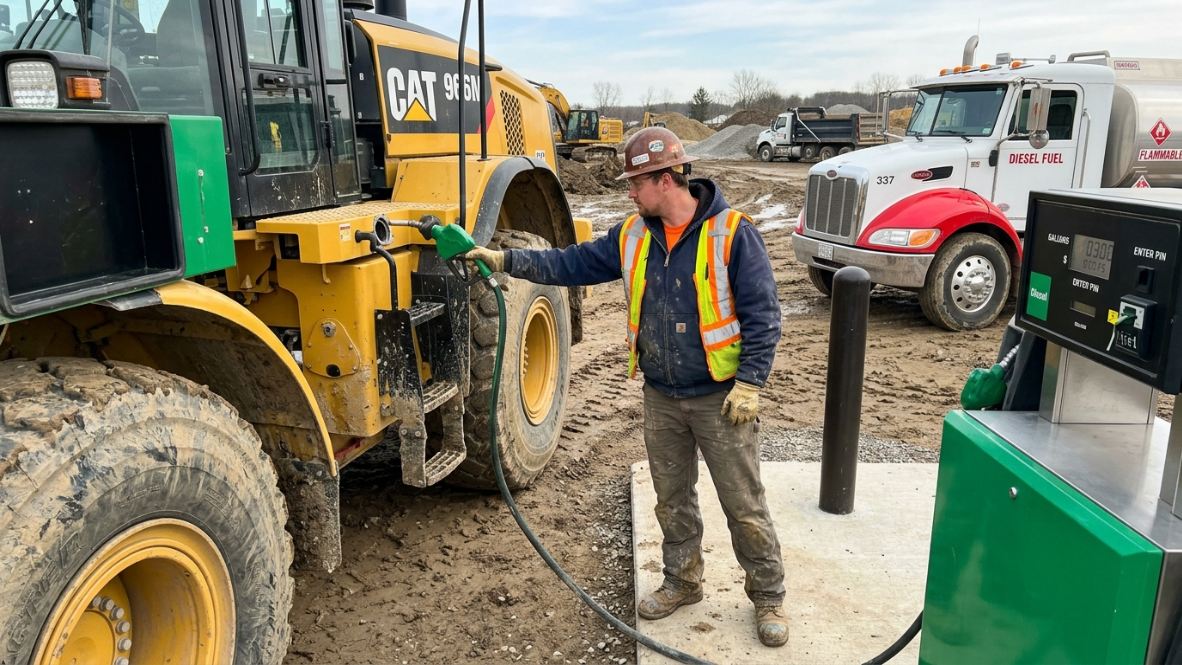
While every fleet is different, research consistently shows a handful of cost categories account for most operating expenses.
Typical cost drivers include:
Cost Driver | Why It Matters |
|---|---|
Fuel consumption | Largest controllable variable cost |
Preventive maintenance | Prevents expensive breakdowns |
Idle time | Burns fuel without producing revenue |
Equipment utilization | Low utilization increases fixed cost per productive hour |
Asset age | Older equipment generally costs more to maintain |
Operator behavior | Impacts fuel use, wear, and accident frequency |
Rather than trying to reduce every expense equally, successful contractors prioritize the few cost drivers that have the greatest effect on Total Cost of Ownership.
Technology and Tools
Telematics
A system that combines GPS technology, onboard diagnostics, and wireless communications to monitor vehicle location, engine performance, driver behavior, and operating conditions in real time.
Why it matters: Telematics transforms construction fleet cost management from a reactive, spreadsheet-based exercise into a data-driven operation. It makes idle time visible, flags maintenance issues before they become breakdowns, and provides the utilization data needed for right-sizing decisions. Practitioners on Reddit report that telematics data is often the first thing that reveals just how much idle time their fleets actually accumulate, and the numbers are almost always worse than expected.
Fleet Management Software and CMMS
Computerized Maintenance Management Systems (CMMS) and broader fleet management software platforms consolidate maintenance records, work orders, cost tracking, and compliance documentation into a single system. These tools integrate with construction accounting systems to produce comprehensive reporting for KPI tracking.
Why it matters: Fleets without CMMS underestimate maintenance costs by 20 to 40%. The software makes the invisible visible: it aggregates those dozens of small repair invoices into a clear cost-per-asset trend line that reveals when a vehicle has crossed its optimal replacement point.
Fleet Fuel Cards
Payment cards used by drivers to purchase fuel (and sometimes maintenance services) that provide detailed transaction data for every fill-up, including location, volume, time, and cost.
Why it matters: Fuel cards enable fleets to monitor fuel expenses in real time, detect fraud, enforce purchase policies, and negotiate better fuel pricing through volume programs. For a complete breakdown of how fuel cards work for contractors, see our fleet fuel cards glossary. Contractors managing fuel spend across multiple sites should also explore fleet fuel rebate programs that return a percentage of spend.
GPS Tracking and Geofencing
GPS tracking provides real-time location data for every vehicle and piece of equipment. Geofencing creates virtual boundaries around jobsites, yards, or restricted areas, triggering alerts when assets enter or leave.
Why it matters: For construction fleets spread across multiple active jobsites, GPS and geofencing provide accountability and loss prevention. They answer basic but critical questions: Where is the equipment? Is it being used on the right project? Did it leave the site after hours?
Driver Scorecards
Performance reports that grade individual operators based on telematics data, including metrics like harsh braking, speeding, excessive idling, and fuel efficiency.
Why it matters: Driver behavior directly impacts fuel costs, maintenance costs, and safety incident rates. Scorecards make behavior visible and coachable. Fleets that implement driver scorecards alongside telematics typically see fuel consumption improvements within the first quarter.
Predictive Maintenance
A maintenance strategy that uses sensor data, operating patterns, and analytics to forecast when a component is likely to fail, allowing repairs to be scheduled before a breakdown occurs.
Why it matters: Predictive maintenance sits above preventive maintenance on the sophistication spectrum. Instead of changing oil every 250 hours regardless of condition, predictive systems analyze actual oil quality, engine temperature trends, and vibration patterns to schedule service only when needed. This reduces both unnecessary maintenance spending and unexpected downtime.
Risk and Loss Terms
Fuel Theft and Fraud
Unauthorized use of fleet fuel, ranging from drivers filling personal vehicles to organized theft from bulk storage tanks and fraudulent fuel card transactions.
Why it matters: Construction leaders estimate that up to 22% of their fleet payments are lost to fraud or theft. Research shows that fuel theft and card abuse can increase operational costs by 8 to 12% annually, especially for fleets with multiple drivers and vehicles operating across dispersed jobsites. One well-documented case involved a contractor (Hammer Construction) that traced internal fuel theft resulting in losses of $500 to $700 per month from a single location.
For broader strategies on controlling all categories of fleet and operational spending, see this guide to construction expense management.
Ghost Assets
Equipment that appears on your books but cannot generate revenue, either because its location is unknown, it’s waiting on parts with no ETA, or it’s stuck in a status limbo between “in service” and “disposed.”
Why it matters: Ghost assets are the single most common cause of utilization gaps in fleets that still rely on manual tracking. You’re paying insurance, depreciation, and sometimes loan payments on equipment that produces nothing. Eliminating ghost assets is one of the fastest wins in construction fleet cost management because it immediately improves utilization rates and frees capital.
Unplanned Downtime
Any period when a vehicle or piece of equipment is unavailable due to an unexpected failure, as opposed to scheduled maintenance or planned downtime.
Why it matters: Top-quartile fleets suffer 68% fewer unplanned breakdowns than the industry average. The gap isn’t luck. It’s the direct result of higher PM compliance, better telematics utilization, and disciplined replacement timing. Every unplanned breakdown cascades into crew delays, schedule disruption, and emergency repair premiums that multiply the direct cost.
Fleet Right-Sizing
The process of adjusting the number and type of vehicles and equipment in your fleet to match actual operational needs, eliminating underutilized assets and filling genuine capacity gaps.
Why it matters: Right-sizing is where utilization data meets financial decision-making. A fleet with 30% idle time doesn’t necessarily need 30% fewer vehicles (seasonal demand and project staging complicate the math), but it almost certainly has opportunities to shed or redeploy specific underperforming assets. Right-sizing reduces fixed costs, improves ROA, and frees capital for higher-return investments.
Best Practices for Reducing Construction Fleet Costs
Fleet cost reduction is usually achieved through consistent operational improvements rather than one-time budget cuts.
Common best practices include:
Perform preventive maintenance on schedule
Track Total Cost of Ownership for every asset
Reduce engine idle time using telematics
Remove underutilized equipment
Replace equipment before maintenance costs spike
Benchmark costs annually
Automate maintenance tracking with fleet software
Standardize vehicle purchasing across the fleet
Review fuel card transactions for fraud
Even small improvements across several areas often produce larger savings than aggressively cutting a single expense category.
Putting It All Together
Construction fleet cost management isn’t a single tactic. It’s a system of interconnected decisions spanning acquisition, operation, maintenance, measurement, and disposal. The contractors who manage fleet costs well share a few common traits: they track TCO religiously, they maintain PM compliance above 90%, they use telematics data to drive decisions rather than just collect it, and they replace equipment based on lifecycle analysis rather than waiting for catastrophic failure.
The numbers bear this out. Top-quartile fleets spend 34% less on maintenance, experience dramatically fewer unplanned breakdowns, and record safety incidents at less than a third of the industry average.
Whether you’re running 10 pickups or 100 pieces of heavy equipment, the terms and benchmarks in this glossary provide the vocabulary and reference points you need to start managing fleet costs with real precision. For contractors looking to improve their bottom line through smarter fleet and procurement decisions, explore proven contractor margin improvement strategies.
Construction Fleet Cost Management Checklist
Use this checklist to evaluate whether your fleet cost management program follows industry best practices.
Best Practice | Target |
|---|---|
Track Total Cost of Ownership | Every asset |
Preventive Maintenance Compliance | Above 90% |
Monitor Fuel Consumption | Weekly |
Measure Utilization | Monthly |
Review Idle Time | Weekly |
Benchmark Fleet Costs | Annually |
Analyze Replacement Timing | Yearly |
Audit Fuel Card Transactions | Monthly |
Review Insurance Claims | Quarterly |
Update Fleet Cost Reports | Monthly |
Frequently Asked Questions
What is construction fleet cost management?
Construction fleet cost management is the process of tracking, controlling, and optimizing all expenses related to owning and operating a fleet of construction vehicles and heavy equipment. It covers direct costs like fuel and maintenance, indirect costs like downtime and administrative overhead, and strategic financial decisions like equipment replacement timing.
What is the average total cost of ownership for a construction fleet asset?
The median TCO for a construction fleet asset in 2025 is $9,436.69. This figure encompasses acquisition, fuel, maintenance, depreciation, insurance, and administrative costs across the asset’s service life. Most contractors underestimate TCO because they focus on the purchase price and don’t aggregate ongoing expenses.
How much does fleet downtime cost per day?
Unplanned downtime can cost $760 or more per vehicle per day. That figure covers only direct costs. When you include idle operator wages, project delays, emergency subcontractor fees, and site overhead, the true disruption cost is typically 3 to 5 times the repair bill alone.
What percentage of fuel spend is lost to theft or fraud?
Construction industry estimates suggest up to 22% of fleet payments are lost to fraud or theft. Fuel theft and card abuse specifically can increase operational costs by 8 to 12% annually, with the risk highest for fleets that operate across multiple dispersed jobsites.
When should construction equipment be replaced?
The optimal replacement point is when the annual cost of keeping equipment exceeds the annualized cost of owning its replacement. For vocational construction equipment like dump trucks and mixers, replacement triggers typically appear between 10,000 and 12,000 operating hours. Assets over 10 years old cost up to 35% more per mile to operate.
What is a good preventive maintenance compliance rate?
Top-performing construction fleets maintain PM compliance rates above 90%. The industry average is 71%. Closing that gap is one of the most impactful things a contractor can do to reduce maintenance costs, prevent unplanned downtime, and extend equipment life.
How does fleet size affect operating costs?
Larger fleets benefit from economies of scale in purchasing, maintenance, and vendor negotiation. Small fleets (under 20 vehicles) average about $310 per truck per month in variable operating costs, while fleets over 100 vehicles average around $265. Smaller contractors can partially offset this disadvantage through group purchasing programs and more intentional procurement planning.
What is a ghost asset and why does it matter?
A ghost asset is equipment that appears on your financial records but cannot generate revenue, typically because it’s lost, waiting on parts indefinitely, or stuck in administrative limbo. Ghost assets inflate your asset base, distort utilization metrics, and waste money on insurance and depreciation for equipment that produces nothing.

Recent Comments