
TL;DR
Construction projects exceed their budgets by 16% to 28% on average, and material costs are projected to climb another 5 to 7% in 2025. The most overlooked way to reduce construction costs isn’t on the jobsite, it’s in how you buy materials. This guide covers 15 specific strategies, from joining contractor buying groups and locking in material prices early to eliminating change orders and phasing projects for better cash flow, each backed by industry data and practitioner experience.
How to Reduce Construction Costs: The 2026 Bottom Line
To reduce construction costs in 2026, firms must shift from jobsite-only fixes to strategic procurement and pre-construction discipline. The most effective methods include joining Group Purchasing Organizations (GPOs) to save ~3% on materials, implementing Value Engineering to cut 7-15% in design, and using Cost Escalation Clauses to mitigate the projected 5-7% annual material inflation. Controlling Change Orders remains the highest-impact internal lever, preventing average budget overruns of 11-15%.
The Cost Problem Is Getting Worse
Here’s the uncomfortable reality: 85% of construction projects over a 70-year study period experienced cost overruns, with an overall average overrun of 28%. Large projects fare even worse, running up to 80% over budget according to McKinsey research.
The forces driving costs higher in 2025 aren’t slowing down. The JLL 2025 Construction Outlook projects a 5 to 7% increase in construction costs this year. Steel deck prices have jumped 11.2% year-over-year. Concrete block is up 7.2%. Rebar, 5.7%. The industry needs roughly 723,000 new hires annually just to meet demand, putting sustained upward pressure on labor rates.
The contractors who consistently reduce construction costs aren’t doing it by cutting corners. They’re doing it through smarter procurement, earlier planning, and better partnerships. These tactical wins also fit inside a broader five-layer cost optimization model that integrates Front-End Planning, Value Engineering, Lean execution, procurement, and Life-Cycle Cost Analysis—the strategies below sit primarily in the procurement and execution layers of that framework. What follows are 15 strategies with the data to back them up, starting with the one most contractors overlook entirely.
If you’re navigating these challenges and opportunities in the construction industry, the strategies below give you a concrete playbook.
Projected Material Cost Increases (2025–2026)
Material Category | Projected Increase | Primary Driver |
Structural Steel | 6.2% | Energy costs & Trade Policy |
Ready-Mix Concrete | 7.5% | Raw aggregate scarcity |
Architectural Glass | 5.0% | High manufacturing demand |
Electrical Components | 8.2% | Grid modernization demand |
HVAC Systems | 6.5% | Regulatory shifts & Efficiency standards |
At-a-Glance: 15 Strategies to Reduce Construction Costs
Strategy | Potential Savings | Implementation Difficulty | Best For | Key Differentiator |
|---|---|---|---|---|
1. Join a Contractor Buying Group | $75K+/year | Low | Small/mid-size contractors | Volume pricing without volume spending |
2. Lock In Material Prices Early | 5–12% avoided cost increases | Medium | Projects with long timelines | Hedges against tariffs and inflation |
3. Invest in Pre-Construction Planning | 7–15% total project savings | Medium | Complex commercial projects | Catches overruns before they happen |
4. Use Value Engineering | 7–15% cost reduction | Medium | Projects in design phase | Maintains performance, lowers cost |
5. Reduce Change Orders | Avoids 11–15% cost overruns | Medium | All project types | Scope discipline is free |
6. Choose Multi-Trade Contractors | 5–10% coordination savings | Low | Multi-discipline projects | Fewer markup layers |
7. Optimize Labor Scheduling | Significant (labor = 40–60% of budget) | Medium | Labor-heavy projects | Eliminates non-productive time |
8. Build Supplier Partnerships | 3–8% through loyalty pricing | Medium | Repeat builders | Long-term pricing stability |
9. Cut Jobsite Waste | 2–5% material savings | Low | Material-heavy projects | Reduces the 25–30% material cost share |
10. Adopt Construction Technology | Measurable efficiency gains for 71% of users | High | Tech-ready firms | Real-time cost visibility |
11. Build In Cost Escalation Clauses | Margin protection | Low | Tariff-exposed projects | Shared risk management |
12. Phase Projects Strategically | Faster ROI, lower carrying costs | Medium | Large commercial builds | Revenue-generating spaces first |
13. Don’t Default to the Lowest Bidder | Avoids rework and delay costs | Low (mindset shift) | All project types | Total cost vs. bid price |
14. Invest in Workforce Training | Reduced rework and turnover | Medium | Companies with retention issues | Skilled crews work faster |
15. Conduct Post-Project Reviews | Compound savings over time | Low | Every contractor | Free to implement |
1. Join a Contractor Buying Group or GPO
Best for: Small and mid-size contractors paying retail or near-retail on materials.
Individual contractors face a structural disadvantage when buying materials. They don’t have the order volume to command the pricing that national builders get. A contractor buying group, sometimes called a group purchasing organization (GPO), solves this by pooling the purchasing volume of many independent contractors to negotiate pricing that none of them could get alone.
The math works. According to Pro Builder, a builder averaging 10 annual home starts with $2.5 million in direct costs can save just over $75,000 per year through a GPO. For commercial contractors with larger material spends, the savings scale accordingly.
Bill Smithers, president of one national GPO and a former division president for a national builder, explained the problem directly: independent builders “were paying a premium in the marketplace just because we were small.” He started a local co-op that eventually grew into a national organization.
Key actions:
Evaluate buying groups based on actual negotiated pricing, not just rebate promises
Look for groups with vendor relationships in your specific trade categories
Compare your current material costs against group pricing before committing
Watch out for:
Not all GPOs deliver equal value. Some have been criticized as “rebate peddlers” that require spending levels so high you end up buying more than needed just to qualify
Group membership doesn’t help if the vendor network doesn’t align with what you actually purchase
Understanding how purchasing leverage works for contractors is the first step to evaluating whether a buying group makes sense for your operation. For a full breakdown of how these organizations work, see this construction buying group guide for contractors.
2. Lock In Material Prices Before They Climb
Best for: Any project with a timeline longer than 3 months, especially during tariff uncertainty.
Material costs are not static. With steel deck up 11.2%, concrete block up 7.2%, and rebar up 5.7% year-over-year (CoreLogic data via Mastt), the cost of waiting to purchase is real and measurable.
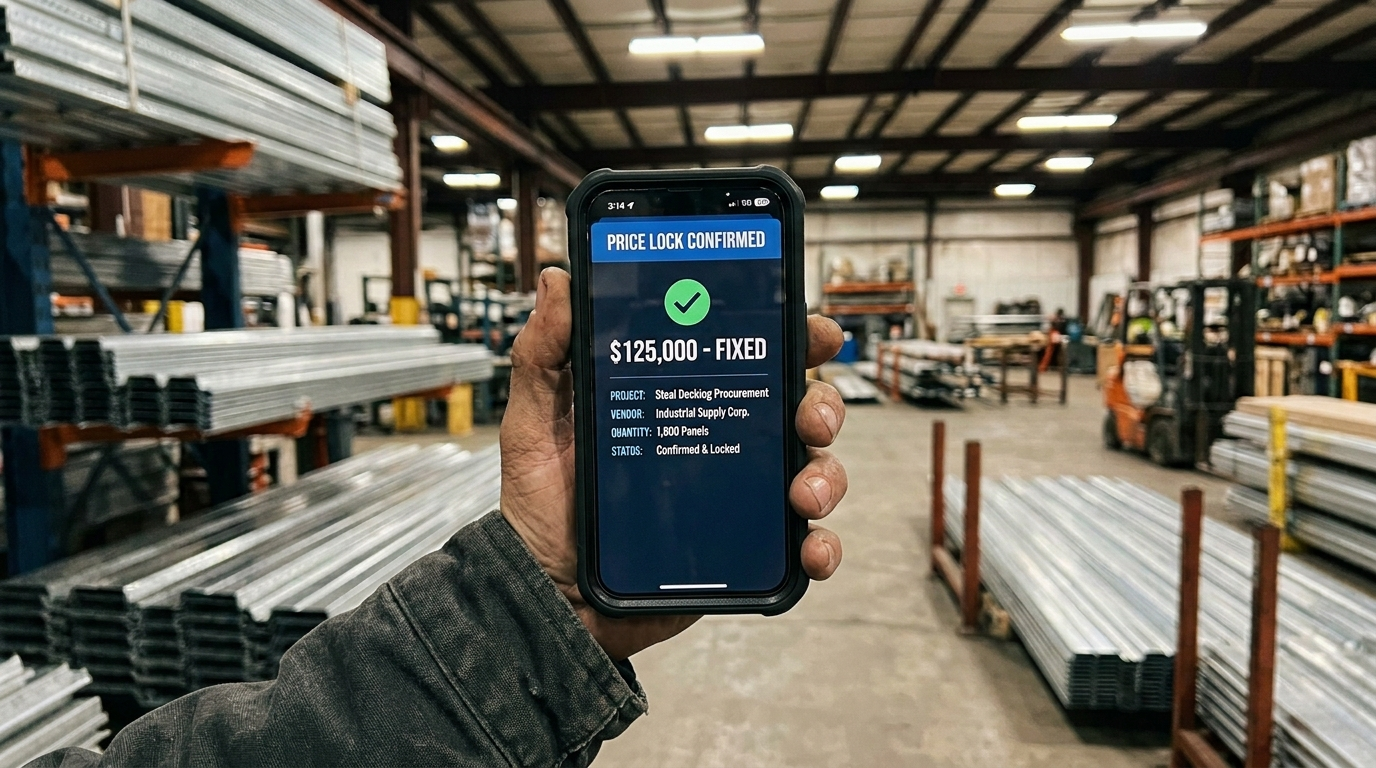
Early procurement, buying or contracting for materials at current prices before tariff hikes or seasonal spikes, is one of the simplest ways to reduce construction costs on any project.
Key actions:
Establish fixed-price contracts with suppliers for key materials at project outset
Monitor commodity price trends and buy when prices dip rather than when you need delivery
Consider forward contracts on volatile materials like steel and lumber
Watch out for:
Storage costs and material degradation if you buy too far ahead of need
Fixed-price contracts may include premium charges for the supplier’s risk, so negotiate carefully
Some suppliers won’t lock prices beyond 60 to 90 days
A well-structured construction sourcing strategy turns ad hoc purchasing into a repeatable system that captures savings across every project.
Expert Insight: The 2% Rule “In the current market, waiting just 30 days to sign a procurement contract can erode 2% of your project margin. In 2026, speed of procurement is as important as the price negotiated.” — [Insert Name/Title or ‘Industry Consensus’]
3. Invest in Pre-Construction Planning
Best for: Complex commercial and industrial projects where design decisions carry the biggest cost implications.
Dow Smith Company, a Tennessee-based general contractor, puts it plainly: “The first and best opportunity to reduce construction costs is in the design stage.” This isn’t motivational advice. It’s a reflection of how cost commitments actually flow through a project. By the time construction starts, 80% or more of total costs are already locked in by design decisions.
Strategic planning and early procurement can reduce commercial project costs by 7 to 15% without sacrificing quality, according to Fahs Construction.
Key actions:
Conduct detailed site assessments before finalizing design to uncover hidden conditions
Develop schematic budget estimates during design, not after
Bring your contractor in during design to flag constructability issues and cost traps
Watch out for:
Pre-construction planning takes time, which feels expensive until you compare it to mid-project redesigns
Not all owners understand why paying for pre-construction services saves money in the end
Requires a contractor willing to invest time before a contract is signed
4. Use Value Engineering, Not Value Cutting
Best for: Projects still in the design phase where material and system substitutions can be evaluated.
Value engineering analyzes every design element to find equivalent-performance alternatives at lower cost. It’s not about choosing cheaper materials. It’s about questioning whether a more expensive specification actually delivers proportional value.
For example, switching a structural system that allows faster installation can cut both labor costs and equipment rental time. Modular techniques alone can reduce project costs by 20 to 30% while improving timelines, according to McKinsey research cited by Bluebeam.
Key actions:
Conduct formal value engineering sessions with design and construction teams together
Evaluate lifecycle costs, not just first costs, for every major specification
Document every substitution decision with performance justification
Watch out for:
Value engineering done poorly becomes value cutting, where quality suffers to meet a budget number
It works best when the contractor is involved early enough to contribute practical alternatives
Owner resistance is common when proposed changes affect aesthetic preferences
5. Reduce Change Orders With Clear Scope Documents
Best for: All project types, but especially projects with multiple stakeholders or evolving requirements.
Change orders are the silent budget killer. They typically increase project costs by 11 to 15% and extend schedules by about 20%, according to HBRC research. Despite this, most articles about reducing construction costs give change orders a single paragraph.
The fix is almost entirely preventable through discipline, not technology.
Key actions:
Write scope documents detailed enough that any competent contractor could price them without a phone call
Get all stakeholders to review and sign off on scope before construction begins
Require written change order forms for every modification, no matter how small, and never accept verbal agreements
Build a change order log and review it weekly with the project team
Watch out for:
Some change orders are genuinely necessary (unforeseen site conditions, code changes). The goal is eliminating discretionary changes, not all changes
Owners who skip the detailed scope phase to “save time” almost always pay for it later
Contractors sometimes underbid expecting to recover margin through change orders, so vet your partners carefully
6. Choose Multi-Trade Contractors to Cut Coordination Costs
Best for: Projects requiring multiple construction disciplines (site work, concrete, paving, flatwork).
Every additional subcontractor on a project adds a markup layer, a scheduling dependency, and a communication channel that can break down. When a single contractor can self-perform key trades like site prep, concrete, and paving, you eliminate those markup layers and gain tighter control over quality and scheduling.
Fahs Construction highlights self-performance as an underappreciated cost lever in commercial construction. Fewer handoffs between trades means fewer delays, fewer miscommunications, and lower total costs.
Key actions:
When evaluating contractors, ask which scopes they self-perform versus subcontract
Calculate the true cost of coordination, including schedule delays from trade sequencing conflicts
For multi-discipline projects, a single contractor covering more scope often beats the “best of breed” approach on individual trades
Watch out for:
Multi-trade contractors aren’t available in every market or for every combination of scopes
Verify that the contractor’s self-perform capabilities are genuine, not just subcontractor management rebranded
You may give up some specialization depth in exchange for coordination efficiency
7. Optimize Labor Scheduling to Eliminate Waste
Best for: Labor-intensive projects where crew productivity directly impacts the bottom line.
Labor costs typically represent 40 to 60% of total project budgets. That makes labor scheduling the highest-stakes optimization problem on any jobsite. Even small efficiency gains compound quickly when applied to the largest cost category.
The waste is substantial. Research from PlanGrid found that 35% of construction professionals’ time is spent on non-productive activities, amounting to over 14 hours per week looking for information, managing conflicts, and doing rework. McKinsey estimates that productivity improvements could save the construction industry $1.63 trillion per year.
Key actions:
Front-load complex or weather-sensitive work to avoid overtime later
Cross-train crew members so they can shift between tasks during transitions, reducing idle time
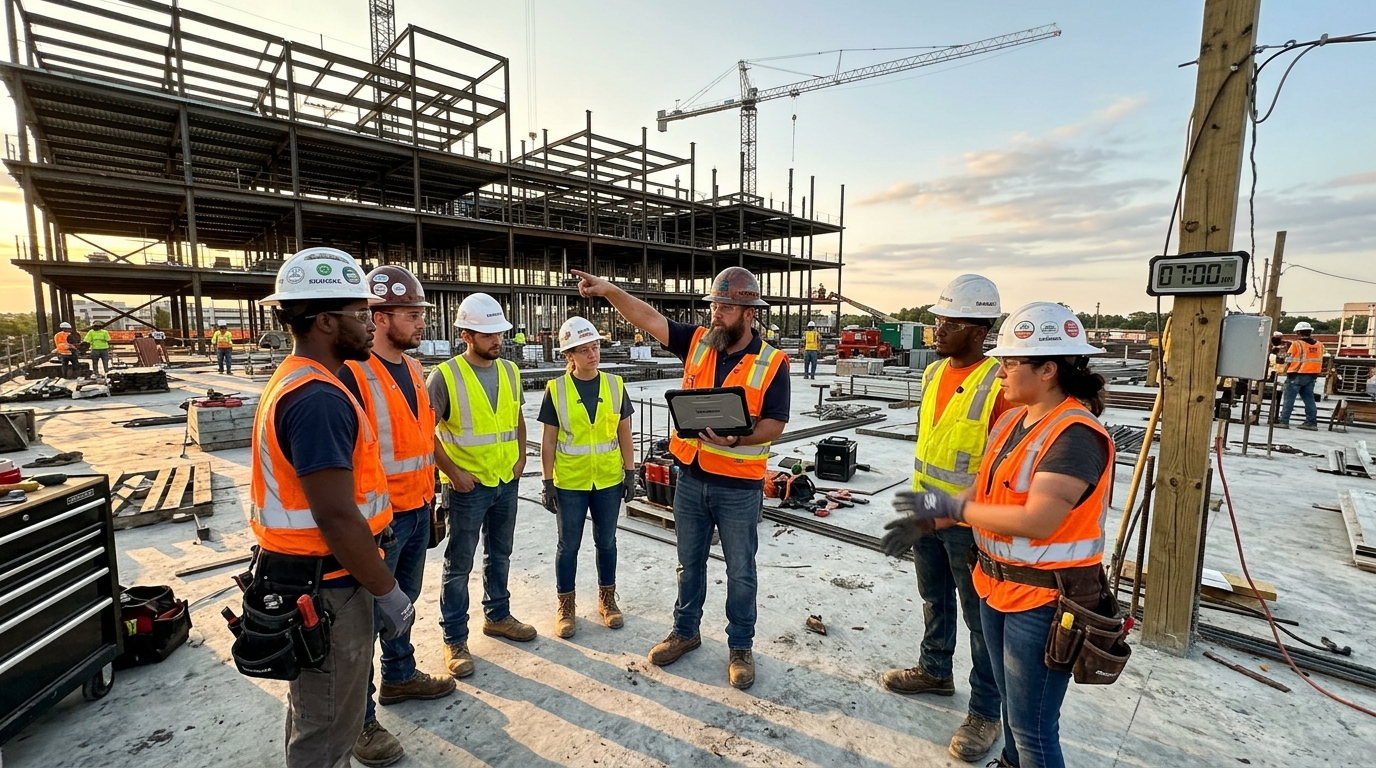
Use daily scheduling huddles to identify and resolve bottlenecks before they cascade
Track actual labor hours against estimates by task, not just by day
Watch out for:
Over-optimization can backfire. Crews pushed too hard burn out, make mistakes, and quit
Cross-training takes time to develop and not every worker will adapt equally
Labor scheduling improvements require reliable foremen who can execute the plan
8. Build Long-Term Supplier Partnerships
Best for: Contractors with recurring material needs who want pricing stability across multiple projects.
Transactional bidding, where you shop every purchase to the lowest price, is the default procurement approach for most contractors. It’s also one of the least effective at reducing construction costs over time. Long-term supplier partnerships offer better pricing, priority availability during shortages, and rebate programs that reward loyalty.
Vendor rebate programs and loyalty pricing are widely available but underutilized. Many contractors don’t know they exist, and others don’t buy enough from a single supplier to qualify.
Key actions:
Consolidate purchases with fewer suppliers to increase your volume and negotiating position
Negotiate annual contracts with fixed or capped pricing
Ask about vendor rebate programs and understand the volume thresholds required to qualify
Build relationships with supplier reps, not just purchasing departments
Watch out for:
Consolidation creates dependency. If your sole supplier has a shortage, you have no backup
Rebate thresholds can incentivize over-purchasing if you’re not disciplined
Partnerships require both sides to invest time, which means they take longer to show returns than transactional approaches
For a deeper look at making these relationships work, read this guide on how to build contractor vendor partnerships.
9. Cut Jobsite Waste With Better Material Management
Best for: Material-heavy projects where the 25 to 30% material cost share makes even small waste reductions meaningful.
Building materials account for 25 to 30% of total construction costs according to NAHB data. A standard waste factor of 10% is baked into most estimates, but many projects exceed it through poor storage, over-ordering, or damage from weather and handling.
Prefabricated components manufactured off-site are a significant lever here. They minimize on-site cutting waste, reduce weather exposure, and cut installation time. This isn’t a niche approach anymore.
Key actions:
Use just-in-time delivery to reduce on-site storage, damage, and theft
Prefabricate what you can off-site to minimize cutting waste and installation errors
Track material usage against estimates at the task level, not just the project level
Designate a material management lead on every jobsite
Watch out for:
Just-in-time delivery requires reliable suppliers and transportation, which isn’t always available in remote areas
Prefabrication requires more upfront design time and coordination
Material tracking adds administrative overhead that smaller crews may resist
10. Adopt Construction Technology for Real-Time Cost Tracking
Best for: Contractors ready to invest in digital tools and willing to change established workflows.
The data is clear: 71% of contractors using digital tools reported measurable improvements in project efficiency, and 61% reported that technology reduced project errors.
Real-time job costing catches overruns while they’re still small enough to fix. BIM identifies spatial conflicts before construction begins, eliminating costly rework. Drone surveys provide accurate earthwork volumes that reduce material over-ordering.
Key actions:
Start with job costing software that integrates with your accounting system
Use BIM on projects where coordination between trades is complex
Implement photo documentation on every project to reduce dispute-related costs
Track the ROI of every technology investment to justify ongoing spend
Watch out for:
Technology adoption fails when it’s imposed without training or buy-in from field teams
Software costs (licenses, training, IT support) can eat into savings if not managed carefully
The construction industry has a history of buying software and never fully implementing it. Commit to one tool at a time
Essential Tools for Real-Time Budget Management
ERP Systems: For automated 3-way matching between POs, invoices, and receipts.
BIM (Level 3): To perform “Clash Detection” before a single nail is driven, saving roughly 5% in rework.
Predictive Analytics: Using AI to forecast material price dips for “Lock-in” strategies.
11. Build In Cost Escalation Clauses
Best for: Projects spanning 6+ months, especially those exposed to tariff-affected materials.
With tariff policy shifting and material costs projected to rise 5 to 7% in 2025, fixed-price contracts without escalation provisions put all material price risk on one party. That’s not sustainable, and it leads to either inflated bids (contractors pricing in risk) or mid-project disputes.
Cost escalation clauses aren’t adversarial. They’re a shared risk management tool that keeps both parties honest.
Key actions:
Include escalation clauses tied to published price indices (like the Bureau of Labor Statistics Producer Price Index for construction materials)
Define trigger thresholds (e.g., escalation applies only when material costs increase more than 3%)
Cap total escalation exposure so both sides understand worst-case scenarios upfront
Watch out for:
Owners may push back on escalation clauses, viewing them as open-ended cost increases
Poorly written clauses create ambiguity that leads to disputes
Escalation protection can make contractors less motivated to find cost-saving alternatives
12. Phase Projects Strategically for Cash Flow
Best for: Large commercial builds where interest carry on the total project cost is significant.
Phasing isn’t just about construction sequencing. It’s a financial strategy. Completing revenue-generating spaces first (tenant-ready areas, operational sections of a facility) means faster returns on investment, which reduces the total interest cost of the project.
Phasing also spreads material purchases across time, reducing the need for bulk storage and the risk of damage or theft on site.
Key actions:
Sequence construction to prioritize spaces that generate revenue or operational value first
Align procurement schedules with phase milestones to avoid warehousing materials
Model the financial impact of different phasing scenarios before committing to a construction schedule
Watch out for:
Phasing adds complexity to site logistics and trade coordination
Some building systems (HVAC, electrical) don’t phase easily without additional temporary infrastructure
Phased occupancy may trigger additional inspection and permitting requirements
13. Don’t Default to the Lowest Bidder
Best for: Every project owner and general contractor still using the “get three bids, pick the cheapest” approach.
This is the contrarian position on this list, and it’s the one that practitioners feel most strongly about. Dow Smith Company, a Tennessee-based general contractor, argues that the number one way to reduce commercial construction costs is to stop automatically choosing the lowest bidder.
The logic: qualified construction supply doesn’t meet demand in today’s market. There are no bargains in the construction phase. The lowest bidder is often the one who missed something in their takeoff, will make it up through change orders, or simply doesn’t have the capacity to deliver on schedule. The real cost of a low bid that goes sideways, delays, rework, litigation, always exceeds what you would have paid a qualified contractor from the start.
Key actions:
Evaluate bids on total value: qualifications, safety record, references, capacity, and price
Hire your construction partner during design, not after, so they can contribute practical cost-saving input
Check reference projects of similar scope and complexity, not just the contractor’s best highlight reel
Watch out for:
Abandoning lowest-bid selection requires more effort in the evaluation process
Some organizations have procurement policies that mandate lowest-price selection. Changing these takes institutional buy-in
Higher-priced bids aren’t automatically better. The point is to evaluate holistically, not to overpay
14. Invest in Workforce Training and Safety
Best for: Contractors struggling with rework, turnover, or rising insurance costs.
Skilled crews work faster, make fewer mistakes, and produce fewer costly callbacks. In an industry that needs 723,000 new hires annually just to keep up with demand, retention through training is significantly cheaper than constant recruitment.
Safety training prevents injuries that cause project delays, workers’ compensation claims, and insurance premium increases. The cost of a serious jobsite accident, in both human and financial terms, dwarfs the investment in prevention.
Key actions:
Build structured onboarding programs for new hires that include both technical skills and safety protocols
Cross-train workers to increase crew flexibility and reduce dependency on individual specialists
Track safety incidents and near-misses and use them as training material
Invest in safety equipment and PPE as a baseline, not an afterthought
Watch out for:
Training requires pulling workers off billable projects, which creates short-term cost pressure
Not all training programs deliver measurable skill improvement. Evaluate results, not just completion rates
Investing in training for workers who then leave is a real risk, but the alternative (untrained workers who stay) is worse
15. Conduct Post-Project Reviews to Find the Leaks
Best for: Every contractor, because this strategy is free and almost no one does it consistently.
This is the simplest and most neglected strategy for reducing construction costs over time. Compare estimated versus actual costs on every job. Identify which cost categories consistently overrun. Feed those lessons back into future estimates.
The compounding effect is powerful. A contractor who runs post-project reviews after every job for a year will produce dramatically more accurate estimates, fewer surprises, and tighter margins than one who never looks back.
Key actions:
Schedule a formal cost review within 30 days of project completion while details are fresh
Break down variances by category: materials, labor, equipment, subcontractors, change orders
Identify the root cause of every significant variance, not just the category
Update your estimating templates based on findings
Watch out for:
Post-project reviews can feel like blame sessions if not facilitated carefully. Focus on systems, not individuals
Time pressure from the next project makes it easy to skip this step. Schedule it like any other deliverable
The value is cumulative. One review teaches you something. Twenty reviews transform your estimating accuracy
Bringing It Together: Procurement Is the Overlooked Lever
Most advice about how to reduce construction costs focuses on what happens on the jobsite. Scheduling, waste reduction, technology adoption. Those strategies matter, and they’re covered above. But the biggest single lever most contractors overlook is how they buy materials.
Building materials account for 25 to 30% of total project costs. Even a 5% improvement in material procurement, whether through buying group membership, supplier partnerships, early price locks, or volume consolidation, translates directly to the bottom line on every project.
For contractors who want to explore how collective purchasing can lower their material costs, the contractor collective purchasing guide explains the mechanics in detail. And for those evaluating specific options, this overview of the best buying groups for contractors is a good starting point.
The strategies in this article aren’t theoretical. They’re being used by contractors across the country to protect margins in a market where costs keep climbing. The ones who act on multiple strategies simultaneously, better procurement, tighter planning, disciplined execution, are the ones who consistently deliver projects on budget.
Frequently Asked Questions
What is the single biggest factor in construction cost overruns?
Poor pre-construction planning and scope definition. Change orders alone add 11 to 15% to project costs and extend timelines by about 20%. Most overruns trace back to decisions (or non-decisions) made before construction even begins.
How much can a contractor buying group actually save?
Savings depend on your current spending levels and the group’s vendor network, but published estimates are significant. One GPO’s savings calculator shows a contractor with $2.5 million in annual direct costs saving over $75,000 per year. Larger commercial contractors with higher material spends can save proportionally more.
Are construction costs going to keep rising in 2025?
All indicators point to yes. JLL’s 2025 Construction Outlook projects a 5 to 7% increase in construction costs. Tariff uncertainty, persistent labor shortages, and above-CPI construction inflation (tracked by analysts like Ed Zarenski) all suggest continued upward pressure.
How do I reduce construction costs without sacrificing quality?
Focus on procurement efficiency and planning, not cheaper materials. Value engineering identifies alternative specifications that perform equally at lower cost. Buying groups give you better prices on the same products. Detailed scope documents prevent costly change orders. None of these approaches require compromising on quality.
What percentage of construction costs go to materials versus labor?
Materials typically account for 25 to 30% of total project costs (NAHB data), while labor represents 40 to 60% (varies by project type and region). The remaining costs cover equipment, overhead, insurance, and profit margin.
Is it worth investing in construction technology to cut costs?
For most contractors, yes. Research from Dodge Data & Analytics shows that 71% of contractors using digital tools reported measurable efficiency improvements. Start with job costing software that gives you real-time visibility into spending, then add tools like BIM or drone surveys as your team’s comfort level grows.
How early should I involve a contractor in the design process?
As early as possible, ideally during schematic design. The earlier a contractor can review plans for constructability issues, material availability, and cost traps, the more options exist to redirect spending. Once construction documents are finalized, the cost-saving window narrows dramatically.
Do cost escalation clauses protect both parties?
When written well, yes. They protect contractors from absorbing unpredictable material price increases and protect owners from inflated bids where contractors pad pricing to cover risk. The key is tying escalation to published price indices and defining clear trigger thresholds so both parties understand the mechanism upfront.
Recent Comments