TL;DR
Construction hi vis gear vendors supply the high-visibility safety apparel that keeps workers visible and alive on jobsites. Choosing the right vendor means understanding ANSI/ISEA 107-2020 classifications, OSHA requirements, FR crossover standards, and bulk purchasing strategies. This glossary covers every term, standard, and procurement concept that safety managers and purchasing leads need to evaluate vendors and buy compliantly.
Quick Answer: How to Choose the Best Construction Hi-Vis Gear Vendor
If you’re evaluating construction hi-vis gear vendors, prioritize compliance before price. A good vendor should supply ANSI/ISEA 107-2020 certified garments, offer Class 2 and Class 3 options, maintain broad sizing (including women’s and extended sizes), provide consistent inventory, support bulk pricing, and understand OSHA and NFPA requirements. Vendors that specialize in construction safety apparel typically reduce compliance risks while lowering long-term procurement costs through standardized purchasing and replacement programs.
Before placing an order, verify:
Requirement | Why It Matters |
|---|---|
ANSI/ISEA 107-2020 certification | Required for compliant garments |
Class 2 & Class 3 inventory | Covers most construction work |
Type R garments | Needed for roadway projects |
Women’s & extended sizing | Helps comply with OSHA PPE Fit Rule |
FR options | Required on electrical or industrial sites |
Bulk discounts | Reduces total procurement costs |
Fast lead times | Prevents jobsite delays |
Replacement planning | Maintains visibility compliance |
Key takeaway: The best vendor is rarely the cheapest one. The right supplier reduces compliance risk, minimizes replacement costs, and ensures workers always have compliant PPE when projects begin.
Why This Glossary Exists
BLS data shows 1,034 construction workers died on the job in 2024. Of those, 244 deaths (about 24%) involved transportation incidents, the kind of on-site vehicle and equipment strikes that high-visibility gear is specifically designed to prevent. According to NIOSH, struck-by injuries accounted for roughly 17% of fatal injuries in construction between 2011 and 2021.
The math on prevention is clear. OSHA estimates that construction companies save $4 to $6 for every $1 invested in safety programs. Fatal construction injuries alone cost the U.S. $5 billion annually, and workers’ compensation claims eat up nearly 4% of construction employer costs, more than double the average across other industries.
Despite these stakes, most content about construction hi vis gear vendors focuses on product catalogs or self-promotional listicles. Nobody has assembled a plain-language reference that connects hi-vis terminology to actual vendor evaluation decisions. That is what this guide does.
Whether you are a safety manager outfitting 200 workers, a project manager enforcing site compliance, or a procurement lead comparing supplier options, bookmark this page. Every term below links directly to how you should be thinking about your hi-vis vendor relationships.
For a broader look at structuring your vendor relationships across all supply categories, see this vendor procurement guide.
Section 1: Core Hi-Vis Gear Definitions (A to Z)
A through C
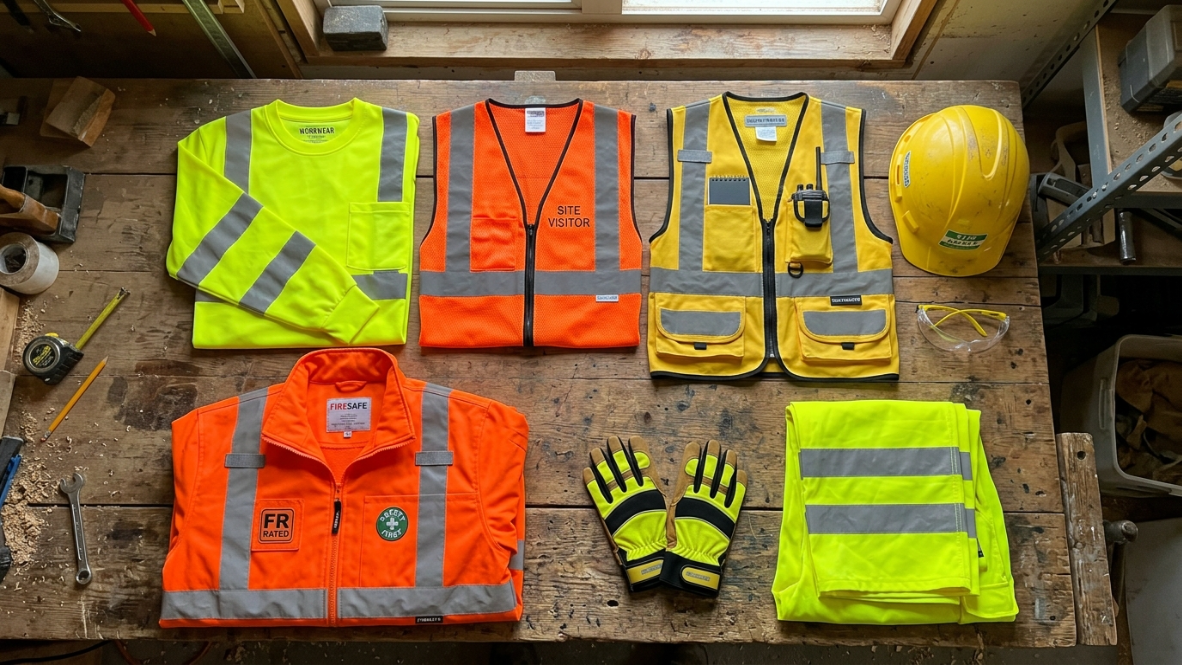
ANSI/ISEA 107-2020
The current U.S. standard governing high-visibility safety apparel design, performance, and materials. Published by the American National Standards Institute and the International Safety Equipment Association, this standard sets the criteria for both fluorescent background material (daytime visibility) and retroreflective material (nighttime and low-light visibility). It defines three performance classes and three garment types. Any construction hi vis gear vendor worth considering should certify products to this specific edition, not an older revision.
Arc Rating (ATPV)
A measurement of thermal protection expressed in calories per square centimeter (cal/cm²). This rating matters for FR hi-vis garments used near electrical work or flash fire hazards. The higher the arc rating, the more energy the fabric can absorb before causing a second-degree burn. When evaluating vendors for dual-hazard sites, always ask for the ATPV value alongside the ANSI class.
Breakaway Vest
A safety vest designed with snap-away closures that release if the garment gets snagged by moving equipment, conveyor belts, or passing vehicles. This is not optional near heavy machinery. Many general contractors mandate breakaway closures across the entire site. A vendor that only stocks standard-closure vests will leave gaps in your compliance program.
Class 1 Garment
The lowest visibility rating under ANSI/ISEA 107. Appropriate for workers separated from traffic moving under 25 mph, such as those in warehouses, parking facilities, or off-road construction zones. Class 1 garments are not compliant for roadway construction work. If a vendor suggests Class 1 for a road-adjacent site, find a different vendor.
Class 2 Garment
Mid-level visibility and the blanket minimum that most general contractors enforce across entire jobsites, regardless of whether every worker is near the roadway. Class 2 garments must have at least 775 square inches of fluorescent background material and 201 square inches of reflective tape. For virtually any scenario involving workers on or near public roadways, OSHA mandates at least an ANSI/ISEA 107 Type R, Class 2 garment as the legal minimum.
Class 3 Garment
The highest visibility classification. Required for high-speed roadway work (over 50 mph), flagging operations, and reduced-visibility conditions. Class 3 garments must contain at least 1,240 square inches of fluorescent material and 310 square inches of reflective tape, providing 360-degree visibility. The material requirements alone make these garments heavier and more expensive, so bulk pricing from your hi vis gear vendor matters significantly at this level.
Class E (Pants)
A separate ANSI classification for hi-vis pants. On their own, Class E pants do not constitute a complete hi-vis ensemble. But when combined with a Class 2 or Class 3 top, they create a higher-rated ensemble. This is a smart flexibility strategy: outfit crews with Class 2 tops and Class E pants during daytime, achieving Class 3 coverage without the bulk of a Class 3 jacket.
Conspicuity
The technical term for how easily a worker can be perceived as a distinct human shape against a background. Conspicuity depends on contrast between the worker’s clothing and the environment, the amount of fluorescent and retroreflective material, and how the material is arranged on the body. This is ultimately what all the standards are trying to measure and maximize.
D through F
DOT Striping
Reflective tape patterns meeting Department of Transportation specifications. Primarily applies to vehicle markings, but the term sometimes appears in hi-vis garment descriptions, particularly for workers in DOT-regulated road zones. Not interchangeable with ANSI tape requirements.
Enhanced Visibility
A general industry marketing term for bright-colored clothing that does NOT meet ANSI/ISEA 107 standards. You will see this phrase on orange t-shirts and lime-green polos sold at hardware stores. Enhanced visibility clothing is not a substitute for compliance-rated gear and using it as such is a citation risk. Construction hi vis gear vendors should clearly distinguish between enhanced visibility products and ANSI-certified garments in their catalogs.
Fluorescent Background Material
The bright-colored fabric (yellow-green, orange-red, or red) that provides daytime visibility. These dyes convert UV light into visible light, making the wearer appear to glow. The critical detail: fluorescent dyes are UV-sensitive and degrade with sun exposure. Practitioners on construction forums report that quality vests fade from UV exposure before they structurally fail, which is why replacement schedules matter (more on this below).
FR Hi-Vis Gear
Garments meeting both ANSI 107 visibility standards and flame resistance standards such as NFPA 2112 (flash fire), NFPA 70E (arc flash), or ASTM F1506. Required where flash fire, arc flash, and low-visibility hazards coexist, which is common on industrial concrete projects, utility work, and oil-and-gas-adjacent construction. Every component of an FR hi-vis garment (shell fabric, reflective tape, thread, binding, closures) must be flame resistant. A vest alone does not satisfy NFPA 70E requirements; it must be worn as part of a complete arc-rated system over an FR shirt and with FR pants.
G through M
GPO (Group Purchasing Organization)
An entity that aggregates buyer demand across multiple companies to negotiate pre-set pricing with vendors. For construction firms managing crews across several sites, GPO membership can cut safety supply costs by 10% to 20% while standardizing compliance specifications. This is one of the most underused procurement strategies in construction PPE purchasing.
Explore how contractor purchasing networks create these savings at scale.
Garment Type (Type O, R, P)
ANSI/ISEA 107’s three-letter classification based on the worker’s environment:
Type O (Off-road): For workers not exposed to public roadway traffic. Covers parking facilities, warehouse interiors, off-road construction. Can be Class 1, 2, or 3.
Type R (Roadway): For workers exposed to roadway traffic and moving vehicles or equipment. Can be Class 2 or 3 only. This is the relevant type for most construction hi vis gear vendor purchases.
Type P (Public Safety): For fire, police, EMS, and related public safety workers. Can be Class 2 or 3.
MUTCD (Manual on Uniform Traffic Control Devices)
The federal standard published by FHWA that mandates ANSI 107 Class 2 or 3 garments for all workers within the right-of-way of Federal-aid highways. If your crews work on or near roads receiving federal funding, MUTCD compliance is non-negotiable. Your vendor should know this standard by name.
Mesh Vest
A lightweight, breathable safety vest constructed with open-weave mesh panels. Common in warm climates and summer months. Mesh vests must still meet ANSI material requirements for fluorescent background area and retroreflective tape. The mesh portion counts differently toward the total required material area, so cheaper mesh vests sometimes fall short. Verify the ANSI certification, not just the color.
Modacrylic Fabric
A flame-resistant synthetic fiber commonly used in FR hi-vis garments. Often blended with aramid fibers for added durability and tear resistance. Modacrylic is inherently flame resistant (the property is in the fiber itself, not a chemical treatment), which means it does not wash out over time. This matters for garments that get laundered frequently on construction sites.
N through R
NFPA 2112
National Fire Protection Association standard for flash fire protection in garments. Sets minimum performance requirements for the thermal protection of workers exposed to short-duration thermal exposures from fire. Relevant to hi-vis procurement whenever the work environment includes flammable gases, vapors, or combustible dust.
NFPA 70E
Standard for electrical safety in the workplace, including arc flash protection requirements. FR hi-vis garments used for electrical work must comply with this standard. Important to remember that a single FR vest worn over a non-FR shirt does not meet NFPA 70E requirements. The entire ensemble matters.
Non-ANSI Gear
Any brightly colored clothing lacking ANSI/ISEA 107 certification. This includes the enhanced visibility shirts, generic orange vests from gas stations, and DIY solutions. Using non-ANSI gear on a construction site that requires compliant hi-vis is a citation risk and a liability exposure. Discount construction hi vis gear vendors sometimes carry products that meet outdated standards or no standard at all. Always verify the specific ANSI edition printed on the garment label.
PPE Fit Rule (29 CFR 1926.95)
OSHA’s final rule, effective January 13, 2025, explicitly requiring that construction employers ensure PPE properly fits each individual worker. This is not a new obligation so much as a clarification, but it has real teeth. Vendors offering fit testing services, comprehensive sizing guidance, and diverse sizing ranges (including women’s and extended sizes) now carry a genuine compliance advantage. If your current vendor only stocks M/L/XL in men’s cuts, you have a problem.
For a deeper look at how this rule affects your broader PPE buying strategy, read this PPE procurement and compliance guide.
Retroreflective Material
Tape or trim that bounces light back toward its source, most commonly vehicle headlights. This is what makes workers visible at night. The two main types are glass bead (less expensive, less bright) and prismatic (more expensive, significantly brighter). ANSI/ISEA 107 sets minimum performance requirements for retroreflective brightness measured in candelas per lux per square meter. Prismatic tape typically outperforms glass bead by a wide margin and holds up better after laundering.
S through Z
Segmented Tape
Reflective tape with gaps or perforations between individual segments, improving garment breathability and flexibility. ANSI/ISEA 107-2020 added specific testing requirements for segmented tape, recognizing its growing popularity. Segmented tape must meet the same retroreflective performance minimums as continuous tape when measured per unit area. Ask vendors whether their segmented tape garments have been tested under the 2020 standard.
Struck-By Hazard
One of OSHA’s “Fatal Four” categories for construction fatalities. Struck-by injuries occur when a worker is hit by a moving vehicle, piece of equipment, or falling/flying object. High-visibility apparel is the primary PPE countermeasure against vehicle and equipment strikes. CDC data shows that fatal work-related injuries at roadway construction sites average 123 worker deaths per year.
Surveyor Vest
A heavier vest style featuring multiple pockets for tools, pens, radios, and field notebooks. Popular with superintendents, inspectors, and surveyors who need to carry gear without a tool belt. Surveyor vests are available in Class 2 and Class 3 configurations. Their weight and coverage make them less popular in summer heat.
Two-Tone Vest
A vest with a contrasting dark (often black) bottom panel. The practical benefit is that the dark panel hides dirt and stains, extending the garment’s usable appearance on muddy or dusty construction sites. Two-tone vests must still meet ANSI requirements for fluorescent material area above the waist.
UV Degradation
The process by which sunlight breaks down fluorescent dyes, reducing daytime visibility over time. This is the primary reason hi-vis garments need periodic replacement. Practitioners on construction forums report that quality vests fade noticeably after 3 to 4 months of heavy outdoor use. Many companies replace vests every 6 to 12 months or after a set number of wash cycles to maintain compliance.
Vendor Compliance Verification
The process of confirming that a vendor’s products meet the current edition of ANSI standards, not an outdated version. This sounds basic, but discount vendors sometimes carry garments certified to ANSI/ISEA 107-2015 or even 107-2010. The label should clearly state ANSI/ISEA 107-2020. If it does not, ask the vendor directly and get the answer in writing.
Use a vendor selection criteria checklist to formalize this verification step.
Wholesale/Bulk Purchasing
A procurement strategy where volume orders reduce the per-unit cost of hi-vis gear, often by 40% to 55% below retail pricing. For example, 100 Class 3 jackets at wholesale might cost $50 each ($5,000 total) compared to $110 each at retail ($11,000). Even smaller orders see savings: companies purchasing 100 safety vests might pay $12 per vest instead of $15 retail.
Section 2: How ANSI Classes and Types Apply to Construction Sites
The interaction between garment type and performance class trips up even experienced safety managers. Here is how the system works in practice.
Garment Type | Available Classes | Who Wears It | When Required |
|---|---|---|---|
Type O (Off-road) | Class 1, 2, or 3 | Warehouse workers, off-road construction, parking lot attendants | No public roadway exposure |
Type R (Roadway) | Class 2 or 3 only | Road construction crews, utility workers near roads, flaggers | Any work on or near public roads |
Type P (Public Safety) | Class 2 or 3 only | Fire, police, EMS, emergency responders | Public safety operations |
Three practical rules for construction sites:
Most general contractors require Class 2 as a blanket minimum across the entire site, even for workers who never get near a road. This eliminates confusion about who needs what.
For high-speed roadway work (over 50 mph) or reduced-visibility conditions (fog, dusk, night), Type R Class 3 is the legal requirement.
The Class E pants trick is real and useful. Pairing Class E pants with a Class 2 top creates a Class 3 ensemble. This gives crews flexibility to scale up protection for night shifts without switching to bulkier Class 3 jackets.
When buying from construction hi vis gear vendors, make sure the vendor stocks the full matrix of types and classes. A vendor that only carries Type O, Class 1 vests cannot serve a road-adjacent construction project.
Which Hi-Vis Garment Should You Buy?
Different construction roles require different garments.
Job Role | Recommended Garment |
|---|---|
General labor | Type R Class 2 vest or shirt |
Road construction | Type R Class 3 |
Flagger | Type R Class 3 |
Surveyor | Surveyor vest |
Utility worker | FR Class 2 or 3 |
Equipment operator | Class 2 shirt or vest |
Concrete crew | Class 2 shirt |
Inspector | Surveyor vest |
This practical guidance aligns garment selection with real-world construction tasks and helps procurement teams standardize PPE across crews.
Section 3: What to Look for in a Hi-Vis Gear Vendor
Not all construction hi vis gear vendors are equal. The cheapest option often becomes the most expensive one when garments fail inspections, fall apart in three months, or arrive late for a project start. Here is what separates reliable vendors from risky ones.
Current Standard Compliance
The vendor should confirm in writing that products meet ANSI/ISEA 107-2020, the current edition. Not 2015. Not 2010. Discount vendors sometimes carry older inventory certified to outdated standards. Check the garment label yourself.
Product Breadth
The ideal vendor stocks vests (mesh, surveyor, breakaway, two-tone), hi-vis shirts (short-sleeve, long-sleeve), hoodies, jackets, rain gear, FR hi-vis options, and Class E pants. A narrow catalog forces you to split orders across multiple suppliers, which increases coordination costs.
Sizing Range
OSHA’s 2025 PPE fit rule means this is no longer optional. Vendors need to offer a real range of sizes, including women’s-specific cuts and extended sizes. If the vendor only carries S through 2XL in a generic unisex fit, they are not equipped to help you comply.
Bulk Pricing and Customization
Volume discounts should be standard for orders of 50 or more garments. Most vendors also offer logo imprinting or heat-transfer customization, which helps with site identification and brand consistency. Get pricing in writing for your typical order volume before committing.
For strategies on negotiating better pricing with safety gear suppliers, explore these vendor price negotiation tactics.
Delivery Reliability
Late delivery on PPE means workers standing idle or, worse, working without proper gear. Ask for the vendor’s average lead time, whether they maintain safety stock for your most-ordered items, and how they handle emergency or rush orders.
Domestic Sourcing Options
With tariffs enacted in 2025 restructuring the cost basis for imported safety equipment, domestically sourced hi-vis gear insulates your pricing from trade policy volatility. According to the International Safety Equipment Association, 77% of members report significant cost increases from recent tariffs. Vendors with domestic manufacturing or warehouse operations can offer more stable pricing.
GPO Compatibility
For mid-size contractors running multiple crews and sites, the ideal setup is a primary full-line vendor for volume purchasing and account pricing, a secondary source for urgent or specialty orders, and a GPO membership providing pre-negotiated pricing across vendors. This three-layer approach balances cost, compliance, and speed.
Learn about the specific benefits of construction vendor programs for managing these relationships.
Construction Hi-Vis Vendor Evaluation Checklist
Choosing between multiple vendors becomes much easier when every supplier is scored against the same procurement criteria.
Vendor Comparison Scorecard
Evaluation Criteria | Weight | Vendor A | Vendor B | Vendor C |
|---|---|---|---|---|
ANSI 107-2020 Certified | 20% | |||
Product Selection | 15% | |||
Inventory Availability | 15% | |||
Pricing | 15% | |||
Delivery Speed | 10% | |||
Women’s Sizes Available | 10% | |||
FR Garments Available | 10% | |||
Customer Support | 5% | |||
Return Policy | 5% | |||
Warranty | 5% |
A standardized scorecard removes subjectivity from purchasing decisions and creates documentation that can support internal procurement policies and contractor audits.
Construction Hi-Vis Vendor Comparison Factors
Factor | Excellent Vendor | Average Vendor |
|---|---|---|
ANSI Compliance | 107-2020 | Older inventory |
Inventory | Large | Limited |
Women’s Sizes | Yes | Few |
FR Options | Full line | Minimal |
Custom Branding | Yes | Limited |
Lead Times | Short | Variable |
Bulk Discounts | Strong | Moderate |
Procurement Support | Dedicated | Basic |
Section 4: The Shift from Vests to Hi-Vis Clothing
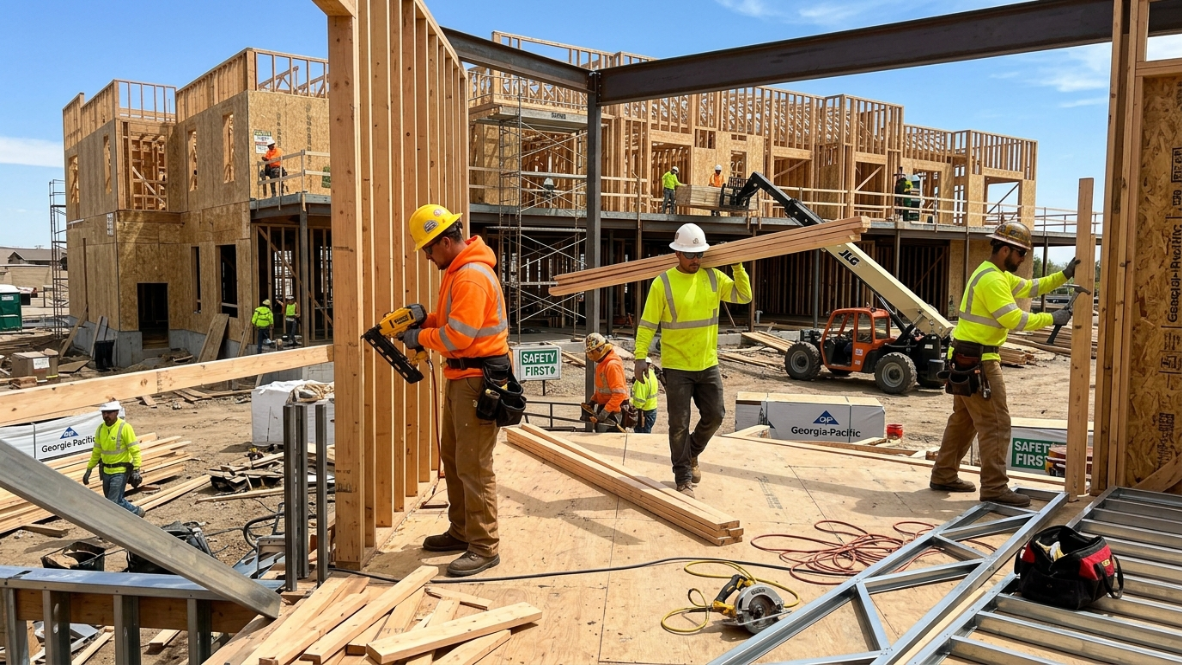
One of the biggest practical shifts in construction hi-vis gear over the past several years is the move away from standalone vests toward hi-vis shirts, hoodies, and jackets.
Practitioners on construction forums explain the reasoning bluntly. One contractor wrote: “Roughly 90% of our job sites require hi-vis now, so I only buy hi-vis shirts for the guys. T-shirts, long sleeves, hoodies.” The logic is simple. Workers who wear a hi-vis shirt as their actual work shirt don’t have to put on and take off a vest every time they enter or leave the work zone. Compliance becomes automatic rather than an extra step.
Comfort drives this trend too. Forum contributors report that quality hi-vis vests built to last are usually not comfortable in summer heat, while cheaper vests fall apart in 3 to 4 months. One worker mentioned buying Viking brand vests from surplus stores at around $50 for better durability, but even durable vests are hot and restrictive in warm weather.
There is one critical compliance note here. If a worker wears a hi-vis shirt (ANSI-rated) and then puts a non-hi-vis jacket or hoodie over it, the visibility compliance is voided. The outermost layer must meet the ANSI requirements. Vendors who understand this will recommend hi-vis outerwear for cold-weather layering, not just base-layer shirts.
When evaluating construction hi vis gear vendors, ask whether they carry the full spectrum of hi-vis clothing, not just vests. The vendor that only sells vests is increasingly out of step with how construction crews actually dress.
Section 5: Controlling Hi-Vis Procurement Costs
Hi-vis gear is a recurring expense, not a one-time purchase. UV degradation, physical wear, wash cycles, and workforce turnover mean you are buying this stuff continuously. Controlling costs without cutting compliance corners requires planning.
Bulk Purchasing Economics
The savings are straightforward and significant. Companies purchasing 100 safety vests might spend $12 per vest instead of $15 at retail. Scale that to Class 3 jackets and the gap widens dramatically: $50 per jacket in bulk versus $110 at retail means saving $6,000 on a single order of 100 jackets.
For detailed strategies on reducing supply costs across all procurement categories, that guide breaks down the approach.
Replacement Budgeting
Do not budget for hi-vis as if it lasts forever. Companies that take compliance seriously replace vests every 6 to 12 months or after a specified number of washes. UV degradation is the main killer of fluorescent dyes, especially in the Southeast and Southwest where sun exposure is intense. Build replacement cycles into your annual safety budget.
GPO Membership
Standardizing safety product sourcing through a GPO contract can cut costs 10% to 20% while improving compliance with safety specifications. For contractors with large employee populations across multiple sites, this is often the single highest-impact procurement decision.
Tariff Awareness
The tariffs enacted in 2025 are not temporary. They have restructured cost structures for imported safety equipment across steel, aluminum, specialty plastics, and electronic components. If your primary hi vis gear vendor sources heavily from overseas, expect price increases and ask about domestic alternatives. Lock in long-term pricing agreements where possible.
Compare your current hi-vis spending against market benchmarks using these construction vendor discount strategies.
Common Mistakes When Buying Hi-Vis Gear
Many contractors spend more than necessary because they make avoidable purchasing mistakes.
Mistake #1: Buying Older ANSI Inventory
Some vendors continue selling garments certified to ANSI/ISEA 107-2015. Always verify that labels reference ANSI/ISEA 107-2020.
Mistake #2: Buying Only Vests
Today’s construction sites increasingly rely on hi-vis shirts, hoodies, jackets, and rainwear instead of standalone vests.
Mistake #3: Ignoring Replacement Costs
The cheapest vest often needs replacing twice as often, increasing annual spending.
Mistake #4: Ordering Without Size Data
Poor fit creates OSHA compliance risks and lowers worker acceptance.
Mistake #5: Choosing Price Over Availability
Delayed shipments can stop projects before they begin.
Section 6: FR Hi-Vis, the Overlooked Crossover
Many construction sites, especially industrial concrete, utility, and energy-adjacent projects, require garments that satisfy both visibility and flame resistance standards simultaneously. This dual-hazard category is where many construction hi vis gear vendors fall short.
An FR safety vest uses arc-rated, flame-resistant fabrics that self-extinguish and resist ignition. It must be tested to ASTM F1506 and/or NFPA 2112 in addition to ANSI visibility standards. The materials are more expensive because every component needs to be FR-rated: the shell, the reflective tape, the thread, the binding, and the closures.
The layering rules are strict. A single FR hi-vis vest worn over a non-FR cotton shirt does not satisfy NFPA 70E requirements. Those standards mandate coverage of all potentially exposed skin with arc-rated fabric. The vest must be part of a complete arc-rated system, over an FR shirt and paired with FR pants.
If your projects include any electrical work, welding, or proximity to flammable materials, your hi vis gear vendor needs a genuine FR product line, not just a single FR vest buried in the catalog. Ask for their NFPA 2112 and NFPA 70E certified options, and verify the arc ratings.
For a complete overview of PPE compliance across all hazard categories, see this PPE compliance and OSHA guide.
How Often Should Construction Companies Replace Hi-Vis Gear?
Replacement depends on exposure, washing frequency, and physical damage rather than garment age alone.
Work Environment | Typical Replacement |
|---|---|
Heavy highway construction | 3–6 months |
Daily outdoor construction | 6–12 months |
Indoor warehouses | 12–24 months |
Occasional visitors | Inspect before each use |
Replace garments immediately if:
Reflective tape peels
Fluorescent fabric fades
Tears reduce visible surface area
Labels become unreadable
ANSI compliance can no longer be verified
Frequently Asked Questions
What ANSI class of hi-vis gear do construction workers need?
Most general contractors require Class 2 as a minimum across the entire site. For work on high-speed roadways (over 50 mph), flagging operations, or reduced-visibility conditions, Class 3 is required. The specific requirement depends on the work environment, but Class 2 is the safe baseline for general construction.
How often should hi-vis gear be replaced?
Most companies replace hi-vis garments every 6 to 12 months or after a set number of wash cycles. UV degradation fades fluorescent dyes before the garment structurally fails, meaning it can look intact but no longer meet the brightness requirements of ANSI/ISEA 107. Heavy outdoor use in sunny climates accelerates this timeline to as few as 3 to 4 months.
Do hi-vis shirts and hoodies count as ANSI-compliant alternatives to vests?
Yes, as long as they are certified to ANSI/ISEA 107-2020 for the appropriate type and class. Many construction crews have shifted to hi-vis shirts and hoodies because they are more comfortable and eliminate the extra step of putting on a vest. The key rule: the outermost visible layer must be the ANSI-rated garment. Covering a hi-vis shirt with a non-rated jacket voids compliance.
What is the difference between Type O, Type R, and Type P garments?
Type O is for off-road environments (no public roadway traffic exposure). Type R is for roadway environments where moving vehicles may be present, which covers most construction work near public roads. Type P is for public safety workers like firefighters and police. Construction projects near roadways almost always require Type R.
How does OSHA’s 2025 PPE fit rule affect hi-vis purchasing?
The rule, effective January 13, 2025, requires employers to ensure that all PPE properly fits each individual worker. For hi-vis gear, this means stocking a range of sizes including women’s-specific cuts and extended sizes. Vendors that offer fit testing services and sizing guidance have a compliance advantage.
Can a single FR hi-vis vest satisfy arc flash requirements?
No. NFPA 70E requires coverage of all potentially exposed skin with arc-rated fabric. An FR vest alone does not cover the arms and torso underneath. It must be worn as part of a complete arc-rated ensemble, typically over an FR shirt and with FR pants. The vest adds visibility, but the underlying layers provide the thermal protection.
How much can bulk purchasing save on hi-vis gear?
Savings typically range from 20% to 55% below retail pricing depending on order volume. A practical example: 100 Class 3 jackets at $50 each in bulk versus $110 each at retail saves $6,000 on a single order. Even smaller volume orders of 100 vests can save $3 per unit or more.
What should I ask a hi-vis vendor before placing a first order?
Confirm products meet ANSI/ISEA 107-2020 (the current edition). Ask for their full product range, sizing options, bulk pricing tiers, average lead times, domestic sourcing capabilities, and whether they support GPO contracts. Use a vendor comparison checklist to standardize this evaluation across multiple suppliers.
Recent Comments