
TL;DR
Construction supply cost reduction is not about buying the cheapest materials. It is about plugging four types of leakage: purchase price, procurement process, material volatility, and field waste. With construction input prices up 4.8% year over year and metals surging by double digits, contractors who treat procurement as a discipline (not an afterthought) protect margins that competitors bleed away. This guide covers 12 practical strategies, from joining a contractor buying group to matching buying tactics by material category.
Materials account for roughly 50 to 60% of total construction project costs and influence about 80% of the construction process source. That makes procurement the single biggest lever most contractors underuse.
The numbers in 2026 are not helping. ABC reported that construction input prices rose 2.2% in a single month (March 2026), with materials up 4.8% year over year, the largest annual jump since January 2023 source. AGC flagged even sharper pain in metals: aluminum mill shapes up 33% year over year and steel mill products up 20.7% source. Mortenson’s Q4 2025 Construction Cost Index put national nonresidential costs at 7.35% above the prior year, citing embedded tariffs and persistent electrical/power-distribution lead times source.
Contractors cannot control commodity markets. But they can control how they buy, from whom, how fast they process paperwork, and how much material ends up in the dumpster.
This article walks through 12 construction supply cost reduction strategies organized around four types of leakage that quietly eat contractor margins.
2026 Construction Cost Reduction Strategy: Key Takeaway
To reduce construction supply costs in 2026, contractors must shift from unit-price shopping to leakage control. According to 2026 AGC and ABC data, material inputs are rising at 4.8% annually. Success requires a four-pillar approach:
Price: Leverage contractor buying groups to aggregate volume.
Process: Automate three-way matching (PO/Packing Slip/Invoice).
Volatility: Lock in metals and electrical gear through early buyout.
Field: Reduce the 12.4% margin erosion caused by rework and waste.
What Construction Supply Cost Reduction Really Means
Most advice tells contractors to “reduce costs.” That is too vague. The contractors who actually protect their margins focus on stopping leakage in four specific areas.
Price leakage. Paying more than necessary because of weak purchasing leverage, missed rebates, failure to compare quotes, or buying outside negotiated programs.
Process leakage. Losing money through manual purchase orders, lost packing slips, slow invoice matching, missed early-pay discounts, and duplicate orders. A 2025 Field Materials/SMACNA survey of 50 mechanical contractor organizations found that 60% handle more than 250 AP invoices per month, 90% rely on AP staff to enter invoices before PM approval, and nearly 50% still physically collect packing slips from jobsites source.
Volatility leakage. Exposed bids, expired supplier quotes, no escalation clause, and late buyout of steel, copper, aluminum, or electrical gear. When commodity prices spike between bid day and installation, contractors absorb the difference.
Field leakage. Wrong materials, missing materials, damaged materials, rework, excess waste, and idle crews waiting on deliveries. FMI estimated that U.S. contractors lost $30 billion to $40 billion to labor inefficiencies in 2022, with supply problems being a major contributor to waiting time, overtime, and remobilization source.
These four leakage types sit inside a larger picture. They map directly into the procurement layer of a comprehensive cost optimization framework that also covers Front-End Planning, Value Engineering, Lean production control, and Life-Cycle Cost Analysis—supply cost discipline is one of five compounding levers, not the only one.
Every strategy below targets one or more of these leakage types. The comparison table shows which is which.
At-a-Glance Comparison: 12 Construction Supply Cost Reduction Strategies
Strategy | Best For | Leakage Type | Effort Level | Main Risk Reduced | Biggest Tradeoff |
|---|---|---|---|---|---|
1. Buying group / purchasing alliance | Recurring spend, multi-crew firms | Price | Low-medium | Weak purchasing leverage | Vendor compliance and fit |
2. SKU standardization | Repeat work, multiple crews | Price, field | Medium | Special-order creep, wrong items | Less flexibility |
3. Quote thresholds | High-dollar commodity buys | Price | Medium | Overpaying incumbents | Quote chasing can slow work |
4. Early buyout / price lock | Volatile or long-lead materials | Volatility | Medium-high | Price spikes, lead-time slips | Working capital, storage |
5. Escalation / de-escalation clauses | Long-duration fixed-price contracts | Volatility | Medium | Uncontrolled commodity swings | Documentation burden |
6. Total landed cost purchasing | Field-change-heavy jobs | Price, field | Medium | “Cheap” supplier causing downtime | Harder to compare than unit price |
7. PO / invoice / packing slip automation | High invoice volume | Process | High | Payment leakage, missed discounts | Implementation effort |
8. Inventory controls | Tools, consumables, PPE | Price, process | Medium | Stockouts, duplicate buying | Carrying cost |
9. Waste and rework reduction | Material-heavy trades | Field | Medium-high | Rework eating margin | Requires field discipline |
10. Prefab, kitting, staged deliveries | Repetitive assemblies, MEP | Field, price | High | Field waste, install variability | Late-change risk |
11. Supplier partnerships | Scarce materials, urgent work | Price, field | Low-medium | Backorders, emergency fees | Not always lowest sticker price |
12. Category-based buying playbook | Mixed material portfolios | All four | Medium | Applying one tactic to everything | Requires spend analysis |
Now, the details on each.
1. Join a Contractor Buying Group or Purchasing Alliance
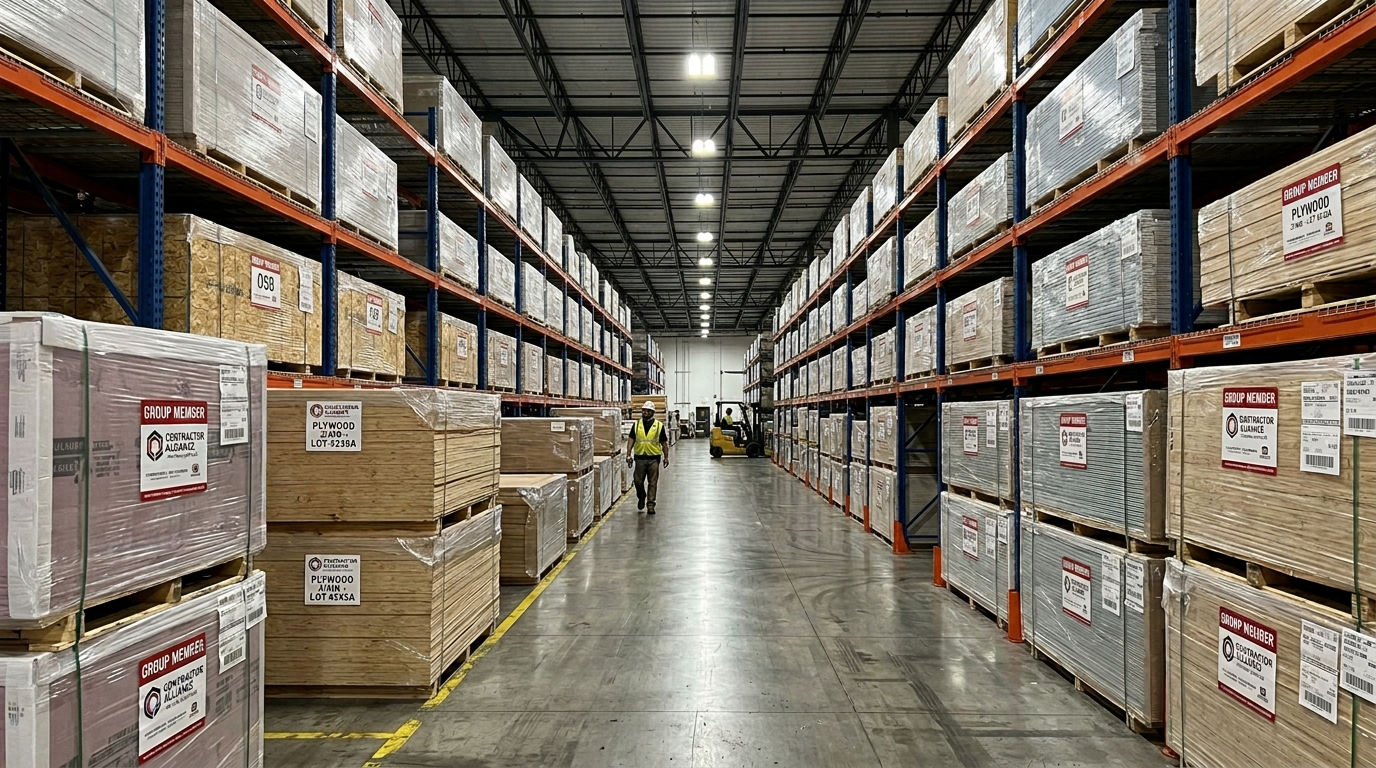
Best for: Contractors with recurring purchases across tools, safety gear, jobsite consumables, MRO, fleet/auto parts, equipment rental, and common construction materials, especially firms with multiple crews or branches.
Individual contractors often lack the purchasing volume to negotiate meaningful pricing from national or regional suppliers. A contractor buying group aggregates demand across many member companies so each one can access better pricing, pre-negotiated vendor programs, and rebate structures they could not get alone.
Buildertrend lists joining a group purchasing organization as a direct cost-saving strategy because a GPO lets builders access lower costs through combined purchasing power source.
What to look for in a buying group:
Pre-negotiated supplier programs that match your actual spend categories
Coverage across local, regional, and national vendors
Rebate tracking and reporting
Clear instructions so field teams know how to buy under the program
Reporting that flags off-program purchases (maverick spend)
Tradeoffs and honest limitations:
Savings leak if your teams do not actually route purchases through the contracted vendors. Program compliance is everything.
Not every local specialty supplier will be covered.
Rebates sometimes require clean documentation and can be delayed.
Results improve dramatically when combined with SKU standardization (strategy #2).
Practitioners on Reddit note that savings from buying programs can vary depending on whether the vendor is supplying materials only or materials plus labor, which makes standardized supply categories the easiest place to measure value source.
For contractors evaluating their options, a contractor purchasing alliance can be a strong starting point for reducing supply costs across categories that repeat month after month.
2. Standardize High-Volume SKUs Before Negotiating
Best for: Contractors with multiple crews buying slightly different versions of the same item (fasteners, blades, sealants, PPE, safety gear, tools, and common commodity materials).
Purchasing leverage means nothing if every superintendent buys a different brand of the same product. Standardization concentrates volume, reduces wrong-item orders, speeds up purchasing, and creates the foundation for every other cost reduction strategy on this list.
Kaizen emphasizes standardization, logistics-flow management, and early procurement involvement as practices that reduce construction costs without sacrificing quality source.
What to do:
Build an approved materials list covering your top spend categories
Create “good/better/best” alternates for common items
Note approved substitutions before bid day, not after
Standardize units of measure across estimating, purchasing, and field
Tie preferred SKUs to your buying group programs or national pricing programs
Flag “do not substitute without approval” items for warranty-sensitive or spec-driven work
Tradeoffs:
Over-standardization can conflict with project specs or owner-required products.
Field leaders may push back if they feel purchasing is limiting their choices.
Requires buy-in from estimators, operations, purchasing, and field staff.
ContractorTalk discussions about owner-supplied materials show how wrong, unassembled, or defective products create scheduling and warranty problems source. The same lesson applies internally: uncontrolled material selection creates hidden labor and coordination costs that never show up on the invoice but absolutely show up on the job cost report.
Standardize first, then negotiate. Otherwise, you are negotiating with scattered volume.
3. Set Quote Thresholds and Compete the Right Purchases
Best for: High-dollar commodity buys where multiple qualified suppliers exist and apples-to-apples comparison is possible.
Not every purchase deserves a formal three-bid process. But high-dollar, repeatable, or volatile categories should be competed in a structured way.
The Field Materials/SMACNA survey found that close to 60% of contractors request at least three supplier quotes on orders above $500 source. That is a good starting point, but the threshold should flex. Urgent field orders need higher thresholds (to avoid paralyzing the crew). Predictable stock orders need lower thresholds (because you have time to shop).
What to do:
Create dollar thresholds by category
Require three quotes above the threshold unless sole-source or emergency
Use a standard quote comparison template
Include delivery fees, fuel surcharges, minimum-order amounts, restocking fees, quote validity, and lead time in every comparison
Track awarded price versus budget
Tradeoffs:
Three quotes are not always worth the delay on fast-moving work.
The cheapest supplier may create delivery, backorder, or service problems that cost more than the price difference.
Bid comparisons fail if specs or quantities differ between quotes.
Practitioners on Reddit warn that supplier reliability and same-day flexibility can be worth more than saving a few percentage points on the initial order source. The lesson: use quote thresholds, but compare total delivered value, not just the number on the line item.
4. Lock Pricing Early on Volatile and Long-Lead Materials
Best for: Steel, copper, aluminum, electrical/power-distribution equipment, asphalt and petroleum-linked products, HVAC equipment, imported finishes, and any material where supplier quotes expire quickly.
Early buyout is one of the most effective construction supply cost reduction tactics when commodity markets are moving fast. It reduces exposure to both price hikes and lead-time slips.
Fahs Construction recommends locking in material pricing early because suppliers may adjust prices monthly or even weekly, and delays in steel, concrete, mechanical systems, or specialty finishes can create unexpected costs source. Gateway Building Company makes a similar point: ordering materials early enough that crews are not waiting on shipments prevents expensive idle time source.
The current market makes this especially relevant. Mortenson’s Q4 2025 index flagged elevated metals pricing and persistent electrical/power-distribution lead times, particularly for data centers and advanced manufacturing projects source.
2026 Material Price & Lead Time Risk Matrix
Use the table below to prioritize your procurement schedule based on current 2026 market volatility.
Material Category | YoY Price Change (May 2026) | Lead Time Risk | Recommended Strategy |
Aluminum Mill Shapes | +33% | High | Early Buyout / Price Lock |
Steel Mill Products | +20.7% | Moderate | Escalation Clauses |
Electrical Gear | +12.5% | Critical | 6-Month Advance Order |
Copper Wire/Pipe | +15.2% | High | Category-Based Playbook |
Construction Energy | +33.4% | Volatile | Total Landed Cost Analysis |
What to do:
Identify volatile materials during estimating, not after the contract is signed
Track quote expiration dates in a buyout schedule
Ask suppliers for price-hold terms in writing
Negotiate storage terms where appropriate
Coordinate submittals early so procurement can proceed before specs stall
Tradeoffs:
Early buyout may lock in the wrong quantity if the design changes after purchase.
Storage creates damage risk, insurance cost, and handling labor.
Cash-flow impact can be significant, especially on multiple simultaneous projects.
If prices fall, you may overpay. This is a real risk, not a theoretical one.
A ContractorTalk user shared that they sometimes order cabinets earlier than ideal to avoid normal January price increases, with suppliers storing materials for a period source. Early ordering works best when combined with design freeze, written price-hold terms, and a plan for where the material actually sits until installation.
5. Use Escalation and De-Escalation Clauses Instead of Padding Every Bid
Best for: Fixed-price contracts with durations longer than supplier quote validity, especially projects using steel, copper, aluminum, lumber, asphalt, cement/concrete, electrical gear, or imported products.
In volatile markets, contractors face a bad choice: pad bids heavily (and risk losing the job on price) or hold tight (and risk losing margin when costs spike). Escalation and de-escalation clauses create a more transparent way to share price risk between contractor and owner.
ConsensusDocs 200.1 is a standard material price escalation clause that identifies specific affected materials and adjusts the contract price using an agreed metric, often an objective market index source. Kaufman Rossin recommends escalation clauses or cost-plus structures as tools that let contractors pass commodity increases to customers when appropriate, paired with timely and accurate reporting source.
What to include in an escalation clause:
Covered materials (be specific)
Baseline price and date
Trigger threshold (e.g., material must increase more than X% before adjustment applies)
Adjustment formula (index-based or supplier-invoice-based)
Both upward and downward adjustment language
Notice and documentation requirements
Treatment of overhead and profit on the adjustment
Time extension language for scarcity or delivery delays
Tradeoffs:
Owners may resist open-ended clauses, so expect negotiation.
Poorly defined clauses create disputes, not solutions.
Tracking baseline pricing, receipts, and reconciliation takes real administrative time.
Escalation clauses are not a profit tool. They are a risk control.
Practitioners on ContractorTalk note that escalation clauses protect margin but create an audit burden. One contractor described baseline pricing and receipt reconciliation as tedious but better than losing profit source. On Reddit, some contractors report padding material estimates by 15 to 20% or shortening quote validity to two weeks as alternatives source. A well-drafted escalation clause beats both of those workarounds.
6. Compare Total Landed Cost, Not Just Material Unit Price
Best for: Fast-moving commercial work, jobs with frequent field changes, contractors with multiple jobsites, and any project using bulky or heavy materials where freight matters.
This is where most construction supply cost reduction advice falls short. The lowest unit price can become the highest total cost once you add delivery fees, minimum-order charges, fuel surcharges, restocking penalties, pickup labor, schedule delays from backorders, and the cost of crews standing around waiting.
Contractors should stop asking “Who has the cheapest unit price?” and start asking “Which supplier gives us the lowest installed cost with the least schedule risk?”
What “landed cost” actually includes:
Unit price
Delivery fee and fuel surcharge
Minimum-order charge
Lead time and same-day availability
Restocking fee
Damage and return handling
Pickup labor (if you are sending a crew member to the supply house)
Downtime cost when materials are late or wrong
Warranty and defect response
What to do:
Add landed-cost fields to your quote comparison templates
Track supplier on-time delivery rates
Track order accuracy
Track emergency delivery charges
Ask every supplier: “What happens when the field needs five more units today?”
A Reddit user in a construction material pricing discussion put it well: the suppliers who save the most money are not always the cheapest, but the ones who can get what is needed the same day without premium charges or minimum delivery fees source. ContractorTalk discussions on markup reinforce this, pointing out that material cost includes sourcing, transport, storage, warranty, delivery, pickup time, and labor, not just the invoice price source.
Tradeoffs:
Landed cost requires better data than most contractors currently collect.
PMs will default to quick unit-price comparisons unless you give them a simple template.
A supplier with a higher unit price may still be the best choice, which can be hard to explain without metrics to back it up.
For a deeper look at how contractors build purchasing frameworks around total cost rather than sticker price, see this guide on construction purchasing strategy best practices.
7. Automate POs, Delivery Tickets, Invoice Matching, and Approvals
Best for: Contractors with high invoice volume, recurring material deliveries, or frequent job-cost disputes and invoice mismatches.
Manual procurement creates leakage that is almost invisible until someone audits it. Duplicate orders, lost packing slips, invoice mismatches, missed early-payment discounts, and delayed approvals all chip away at margin.
The numbers from the Field Materials/SMACNA survey are striking: 90% of surveyed contractors rely on AP staff to enter invoices before PM approval, nearly 50% physically collect packing slips from jobsites or shops, and only 9% use a mobile app to capture and correlate delivery slips with purchase orders. Respondents identified delivery slip scanning as the top automation opportunity (27.6%), followed by PO entry and AP invoice entry/verification at 18.4% each source.
What to look for in procurement automation:
Purchase order creation and tracking
Quote comparison tools
Mobile packing slip capture in the field
Three-way match: PO to delivery receipt to invoice
Backorder tracking
Invoice approval workflows
Integration with your accounting/ERP system
Job-cost coding at the point of purchase
Tradeoffs:
Software does not fix bad purchasing rules. Automate a broken process and you get faster broken results.
Field adoption is the hardest part. If superintendents will not use the app, the data never gets captured.
Poor item coding reduces the value of reports.
Integration with existing accounting systems can take longer than expected.
Procurement automation should be framed as margin protection. Start with the basics (packing slips, POs, and three-way invoice matching) before worrying about dashboards and analytics.
8. Control Inventory for Tools, Consumables, PPE, and Common Jobsite Supplies
Best for: Contractors with multiple crews buying recurring tools, PPE, blades, bits, adhesives, fasteners, small equipment, and consumables, especially companies plagued by frequent emergency supply runs.
A lot of contractors lose money in ways they never measure: duplicate purchases because nobody knew the tool was already on another jobsite, emergency runs to the supply house because consumables ran out, shrinkage from misplaced or unreturned equipment. Inventory control is a straightforward construction supply cost reduction lever that does not require sophisticated technology.
Buildertrend recommends creating an inventory of tools and equipment, having employees sign tools in and out, training teams to care for tools, and keeping maintenance records source.
What to do:
Classify items as stock, job-specific, or special order
Set minimum and maximum levels for stock items
Assign tool ownership or use a checkout system
Track loss and damage rates
Keep pre-built jobsite supply kits for common setups
Reconcile inventory monthly
Buy recurring items through negotiated programs or your contractor buying group
Tradeoffs:
Overstocking ties up cash and creates storage headaches.
Consumables disappear quickly if nobody owns the tracking system.
Inventory management requires discipline, and discipline requires someone to be accountable.
Inventory control does not mean “buy more.” It means buy the right recurring items through the right channel and know where they are.
9. Reduce Waste and Rework Before Buying Cheaper Materials
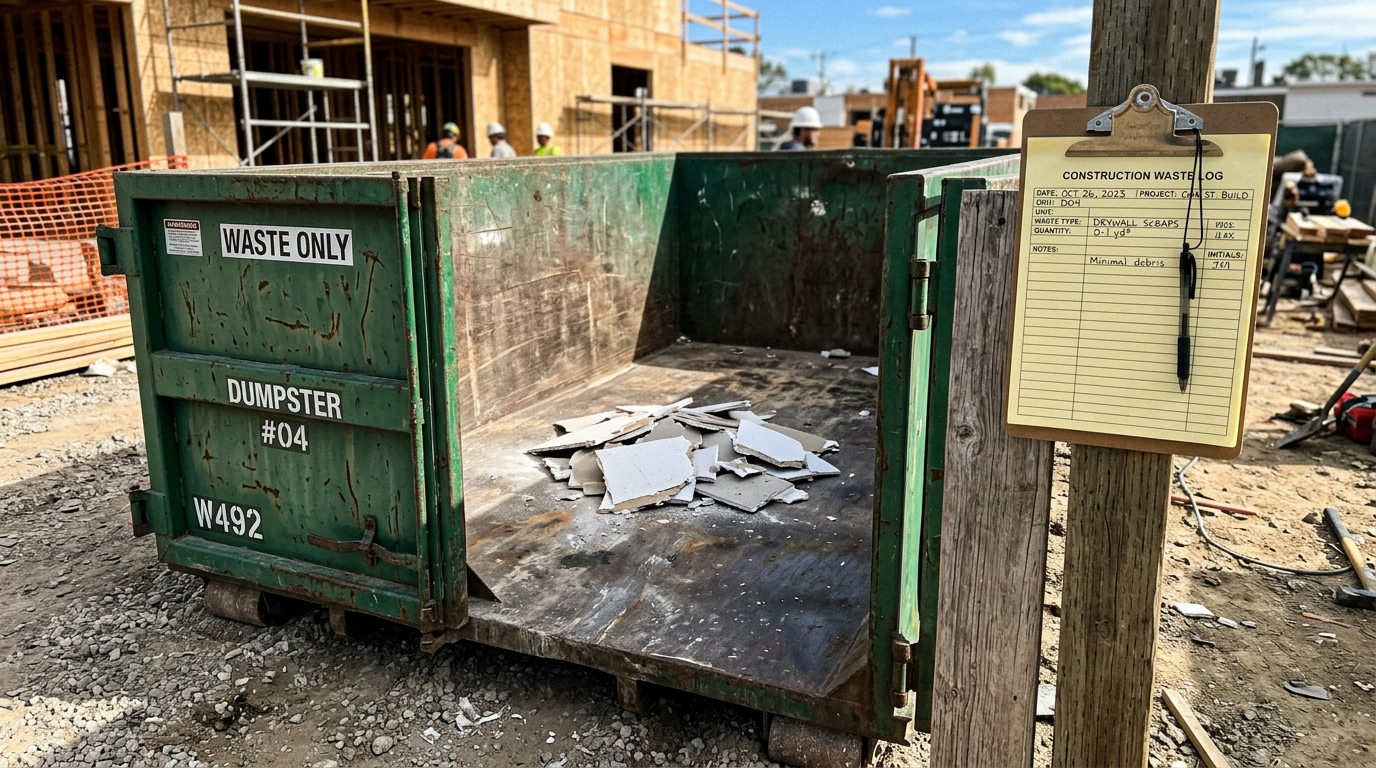
Best for: Concrete, asphalt, structural, MEP, drywall/framing, finishes, and any material-heavy trade, especially contractors with repeat defects, excess scrap, or tight margins.
Buying cheaper materials is usually the riskiest construction supply cost reduction move a contractor can make. Reducing waste and rework almost always saves more without creating warranty, quality, or callback problems.
The cheapest material is expensive if you install it twice.
ASCE’s 2026 summary of field rework research found that actual precompletion rework costs averaged 0.38% of contract value and rose to 0.76% when postcompletion corrections were included. Prior studies estimated rework as high as 12.4% of contract value when change orders and quality issues were combined source. Even the “small” percentages can erase profit on tight-margin jobs.
What to do:
Track material waste by job (not just labor waste)
Track rework causes and tie them back to estimating and procurement
Require pre-install meetings for high-risk scopes
Improve takeoff accuracy
Protect stored materials from weather, theft, and damage
Use checklists before pours, critical installs, and inspections
Invest in better layout and BIM/clash detection where applicable
Tradeoffs:
Waste tracking can feel like more paperwork to field teams.
Teams resist when data is used for blame instead of improvement.
Requires a feedback loop between field and office that many contractors do not have.
Practitioners on Reddit and ContractorTalk repeatedly emphasize that procurement mistakes create labor waste and rework, not just material waste source. Wrong items, missing quantities, and unclear specs force second trips, remobilization, and overtime. Fixing the material side often fixes the labor side.
10. Use Prefabrication, Kitting, and Staged Deliveries Where Repetition Exists
Best for: MEP assemblies, repetitive rooms or units, multi-location programs, warehouses, distribution centers, schools, healthcare facilities, and jobsites with limited laydown area.
Prefabrication and kitting move work from the field (where it is expensive, weather-dependent, and variable) to a controlled environment (where quality is consistent, waste is lower, and installation is faster).
Kaizen notes that prefabrication can reduce labor and material waste, shorten schedules by overlapping offsite production with site preparation, and improve quality control. It also flags the challenges: logistics, transportation, coordination, and the need for earlier design decisions source.
What to do:
Identify repeatable assemblies across your project portfolio
Freeze designs earlier in the project timeline
Kit materials by area or phase instead of bulk-delivering everything at once
Coordinate delivery sequence with the installation schedule
Use QR or barcode labeling for tracking
Compare install productivity of prefab versus field-built as a baseline
Tradeoffs:
Late design changes are expensive and may waste prefabricated components entirely.
Freight damage and staging errors can erase the savings.
Requires tighter coordination between office, shop, and field.
Not a good fit for highly custom, low-repeat work.
Prefabrication is not just a construction method. When done right, it is a procurement strategy that reduces the number of things that can go wrong between the purchase order and the installed product.
11. Build Supplier Partnerships Instead of Chasing the Cheapest Quote
Best for: Materials with availability risk, contractors who need fast response on field changes, companies with significant repeat spend, and long-term regional operators.
There is a difference between shopping for the cheapest supplier and building a relationship with the most reliable one. In volatile markets, supplier allocation priority, return handling, payment terms, same-day delivery capacity, and technical support can matter as much as unit pricing.
Kaizen identifies strategic supplier partnerships, transparent communication, fair contracts, and collaboration in project planning as important procurement practices for cost control and delivery reliability source.
What to do:
Score each supplier on price, delivery reliability, order accuracy, same-day availability, backorder communication, return/restocking policy, invoice accuracy, warranty handling, and field-team satisfaction
Conduct quarterly business reviews with your top five suppliers
Establish preferred vendor tiers
Negotiate early-payment or rebate terms
Share forecasts of upcoming work so suppliers can plan
Build an escalation path for urgent needs
For a deeper look at building these relationships effectively, see this guide on how to build contractor vendor partnerships.
Tradeoffs:
Relationship buying can become complacent buying if you stop benchmarking.
Preferred suppliers should be measured, not trusted blindly.
Dependence on a single supplier creates risk if they have capacity problems.
The Reddit pricing discussion reinforces this strongly: a supplier who can add to an order same-day without premium fees or minimum delivery charges is often worth more than one offering a slightly lower unit price source. The best approach is to partner with strong suppliers but benchmark them regularly against the market.
12. Match the Buying Tactic to the Material Category
Best for: Contractors ready to move from reactive, one-size-fits-all purchasing to disciplined category management across their spend portfolio.
A single buying tactic will not work for every construction supply category. Steel behaves differently from PPE. Electrical gear has different constraints than concrete. The final and most important construction supply cost reduction strategy is to match the right tactic to the right material type.
Category | Examples | Main Risk | Best Buying Tactic |
|---|---|---|---|
Volatile commodities | Steel, copper, aluminum, lumber, asphalt | Price escalation | Early buyout, escalation clause, index tracking |
Long-lead specialty items | Electrical gear, custom doors, HVAC equipment | Schedule delay | Early submittals, price holds, vendor tracking |
Bulky local materials | Concrete, aggregates, pipe, stone | Freight/delivery cost | Local supplier partnerships, delivery planning |
High-volume consumables | PPE, blades, fasteners, sealants, jobsite supplies | Leakage and rogue spend | Buying group, SKU standardization, inventory controls |
Spec-sensitive products | Fire-rated assemblies, ADA items, owner-approved finishes | Rejection/rework | Approved alternates, documentation, no unauthorized substitution |
Emergency field purchases | Small missing items, repair supplies | Crew downtime | Preferred suppliers, stocked kits, same-day service terms |
BLS data from March 2026 shows this differentiation clearly: “inputs to stage 1 construction producers” were up 5.8% year over year, but energy inputs surged 33.4% and transportation/warehousing of goods rose 6.0% source. These are separate pressures requiring separate responses.
What to do:
Pull your spend data and sort purchases by category
Identify which leakage type (price, process, volatility, field) is the biggest risk in each category
Assign the appropriate buying tactic from this article
Review and update the playbook quarterly as market conditions shift
Tradeoffs:
Requires clean spend data, which many contractors do not have.
Field teams may see category management as “office theory” unless it translates into clear buying rules they can follow.
Needs periodic updates as markets change.
For a comprehensive framework on building this kind of purchasing discipline, see the guide on contractor purchasing leverage.
How to Start Reducing Construction Supply Costs in 30 Days
Theory is useless without action. Here is a practical four-week plan.
Week 1: Pull Your Spend Data
Gather your top suppliers by dollar volume, top categories by frequency, top SKUs by quantity, emergency purchases from the last 90 days, delivery and freight charges, and rebates received versus rebates available.
Week 2: Identify Leakage
Look for purchases made outside preferred vendors. Find duplicate SKUs across crews. Flag expired quotes that were used anyway. Count missing packing slips and invoice mismatches. Document backorder delays and their downstream effects. List the top three causes of waste or rework.
Week 3: Pick Three Controls
Do not try to implement all 12 strategies at once. Pick three that match your biggest leakage areas. Common starting combinations:
Price leakage: Buying group evaluation + quote thresholds + SKU standardization
Volatility leakage: Early buyout schedule + escalation clause template
Process leakage: PO/delivery/invoice matching + packing slip capture
Field leakage: Waste tracking + supplier scorecard + inventory controls
Week 4: Pilot
Choose one category, one branch, one crew type, or one supplier program. Measure the baseline. Run the new process. Compare results.
The contractors who treat construction supply cost reduction as a continuous discipline, not a one-time project, are the ones who actually see margin improvement over time.
Materials That Deserve Early Risk Review
These categories have shown the most price volatility or lead-time pressure in 2025 and 2026. Flag them during estimating:
Steel and rebar
Aluminum
Copper wire and pipe
Asphalt and petroleum-linked products
Electrical and power-distribution equipment
HVAC equipment
Imported finish materials
Cement/concrete in constrained markets
Specialty doors, hardware, and glazing
Long-lead owner-selected finishes
AGC’s January 2026 data showed aluminum up 33% and steel up 20.7% year over year source. A LinkedIn post from a construction company recommended 5 to 8% material contingency for 2026 bids, escalation clauses for contracts over six months, and early locking of steel, aluminum, and copper source. That aligns with what the market data shows.
“Cheap Supply” vs. “Low-Cost Supply”
This distinction matters. Here is the difference:
Cheap supply means lowest unit price, unknown lead time, extra delivery fees, no same-day support, poor return handling, and field downtime when things go wrong.
Low-cost supply means competitive total landed cost, reliable delivery, clear warranty terms, known substitution options, strong documentation, and fewer emergency runs and reorders.
Construction supply cost reduction means moving from cheap to low-cost. They are not the same thing.
FAQs
What is construction supply cost reduction?
Construction supply cost reduction is the process of lowering the total cost of construction materials, tools, consumables, equipment, delivery, storage, procurement administration, waste, and rework without reducing quality or creating schedule risk. It is not about buying the cheapest product. It is about controlling leakage across purchasing, process, volatility, and field operations.
What is the fastest way to reduce construction supply costs?
For contractors with recurring supply spend, the fastest levers are usually buying group participation, SKU standardization, competitive quote thresholds, and eliminating off-contract purchases. For longer projects, early buyout and escalation clauses are equally important. The right starting point depends on where your biggest leakage is.
Should contractors always choose the cheapest supplier?
No. Contractors should compare total landed cost, which includes delivery fees, lead time, order accuracy, same-day availability, minimum-order charges, return policies, warranty response, and the labor cost of waiting on late or wrong materials. The cheapest unit price frequently becomes the most expensive total cost.
Are escalation clauses worth using?
They can be valuable when contracts extend beyond supplier quote validity or include volatile materials like steel, copper, and aluminum. But they require clear baseline pricing, covered materials, trigger thresholds, supporting documentation, and timely notices. ConsensusDocs 200.1 provides a widely referenced template source. Poorly written clauses create disputes rather than protection.
How do buying groups reduce contractor supply costs?
Buying groups aggregate purchasing volume across multiple companies so members can access negotiated supplier programs, discounts, and rebates that they could not obtain individually. Results depend on category coverage, member compliance, local vendor fit, and how consistently the contractor routes purchases through the program. Learn more about how a construction group purchasing organization works.
What is “maverick spend” and why does it matter?
Maverick spend is purchasing that happens outside your negotiated vendor programs or preferred suppliers. It occurs when field teams buy from convenient local suppliers instead of using contracted pricing. Even small amounts of maverick spend can erode the savings a buying group or preferred vendor program generates.
How much do materials really affect construction project costs?
Research shows materials account for approximately 50 to 60% of construction costs and influence about 80% of the construction process source. That makes procurement discipline one of the highest-impact areas a contractor can improve.
Should contractors let owners or customers supply materials to save money?
Removing contractor markup on materials sounds like savings, but multiple contractors on Reddit and ContractorTalk report that customer-supplied materials frequently arrive wrong, short, or without warranty coverage, creating pickup trips, storage problems, labor downtime, and rework source. Removing markup can increase total cost if it removes accountability. Contractors should reduce material cost through purchasing leverage and process discipline, not by creating responsibility gaps.
What Comes Next
The next step is straightforward: map your top supply categories, identify where leakage is happening, and pick the strategy that fits. If recurring supply spend across tools, consumables, PPE, fleet, or common materials is one of your biggest margin concerns, evaluating a contractor purchasing alliance is worth the time.
Construction supply cost reduction is not a project with a finish date. It is a discipline that compounds. The contractors who build purchasing controls into their operations, rather than treating procurement as an afterthought, are the ones who keep their margins when markets get volatile.

Recent Comments