TLDR
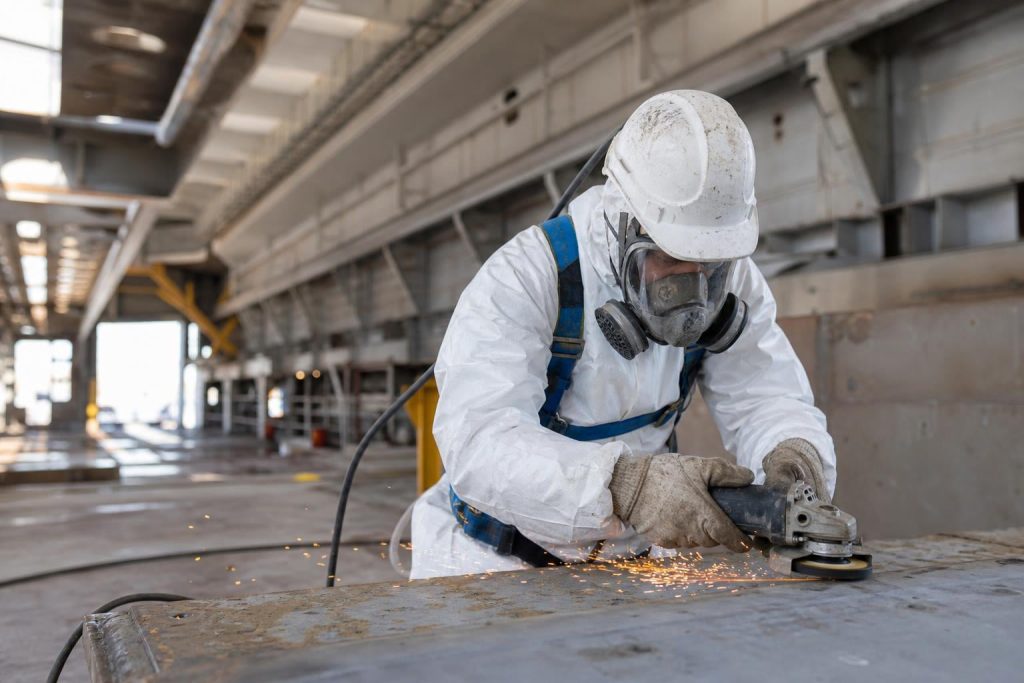
A contractor respirator program is the written system a contractor must have when workers are required to use respirators on the job. OSHA mandates that this program cover hazard assessment, respirator selection, medical evaluations, fit testing, training, maintenance, and recordkeeping. Construction contractors, especially those doing concrete cutting, grinding, jackhammering, and demolition, frequently trigger respirator program requirements through OSHA’s silica standard and Table 1. Simply handing out masks is not a program, and respiratory protection ranks among OSHA’s most cited violations every year.
A contractor needs a written OSHA respirator program whenever respirators are required by a workplace hazard, OSHA standards, or company policy. A compliant program includes hazard assessment, respirator selection, medical evaluations, fit testing, employee training, maintenance procedures, annual program reviews, and recordkeeping. Simply providing N95 masks or half-face respirators does not satisfy OSHA requirements.
Key Takeaways
OSHA requires a written respirator program whenever respirators are required for employee protection.
Construction contractors follow OSHA 29 CFR 1910.134 through 29 CFR 1926.103.
Medical evaluations must occur before required respirator use.
Tight-fitting respirators require annual fit testing.
Engineering controls must be considered before respirators.
A silica exposure control plan does not replace a respirator program.
Respiratory Protection remains one of OSHA’s most frequently cited standards.
What Is a Contractor Respirator Program?
A contractor respirator program is a written respiratory protection program that spells out how a contractor selects, issues, maintains, and documents respirator use across jobsites. Under OSHA’s respiratory protection standard (29 CFR 1910.134), employers must establish and implement a written respiratory protection program with worksite-specific procedures whenever respirators are necessary to protect employee health or required by the employer.
In plain terms: if a contractor tells workers to wear respirators, or the hazard demands it, the contractor needs more than a box of masks. The program must name a trained administrator, identify which hazards require respiratory protection, document medical clearances, confirm fit testing, prove workers were trained, and keep records ready for inspection.
Construction contractors follow the same standard as general industry. OSHA’s construction respiratory protection rule, 29 CFR 1926.103, states that construction requirements are identical to 1910.134. There is no separate, lighter standard for construction. The same program elements apply.
For contractors managing multiple safety vendors and compliance documentation, a respirator program is one piece of a broader safety program vendor strategy that includes PPE suppliers, fit-testing providers, and occupational health clinics.
Why Contractor Respirator Programs Matter
Three reasons stand out.
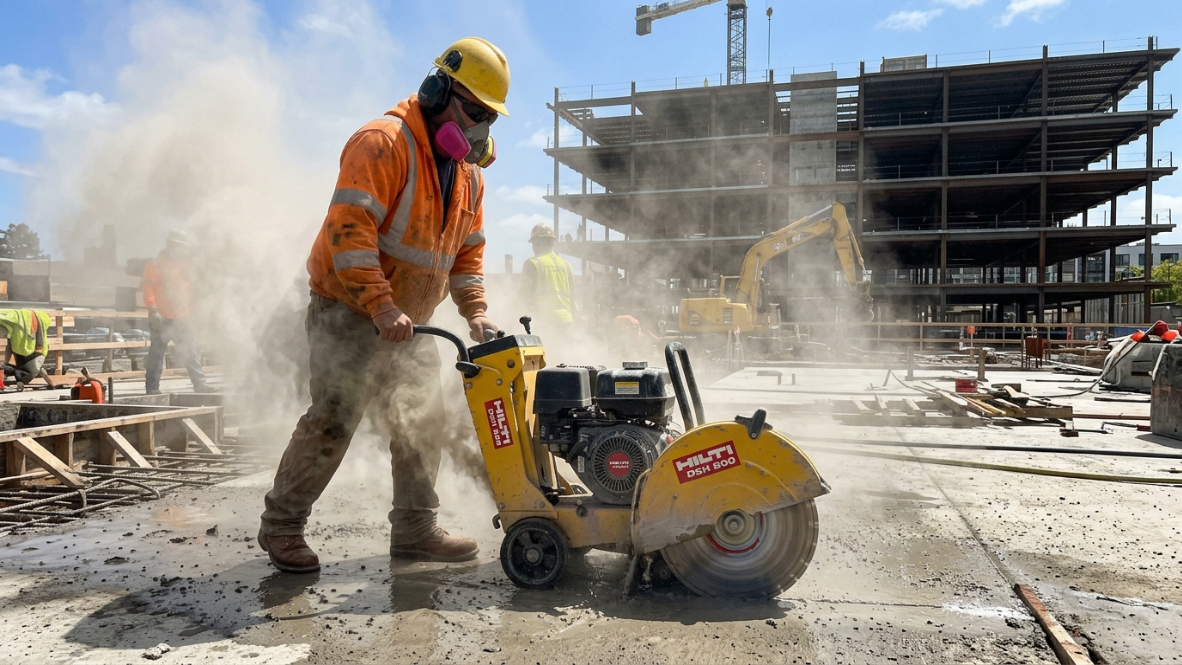
Lung disease is real. NIOSH estimates that roughly 2 million construction workers are exposed to silica dust on the job. Respirable crystalline silica exposure can cause silicosis, lung cancer, COPD, and kidney disease. Workers may not feel acute symptoms from a single shift of concrete grinding or jackhammering, but the damage is cumulative. Among workers exposed above the NIOSH recommended exposure limit, eight out of ten were in construction.
Citations keep coming. Respiratory protection (29 CFR 1910.134) appeared in OSHA’s FY 2025 Top 10 most frequently cited standards, with preliminary data showing 1,953 violations. This is not an obscure paperwork item. It is one of the most common reasons contractors get cited.
False protection is worse than no protection. A LinkedIn practitioner post on silica control gaps argued that many construction businesses understand silica is a serious risk, but good intentions collapse when respirators are issued without fit testing, training, or correct use. Handing a worker a half-mask respirator and calling it “protection” without verifying the seal, the cartridge, and the training is a liability, not a solution.
When Is a Contractor Respirator Program Required?
Not every contractor needs one. But the triggers are more common than most people think.
Scenario | Full written program? | Notes |
|---|---|---|
OSHA standard requires respirator use (e.g., silica Table 1) | Yes | Specific tasks with defined APF requirements |
Employer requires respirators | Yes | Any employer-mandated use triggers the full program |
Respirator is necessary to protect worker health | Yes | Based on exposure assessment or applicable standard |
Worker voluntarily wears filtering facepiece only, and respirator is not required | No, but Appendix D information required | Employer must confirm use will not create a hazard |
Worker voluntarily uses elastomeric or other non-filtering-facepiece respirator | Limited program elements apply | Medical ability, cleaning, storage, and maintenance must be addressed |
The distinction between “required” and “voluntary” trips up contractors constantly. Practitioners on Reddit report that if measured exposures are above the PEL or action level, treating N95 use as voluntary is incorrect. Full program elements, including fit testing and medical evaluation, kick in when exposure conditions, OSHA Table 1, employer policy, or jobsite rules make respirators necessary.
One safety professional in a Reddit thread about silica put it bluntly: if the hazard assessment or silica standard demands respiratory protection, the “voluntary” shortcut does not apply.
Do You Need a Contractor Respirator Program?
Question | Yes | No |
|---|---|---|
Is there an airborne respiratory hazard? | Continue | Program usually not required |
Does OSHA require respirators for the task? | Written program required | Continue |
Does your company require respirators? | Written program required | Continue |
Is respirator use completely voluntary with only filtering facepieces? | Appendix D only | Full program may apply |
What OSHA Requires in a Written Respiratory Protection Program
A compliant contractor respirator program must cover these elements:
Program administrator with training or experience appropriate to the program’s complexity
Hazard assessment and exposure evaluation for each task or work area
Respirator selection matched to the specific hazard and assigned protection factor
NIOSH-certified respirator requirement, meaning only approved models
Medical evaluation before fit testing or required respirator use
Fit testing for all tight-fitting respirators, before initial use and at least annually
Proper use procedures, including user seal checks and facial hair rules
Cleaning, disinfecting, storage, inspection, repair, and replacement
Cartridge and filter change schedules
Breathing air quality for supplied-air or SCBA systems, if applicable
Worker training covering hazards, limitations, emergency use, seal checks, and maintenance
Program evaluation at least annually
Recordkeeping for fit tests, medical clearances, and the written program itself
OSHA lays out these requirements across multiple subsections of 1910.134. The standard is dense. Templates from organizations like NACCHO and OSHA’s own sample program page exist, but both sources warn that templates must be tailored to the actual worksite. A generic template sitting in a filing cabinet does not equal compliance.
Understanding how to source and vet PPE suppliers, fit-testing services, and other safety-related vendors is part of building a reliable program. A structured PPE procurement process helps contractors avoid buying non-approved equipment or working with unqualified providers.
Choosing the Correct Respirator
Selecting the correct respirator depends on several factors, including:
Type of airborne contaminant
Concentration of exposure
Assigned Protection Factor (APF)
Oxygen levels
Whether engineering controls are feasible
Required duration of work
Physical demands of the task
Common respirator categories include:
Respirator Type | Typical Uses |
|---|---|
N95 Filtering Facepiece | Silica, nuisance dust |
Half-face Elastomeric | Silica, welding, grinding |
Full-face Elastomeric | Higher exposure levels |
Powered Air Purifying Respirator (PAPR) | Workers with facial hair or higher protection needs |
Supplied-Air Respirator | Confined spaces and specialty operations |
SCBA | IDLH environments and emergency response |
The Controls-Before-Respirators Hierarchy
OSHA is clear: preventing atmospheric contamination through engineering controls is the primary objective. Respirators are used when effective controls are not feasible or while controls are being installed.
The practical hierarchy looks like this:
Eliminate or reduce dust, fume, and vapor generation at the source
Use engineering controls (water delivery, local exhaust ventilation, dust collection, enclosures)
Use work-practice controls (wet cleanup, HEPA vacuuming, restricted access, task scheduling)
Use respirators when controls cannot reduce exposure enough, when OSHA Table 1 requires them, or while controls are being put in place
Practitioners on Reddit describe this as a maturity goal. One SafetyProfessionals thread discussed a construction team trying to reduce silica exposure enough to eliminate their respiratory protection program entirely. Commenters pointed out that while reducing reliance on respirators is the right direction, maintenance tasks, enclosed work, and control failures may still require respiratory protection for specific activities.
The best contractor respirator programs are not about buying more masks forever. They are about systematically reducing exposures and documenting when and why respirators are still necessary.
Common Construction Tasks That Trigger Respirator Program Requirements
Some construction activities are significantly more likely to require respiratory protection than others.
Frequently Triggered Tasks
Construction Task | Common Hazard | Respirator Often Required? |
|---|---|---|
Concrete cutting | Silica | Yes |
Concrete grinding | Silica | Yes |
Tuckpointing | Silica | Yes |
Jackhammering | Silica | Often |
Demolition | Silica, lead, asbestos | Often |
Spray painting | Organic vapors | Often |
Welding | Metal fumes | Often |
Abrasive blasting | Dust and metals | Usually |
Drywall sanding | Dust | Sometimes |
Asphalt milling | Depends on controls | Sometimes |
Construction Examples: Silica, Concrete, Asphalt, and Demolition
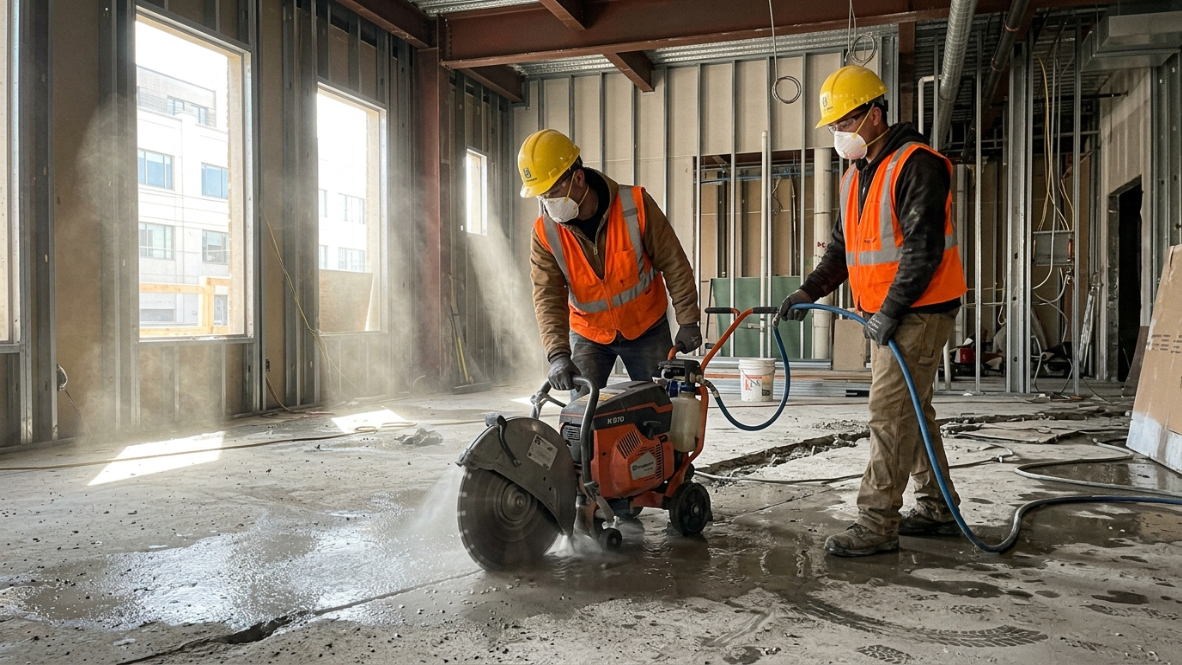
This is where contractor respirator programs become concrete (in both senses). OSHA’s silica construction standard (29 CFR 1926.1153) applies when worker exposure will not remain below 25 μg/m³ as an 8-hour TWA. The permissible exposure limit is 50 μg/m³. For common construction tasks, OSHA provides Table 1, which matches specific tasks to required engineering controls, work practices, and respiratory protection levels.
Walk-Behind Saw (Indoor or Enclosed)
Table 1 requires integrated water delivery. Outdoor use requires no respirator. Indoor or enclosed work requires APF 10 respiratory protection, which means a contractor running a walk-behind saw inside a building needs a full respirator program.
Jackhammers and Handheld Chipping Tools
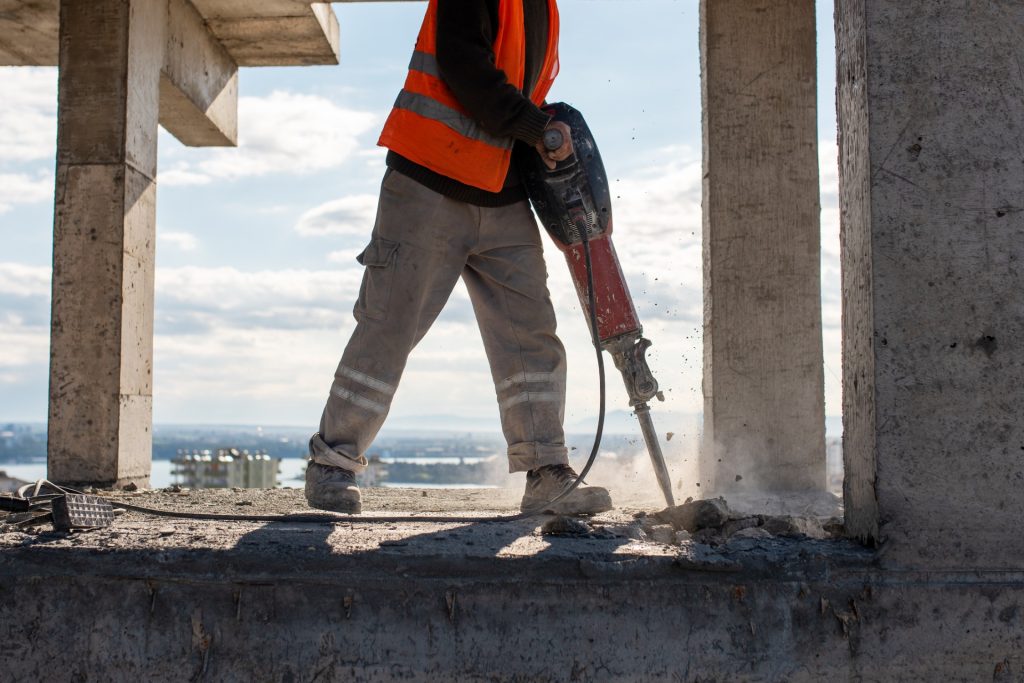
With water delivery as the engineering control, outdoor use requires no respirator for up to 4 hours but APF 10 for more than 4 hours. Indoor or enclosed work requires APF 10 regardless of duration.
Tuckpointing and Mortar Removal Grinding
Handheld grinders used for mortar removal require a shroud and dust collection system. APF 10 is required for up to 4 hours, and APF 25 for more than 4 hours. This is one of the highest-exposure tasks in construction.
Asphalt Milling
For large drivable milling machines, Table 1 specifies exhaust ventilation on the drum enclosure and supplemental water sprays. When those controls are fully implemented, no respirator is required. This is a case where proper engineering controls can eliminate the respirator trigger entirely.
Handheld Grinders (Non-Mortar Uses)
Outdoor use with specified water delivery or dust collection can require no respirator. Indoor or enclosed work with dust collection requires APF 10 for more than 4 hours.
These examples matter because they translate OSHA’s silica requirements into language that concrete and asphalt crews actually recognize. Most general respiratory protection content skips this level of detail.
Medical Evaluation, Fit Testing, and Training
Medical Evaluation
Before a worker can be fit tested or required to use a respirator, OSHA requires a medical determination from a physician or other licensed healthcare professional (PLHCP). The evaluation determines whether the employee is medically able to use the respirator, identifies any limitations, and confirms the employee received a copy of the recommendation.
A note on proposed changes: OSHA proposed in 2025 to modify some medical evaluation requirements for filtering facepiece respirators and loose-fitting PAPRs. However, as of June 2026, OSHA reopened the rulemaking record and the proposal has not become a final rule. The current standard still requires medical evaluation. Do not assume this requirement has been removed.
Fit Testing
OSHA requires fit testing for tight-fitting facepiece respirators before initial use, when a different respirator size, style, model, or make is used, and at least annually thereafter. Physical changes that could affect fit (significant weight change, dental work, facial surgery) also trigger retesting.
Small contractors often outsource fit testing to occupational health clinics or mobile testing providers. Practitioners on Reddit suggest asking workers’ compensation carriers whether they provide fit-testing support or templates, which can reduce startup costs. Larger contractors sometimes train internal safety staff to conduct fit tests, which a LinkedIn post from a UK construction firm described as a maturity marker for safety programs.
Training
Training must happen before required workplace use and must cover:
Why the respirator is necessary
Capabilities and limitations of the specific respirator
Emergency use procedures
How to inspect, don, and remove the respirator
User seal check procedures
Maintenance and storage
Medical signs and symptoms of exposure
General requirements of the OSHA standard
Training must be repeated annually and whenever workplace changes, respirator changes, or observed knowledge gaps make retraining necessary. 3M’s annual training checklist adds a useful practical detail: hands-on practice and worker demonstration should be part of the session, not just a lecture and a sign-off sheet.
Typical Contractor Respirator Program Timeline
Stage | When Required |
|---|---|
Hazard assessment | Before work begins |
Respirator selection | After hazard assessment |
Medical evaluation | Before fit testing |
Fit testing | Before first use |
Employee training | Before first use |
Respirator use | After all requirements completed |
Annual review | Every 12 months |
Repeat fit testing | Every year or after physical changes |
Fit Test vs. User Seal Check
These two get confused constantly. They are not the same thing.
A fit test is a formal, periodic test that confirms a specific respirator model and size creates an acceptable seal on the worker’s face. It happens before first use, annually, and when changes occur. Qualitative fit tests are pass/fail tests using the wearer’s senses (taste, smell, or irritation response). Quantitative fit tests use instruments to numerically measure face-seal leakage.
A user seal check is a quick check the worker performs every single time they put on a tight-fitting respirator. It verifies the respirator is properly seated before entering the work area.
Think of it this way: the fit test selects and verifies the right respirator. The seal check confirms it is sitting correctly right now. Both are required under OSHA 1910.134, and skipping either one is a citation risk.
For more on meeting OSHA equipment requirements across your jobsites, see this guide on PPE compliance in construction.
Beards, Personal Respirators, and Other Field Problems
Facial Hair
OSHA does not permit tight-fitting facepiece respirators to be worn by employees with facial hair that comes between the sealing surface and the face or interferes with valve function. This is not a suggestion. It is a prohibition.
Reddit safety discussions show this is one of the most common flashpoints on jobsites. Workers refuse to shave. Supervisors look the other way. One safety-professional thread specifically called out clean-shaven refusal as a practical barrier to running a respirator program. The options are limited: workers with beards can use loose-fitting powered air-purifying respirators (PAPRs) if the hazard allows that type of protection, or they must shave the sealing area.
Workers Buying Their Own Respirators
Construction Reddit threads regularly show workers asking whether they can buy their own respirators and whether employers must fit test personally purchased equipment. OSHA allows employers to permit employees to use their own respirators voluntarily, but only if the employer determines the use will not create a hazard. When respirator use is required, the employer should provide the respirator and ensure all program elements (fit testing, training, medical evaluation) are met.
The “Voluntary Use” Trap
Calling respirator use “voluntary” when it is actually required is a common and dangerous shortcut. If exposure conditions, Table 1, employer policy, or jobsite rules make respirators necessary, the voluntary-use exception does not apply. The voluntary exception for filtering facepieces (where only Appendix D information is required) is narrow. It applies only when respirators are truly not required by the hazard or the employer.
Respirator Program vs. Silica Exposure Control Plan
Construction contractors dealing with silica often need two separate written documents, and the difference matters.
A Written Respiratory Protection Program (under 1910.134/1926.103) covers how the contractor manages respirators: selection, medical evaluation, fit testing, training, use, maintenance, and records. It applies whenever respirators are required for any hazard.
A Written Silica Exposure Control Plan (under 1926.1153) describes the specific tasks involving silica exposure, the engineering controls and work practices used, respiratory protection requirements, housekeeping measures, and procedures to restrict access when needed. It is silica-specific.
One does not replace the other. A contractor cutting concrete indoors needs a silica exposure control plan describing the task and controls, and a respirator program documenting how the required APF 10 respirator is managed. Getting the documentation right matters during owner, GC, or auditor reviews.
When subcontractors are involved, respirator program records become part of the vendor onboarding checklist that GCs and owners typically require before crews start work.
Respirator Program vs Silica Exposure Control Plan
Respirator Program | Silica Exposure Control Plan |
|---|---|
Covers all respiratory hazards | Covers crystalline silica only |
Required under OSHA 1910.134 | Required under OSHA 1926.1153 |
Focuses on respirator management | Focuses on exposure reduction |
Includes fit testing | Includes engineering controls |
Includes medical evaluations | Includes housekeeping procedures |
Includes training | Includes restricted access procedures |
OSHA Inspection: What Compliance Officers Usually Ask For
During an OSHA inspection, contractors should expect inspectors to request documentation such as:
Written respiratory protection program
Medical clearance documentation
Annual fit-test records
Training records
Hazard assessments
Respirator selection documentation
Maintenance procedures
Inspection logs
Cartridge replacement schedule
Program administrator designation
Contractor Documentation Checklist
GCs, owners, and safety auditors do not just want to know a contractor has a respirator program. They want to see proof. Here is what should be in the job file:
Current written respiratory protection program
Program administrator name and designation
Task and hazard matrix (which tasks require respirators and why)
Respirator selection matrix (which models are approved for which hazards)
Silica Table 1 or exposure assessment documentation, where applicable
Medical clearance records from PLHCP
Fit-test records with employee name, test type, respirator make/model/style/size, date, and pass/fail results
Training records with dates, topics, and attendee lists
Cleaning, storage, and inspection procedures
Cartridge and filter change schedules
Voluntary-use Appendix D acknowledgments, where applicable
Annual program review notes
OSHA requires fit-test records to be retained until the next fit test is administered. The current written program must always be available. For contractors managing multiple jobsites, this means a consistent system for collecting and storing these records, not scattered paperwork in truck cabs.
The Three-Trigger Framework
Instead of starting with “which mask do I buy,” contractors should work through three trigger questions.
Trigger 1: Hazard trigger. Is there an airborne hazard? Silica, lead, asbestos, welding fume, chemical vapor, dust, mist, gas, or oxygen deficiency? If no hazard exists for a given task, no respirator program is needed for that task.
Trigger 2: Requirement trigger. Does OSHA, Table 1, an exposure assessment, the employer, the GC, or the project owner require respirators? If yes, the full program path applies.
Trigger 3: Program trigger. Has the contractor completed all the program elements? Written procedures, administrator, medical evaluation, fit test, training, maintenance, records? If gaps exist, the program is not compliant.
This framework keeps contractor respirator programs from becoming a static policy document that nobody reads. It turns the program into a decision tool that connects hazard identification to documented compliance.
Common Mistakes Contractors Make
Mistake 1: Treating respirators as a purchase, not a program. Buying a case of N95s and distributing them is not a respirator program. OSHA requires selection, fit testing, training, maintenance, evaluation, and records.
Mistake 2: Calling required use “voluntary.” If the hazard demands respiratory protection, the voluntary-use exception does not apply. This mistake shows up in OSHA citations regularly.
Mistake 3: Using a template without tailoring it. OSHA’s sample program page and the NACCHO template both explicitly warn that templates are starting points, not compliance by themselves. A template that does not reflect the actual jobsite hazards, respirator models, and training records is just paper.
Mistake 4: Skipping fit testing. Every tight-fitting respirator requires a fit test before use and at least annually. An N95 used for required protection is a tight-fitting respirator. It needs a fit test.
Mistake 5: Ignoring facial hair. OSHA prohibits tight-fitting facepieces where facial hair breaks the seal. Ignoring this creates a citation risk and, more importantly, exposes workers to the hazard they think they are protected from.
Mistake 6: Confusing fit tests with seal checks. A fit test is formal and periodic. A seal check happens every time the worker puts on the respirator. Both are required.
Avoiding these mistakes takes planning. For contractors building out their safety procurement processes, a procurement planning checklist can help ensure fit-testing services, medical evaluations, and PPE supplies are arranged before work begins.
How Small Contractors Usually Get Started
Practitioners on Reddit describe a common path for small contractors building their first respirator program:
Read OSHA 1910.134 and 1926.103
Assign a program administrator (this can be the owner or a competent safety person)
Use an OSHA sample program or NACCHO template as a starting point, then customize it
Contact an occupational health clinic for medical evaluations and fit testing
Ask your workers’ compensation carrier whether they offer templates, air monitoring, or fit-testing resources
Document everything from day one
The AIHA respiratory protection resource page is designed for individuals and small businesses that may not have an in-house industrial hygienist. It provides a practical roadmap for exposure assessments, written program development, and implementation.
For contractors who want to standardize how they select and manage safety-related vendors across their business, a contractor vendor programs guide covers repeatable frameworks for building these relationships.
Related Terms
APF (Assigned Protection Factor): The workplace level of respiratory protection a respirator class is expected to provide under a continuing, effective program. APF 10 means the respirator reduces exposure by a factor of 10. APF 25 reduces it by a factor of 25.
Filtering Facepiece Respirator (FFR): A negative-pressure air-purifying respirator where the mask itself is made of filtering material. NIOSH describes these as commonly called “dust masks,” but they are respirators when used for workplace protection.
N95: A filtering facepiece or filter class that is at least 95% efficient against tested particles. When required for workplace protection, N95s are subject to OSHA’s respirator program requirements.
P100: A filter class that is 99.97% efficient. Higher efficiency also means more breathing resistance.
PAPR (Powered Air-Purifying Respirator): Uses a fan to draw air through filters. Loose-fitting PAPRs can accommodate facial hair and do not require fit testing. Tight-fitting PAPRs still require fit testing.
QLFT (Qualitative Fit Test): A pass/fail test using the wearer’s senses, such as taste or smell response to a test agent.
QNFT (Quantitative Fit Test): A fit test using an instrument to numerically measure face-seal leakage. More precise than qualitative methods.
User Seal Check: A check the worker performs each time the respirator is donned to verify proper seating.
Table 1: OSHA’s silica construction table matching common tasks to required engineering controls, work practices, and respiratory protection levels. Contractors who fully implement Table 1 controls for a given task are not required to separately assess exposures for that task.
PLHCP: Physician or other licensed healthcare professional who provides the medical evaluation and clearance for respirator use.
FAQ
Do all contractors need a respirator program?
No. A contractor needs a respiratory protection program when respirators are required by OSHA, required by the employer, or necessary to protect employee health. If no respiratory hazard exists for the contractor’s work and no one is required to wear a respirator, a full program is not triggered. But any contractor working around concrete, masonry, demolition, or coatings should evaluate whether their tasks create a hazard that requires one.
Is a dust mask the same as a respirator?
In workplace safety terms, yes. NIOSH describes filtering facepiece respirators (commonly called dust masks) as a type of negative-pressure air-purifying respirator. When a “dust mask” is required for workplace protection, it is subject to OSHA’s respiratory protection requirements, including fit testing for required use.
Is fit testing required for N95 respirators?
If the N95 is required for workplace protection, it is a tight-fitting respirator and must be fit tested before initial use, when the model or size changes, and at least annually. The only exception is truly voluntary use of filtering facepieces where the hazard does not require respiratory protection.
Can employees use their own respirators?
OSHA allows employers to permit employees to use their own respirators voluntarily, if the employer determines the use will not create a hazard. However, when respirator use is required, the employer should provide the respirator and ensure fit testing, medical evaluation, and training are completed. Personal purchases should not substitute for employer-provided, employer-managed respiratory protection.
Can workers with beards wear respirators?
Not tight-fitting facepiece respirators. OSHA prohibits tight-fitting facepieces when facial hair comes between the sealing surface and the face or interferes with valve function. Loose-fitting PAPRs may be an option for bearded workers because they do not rely on a face seal, but the respirator type must match the hazard and be selected by a qualified person.
Does a silica exposure control plan replace a respirator program?
No. These are separate documents with different purposes. The silica exposure control plan (under 1926.1153) addresses silica-specific tasks, controls, and access restrictions. The respiratory protection program (under 1910.134) covers how the contractor manages all aspects of respirator use. When the silica standard requires respiratory protection, both documents are needed.
Did OSHA remove medical evaluation requirements for N95s?
Not as of mid-2026. OSHA proposed changes in 2025 for filtering facepiece respirators and loose-fitting PAPRs, but the rulemaking record was reopened in June 2026 and the proposal has not become a final rule. The current standard still requires medical evaluation before required respirator use. Treat this as a developing situation, not a settled change.
How often must fit testing be done?
At minimum, annually. Fit testing is also required before initial use of a tight-fitting respirator, when the worker switches to a different make, model, style, or size, and when physical changes (significant weight gain or loss, dental work, facial surgery) could affect the seal.
Recent Comments