
TL;DR
The average construction project overruns its budget by 28 to 33 percent, and only 25 percent of projects finish within 10 percent of the original estimate. The highest-impact construction cost reduction strategies target materials (40 to 60 percent of total project costs), rework prevention, and coordination failures. Group purchasing organizations cut material costs by 10 to 15 percent, BIM reduces rework expenses by 40 to 50 percent, and preventive maintenance costs four to five times less than full reconstruction. This guide covers 15 strategies organized by project phase, each with hard numbers on potential savings.
The construction industry has a cost problem that goes beyond inflation. According to McKinsey Global Institute research, the average project overruns its budget by 28 to 33 percent. KPMG’s Global Construction Survey found that only 25 percent of projects come within 10 percent of their original budget. On megaprojects, the picture is even worse: 98 percent suffer cost overruns exceeding 30 percent.
These aren’t random budget misses. They’re systemic failures in procurement, coordination, quality control, and planning. Building material costs have climbed 37.7 percent since 2020. The construction industry needs 501,000 additional workers. Margins are thinning fast.
Construction cost reduction isn’t about buying cheaper materials or cutting corners on labor. It’s about eliminating the waste, rework, and procurement inefficiency that inflate every project budget. The 15 strategies below are organized by project phase, from preconstruction planning through long-term maintenance.
Key Takeaway: How to Reduce Construction Costs in 2026
To reduce construction costs effectively, focus on three high-leverage areas: Procurement (using GPOs to save 10–15% on materials), Technology (implementing BIM to cut rework by 40%), and Planning (investing 1–3% of the budget in preconstruction to prevent the industry-average 30% cost overrun). The most successful strategies in 2026 prioritize trade consolidation and preventive maintenance to avoid the 4x–5x higher costs of reactive reconstruction.
Construction Cost Reduction Strategies at a Glance
# | Strategy | Potential Savings | Effort | Best For |
|---|---|---|---|---|
1 | Preconstruction Planning | Prevents 28–33% overruns | Medium | Project owners, GCs |
2 | Lock in Material Pricing | Hedges against 37.7% inflation | Low–Medium | Procurement teams |
3 | Group Purchasing (GPO) | 10–15% on materials/equipment | Low | All contractors |
4 | Value Engineering | 5–15% per redesign cycle | Medium | Design-build teams |
5 | Consolidate Trades | Eliminates markup layers | Medium | Multi-trade projects |
6 | Self-Performing Contractors | Removes sub overhead/profit | Low | Owners, GCs |
7 | QA/QC Rework Reduction | Recovers ~5% of project cost | Medium–High | Field operations |
8 | BIM and Digital Tools | 40–50% rework cost reduction | High | Complex projects |
9 | Scope Creep Control | Prevents 60% of overruns | Medium | Project managers |
10 | Equipment Cost Optimization | Varies by utilization rate | Low–Medium | Equipment-heavy jobs |
11 | Material Waste Reduction | 10–15% of material budget | Medium | All projects |
12 | Seasonal Scheduling | 15–25% lower labor rates | Low | Flexible timelines |
13 | Preventive Maintenance | 4–5x cheaper than reconstruction | Low–Medium | Facility managers |
14 | Proactive ADA Compliance | Avoids $75K–$150K penalties | Medium | Property owners |
15 | Long-Term Vendor Partnerships | Loyalty pricing + priority scheduling | Low | Repeat builders |
1. Invest in Preconstruction Planning
Best for: Project owners and general contractors on projects over $500K
Potential savings: Prevents the 28–33% average overrun that plagues projects with weak front-end planning
Preconstruction services typically cost 1 to 3 percent of total installed project cost. That small investment prevents the kind of budget disasters McKinsey documented in their study of 500+ global projects, which found 79 percent experienced cost overruns and 52 percent faced significant delays.
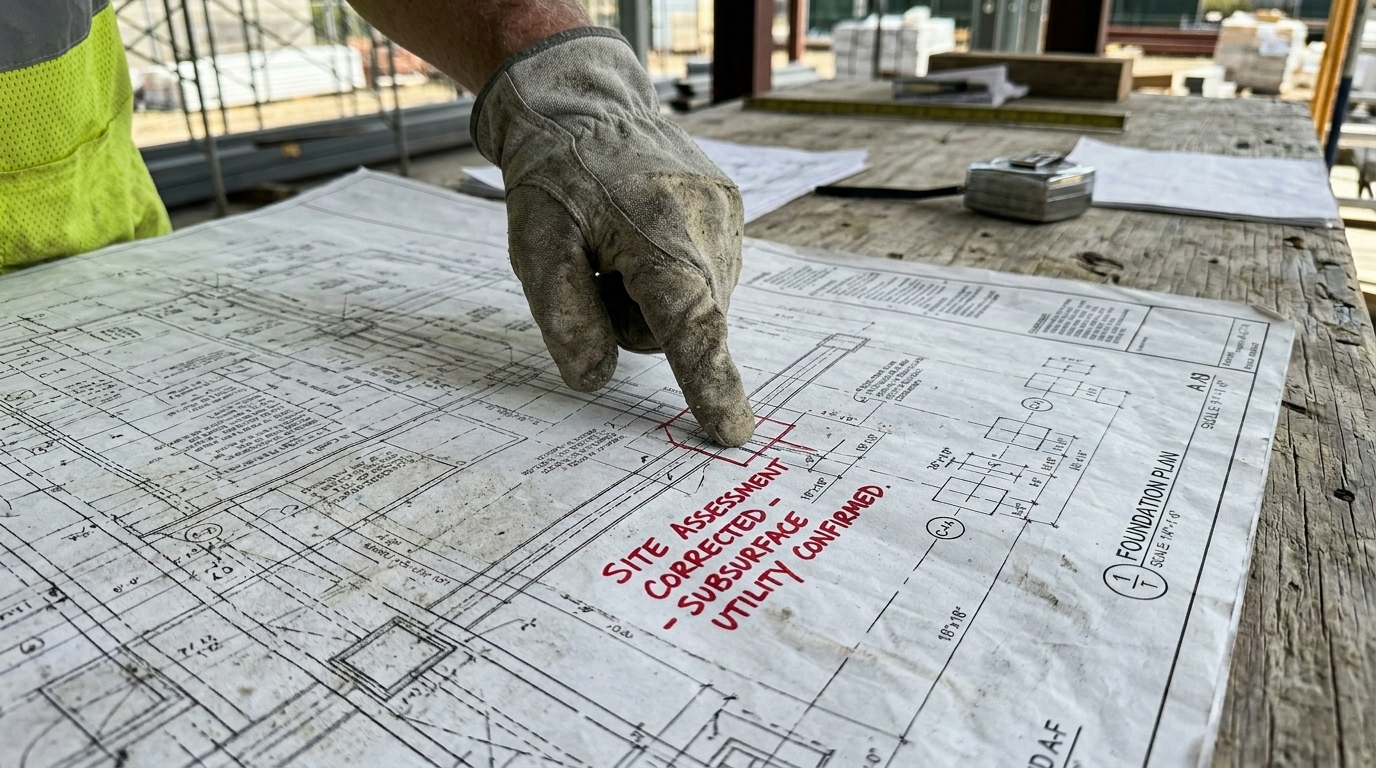
Conduct thorough site assessments before design finalization to catch subsurface issues, utility conflicts, and access limitations early
Run constructability reviews where field crews evaluate whether the design can actually be built efficiently
Align design decisions with cost targets, not the other way around
Considerations:
Requires budget allocation before the project feels “real,” which is a hard sell for some owners
Adds 4 to 8 weeks to the front-end schedule, making it impractical for emergency or fast-track projects
Practitioners on Quora note that the “best way to limit cost of pavement construction is to have a well-designed road map” and that heavy truck loadings are the primary cost driver. The same principle applies across all construction types: upfront engineering decisions carry the highest cost leverage. Building a construction sourcing strategy during preconstruction compounds these savings downstream.
2. Lock in Material Pricing Early
Best for: Procurement teams managing projects with long timelines or phased construction
Potential savings: Hedges against the 37.7% material cost inflation seen since 2020
Steel mill products climbed 3.8 percent year-over-year in August 2025, and asphalt paving mixtures increased 2.9 percent. In the EU, construction material prices rose 25 to 40 percent between 2021 and 2024. These aren’t one-time spikes. They’re structural price trends that punish anyone who waits.
Negotiate forward-buy agreements with key suppliers for materials you know you’ll need
Include price escalation clauses in contracts so cost increases are shared fairly rather than absorbed entirely by the contractor
Consider strategic stockpiling of high-volatility materials (steel, copper, asphalt) when prices dip
Considerations:
Forward-buy commitments tie up cash and require accurate demand forecasting
Storage costs and material degradation can offset savings if quantities are overestimated
3. Use Group Purchasing Power
Best for: Small to mid-size contractors who lack the volume to negotiate national pricing on their own
Potential savings: 10 to 15 percent on materials and equipment, plus up to 60 percent reduction in procurement admin time
Materials account for 40 to 60 percent of total project costs. Most contractors compare only 3 to 4 supplier quotes per purchase because there’s simply no time for more. A practitioner-founded blog (BuildAgent) calculated that on a €2M project, insufficient supplier comparison costs €50,000 to €100,000 in missed savings.
Group purchasing organizations solve this by aggregating buying power across dozens or hundreds of contractors. By joining a GPO, contractors typically save 10 to 15 percent on materials and equipment, gain access to annual cash rebates, and cut procurement admin time by up to 60 percent. Standardizing safety product sourcing alone through a GPO contract can reduce costs 10 to 20 percent.
Join a contractor-focused GPO that negotiates national pricing with major suppliers
Consolidate purchases through pre-negotiated contracts rather than bidding each buy independently
Take advantage of annual rebate programs that return cash based on volume
Considerations:
Savings depend on the GPO’s supplier network aligning with your actual material needs
Some GPOs require membership fees or minimum purchase commitments
Construction cost reduction at the procurement level is the fastest path to measurable savings because it touches the single largest cost category on every project. CNBA’s contractor collective purchasing guide breaks down how buying groups work and what contractors can realistically expect to save.
4. Apply Value Engineering Without Gutting Quality
Best for: Design-build teams and owners willing to revisit specifications before construction starts
Potential savings: 5 to 15 percent per redesign cycle, depending on project complexity
Value engineering isn’t about picking cheaper materials. It’s about evaluating the function-to-cost ratio of every design decision and finding alternatives that deliver the same performance for less money.
Standardize structural dimensions (column spacing, slab thickness, beam sizes) to reduce formwork complexity and material waste
Substitute materials where performance equivalence is proven
Use modular or prefabricated components to shift labor from field to factory, where conditions are controlled and productivity is higher
Considerations:
Delays the project if value engineering is introduced after design is substantially complete
Aggressive VE sometimes sacrifices long-term durability for short-term savings, which backfires during the maintenance phase
5. Consolidate Trades Under Fewer Contractors
Best for: Multi-discipline projects (concrete, asphalt, site work, fencing) with tight schedules
Potential savings: Eliminates subcontractor markup layers and reduces coordination-driven rework
According to Dodge Construction Network, 33 percent of contractors identify coordination issues as the root cause of construction quality problems. Every additional subcontractor adds a layer of overhead, profit margin, scheduling conflict, and communication failure.
Using a single multi-trade contractor for related scopes (structural concrete, asphalt paving, site work, ADA compliance) cuts the number of handoffs that create delays and rework. Fewer contracts also mean fewer mobilizations, and each mobilization carries fixed costs regardless of work volume.
Evaluate whether one contractor can self-perform multiple related trades instead of hiring four or five subs
Streamline safety management under a single safety culture instead of coordinating multiple subcontractor programs
Reduce total mobilization costs by combining scopes under one crew
Considerations:
Multi-trade contractors are less common, so geographic availability can limit options
A single contractor failure becomes a single point of risk for multiple scopes
6. Hire Self-Performing Contractors
Best for: Owners and general contractors who want tighter cost control and fewer markup layers
Potential savings: Removes one full layer of overhead and profit from the cost chain
When a general contractor subcontracts work, the subcontractor adds their own overhead and profit (typically 10 to 20 percent) on top of actual labor and material costs. Self-performing contractors who employ their own crews and own their equipment eliminate that markup layer entirely.
Self-perform crews respond faster to field conditions because there’s no sub to call and negotiate with
One accountability chain means fewer delays when problems arise
Quality control is tighter when every worker operates under the same training and safety standards
Considerations:
Self-performing contractors may have capacity constraints during peak season
Not every contractor who claims to self-perform actually does so across all trades advertised
Labor & Procurement Model Comparison
Strategy | Cost Impact | Risk Level | Primary Benefit |
Traditional Subcontracting | High (10-20% Markups) | Low | Specialized expertise; shared liability |
Self-Performing | Low (Internal rates) | High | Direct quality control; no markup |
GPO Procurement | Low (10-15% Savings) | Low | Immediate ROI; reduced admin time |
Trade Consolidation | Medium (Efficiency gains) | Medium | Fewer handoffs; streamlined schedule |
7. Reduce Rework Through Quality Systems
Best for: Field operations teams on projects where tolerances are tight or rework is historically common
Potential savings: Recovers approximately 5 percent of total project cost (the typical rework burden)
Rework represents approximately 5 percent of total project cost at the lower end, which translates to several percentage points of contractor margin eaten away by doing work twice. The good news: PlanRadar’s data shows that 56 percent of companies with consistent QA/QC processes keep rework costs under 5 percent of budget.
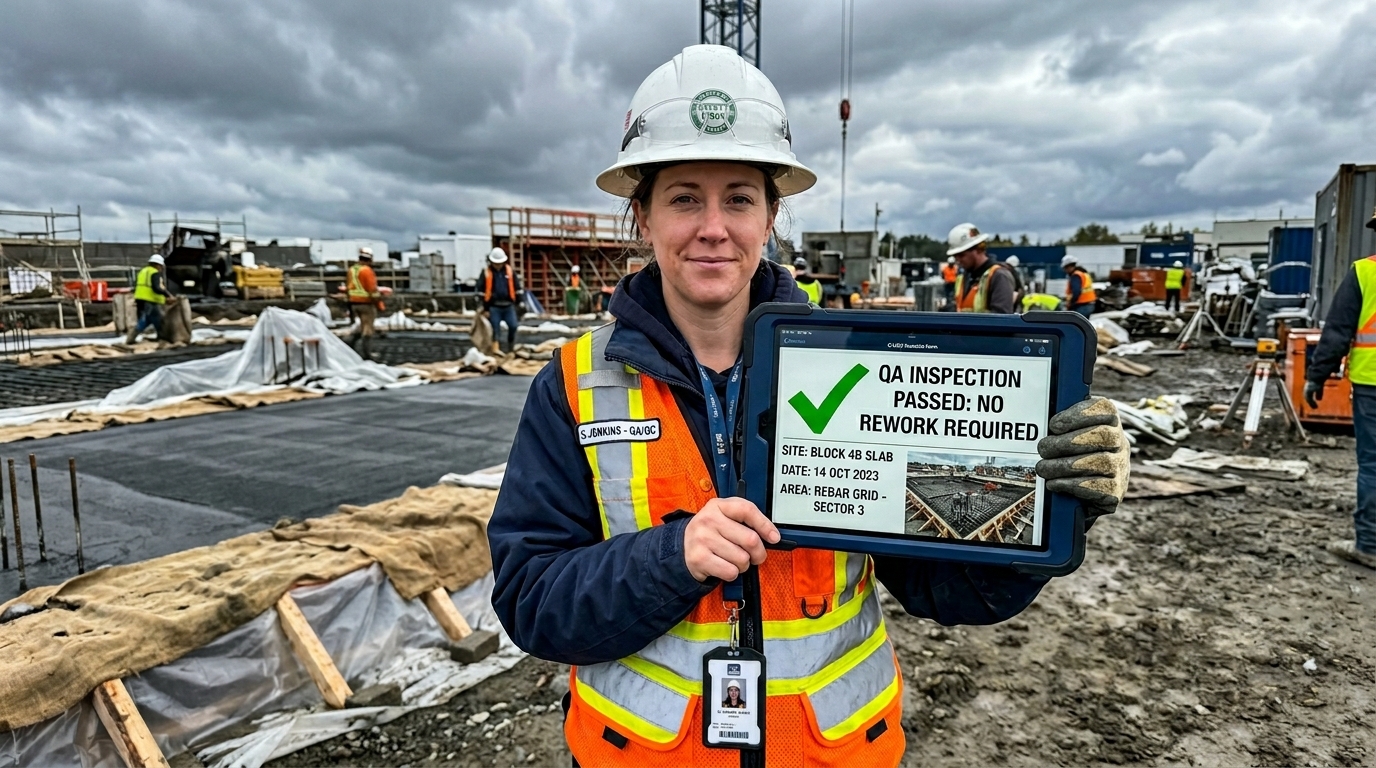
Implement pre-pour checklists, daily inspection protocols, and crew training programs
Document everything with photos and digital sign-offs so defects are caught before they’re buried
Track rework causes and costs systematically to identify patterns, not just symptoms
Considerations:
Quality systems require upfront time and buy-in from field supervisors who may see them as paperwork
Overly bureaucratic QA processes can slow production if not designed for field realities
The takeaway from PlanRadar’s research is straightforward: quality systems are cost systems. Reducing construction costs through rework prevention protects margins without requiring any negotiation or procurement change.
8. Use BIM and Digital Tools for Clash Detection
Best for: Complex projects with multiple MEP systems, structural elements, and tight coordination requirements
Potential savings: 40 to 50 percent reduction in rework costs, 50 to 60 percent fewer design errors
A Springer Nature study found that BIM reduces design errors by 50 to 60 percent, clashes by 40 percent, and rework costs by 40 to 50 percent. Separately, Dodge Data & Analytics reports that 71 percent of contractors using digital tools saw measurable improvement in project efficiency.
Use 3D coordination to identify MEP and structural conflicts before they become expensive field problems
Even smaller firms benefit from simplified BIM workflows on complex pours or crowded site work
Digital daily logs and photo documentation create an audit trail that prevents disputes
Considerations:
BIM implementation has a steep learning curve and requires trained staff or consultants
The ROI diminishes on simple, repetitive projects where traditional coordination works fine
Software licensing costs can be prohibitive for small contractors with low project volume
9. Control Scope Creep with Formal Change Management
Best for: Project managers and owners on projects with multiple stakeholders or evolving requirements
Potential savings: Addresses the root cause of 60 percent of construction budget overruns
Approximately 60 percent of construction projects go over budget due to scope changes. Scope creep isn’t always dramatic. It’s the accumulation of small additions, “while you’re here” requests, and undocumented verbal agreements that collectively wreck the budget.
Require written change orders with cost and schedule impact analysis before any scope addition is approved
Define scope with precision during preconstruction (ties directly back to Strategy #1)
Track cumulative change order totals against a contingency budget so all stakeholders see the running total
Considerations:
Strict change management can create friction with owners who expect flexibility
Not all scope changes are avoidable; some respond to genuine site conditions discovered during construction
10. Optimize Equipment Costs with Rent vs. Buy Analysis
Best for: Equipment-heavy contractors and site work operations
Potential savings: Varies significantly by utilization rate, but idle equipment is pure overhead
The simple rule: if a piece of equipment sits idle more than 50 percent of the time, renting is almost always cheaper than owning. Ownership carries insurance, maintenance, storage, and depreciation costs that don’t pause when the machine does.
Conduct utilization audits on owned equipment to identify assets that should be sold and rented as needed
Negotiate bulk rental agreements, especially through purchasing alliances that offer fleet volume discounts
Keep fleet parts and maintenance costs low through group sourcing rather than buying retail
Considerations:
Rental availability tightens during peak construction season, driving rates up
Long-term rental on high-utilization equipment gets more expensive than ownership over time
11. Minimize Material Waste
Best for: All projects, particularly high-material-cost jobs (concrete, asphalt, steel)
Potential savings: 10 to 15 percent of purchased materials typically become waste
Up to 10 to 15 percent of materials purchased for construction become waste. The U.S. generated over 600 million tons of construction-related waste in 2018. Every wasted ton represents money in a dumpster.
Invest in accurate material takeoffs rather than padding orders with excessive waste factors
Implement just-in-time delivery to reduce on-site storage damage, theft, and weather exposure
Use recycled materials where specs allow. Recycled asphalt pavement (RAP) saves approximately 20 to 30 percent compared to new hot mix asphalt
Considerations:
Just-in-time delivery requires reliable suppliers and precise scheduling
Recycled material use is limited by project specifications and local availability
Construction cost reduction through waste minimization is one of the few strategies that simultaneously improves environmental performance, making it easier to justify to ESG-conscious project owners.
12. Schedule Strategically for Seasonal Savings
Best for: Projects with flexible timelines that can target off-peak construction windows
Potential savings: 15 to 25 percent lower labor rates during the off-season (November through March)
Off-season construction offers 15 to 25 percent lower labor rates due to reduced demand. Contractors are hungrier for work, material suppliers run promotions, and negotiating leverage shifts from seller to buyer.
Bundle multiple projects for volume discounts on materials and shared mobilization costs
Target bidding during late fall when contractor backlogs are thinnest
Layer seasonal timing with smarter procurement through purchasing strategy best practices to compound the savings
Considerations:
Weather-sensitive work (asphalt paving, concrete finishing) has real limitations during cold months
Some jurisdictions have seasonal permitting delays that offset scheduling savings
13. Invest in Preventive Maintenance Over Reactive Repair
Best for: Facility managers and commercial property owners with existing pavement and concrete assets
Potential savings: Preventive treatments are 4 to 5 times more cost-effective than full reconstruction
This strategy targets the long game. Rehabilitation can cost 10 times as much as maintenance. Neglected cracks expand into potholes requiring full-depth repairs at $4 to $10 per square foot compared to $1 to $3 for resurfacing.
A practitioner blog (Asphalt Coatings Company) documents that preventive pavement treatments applied on a consistent schedule are four to five times more cost-effective than waiting for full reconstruction. This math applies directly to parking lots, truck courts, loading docks, and facility roadways.
Establish lifecycle maintenance programs that include milling, overlays, sealcoating, and crack sealing at planned intervals
Budget for annual condition assessments that catch deterioration early
Stay current on pavement industry trends including recycled materials and emerging treatment technologies
Considerations:
Requires consistent annual budgeting, which competing capital priorities can undermine
Preventive maintenance only works if the underlying pavement structure is still sound
14. Prioritize ADA Compliance Proactively
Best for: Commercial property owners and facility managers managing multi-site portfolios
Potential savings: Avoids first-violation penalties up to $75,000 and subsequent violations up to $150,000
A first violation for ADA non-compliance can carry a maximum civil penalty of $75,000, with subsequent violations reaching $150,000. That doesn’t include attorney fees, remediation costs, or business disruption during forced construction. Proactive compliance costs a fraction of reactive lawsuit defense.
Conduct ADA audits of parking lots, sidewalks, ramps, and signage before a complaint forces the issue
Build ADA compliance into every site work scope rather than treating it as an afterthought
For broader context on regulatory and market risks facing contractors, see this overview on navigating challenges in the construction industry
Considerations:
ADA standards can be complex, and interpretations vary by jurisdiction and enforcement body
Compliance upgrades to existing properties are nearly always more expensive than incorporating ADA requirements from the start
15. Build Long-Term Vendor and Contractor Partnerships
Best for: Repeat builders, property portfolio managers, and contractors with steady annual work volume
Potential savings: Loyalty pricing, priority scheduling, better communication, and reduced rebid costs
One-off transactional relationships leave money on the table. Long-term partnerships unlock preferential pricing, priority scheduling during peak season, and the kind of honest communication that prevents expensive surprises. When your vendors know they’ll see you again next quarter, they invest in getting it right.
Formalize partnerships through structured contractor-vendor partnership programs rather than relying on informal goodwill
Use GPO or buying group membership to access pre-negotiated pricing that rewards volume loyalty
Maximize returns through vendor rebate programs that return cash based on annual purchase volume
Considerations:
Long-term relationships can breed complacency if pricing isn’t periodically benchmarked against market rates
Over-reliance on a single vendor creates supply chain risk if that vendor faces capacity or quality issues
Bonus: Emerging 2026 Cost-Savers
AI-Driven Material Forecasting: Use predictive analytics to time your “Lock-in” strategy (Strategy #2) based on real-time commodity market fluctuations.
Carbon-Neutral Incentives: Leverage local tax credits for using sustainable materials. While these may have higher upfront costs, the net project cost often drops after rebates.
Off-site Modular Assembly: Moving just 25% of a project to a modular environment can reduce total site labor costs by 20% due to increased worker productivity.
Bringing It All Together
Construction cost reduction is a system, not a single tactic. The 15 strategies above span the full project lifecycle, from preconstruction planning through long-term asset maintenance. No single approach will transform your cost structure overnight. But stacking several of these strategies compounds the savings in ways that show up clearly on the bottom line.
The highest-leverage starting point for most contractors is procurement. Materials represent 40 to 60 percent of total project costs, and most companies aren’t comparing enough suppliers or accessing the volume discounts available through buying groups. CNBA’s contractor group purchasing organization guide walks through how GPOs work, what savings to expect, and how to evaluate whether a purchasing alliance fits your operation.
Start with the strategies that match your biggest cost pain points. For most commercial contractors, that means procurement optimization, trade consolidation, and rework prevention. The data is clear: the savings are there. You need a system to capture them.
Frequently Asked Questions
What is the single biggest driver of construction cost overruns?
Scope changes cause approximately 60 percent of construction budget overruns. However, material costs (40 to 60 percent of total project costs) and rework (roughly 5 percent of project cost) are also major contributors. Most overruns result from a combination of poor preconstruction planning, insufficient procurement optimization, and weak change management.
How much can a group purchasing organization save on construction materials?
Contractors who join a GPO typically save 10 to 15 percent on materials and equipment. Additional benefits include annual cash rebates and up to 60 percent less time spent on procurement administration. The savings are most significant for small and mid-size contractors who lack the individual volume to negotiate national pricing.
Does BIM actually reduce construction costs for smaller projects?
On complex projects, yes. BIM reduces rework costs by 40 to 50 percent and design errors by 50 to 60 percent according to published research. However, the ROI drops on simple, repetitive projects where traditional coordination methods work well enough. The software licensing and training costs also make adoption harder to justify for low-volume contractors.
What is value engineering in construction?
Value engineering is a systematic review of project design to find alternatives that deliver the same function at lower cost. It focuses on evaluating the function-to-cost ratio of design decisions, not simply substituting cheaper materials. When done during preconstruction, it can reduce project costs by 5 to 15 percent per redesign cycle.
How much does construction rework typically cost?
Rework accounts for approximately 5 percent of total project cost at the lower end, which directly eats into contractor margins. Companies with consistent QA/QC processes are significantly more likely to keep rework below that threshold. The key is catching defects through inspection protocols before they become buried in subsequent work.
When is the cheapest time of year to schedule construction work?
The off-season window of November through March generally offers 15 to 25 percent lower labor rates due to reduced demand. Material suppliers often run promotions during this period, and contractors have more flexibility to negotiate favorable terms. The tradeoff is that weather-sensitive work like asphalt paving and concrete finishing faces real quality limitations in cold temperatures.
How does preventive maintenance reduce long-term construction costs?
Preventive pavement treatments applied on a consistent schedule are four to five times more cost-effective than waiting for full reconstruction. For example, resurfacing costs $1 to $3 per square foot, while full-depth pothole repairs run $4 to $10 per square foot. A structured lifecycle program (milling, overlays, sealcoating, crack sealing) extends pavement useful life dramatically and avoids capital-intensive reconstruction projects.
What are ADA non-compliance penalties in construction?
A first ADA violation can carry a maximum civil penalty of $75,000, and subsequent violations can reach $150,000. These fines don’t include legal defense costs, forced remediation expenses, or business disruption. Proactive ADA compliance built into site work scopes costs a small fraction of what reactive remediation after a complaint or lawsuit demands.
Recent Comments