
TLDR
Contractor purchasing efficiency measures how well a contractor converts project needs into delivered, documented, and usable materials or services with minimal waste, delay, and cost leakage. It goes beyond finding the lowest price. Procurement can account for 40% to 70% of a construction company’s total spending, so small improvements in purchasing speed, supplier reliability, and process discipline have an outsized effect on margins. The most practical way to evaluate purchasing efficiency is at the workface: did crews get what they needed, when they needed it, at the agreed price, without emergency runs or idle time?
Executive Summary: The Direct Path to Purchasing Efficiency
To maximize contractor purchasing efficiency in 2026, firms must shift from reactive buying to structured procurement. The goal is to minimize the “Total Cost of Procurement”—which includes the unit price plus the cost of labor downtime, rush fees, and administrative errors.
The 3 Pillars of Efficient Purchasing:
1. Standardization: Route 80% of recurring spend through preferred supplier programs.
2. Lead-Time Management: Identifying long-lead items during the estimating phase, not the mobilization phase.
3. Field-First Logistics: Measuring success by “Kit-Complete” readiness—ensuring 100% of materials are on-site before a crew is dispatched.
Key Takeaway: A 5% reduction in procurement waste often yields a higher margin increase than a 10% increase in total sales volume.
What Is Contractor Purchasing Efficiency?
Short Definition
Contractor purchasing efficiency is the ability to buy the materials, equipment, supplies, and services a contractor needs at the right price, quantity, quality, time, and location while reducing wasted labor, admin time, rush orders, invoice errors, and jobsite delays.
Plain-English Meaning
A contractor has high purchasing efficiency when crews get what they need, when they need it, at the agreed price, from dependable suppliers, with clean purchase orders, accurate invoices, and minimal emergency buying.
This is not just about getting a better unit price on rebar or pipe fittings. It includes the full cost of buying: the hours spent chasing quotes, the approval delays that push deliveries past crew readiness, the emergency supply run that pulls a foreman off the job, and the invoice correction that ties up accounting for a week. Purchasing efficiency means all of those friction points are reduced to a minimum.
According to McKinsey, procurement typically accounts for 40% to 70% of a construction company’s total spending. That range makes purchasing one of the highest-leverage areas for margin improvement. Companies with best-in-class procurement practices can have margins five to ten percentage points higher than laggards.
Why Contractor Purchasing Efficiency Matters
Purchasing Affects Contractor Margins
When procurement represents the majority of project costs, even modest improvements in pricing, waste reduction, and cycle time compound across every job. McKinsey also notes that many construction CPOs believe applying best-in-class procurement practices can generate savings of up to 12%. For a contractor running $20 million in annual material spend, that is a significant number.
The challenge is that most contractors do not have dedicated procurement teams. Purchasing gets handled by project managers, superintendents, foremen, and office admins alongside their other responsibilities. Without structure, spend fragments across vendors, quotes expire before orders go out, and invoices pile up with discrepancies nobody has time to resolve.
Contractors who want to understand how structured programs improve their position should explore how contractor purchasing leverage works in practice.
Material Price Volatility Raises the Stakes
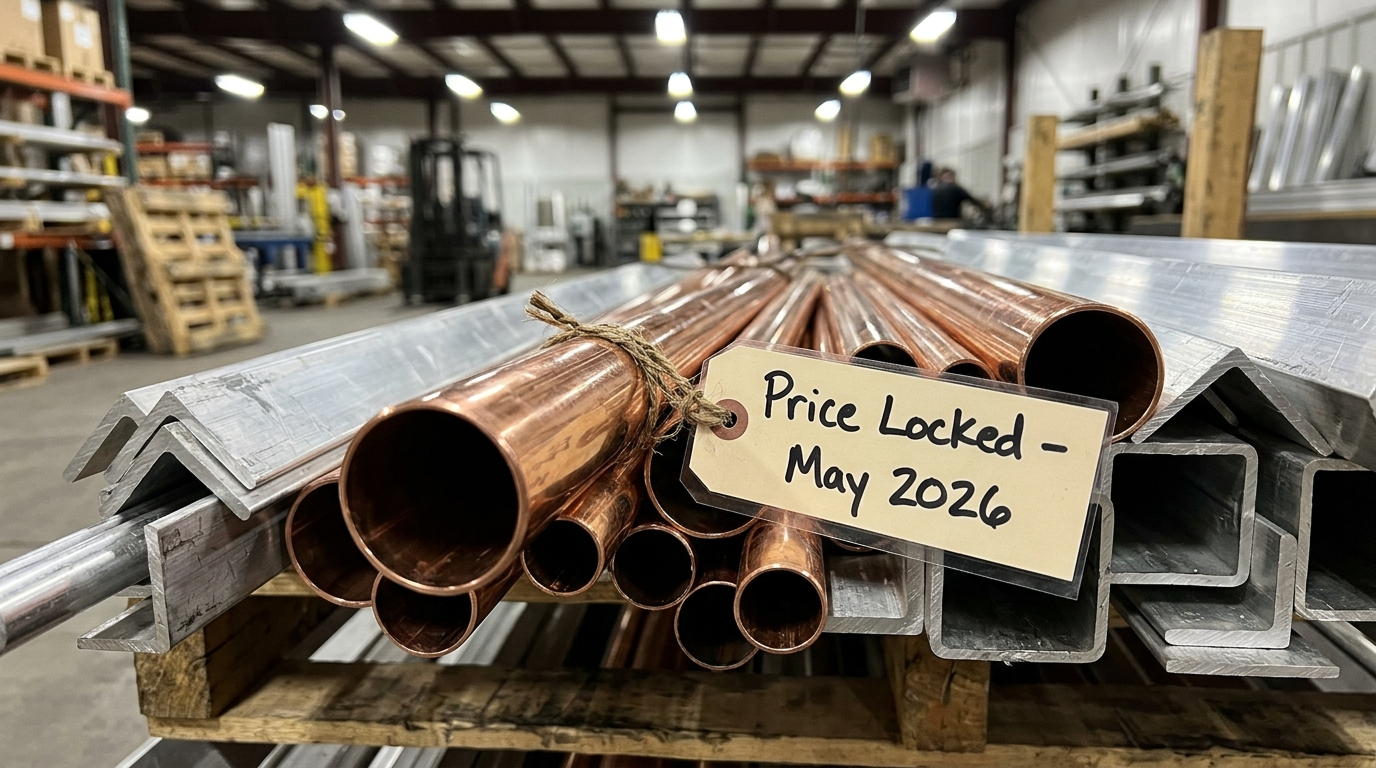
AGC reported that the producer price index for inputs to new nonresidential construction rose 1.7% from February to March 2026, the largest one-month increase since January 2022. Year-over-year, key inputs surged: aluminum mill shapes up 34.1%, copper and brass mill shapes up 21.3%, and steel mill products up 15.4%.
When input prices move this fast, slow approvals, weak quote tracking, and missing escalation language become expensive. A contractor with a 30-day-old quote and no price-lock mechanism may absorb cost increases that wipe out the job’s margin before work even starts.
The pressure extends beyond materials. According to AGC’s 2026 Construction Hiring and Business Outlook survey, about 70% of firms were affected by tariffs. In response, 40% raised bid prices, 32% accelerated purchases, and 20% added price-sharing adjustments to contracts. Purchasing efficiency now includes contract terms, timing decisions, and sourcing strategy, not just placing orders faster.
Labor Shortages Make Material Delays More Expensive
ABC estimated that the construction industry needs to attract 349,000 net new workers in 2026 to meet demand. When skilled labor is this scarce, every hour a crew spends waiting for materials, making unplanned supply runs, or reworking around missing parts costs more than it did five years ago.
FMI’s Labor Productivity Study quantified the damage: $30 billion to $40 billion lost annually due to poor productivity, with 60% of respondents reporting that 11% or more of field labor costs are wasted. Three of the top four internal productivity factors relate to planning, communication, and collaboration, all of which connect directly to how well purchasing feeds the field.
The hidden cost of inefficient purchasing is often paid in labor hours. If materials are late, incomplete, wrong, or poorly staged, crews lose productive time even if the purchase price looked acceptable.
Contractor Purchasing Efficiency vs. Procurement Efficiency
Glossary searchers often confuse purchasing with procurement. The terms overlap but are not interchangeable.
Purchasing
Purchasing is the act of buying goods or services. It covers the transaction: selecting a supplier, placing the order, receiving delivery, and paying the invoice. Purchasing efficiency focuses on making that buying step faster, cleaner, and less wasteful.
Procurement
Procurement is the full lifecycle. It starts with identifying the need and includes sourcing, negotiating, approving, buying, receiving, inspecting, paying, and managing supplier performance over time. BILL defines construction procurement as acquiring goods, services, and contractors needed to complete a project. Sortly describes it as sourcing, purchasing, and managing materials, equipment, and subcontracted work.
Contractor purchasing efficiency sits inside the broader procurement system. You can have a great purchasing process but still have procurement problems if your sourcing is weak, your specs are incomplete, or your supplier management is nonexistent.
For a deeper look at how contractors organize the full procurement function, see this guide on construction procurement alliances.
Purchase Requisition vs. Purchase Order
Stampli explains that a purchase requisition is an internal request, while a purchase order is an external agreement between buyer and supplier. Complete requisitions prevent wrong orders, missing specs, and approval delays. Clean POs reduce invoice disputes, duplicate payments, and delivery confusion. Both matter to purchasing efficiency.
Sourcing
Sourcing is the process of finding and qualifying suppliers. Better sourcing improves price, availability, lead times, and reliability. Contractors interested in formalizing this process can review a construction sourcing strategy guide for a broader framework.
At a Glance: Purchasing vs. Procurement
Feature | Purchasing (The Transaction) | Procurement (The Strategy) |
Focus | Short-term: Getting the order placed. | Long-term: Sourcing and vendor health. |
Primary Goal | Price, speed, and accuracy of the order. | Value, risk mitigation, and supply chain stability. |
Key Activity | Issuing POs, receiving, and payments. | Market research, negotiation, and auditing. |
Efficiency Metric | Order cycle time & invoice accuracy. | Total Cost of Ownership (TCO) & ROI. |
What Efficient Contractor Purchasing Looks Like
Most vendor articles describe purchasing efficiency as a technology problem. Install the right software, automate approvals, and the inefficiency disappears. That is part of it. But the bigger picture is a combination of process discipline, supplier strategy, risk management, and field execution.
The 6 Rights of Contractor Purchasing
Trimble frames the procurement objective as buying the best item at the right quality, quantity, time, and cost. Expanding on that framework, efficient contractor purchasing means getting six things right on every order:
Right item. Correct spec, approved alternate, proper warranty, code compliance. A substituted product that fails inspection or causes rework was never the right item, regardless of price.
Right quantity. Enough to avoid stockouts, not so much that cash, storage space, and waste increase. Practitioners on Reddit’s r/Construction report that ordering too little creates worse problems than ordering slightly too much, because the labor cost of running out mid-task often exceeds the cost of modest material overages.
Right price. Competitive unit price plus rebates, credit terms, freight, delivery fees, and total cost of ownership. The cheapest line item is not always the cheapest purchase.
Right supplier. Dependable, responsive, financially stable, and aligned with the contractor’s needs. More on this below.
Right time. Ordered early enough for lead times, approved in time for the project schedule, delivered when crews need it. Not a week early taking up laydown space, and not two days late causing a cascade of rescheduling.
Right place. Delivered to the correct jobsite, laydown area, warehouse, or crew. With clean receiving documentation, not dropped in a parking lot with no delivery ticket.
The 3 Controls: Spend, Risk, and Field Readiness
Getting the 6 Rights consistently requires three control systems working together.
Spend control means approved vendors, negotiated programs, quote tracking, PO discipline, and rebate capture. When contractors route recurring purchases through contractor national pricing programs, they reduce the time spent chasing one-off quotes while improving consistency.
Risk control means escalation clauses, quote-validity windows, approved alternates, supplier backups, and long-lead tracking. SMACNA’s FAQ on tariff impacts notes that price escalation clauses can provide relief in fixed-price contracts when material prices change significantly, but the exact wording, notice requirements, and covered materials determine whether the contractor can actually recover the increase.
Field control means kit-complete readiness, receiving checks, staging, inventory visibility, and fewer emergency runs. Supply Chain Management Review argues that material procurement is a “hidden productivity killer” because material specification, sourcing, approvals, shipping, receiving, and staging determine whether crews do direct work or wait.
For contractors, purchasing efficiency should be measured at the workface. If the crew cannot start because a part is missing, the purchase was not efficient, even if it was cheap.
How to Measure Contractor Purchasing Efficiency
Most competitor guides mention KPIs in passing. Contractors need a practical measurement framework, not a list of 40 metrics they will never track. These metrics also feed upward into the broader construction cost optimization stack, where procurement KPIs sit alongside Front-End Planning maturity, Lean execution metrics like Percent Plan Complete, and earned-value indicators—the workface signals below tell you whether the procurement layer of that stack is actually working. Start with five core KPIs:
Spend under program. What percentage of total material and supply spend goes through approved suppliers, negotiated agreements, or structured purchasing programs? Higher is better.
Supplier on-time delivery rate. What percentage of deliveries arrive within the agreed window? This is the single metric that most directly connects purchasing to field productivity.
Quote-to-invoice variance. How often does the final invoice match the original quote? Large variance indicates pricing surprises, scope creep, or poor documentation.
Rush-order rate. What percentage of purchases are emergency or rush orders? High rates indicate poor planning, weak inventory visibility, or both.
Crew downtime caused by material issues. How many hours per project or per week are lost because materials are late, wrong, incomplete, or missing? This is the KPI that turns purchasing efficiency from an accounting concern into a field-operations concern.
SCMR recommends tracking additional metrics such as kit-complete readiness, PO-to-dock lead time, RFI/submittal cycle time, and receiving first-time quality for contractors who want to go deeper.
Beyond these five, more advanced measurements include:
Cost KPIs: Price variance vs. estimate, rebate capture rate, freight as a percentage of material spend, material overage/waste rate. Contractors who participate in rebate programs should track actual capture. A rebate that exists on paper but never gets collected does not improve efficiency. For guidance on tracking and maximizing rebates, see this contractor vendor rebates guide.
Speed KPIs: Requisition-to-PO cycle time, PO-to-delivery lead time, supplier quote turnaround, approval bottleneck time, invoice exception resolution time.
Reliability KPIs: Supplier fill rate, first-time-right delivery rate, backorder rate, damage/return rate, delivery exceptions per project.
Field-readiness KPIs: Percentage of tasks started with complete materials, stockout incidents per project, emergency supply runs per week, rework caused by wrong or nonconforming material.
The point is not to track everything. It is to pick the metrics that connect purchasing decisions to jobsite outcomes and review them consistently.
Common Causes of Poor Purchasing Efficiency
Reactive Job-by-Job Buying
When every project starts from scratch with new quotes, new suppliers, and no carryover from previous jobs, the contractor pays a time tax on every purchase. Standardization across jobs, even just for recurring consumables, tools, PPE, and common materials, removes significant friction.
Maverick Spend
Maverick spend is off-contract or unapproved purchasing. It happens when foremen, PMs, or field staff buy from whoever is closest or cheapest without checking approved vendor lists or existing agreements. The result: inconsistent pricing, lost rebate eligibility, duplicate purchases, and zero supplier leverage.
Slow Approvals
An approval process that takes three days for a $500 material order is not a control. It is a bottleneck. Efficient purchasing requires approval thresholds that match the urgency and risk of the purchase.
Weak Supplier Relationships
Practitioners on Reddit’s r/ConstructionManagers describe a practical approach: use a few trusted suppliers or national account agreements for standard recurring purchases, then get multiple quotes for large or specialty packages. One commenter’s point stood out: a responsive supplier who handles same-day changes without premium charges may save more money than a cheaper supplier who causes crew downtime.
No Quote Validity or Escalation Rules
In a Reddit thread on r/Contractor about mid-job material price increases, contractors discussed quote-validity windows of 7 to 30 days, escalation clauses, and locking material pricing soon after contract signing. Several treated escalation as something to handle in the estimate and contract before the job starts, not after the contractor is already exposed.
A contractor who holds a quote for 30 days but does not lock supplier pricing, collect a deposit, or include escalation language may be buying inefficiently even if the original material quote was competitive.
Poor Receiving and Invoice Controls
BILL describes delivery confirmation, inspection approvals, and three-way matching (matching PO, receiving record, and invoice) as controls that prevent errors, overpayments, and fraud. Without these steps, contractors pay for materials they did not receive, accept damaged goods without recourse, and spend hours reconciling mismatched invoices.
Field Disorganization
In a Reddit thread about annoying purchase order processes, field workers on r/Construction complained about ordering too little, running out mid-day, material scattered across crews, and “scavenger hunts” for hardware. One construction manager said they order starting materials before the project and worry more about management and planning failures than small material overages. The takeaway: purchasing efficiency problems often surface as field chaos, not accounting errors.
The 2026 Contractor Procurement Tech Stack

Efficiency is no longer possible using only manual spreadsheets. Leading contractors now integrate three specific technologies:
Inventory & Asset Tracking: Using QR or RFID tags to provide real-time visibility into what is already in the warehouse before cutting a new PO.
Automated AP (Accounts Payable): Systems that perform “Three-Way Matching” (PO + Receiving Ticket + Invoice) to catch overcharges automatically.
Procurement Networks: Digital platforms that connect contractors directly to national pricing programs, eliminating the “quote-chasing” phase for standard materials.
How Contractors Improve Purchasing Efficiency
Standardize Recurring Purchases
Create approved supplier lists and preferred SKUs for recurring materials, consumables, PPE, parts, and tools. This reduces quote chasing, wrong items, duplicate purchases, and invoice exceptions. For categories where the contractor buys the same products repeatedly across jobs, standardization is the fastest path to efficiency.
Use Preferred Supplier Programs
Supplier agreements, national pricing programs, and negotiated purchasing programs bring consistency and visibility. When a contractor knows the price, terms, and delivery expectations before the order goes out, the entire cycle speeds up. Contractors who want to explore structured programs can review this guide on contractor purchasing networks and GPO savings.
Join Buying Groups or Purchasing Alliances
Buying groups and purchasing alliances give contractors access to negotiated supplier programs, better pricing, rebates, and vendor relationships that would be difficult to achieve alone. They are most useful for repeatable categories and work best when contractors actually route spend through the program and track realized savings.
The biggest benefit is often not just a headline discount. It is the combination of effective price, time saved, reduced vendor search, and improved consistency. For contractors investigating these models, a contractor buying group guide explains how to evaluate and join one.
Important nuance: buying groups do not replace job-specific estimating or PO discipline. They are one component of a broader purchasing strategy.
Quote Major Packages Competitively
Use core suppliers for daily needs, but get multiple quotes for major packages or specialty items. This matches the practitioner consensus: relationship speed for daily purchases, competitive pressure for large buys. The two approaches are not contradictory. They serve different purchasing situations.
A commenter on Reddit’s r/Construction noted that trades may have better pricing than the GC for certain material categories due to loyalty or quantity discounts. Centralization improves control, but it should not override trade-specific buying leverage when a subcontractor has better supplier relationships, warranties, or installed-cost accountability.
Improve Requisition and PO Discipline
Require every requisition to include a project code, description, spec, quantity, delivery date, delivery location, budget code, requested supplier, and approval route. Stampli notes that complete requisitions prevent errors and delays. The small upfront effort of writing a proper requisition saves multiples of that time in corrections, returns, and invoice disputes.
Track Long-Lead Items Earlier
Build a procurement log for long-lead and approval-sensitive items at the start of every project. SCMR recommends tracking spec, submittal date, fabrication duration, ship date, on-site date, receiving window, and kit-complete milestone. Many purchasing failures are not caused by slow buying. They are caused by late identification of what needs to be bought.
Add Price-Risk Language
Use quote-validity windows, escalation clauses, change-order rules, and supplier quote documentation. SMACNA emphasizes that escalation clauses can help fixed-price contractors, but recovery depends on exact wording, notice requirements, and covered materials. Contractors should review contract language with counsel rather than relying on generic templates.
A LinkedIn post from Coorpro framed procurement as a risk-management function, emphasizing technical compliance before price negotiation, supplier due diligence, and delivery reliability. That framing is correct. Buying efficiently means reducing uncertainty before it reaches the project schedule.
Measure Supplier Performance
Track on-time delivery, fill rate, quote responsiveness, emergency support, invoice accuracy, defect rate, and warranty support. This data should inform future purchasing decisions. A supplier with a 70% on-time rate is not a preferred supplier, regardless of pricing.
Examples of Contractor Purchasing Efficiency
Efficient Daily Purchasing
A paving contractor uses a preferred supplier with slightly higher unit prices but negotiated terms, dependable delivery windows, quick same-day add-ons, and accurate invoices. The contractor avoids minimum delivery charges, crew downtime, and repeated quote chasing. The total cost is lower than the “cheaper” alternative.
Efficient Large-Package Purchasing
A contractor bids a project with copper, steel, and fuel-sensitive components. The estimate states that the quote is valid for 15 days and includes a material escalation clause for defined inputs. If the owner delays approval and material costs rise, the contractor has a documented process for updating the price. The contractor also gets three competitive quotes for the major material package, locks pricing with the selected supplier, and issues the PO within a week of contract signing.
Inefficient Low-Bid Purchasing
A concrete contractor saves 3% on anchor bolts from a new supplier, but the shipment arrives two days late and is missing documentation. Crews work out of sequence, the superintendent sends someone on an emergency supply run, and the PM spends time correcting the invoice. The unit price was lower, but the purchase was inefficient. Contractor purchasing efficiency should measure total installed impact, not only purchase price.
Buying Group Efficiency
A regional contractor buys recurring consumables, tools, PPE, and supplies through a negotiated purchasing alliance instead of one-off local purchases. The contractor gains better pricing, rebate capture, standardized suppliers, and less time spent chasing quotes. Routine spend moves from reactive, one-off buying into a structured program. For contractors evaluating this approach, a contractor purchasing alliance guide covers the process and expected benefits.
Mistakes to Avoid
Measuring only purchase price. Total cost includes delivery reliability, field responsiveness, credit terms, invoice accuracy, and labor impact.
Letting every PM or foreman buy from different vendors. This fragments spend, destroys leverage, and makes tracking impossible.
Ignoring freight, fuel surcharges, minimum delivery fees, and restocking fees. These add up quietly.
Holding quotes longer than supplier pricing is valid. A 30-day-old quote with no price lock is not a real quote.
Failing to collect rebates. Rebates improve effective purchase price, but only if tracked and collected.
Buying direct without understanding minimums, storage, and warranty risk. Practitioners on Reddit’s r/Contractor report that many manufacturers do not sell direct or require large minimum order quantities. For many contractors, better distributor relationships or buying groups are more realistic than going direct.
Letting client-supplied materials create unclear responsibility. Contractors on Reddit warn that client-supplied materials can cause wrong quantities, warranty gaps, and stop-work situations. Purchasing efficiency includes controlling who buys, who warrants, who stores, and who pays for rework.
Paying invoices before delivery verification. Match PO, receiving report, and invoice before approving payment.
Not matching material orders to project codes. Without job-cost tracking, it is impossible to know which projects are bleeding money on materials.
Buying too little because overage looks expensive. The labor cost of running out mid-task nearly always exceeds the cost of a modest surplus.
FAQs About Contractor Purchasing Efficiency
What is contractor purchasing efficiency?
It is a contractor’s ability to buy the right materials, services, supplies, and equipment at the right price, quantity, quality, time, and location with minimal waste, delay, and administrative burden. It matters because purchasing represents a large share of contractor spending, and poor purchasing shows up as margin loss, crew downtime, rework, and schedule slippage.
Is purchasing efficiency the same as procurement efficiency?
No. Purchasing is the buying step. Procurement is the full process from need identification and sourcing through delivery, inspection, payment, and supplier performance management. Purchasing efficiency sits inside the broader procurement system.
What is the most important purchasing efficiency KPI for contractors?
For most contractors, the most practical KPI is crew downtime caused by missing, late, wrong, or incomplete materials. This connects purchasing directly to jobsite productivity and makes the cost of poor purchasing visible to field leadership, not just accounting.
Can buying groups improve contractor purchasing efficiency?
Yes, especially for recurring purchases where negotiated pricing, rebates, supplier access, and standardized buying reduce both cost and admin time. They work best when contractors track participation, compliance, and realized savings. A construction buying consortium guide covers the mechanics.
Is the cheapest supplier always the most efficient?
No. A supplier with lower unit pricing but poor delivery reliability, slow responses, invoice errors, or weak jobsite support can cost more in labor downtime and schedule disruption than the money saved on the purchase price.
Should contractors buy direct from manufacturers?
Sometimes, but many manufacturers require large volume, minimum orders, or route contractors through distributors. For most contractors, better supplier programs, buying groups, or preferred distributor relationships are more realistic paths to improved purchasing efficiency.
How do escalation clauses relate to purchasing efficiency?
They define who carries the risk when material costs change after bid or contract signing. SMACNA notes that escalation clauses can help in fixed-price contracts, but recovery depends on exact wording, notice requirements, and covered materials. Contractors should review escalation language with legal counsel.
Where should a contractor start improving purchasing efficiency?
Start by measuring five things: spend under approved programs, supplier on-time delivery, quote-to-invoice variance, rush-order rate, and crew downtime from material issues. Those five metrics will reveal where the biggest problems are. Then standardize recurring purchases, build a preferred vendor list, and move routine spend into structured programs. For a broader framework, this guide on construction purchasing strategy best practices covers the full approach.

Recent Comments