
TL;DR
Diesel prices crossed $5.25 per gallon nationally in 2026, making fuel the single largest variable cost for most construction fleets. This guide compares seven construction fleet fuel programs, from zero-fee fleet cards to cost-plus cardlock networks and bulk delivery. The best choice depends on fleet size, geography, and whether you burn off-road diesel. Most sophisticated contractors combine bulk delivery for jobsite equipment with fleet cards for road vehicles, a hybrid strategy that none of the other comparison guides cover.
Construction fleet fuel programs help contractors reduce fuel costs, prevent theft, improve project cost tracking, and protect profit margins from diesel price volatility. The best program depends on fleet size, equipment type, and geography.
For most contractors:
Fleet Type | Best Choice |
|---|---|
1–5 vehicles | Coast or RoadFlex |
5–20 vehicles | Voyager Fleet Card |
20+ vehicles | WEX + Bulk Fuel Delivery |
Heavy equipment fleets | Bulk Fuel Delivery + Fleet Card Hybrid |
Western U.S. contractors | CFN Cardlock |
For contractors operating heavy equipment, bulk fuel delivery typically provides much larger savings than fuel card rebates alone. Most large construction companies use both bulk fuel delivery and fleet cards rather than choosing only one.
Why Construction Fleets Need a Fuel Program, Not Just a Gas Card
Diesel fuel costs account for more than 35% of the operational costs for diesel-powered construction equipment. That number has always been significant, but in 2026 it became urgent. The national average for on-highway diesel hit $5.25 per gallon, the first time diesel crossed the $5 threshold nationwide. More alarming, the diesel fuel index soared 37.8% from February to March 2026, the largest single-month jump since the Gulf War.
For a bid-based business, this kind of volatility is dangerous. Construction projects are priced months before the work begins. If fuel costs spike between bid day and project completion, profits evaporate. A structured fuel program isn’t a nice-to-have. It’s margin protection.
Then there’s theft. The National Association of Fleet Administrators reports that 83% of fleets experience regular fuel theft. Construction leaders estimate that up to 22% of their fleet payments are lost to fraud or theft. A single overnight siphoning event can drain 100 to 150 gallons from heavy equipment, representing $450 to $675 in direct losses at today’s prices.
Construction fleet fuel programs address these problems with spend controls, real-time alerts, purchase limits, and reporting that generic credit cards simply don’t offer. But “fuel program” means different things depending on your fleet size and operation type. Some contractors need a card. Others need bulk delivery. The smartest ones use both.
Fuel is just one line item in your overall expense management strategy. But it’s often the most volatile one, which makes it a good place to start.
Explore construction vendor programs that help contractors access better pricing across fuel and materials.
How Construction Fleet Fuel Programs Work
Many contractors think a fleet fuel program simply means using a fuel card. In reality, fuel management usually includes multiple purchasing methods working together.
Most programs combine one or more of these approaches:
Fuel Strategy | Best For | Typical Savings |
|---|---|---|
Fleet Fuel Card | Company vehicles | Low to Moderate |
Bulk Fuel Delivery | Heavy equipment | High |
Cardlock Network | Regional diesel fleets | High |
On-site Fuel Tanks | Long-term projects | Very High |
At-a-Glance Comparison: Construction Fleet Fuel Programs
Program | Best For | Network Size | Rebate Range | Monthly Cost | Off-Road Diesel | Personal Guarantee Required? |
|---|---|---|---|---|---|---|
Voyager Fleet Card | Universal acceptance, zero fees | 320,000+ (97% of stations) | 3¢–8¢/gal | $0 (via select partners) | No | Varies by partner |
WEX Fleet Card | Large mixed fleets, maintenance tracking | 95% of stations + 45K service centers | 1¢–15¢/gal | ~$4/card | No | Yes (since 2022) |
Coast Fleet Card | Small/mid fleets, modern software | Visa-wide + 30K discount stations | 3¢–9¢/gal | $0 | No | No |
Fuelman Fleet Card | Urban diesel fleets with predictable routes | 60,000+ locations | 8¢–12¢/gal | $59–$99/account | No (explicitly excluded) | Yes |
CFN Cardlock | Western U.S. fleets buying off-road diesel | 3,000 cardlock + 57K retail | 30¢–40¢/gal (cost-plus) | Varies | Yes | Varies |
RoadFlex | New businesses needing no personal guarantee | Visa-wide | Up to 3¢/gal + 1% non-fuel | $0 (pre-funding may apply) | No | No (Unlimited tier) |
Bulk Fuel Delivery | High-volume, long-duration jobsites | On-site | 35¢–70¢/gal off retail | Equipment + delivery fees | Yes | N/A |
Quick picks by fleet size:
1–5 vehicles: Coast or RoadFlex (no fees, no personal guarantee)
5–20 vehicles: Voyager or Coast (broad acceptance, zero/low fees)
20+ vehicles: WEX or bulk delivery hybrid (controls, volume pricing)
Heavy off-road diesel use: CFN Cardlock or bulk delivery
1. Voyager Fleet Card (via U.S. Bank Partners)
Best for: Construction companies needing universal fuel station acceptance with zero fees
The Voyager card is accepted at over 97% of all retail gas stations and truck stops in the United States, giving it the widest network of any construction fleet fuel card. U.S. Bank distributes it through a network of Fleet Partners, and each partner sets its own pricing, fees, and support. Through select partners, you can get a true zero-fee structure: no card fees, no transaction fees, no late payment fees.
Pricing and rebates:
3¢ to 8¢ off per gallon at approximately 2,000 select participating stations
$0 monthly cost through select partners
“Retail-Minus” pricing model
Key features:
Per-day transaction limits, dollar limits per transaction, and time-frame controls
Product exception reports that flag non-fuel purchases
Real-time purchase alerts via text and email
Works for mixed fleets (pickups, dump trucks, service vehicles)
Limitations:
Retail-Minus pricing means smaller per-gallon savings compared to cost-plus models
Software portal experience varies significantly depending on which partner you choose
No cost-plus pricing option for heavy diesel users
Off-road diesel not supported
Practitioners on fleet review sites have called Voyager “an operational powerhouse for mixed fleets” while noting its pricing model won’t deliver the deepest discounts. The card generally wins on fees when compared to WEX, which charges setup fees (up to $40), monthly per-card fees (up to $2/card), and truck stop transaction fees.
Verdict: The safest, most accessible choice for mid-size construction fleets that operate across multiple states and want simplicity above all else.
2. WEX Fleet Card
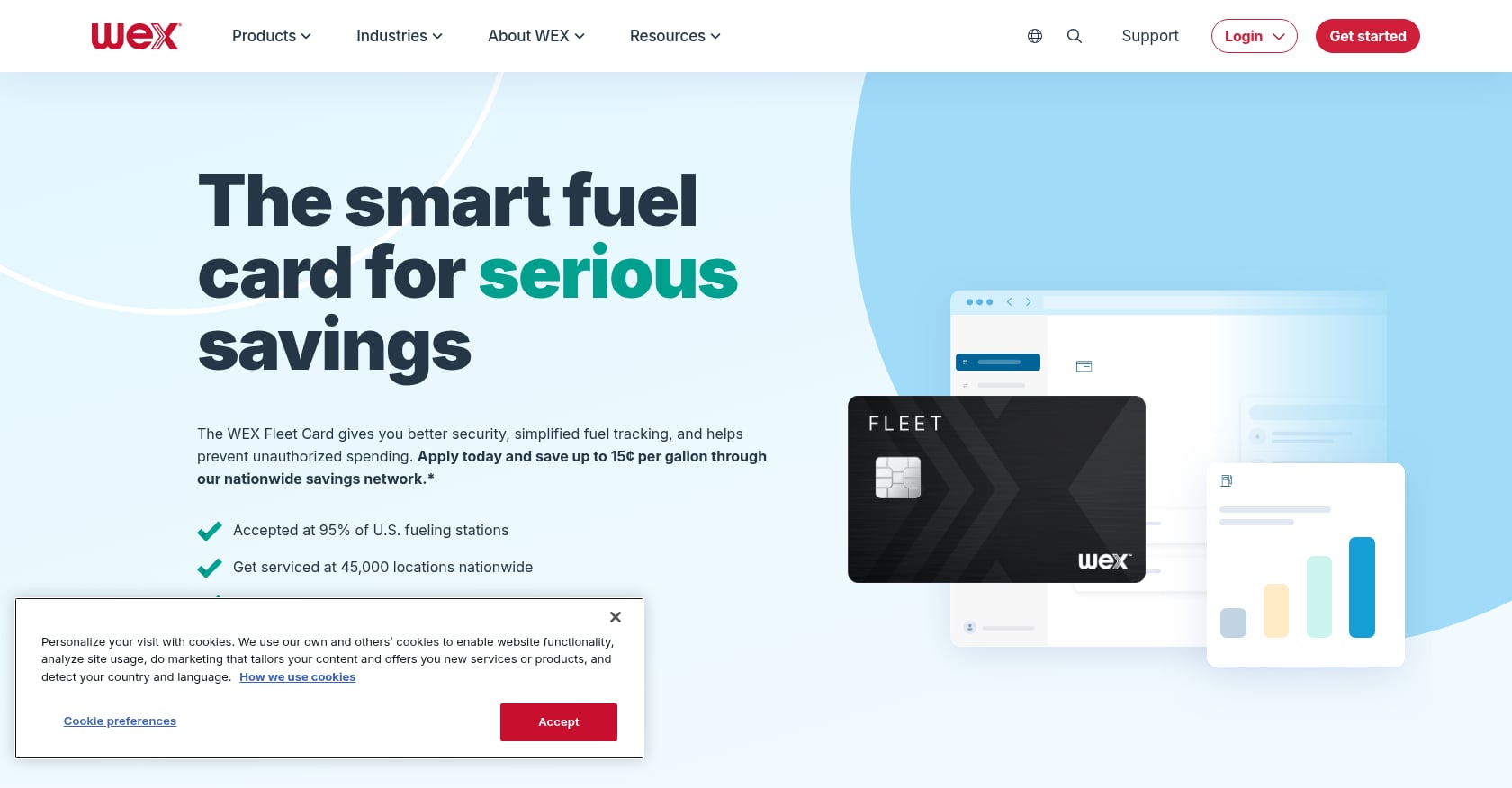
Best for: Large construction fleets (20+ vehicles) needing advanced controls and maintenance network access
WEX is the enterprise option. Its network covers roughly 95% of fuel stations and more than 45,000 service locations nationwide, making it the only card on this list that genuinely doubles as a maintenance management tool. Construction fleets consistently cite the maintenance location network as a deciding factor.
Pricing and rebates:
$0.03 to $0.15 per gallon within the WEX savings network
$0.01 to $0.03 per gallon elsewhere
Approximately $4 per card per month, plus potential setup fees
All pricing is quote-driven with no published fee schedule
Key features:
Extensive spend controls and reporting (WEX’s strongest advantage)
45,000+ service center locations that accept the card
Integrated maintenance tracking
Customizable reporting for project-level fuel cost allocation
Limitations:
Since 2022, WEX has required personal guarantees for most small business accounts
Fee structures are unpublished and vary by contract, with monthly card fees, setup fees, and transaction fees that add up quickly
Documented customer service challenges, including long wait times and difficulty resolving billing disputes
Not cost-effective for small or mid-size fleets
Lane Construction, a major heavy civil contractor, reportedly returned to WEX after trying other providers, citing better customer service, more reliable reporting, and increased efficiencies. That said, WEX works best when you have the fleet volume to justify the overhead. If you’re running fewer than 20 vehicles, the per-card fees will eat into your savings.
Verdict: The strongest reporting and controls in the market, but the fee complexity and personal guarantee requirement make it a poor fit for smaller operations. For fleet managers tracking fuel costs as part of construction cost management, WEX provides the most granular data.
3. Coast Fleet Card (Visa)
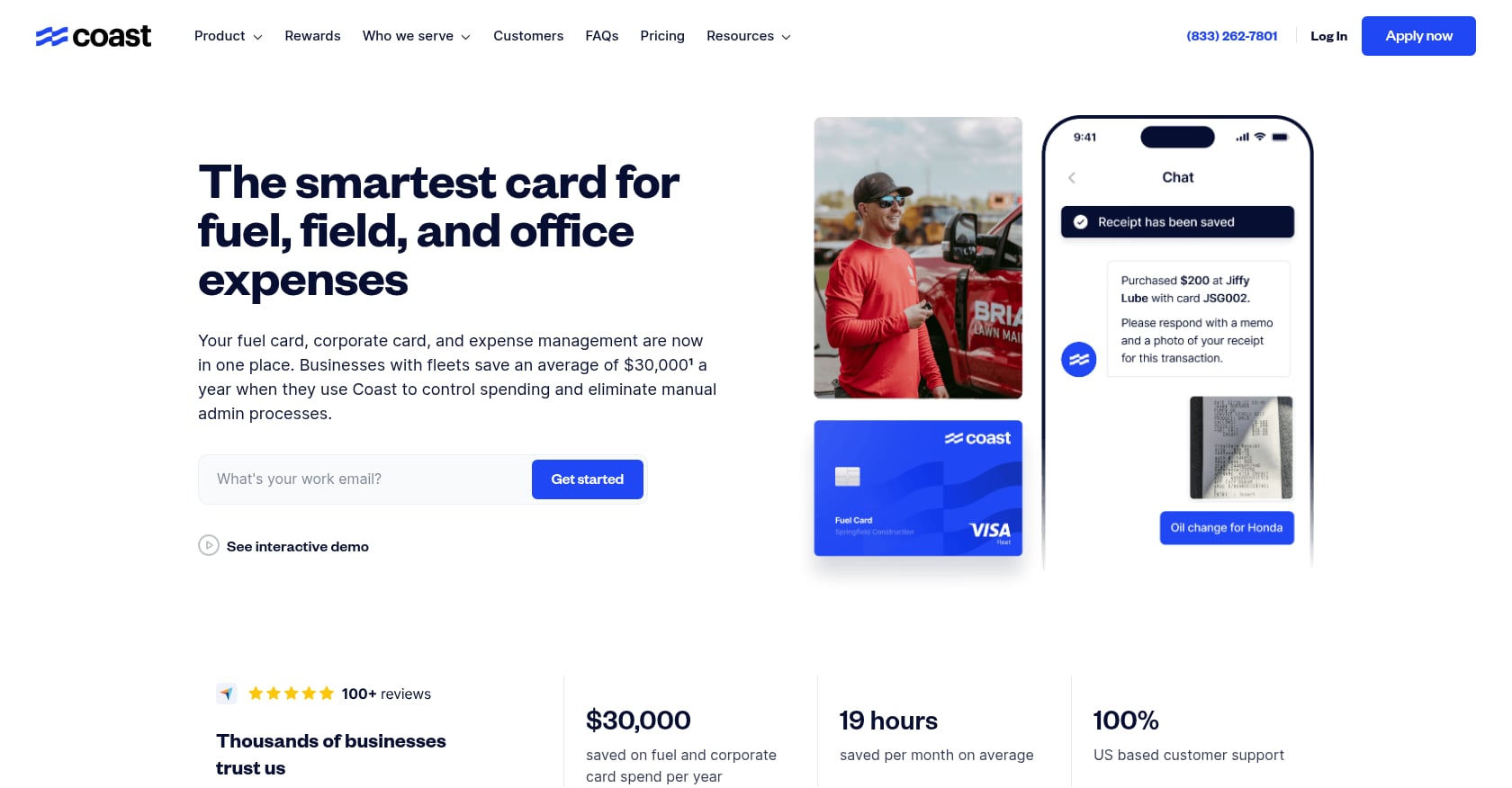
Best for: Small-to-mid construction fleets wanting modern software and combined fuel plus field expense management
Coast is the newest entrant disrupting the legacy fuel card market. It runs on the Visa network (accepted everywhere Visa is accepted), charges no monthly fees, and wraps everything in software that actually feels modern.
Pricing and rebates:
3¢ to 9¢ back per gallon at 30,000+ stations, with no volume tiers or expiration
1% cashback on all business spending including fuel, maintenance, and software
Charge card model (pay balance in full each month)
Key features:
Virtual cards issued instantly via mobile app for new drivers
SMS authorization at the pump for fraud prevention
Integrates with QuickBooks Online and Xero
Accepted anywhere Visa is accepted, not limited to fuel-specific networks
Limitations:
Drivers must use a mobile app to authorize purchases, which can be challenging for workers less comfortable with smartphones
Does NOT support QuickBooks Desktop, only QuickBooks Online
Charge card model requires full monthly payment (no revolving credit)
No off-road diesel support
A Capterra reviewer in the construction industry noted they “truly enjoyed” the experience and found Coast “very user-friendly.” One practitioner review site gave a strong endorsement, writing that Coast “strips out the hidden fee garbage that legacy providers have been getting away with for years.” For vocational fleets with a mix of pickups and dump trucks, Coast is arguably the best option right now.
Verdict: The best combination of price transparency, modern software, and zero fees for construction fleets under 20 vehicles.
4. Fuelman Fleet Card (by Corpay)
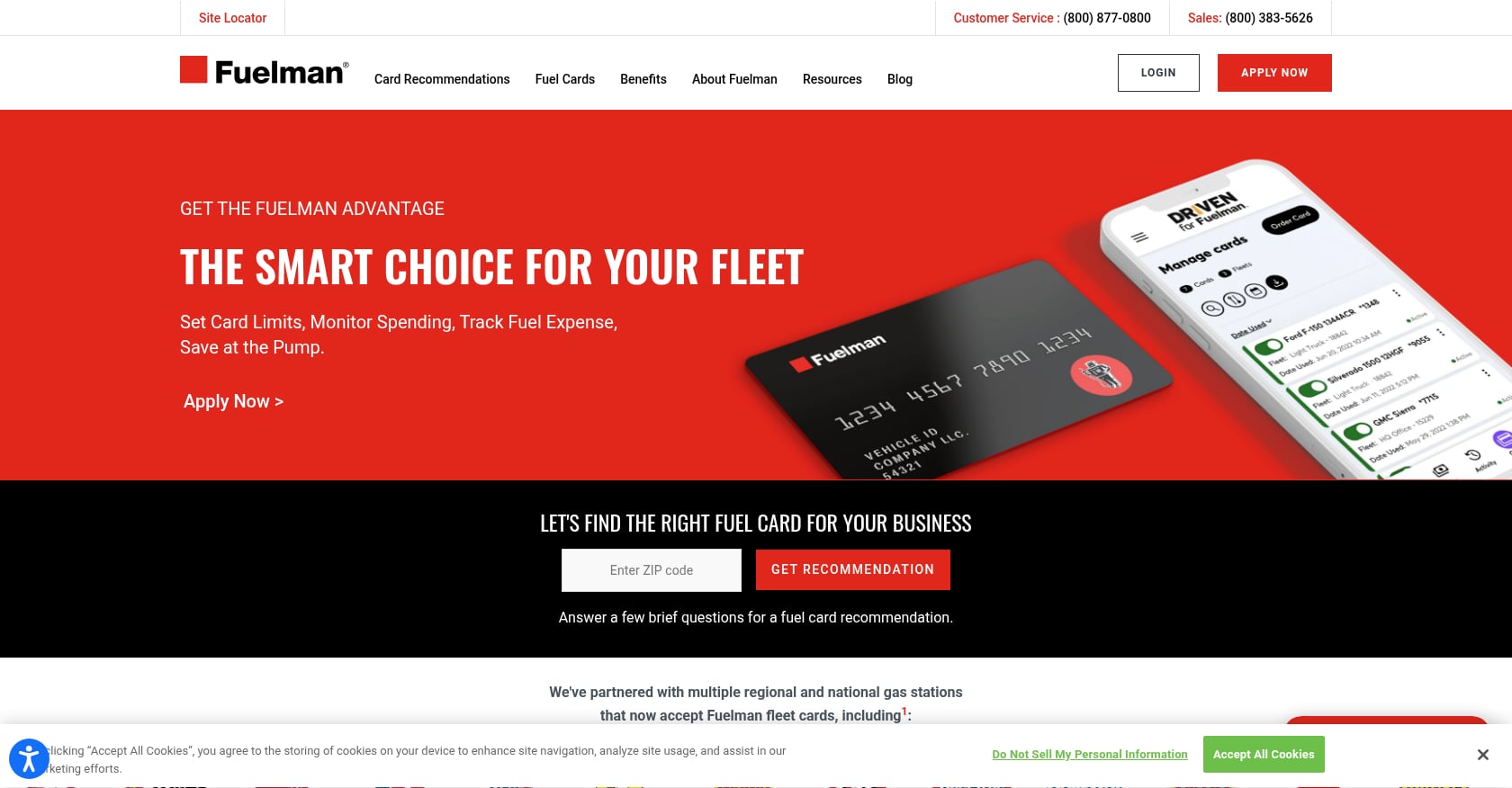
Best for: Urban and regional construction fleets with predictable diesel routes and no off-road equipment
Fuelman offers some of the highest per-gallon rebates on this list, but those numbers come with significant caveats that construction companies need to understand before signing up.
Pricing and rebates:
Mixed Fleet card: 8¢ off every gallon at 40,000+ discount network locations, $99/month for unlimited cards
Diesel-only card: 12¢ per gallon off diesel, $59/month
Zero rebate at “Acceptance Network” locations outside the discount network, plus possible transaction fees
Key features:
Network covers 60,000+ locations including Exxon, Chevron, Pilot, Love’s, and Circle K
Gallon-based purchase controls (set 50-gallon limits instead of dollar amounts that fluctuate with prices)
Integrated maintenance management
Limitations, and this is where it gets serious:
Fuelman’s own terms exclude off-road diesel from rebates. For construction companies running excavators, dozers, and loaders, this is a dealbreaker. Off-road diesel is the primary fuel for most heavy construction equipment, and getting zero rebate on it defeats the purpose.
Small fleets face prohibitive per-card costs. A five-truck operation paying $7.80 per card monthly needs substantial volume just to break even.
The FTC alleged that FleetCor (Fuelman’s parent company, now Corpay) “charged customers at least hundreds of millions of dollars in hidden fees.”
BBB complaints mention “outrageous” late fees.
Verdict: The per-gallon rebate headline is attractive, but the off-road diesel exclusion makes Fuelman a poor fit for most construction companies. Only consider it if your fleet is entirely road-going vehicles in urban areas. Understanding fee structures is part of sound vendor price negotiation, and Fuelman’s structure demands extra scrutiny.
5. CFN Cardlock
Best for: Western U.S. construction companies purchasing significant volumes of off-road diesel
CFN is the outlier on this list. It’s not a traditional fleet card. It’s access to a network of unattended cardlock fueling stations that offer cost-plus pricing, meaning the price you pay is pegged to the wholesale cost of fuel plus a small markup.
Pricing and rebates:
Cost-plus pricing can beat retail pump prices by 30¢ to 40¢ per gallon
Monthly costs vary by account
Key features:
Access to more than 3,000 discount cardlock locations
Many CFN locations stock off-road (dyed) diesel, with separate tracking for tax purposes
Can add access to 57,000+ retail stations when drivers need fuel outside the cardlock network
Especially popular with construction companies that purchase off-road diesel in volume
Limitations:
Network is concentrated in Western states: California, Arizona, Oregon, Washington, Nevada
Not practical for Southeastern U.S. operations
Cardlock locations are unattended and may not be convenient for all routes
Limited retail network outside the cardlock system
Verdict: If you operate in the Western U.S. and burn significant off-road diesel, CFN delivers savings that no traditional fleet card can match. The 30¢ to 40¢ per gallon discount on cost-plus pricing dwarfs the 3¢ to 12¢ rebates offered by card programs. But for contractors in the Southeast, this isn’t a realistic primary option.
6. RoadFlex (Visa)
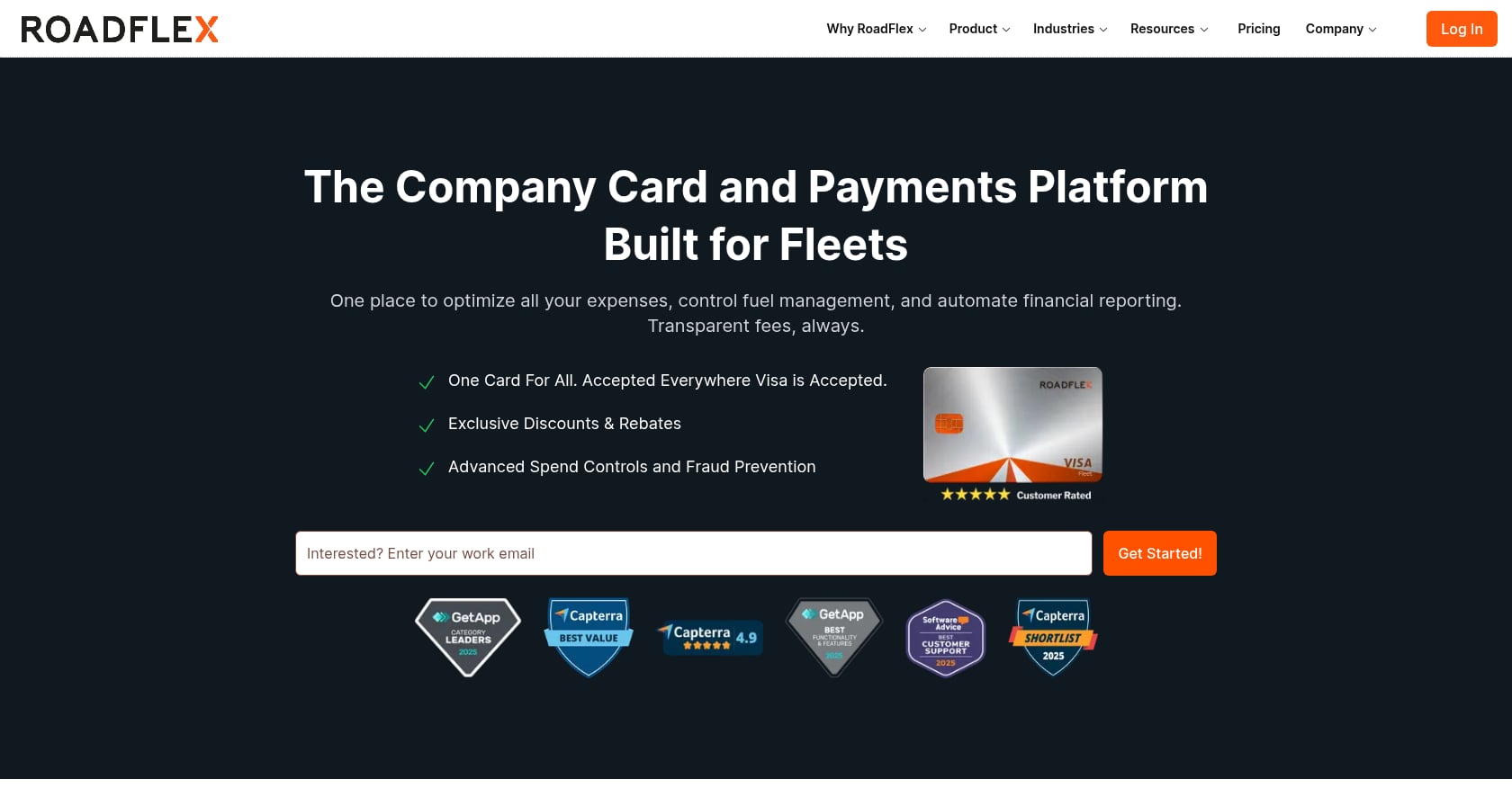
Best for: New or growing construction companies that cannot or will not sign personal guarantees
RoadFlex targets an underserved segment: newer construction businesses that need fleet fuel programs but can’t satisfy the credit requirements of legacy providers like WEX.
Pricing and rebates:
Advertises “Visa Acceptance. Zero Fees.”
Competitive discounts at all fuel stations nationwide
1% back on all non-fuel expenses
Pre-funding may be required for the no-personal-guarantee tier
Key features:
No personal guarantee required on the Unlimited tier
Telematics integration with Azuga Fleet, Fleetio, Geotab, Motive, Samsara, and QuickBooks
If you connect telematics, RoadFlex validates fuel level and vehicle location to help prevent employee fuel theft and fraud
Users save an average of 11% in fuel costs in the first year, according to the company
Limitations:
At major truck stops, Visa-based cards pay “Credit Price,” which is often 6¢ to 10¢ higher than the cash price. This can wipe out the 3¢ discount and actually cost you more per gallon. Practitioners on fleet forums flag this as a real problem for highway-heavy operations.
Pre-funding requirement for the no-guarantee tier ties up working capital
Relatively new company with less track record than legacy providers
On Capterra, 15% of RoadFlex reviewers identify as being in the construction industry, suggesting meaningful adoption in the sector.
Verdict: The best option for startups and young construction companies that need a fleet fuel card without pledging personal assets. Just watch the truck stop pricing carefully.
7. Bulk Fuel Delivery and On-Site Fueling

Best for: Large construction fleets on extended projects consuming high volumes of diesel
This is the option that every other construction fleet fuel programs comparison ignores. Most listicles only cover cards, but many of the largest construction companies don’t primarily use cards for their heavy equipment fuel. They use bulk delivery.
Pricing:
Bulk delivery accounts can access pricing 35¢ to 70¢ per gallon below retail, far exceeding the 2¢ to 12¢ rebates from fleet cards
Pricing depends on volume commitments, delivery frequency, and location
Key features:
On-site fueling eliminates the time and cost of driving equipment to fuel stations
Off-road (dyed) diesel is standard for bulk delivery, making it ideal for construction equipment
Volume pricing provides cost predictability for project budgeting
Eliminates individual transaction fraud risk entirely
Limitations:
Requires storage tanks and containment on the jobsite (permitting, environmental compliance)
Only practical for projects lasting weeks or months in a fixed location
Delivery scheduling requires planning, and emergency fills can be expensive
Upfront investment in tanks and dispensing equipment
The critical insight here is that fuel card rebates of 2¢ to 8¢ per gallon pale in comparison to the 35¢ to 70¢ per gallon savings available through bulk purchasing. For a fleet consuming 5,000 gallons per week on a jobsite, the difference between a fuel card rebate and bulk pricing could be $1,500 to $3,500 per week.
Contractors focused on supply cost reduction should evaluate bulk fuel delivery alongside material purchasing strategies, since the negotiation principles are similar.
Estimated Annual Savings by Fleet Size
Fleet Size | Annual Fuel Use | Potential Annual Savings |
|---|---|---|
5 Vehicles | 12,000 gallons | $600–$2,500 |
15 Vehicles | 40,000 gallons | $2,000–$10,000 |
30 Vehicles | 90,000 gallons | $8,000–$35,000 |
Heavy Equipment Fleet | 250,000 gallons | $40,000–$150,000 |
Actual savings vary by fuel prices, rebates, theft reduction, and use of bulk purchasing.
The Hybrid Strategy: How Top Contractors Actually Manage Fuel
Here’s what the experienced contractors do: they don’t pick one program. They combine them.
A construction company running a typical mixed fleet might use bulk fuel delivery for off-road diesel on jobsites (filling excavators, loaders, and generators from an on-site tank) while issuing fleet fuel cards to employees driving pickups, service trucks, and dump trucks on public roads.
This hybrid approach captures the deep cost-plus or bulk discounts for the high-volume equipment fuel while still getting spend controls, reporting, and modest rebates on the road vehicle portion.
Consider a mid-size contractor with 30 pieces of heavy equipment and 25 road vehicles. The equipment might consume 8,000 gallons of off-road diesel per week across multiple sites. The road vehicles might use 2,000 gallons of on-road diesel and gasoline. Bulk delivery at $0.50/gallon below retail saves $4,000/week on the equipment fuel alone. A fleet card saving $0.06/gallon on road vehicles adds $120/week. Both matter, but the bulk savings dwarf the card savings.
The fleet card’s real value in this scenario isn’t the rebate. It’s the fraud prevention, purchase controls, and reporting that let you track fuel spend by driver, vehicle, and project.
See how national pricing programs help contractors access better rates on fuel and other operational expenses.
How to Choose the Right Construction Fleet Fuel Program
By Fleet Size
1 to 5 vehicles: Keep it simple. Coast or RoadFlex offer zero fees, no personal guarantees, and Visa-wide acceptance. At this size, the per-card costs of WEX or Fuelman will eat any potential savings. Your primary goal is spend visibility and fraud prevention, not per-gallon rebates.
5 to 20 vehicles: Voyager gives you the broadest acceptance at zero cost through the right partner. Coast remains strong here too. Start calculating whether the volume justifies a more structured program. At 20 vehicles, WEX data shows average annual savings of $1,569, which starts to become meaningful.
20+ vehicles: WEX or a bulk delivery hybrid becomes worth the overhead. The reporting capabilities justify the monthly fees when you’re managing dozens of drivers and need to allocate fuel costs across multiple projects. Consider combining a card program with bulk delivery if you run heavy equipment.
By Geography
Southeastern U.S.: Voyager, Coast, or WEX. CFN’s cardlock network doesn’t extend meaningfully into this region. Bulk delivery is widely available and should be evaluated for any project-based heavy equipment fueling.
Western U.S.: CFN Cardlock is hard to beat for off-road diesel. Pair it with a Visa-based card (Coast or RoadFlex) for road vehicles.
Nationwide operations: Voyager’s 97% acceptance or WEX’s broad network. Multi-state operations benefit from consistent reporting across all locations.
Key Questions Before You Sign
What percentage of your fuel is off-road diesel? If it’s more than 30%, eliminate any card that excludes off-road rebates (Fuelman, most card programs).
Will you sign a personal guarantee? If not, your options narrow to Coast, RoadFlex, and Voyager through certain partners.
What’s your monthly fuel spend? Calculate break-even on any card with monthly fees. A $99/month Fuelman account needs more than $1,188 in rebatable fuel purchases per month just to cover the fee at 8¢/gallon.
How long are your typical projects? Projects lasting months in one location justify bulk delivery infrastructure. Short-duration projects across many sites favor fleet cards.
Do you need maintenance integration? Only WEX offers meaningful maintenance network coverage.
Building fuel into your project estimates as a controllable line item is part of broader contractor overhead reduction. The right fuel program turns an unpredictable expense into a managed one.
Fuel as Bid Protection: The Angle Most Contractors Miss
Construction companies don’t just want to save a few cents per gallon. They need predictable fuel costs to protect margins on fixed-price bids.
Consider this: the American Transportation Research Institute reports that the average marginal fuel cost per mile for commercial fleets was 48.1¢ in 2024, or $19.32 an hour. When diesel jumps 20% between your bid submission and project start, those numbers blow up fast.
An asphalt paving contractor, Hardy & Harper, reduced fuel spend by 24% using fleet management strategies. That’s not just savings. On a fixed-price contract, that’s the difference between a profitable project and a loss.
Construction fleet fuel programs should be evaluated not just on per-gallon rebates but on their ability to:
Lock in pricing predictability through bulk purchasing agreements
Provide real-time data for adjusting project fuel estimates
Reduce theft and unauthorized use that inflates actual costs above estimates
Generate reporting that improves the accuracy of future bids
This framing connects fuel management to your overall contractor margin improvement strategy. Every dollar saved on fuel drops directly to the bottom line.
Construction Fleet Fuel Program Buying Checklist
Before signing any agreement, verify:
Total monthly fees
Transaction fees
Setup fees
Late fees
Personal guarantee requirements
Fuel station network
Off-road diesel eligibility
Reporting features
Accounting integrations
Mobile app quality
Fraud controls
Contract length
Cancellation penalties
Frequently Asked Questions
What is a construction fleet fuel program?
A construction fleet fuel program is a structured approach to purchasing and managing fuel across a company’s vehicles and equipment. It can include fleet fuel cards with per-gallon rebates and spend controls, bulk fuel delivery to jobsites, or a combination of both. The goal is to reduce per-gallon costs, prevent fraud and theft, and generate reporting for project-level cost tracking.
Are fleet fuel card rebates worth it for small construction companies?
For fleets under five vehicles, the primary value of a fleet card isn’t the rebate (which might total $50 to $100 per month). The real value is spend controls and visibility. Cards like Coast and RoadFlex charge zero monthly fees, so there’s no break-even hurdle. You benefit from fraud prevention and purchase tracking from day one, even if the per-gallon savings are modest.
Why do some fuel cards exclude off-road diesel from rebates?
Off-road (dyed) diesel is untaxed highway fuel used for construction equipment, agricultural machinery, and generators. Some fuel card programs, notably Fuelman, explicitly exclude it from rebate calculations because the pricing structure and supply chain differ from retail pump diesel. Since off-road diesel is the primary fuel for most heavy construction equipment, this exclusion can make a card essentially useless for equipment fueling.
How much can bulk fuel delivery save compared to fleet cards?
Fleet card rebates typically range from 2¢ to 12¢ per gallon. Bulk fuel delivery to a jobsite can save 35¢ to 70¢ per gallon below retail pricing. For a construction fleet consuming 5,000 gallons per week, that difference translates to $1,150 to $3,100 in additional weekly savings compared to even the best fleet card rebate.
Do I need a personal guarantee to get a fleet fuel card?
It depends on the provider. WEX has required personal guarantees for most small business accounts since 2022. Fuelman also typically requires one. Coast and RoadFlex (Unlimited tier) do not require personal guarantees, making them better options for newer construction businesses or owners who prefer to keep business and personal liability separate.
Can I use multiple fleet fuel programs at the same time?
Yes, and many experienced contractors do exactly this. The hybrid approach (bulk delivery for jobsite equipment, fleet cards for road vehicles) is common among larger operations. Some companies even use different card programs for different vehicle types or regions. There’s no exclusivity requirement with most providers.
How do fleet fuel cards prevent theft on construction sites?
Fleet cards use several controls: per-transaction dollar limits, daily transaction limits, gallon-based purchase caps, time-of-day restrictions, and product-type restrictions (fuel only, no merchandise). Some cards like RoadFlex integrate with telematics to validate that the vehicle is actually at the fuel station and that the fuel level corresponds to the purchase amount. Real-time SMS alerts notify managers of every transaction.
What’s the biggest hidden cost with construction fleet fuel programs?
The “Credit Price” problem at truck stops. Visa-based cards (Coast, RoadFlex) pay the credit card price at major truck stops like Pilot and Love’s, which is often 6¢ to 10¢ higher per gallon than the cash price. If your drivers fuel primarily at truck stops, a card advertising a 3¢ rebate could actually cost you 3¢ to 7¢ more per gallon than paying cash. Always calculate net savings, not just the advertised rebate.
What is the difference between retail-minus pricing and cost-plus pricing?
Retail-minus pricing subtracts a fixed discount from the posted pump price. Cost-plus pricing is based on wholesale fuel cost plus a negotiated markup. Cost-plus pricing generally produces larger savings for high-volume diesel fleets, especially contractors purchasing bulk or off-road diesel.
Can fleet fuel cards integrate with telematics?
Yes. Several providers integrate with telematics platforms that compare fuel purchases against vehicle location, fuel tank levels, and mileage. This helps identify unauthorized purchases and reduces employee fuel fraud.
Is bulk fuel delivery cheaper than cardlock fueling?
Usually yes, provided the contractor purchases sufficient volume. Bulk fuel delivery eliminates retail markup and transportation costs, making it the most economical option for long-duration construction projects.
Fuel is one of the most controllable major costs in construction, but only if you treat it as a procurement decision rather than an afterthought. The right construction fleet fuel program protects your margins, reduces theft, and gives you data to bid more accurately.
Discover how procurement savings programs help contractors reduce costs across fuel, materials, and equipment.

Recent Comments