
TL;DR
PPE standardization for contractors means establishing uniform specifications, procurement processes, fit requirements, and documentation for personal protective equipment across all workers and subcontractors on a project. The 2025 OSHA proper-fit rule (29 CFR 1926.95©) now requires that all PPE properly fit each construction worker, closing a gap that existed for decades. General contractors can be cited for subcontractor PPE violations under OSHA’s multi-employer policy. A structured approach to PPE standardization reduces compliance risk, cuts procurement costs by 10-20%, and keeps workers safer.
Spending more than $25,000 a year on safety supplies without a formal program? Explore how contractor PPE discount programs can reduce costs while improving compliance.
PPE standardization for contractors is the process of using approved PPE specifications, standardized purchasing, proper sizing, documented fit verification, and consistent enforcement across all employees and subcontractors. OSHA’s 2025 proper-fit rule now requires PPE to properly fit every construction worker, making standardized sizing, documentation, and procurement essential for compliance, worker safety, and cost control.
PPE Standardization Checklist
Requirement | Why It Matters | OSHA Requirement |
|---|---|---|
Hazard Assessment | Determines required PPE | Required |
Proper Fit | Prevents injuries and meets 2025 rule | Required |
Approved PPE List | Prevents inconsistent equipment | Best Practice |
ANSI/ASTM Compliance | Ensures equipment meets testing standards | Required indirectly |
Employee Training | Workers know when and how to use PPE | Required |
Inspection Program | Removes damaged PPE | Required |
Documentation | Proves compliance during inspections | Strongly Recommended |
Subcontractor Verification | Reduces GC liability | Best Practice |
What Is PPE Standardization for Contractors?
PPE standardization is the practice of establishing uniform personal protective equipment specifications, procurement processes, fit requirements, and compliance documentation across every worker and subcontractor on a construction project or within a contracting organization.
This is different from ad-hoc purchasing, where each foreman or subcontractor buys whatever brand or model is cheapest at the nearest supply house. That approach creates three problems: inconsistent protection levels, bloated SKU counts, and gaps that OSHA inspectors notice.
A standardized PPE program addresses these problems by defining exactly which products are approved for each task, ensuring those products meet current OSHA and ANSI requirements, and creating repeatable systems for procurement, issuance, fit verification, and documentation.
PPE standardization for contractors matters for three reasons:
Regulatory compliance. OSHA’s construction PPE standard now explicitly requires proper fit, and penalties for serious violations run $16,550 per occurrence. Willful violations cost up to $165,514 each.
Cost control. Standardizing reduces the number of product lines you stock, enables bulk purchasing, and eliminates emergency orders that carry premium pricing.
Workforce consistency. When every crew member on a multi-employer site wears the same class of high-visibility vest and the same rated hard hat, confusion drops and safety culture improves.
Standardized PPE vs Non-Standardized PPE
Standardized Program | Non-Standardized Purchasing |
|---|---|
Approved products | Random brands |
Consistent protection | Inconsistent protection |
Easier OSHA documentation | Missing documentation |
Lower SKU count | Excess inventory |
Better pricing | Higher purchasing costs |
Easier employee training | Different PPE across crews |
Better fit management | Limited sizing options |
Easier inspections | Difficult compliance verification |
Why PPE Standardization Matters More in 2026
Many contractors already provide PPE but still struggle with inconsistent compliance because equipment varies between supervisors, projects, and subcontractors.
In 2026, contractors face several new pressures:
OSHA’s proper-fit enforcement
Rising PPE costs from tariffs
More multi-employer projects
Growing workforce diversity requiring expanded sizing
Increased owner safety requirements
Greater documentation expectations during OSHA inspections
Standardization solves these issues by creating one approved PPE system instead of multiple purchasing practices across crews.
PPE Standardization Process (Step-by-Step)
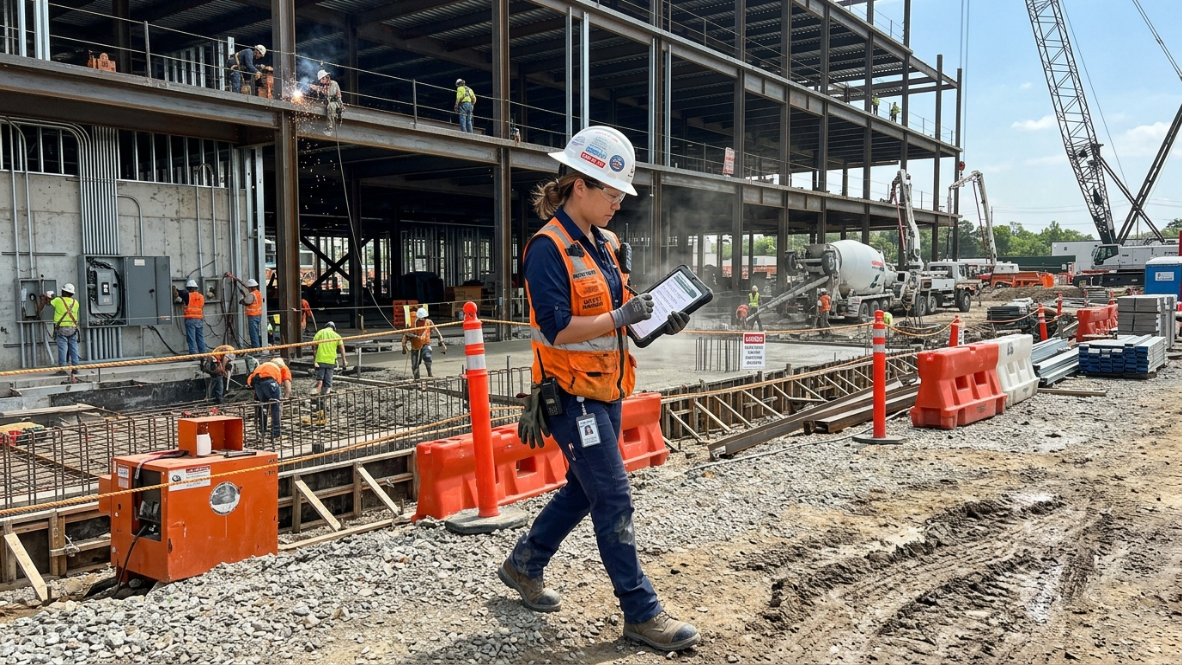
Most successful contractors standardize PPE using a structured process rather than replacing every product at once.
Step 1: Conduct Hazard Assessments
Identify hazards by trade, equipment, and task.
Step 2: Define Approved PPE
Create approved products for each hazard.
Step 3: Verify ANSI/ASTM Compliance
Only approve products meeting current consensus standards.
Step 4: Ensure Proper Fit
Offer multiple sizes and document fitting.
Step 5: Train Employees
Teach proper use, inspection, storage, and replacement.
Step 6: Audit Compliance
Inspect PPE usage regularly and update approved products annually.
Key OSHA Standards Governing Contractor PPE
29 CFR 1926.95: The Core Construction PPE Standard
This is the foundational regulation. It requires employers to provide PPE for all hazardous conditions and maintain that equipment in a sanitary, reliable condition. If employees provide their own PPE, employers must verify its adequacy.
The standard was updated in January 2025 with the proper-fit rule (covered in detail below), which added subsection © language requiring that PPE “properly fits each affected employee.”
29 CFR 1926.28: The Employer’s Obligation to Require PPE
Where 1926.95 addresses what PPE must be and how it must fit, 1926.28 establishes that the employer is responsible for requiring workers to actually wear it. This matters because only 60% of construction workers consistently use PPE, according to a 2021 study published in the Journal of Occupational Health. Having the right equipment on the shelf is not the same as having it on the worker.
The General Duty Clause (Section 5(a)(1))
Even when no specific OSHA standard covers a hazard, the General Duty Clause requires employers to maintain a workplace free from recognized hazards. This acts as a backstop for situations where PPE needs exceed what the specific standards address.
For a full breakdown of OSHA requirements by equipment category, see our PPE compliance construction guide.
Penalty Context
These standards carry real financial weight. In 2024, fall protection alone generated over 6,200 violations. OSHA investigated 826 worker deaths in construction that year. In 2023, the construction industry recorded 1,075 fatalities out of 5,283 total workplace deaths nationwide, more than any other sector. The average cost of a construction worker injury case runs approximately $40,000.
ANSI and Consensus Standards That Apply
OSHA sets legal minimums. ANSI and ASTM provide the technical specifications that determine whether a piece of equipment actually meets those minimums. Understanding both layers is essential for PPE standardization.
Eye and Face Protection: ANSI Z87.1
Covers safety glasses, goggles, and face shields. OSHA accepts ANSI Z87.1 in its 2010, 2003, and 1989 editions. Look for the Z87+ marking on lenses, which indicates impact resistance.
Head Protection: ANSI Z89.1
Governs hard hats and helmets. Type I protects the top of the head. Type II protects top and sides. Class E (electrical) is rated for 20,000 volts. Class G (general) handles 2,200 volts. Class C offers no electrical protection.
Foot Protection: ASTM F2412/F2413
Note that foot protection standards come from ASTM, not ANSI. F2412 covers testing methods. F2413 covers performance requirements for protective footwear, including impact resistance, compression resistance, and metatarsal protection.
High-Visibility Apparel: ANSI/ISEA 107
This standard defines three classes of high-visibility garments:
Class 1: Minimum visibility, for workers in low-traffic areas
Class 2: Standard visibility, for workers near traffic up to 25 mph
Class 3: Maximum visibility, for workers near traffic above 25 mph or in poor lighting
The current edition is ANSI/ISEA 107-2020. Contractors frequently default to Class 2, but specific site conditions may demand Class 3.
Cut Resistance: ANSI/ISEA 105
Rates glove cut resistance on a scale from A1 (light) to A9 (extreme). This is where PPE standardization for contractors gets practical. A concrete crew needs different cut ratings than an electrical crew. Role-based selection matters.
Impact Protection: ANSI/ISEA 138
Covers dorsal impact protection for gloves, rated Level 1 through Level 3. This standard is relatively new and increasingly relevant for contractors working with heavy materials, steel, or demolition.
The key point: OSHA does not adopt every consensus standard word for word. Instead, OSHA’s 2025 revision centralizes the fit requirement in the construction standard so that all PPE must fit properly regardless of whether a specific consensus standard addresses fit.
The 2025 Proper-Fit Rule: What Changed for Contractors
This is the most significant update to contractor PPE requirements in years. Understanding it is non-negotiable for anyone responsible for PPE standardization on construction sites.
Before the Rule
For decades, OSHA’s general industry standard (29 CFR 1910.132) required employers to provide properly fitting PPE. The construction industry standard, 29 CFR 1926.95, did not include this requirement. PPE had to be “safely designed and constructed,” but fit was not explicitly mandated.
The construction industry fought against adding a fit requirement. Opposition centered on the burden it would place on smaller companies and the difficulty of managing fit across a transient workforce.
After the Rule
Effective January 13, 2025, the revised 29 CFR 1926.95© now requires that PPE “properly fits each affected employee.” This applies to all types of PPE: hard hats, gloves, safety glasses, hearing protection, respirators, coveralls, vests, and harnesses.
The Three PPE Categories
The 2025 rule creates a framework that almost no other resource explains clearly. OSHA defines three categories:
Universal fit PPE: Items that are adjustable and capable of fitting most people. Think adjustable safety glasses or one-size-fits-most earplugs. These items generally do not need replacement under the new rule.
Employer-provided, non-universal fit PPE: Items the employer owns and issues that require specific sizing. This category is most affected by the new rule. It includes body harnesses, chemical protective clothing, earmuffs, face shields, gloves, non-prescription safety glasses, safety vests, and splash aprons.
Employee-purchased PPE (reimbursed by employer): Items workers buy themselves with employer reimbursement. Employers must verify these items meet standards and fit properly.
Why Fit Matters Beyond Compliance
Improperly fitting PPE is not just a regulatory problem. Oversized gloves get caught in machinery. Loose harnesses fail to arrest falls correctly. Safety glasses that slide down get taken off entirely. Poorly fitting PPE can actually create new hazards while simultaneously discouraging workers from wearing it.
This is especially relevant for women and smaller-framed workers who have historically been forced into equipment designed for average-sized men.
The Enforcement Ambiguity
Here is where it gets complicated. OSHA has not defined exactly what “properly fitting” means in measurable terms. When the proposed rule was published in July 2023, stakeholders raised concerns that workers could file complaints about “improperly fitting” PPE simply because it’s uncomfortable.
OSHA’s position is that a perfect fit is not always achievable and that some flexibility in interpretation is appropriate. Employers should focus on selecting PPE that protects workers without introducing new risks. In practice, this means documenting your fit assessment process, offering multiple size options, and creating feedback channels for workers to report fit issues.
For contractors building a PPE procurement strategy, the fit rule means stocking a wider range of sizes and budgeting for replacements when existing inventory does not accommodate all workers.
PPE Responsibilities on Multi-Employer Worksites
Construction sites rarely involve a single employer. A typical commercial project has a general contractor, multiple subcontractors, and sometimes an owner’s representative. PPE standardization across all these parties is where compliance gets genuinely difficult.
OSHA’s Multi-Employer Citation Policy
OSHA can cite employers in four roles, and a single company can occupy more than one:
Creating employer: The employer whose actions created the hazard
Exposing employer: The employer whose workers are exposed to the hazard
Correcting employer: The employer responsible for correcting the hazard
Controlling employer: The employer with general supervisory authority over the worksite
Under 29 CFR 1926.16, both the general contractor and all subcontractors have safety responsibilities. OSHA most often enforces this in construction against the GC as the “controlling employer,” meaning the GC has the power to correct violations or require others to correct them.
In plain terms: if a subcontractor’s worker is wearing a cracked hard hat or no fall protection harness, the GC can be cited even though the GC did not employ that worker.
Who Pays for Subcontractor PPE?
OSHA’s general position is that a host employer or general contractor is not required to pay for a subcontractor’s employees’ PPE. The obligation follows the employer-employee relationship. However, if a GC establishes an employment relationship with a worker (even informally), the GC must provide PPE at no cost to that employee.
This creates a practical incentive for GCs to require documented PPE compliance from subcontractors before they set foot on site, rather than discovering gaps during work.
Subcontractor Prequalification as Risk Reduction
The most effective approach practitioners report is building PPE requirements into subcontractor agreements and prequalification. Require subs to document their PPE programs, provide evidence of fit testing, and demonstrate that their equipment meets current ANSI standards before mobilizing.
Practitioners on Reddit’s r/SafetyProfessionals forum describe the real friction here: standardizing items like hard hats and safety glasses across subcontractors is straightforward, but gloves, respirators, and harnesses require individual sizing and sometimes personal preference. One-size-fits-all kits fail both compliance and morale. The consensus among safety professionals is that role-based standardization (different approved product lists for different trades) works better than forcing everyone into identical kits.
PPE Standardization Best Practices for Contractors
Moving from regulatory requirements to implementation, here are the practices that separate compliant programs from truly effective ones.
Start with Hazard Assessments
Every PPE decision should trace back to a documented hazard assessment. OSHA requires this, but the practical benefit is equally important: it prevents both under-protection and over-specification. A hazard assessment identifies the specific risks for each task and trade, then maps those risks to PPE requirements.
This is not a one-time exercise. Assessments should be updated when scope changes, new trades mobilize, or site conditions shift.
Establish Written PPE Policies That Exceed OSHA Minimums
It is common for project owners, general contractors, and specialty trades to maintain PPE requirements that go beyond OSHA’s minimum standards. Using OSHA as a baseline while adding project-specific requirements (such as mandatory Class 3 hi-vis on all outdoor tasks, or impact-rated gloves for all steel work) is a best practice that reduces ambiguity and strengthens your defense in the event of an incident or inspection.
Reduce SKU Count Through Standardization
One manufacturing customer profiled in a procurement case study discovered they were ordering six styles of disposable gloves for the same basic purpose. Workers had simply become attached to their favorites. After product testing and communication, the team agreed on one style, enabling bulk ordering and significant cost reduction.
The same principle applies to contractor PPE programs. Fewer approved products means simpler procurement, better volume pricing, and easier compliance verification. The goal is not to eliminate choice entirely but to narrow options to a tested, compliant set.
Implement Role-Based Procurement
Different trades need different equipment. A concrete finisher’s PPE requirements differ from an ironworker’s. Build procurement around job roles rather than generic kits. This approach satisfies the 2025 fit rule more effectively because you are selecting products appropriate for the actual work being performed and the body types doing it.
Document Everything
Training records, issuance logs, fit test results, replacement histories, and worker feedback should all be documented and retrievable. If OSHA shows up, documented processes are your primary defense. If a worker claims their PPE did not fit, your records should show what was issued, when, and whether the worker reported any concerns.
Create Worker Feedback Loops
Workers who wear PPE eight to twelve hours a day know whether it works. Formal mechanisms for reporting fit problems, requesting different sizes, or flagging equipment degradation improve both compliance and adoption rates.
Common PPE Standardization Mistakes
Buying Only the Lowest-Cost PPE
Lowest purchase price often increases replacement costs.
Ignoring Proper Fit
One-size-fits-all programs frequently violate OSHA’s fit requirement.
Using Too Many Vendors
More vendors create inconsistent quality and pricing.
Failing to Train Workers
Even compliant PPE fails when worn incorrectly.
Not Inspecting PPE
Damaged PPE remains one of OSHA’s most common findings.
PPE Procurement and Cost Control
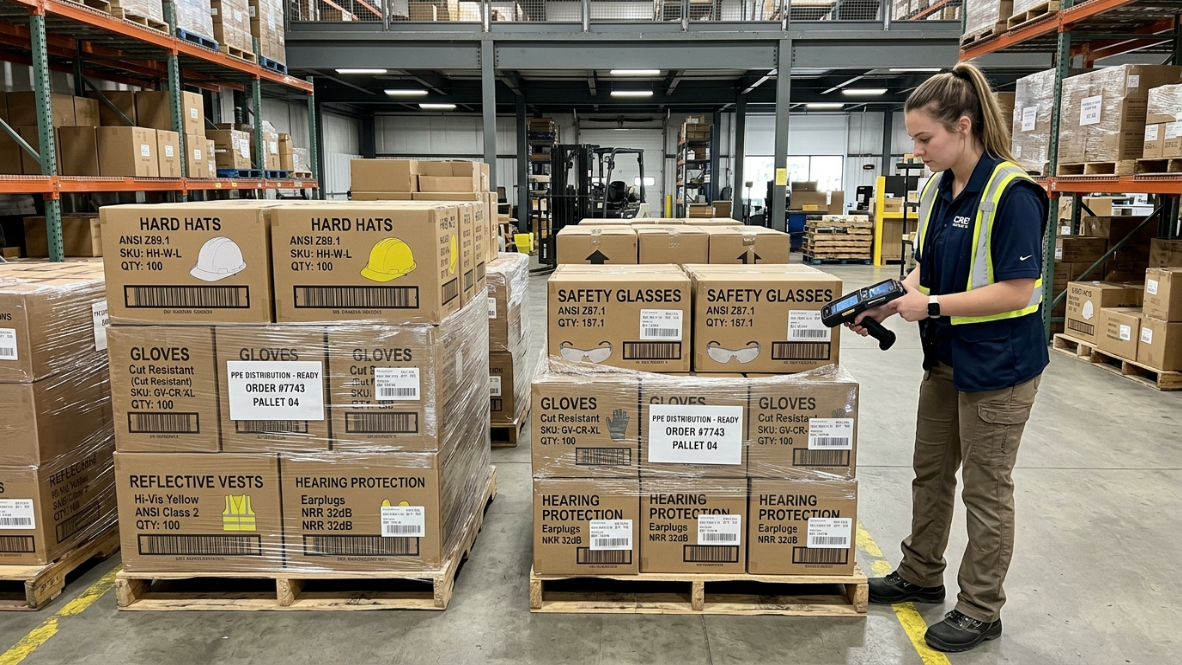
PPE standardization for contractors is not just a safety initiative. It is a financial one. The way most contractors buy safety equipment leaves money on the table.
Total Cost of Ownership vs. Unit Price
A cheap pair of gloves that falls apart in two days costs more than a quality pair that lasts two weeks. A smart PPE procurement strategy accounts for durability, replacement frequency, injury rates, and administrative overhead, not just the sticker price. Choosing non-compliant or subpar equipment is a false economy where long-term costs of failures, injuries, and legal liabilities far outweigh initial savings.
Bulk Purchasing: Benefits and Risks
Consolidating purchases of standardized products enables volume discounts. But bulk buying creates its own risks: inventory management challenges, product expiration (particularly for items like respirator cartridges), and storage requirements on active jobsites.
The balance point is maintaining enough stock to avoid emergency orders (which carry premium pricing) without creating waste. For guidance on managing construction supply cost reduction, forecasting demand by project phase is the single most effective tactic.
GPO Membership for Volume Discounts
Group purchasing organizations pool buying power across multiple contractors. On average, organizations using a GPO pay about 13% less for supplies than those negotiating independently. For safety and PPE specifically, standardizing sourcing through a GPO contract can cut costs 10-20% while improving compliance with safety specifications.
Explore preferred vendor programs to understand how structured supplier relationships translate to better pricing and consistent quality.
Signs You Need a Formal PPE Procurement Program
If any of these apply, ad-hoc purchasing is costing you:
Annual PPE spend exceeds $25,000
Pricing varies by 15% or more between orders for the same product
Emergency orders happen more than twice per quarter
You cannot quickly identify which ANSI standards your current inventory meets
Multiple project managers are buying different brands of the same PPE category
2025-2026 Tariff Impact on PPE Costs
This is the cost pressure nobody planned for. A 2025 survey by the International Safety Equipment Association found that 97% of members reported higher costs for materials, components, and finished PPE since April 2025. Even more concerning, 59% of safety professionals reported delaying critical PPE purchases, and 41% saw buyers switching to cheaper, less protective equipment.
Delaying purchases or downgrading quality in a year when OSHA is actively enforcing a new fit rule is a dangerous combination. Contractors who locked in pricing through standardized vendor agreements or GPO contracts before tariffs hit are in a significantly better position. For those who haven’t, building a vendor cost negotiation strategy now is urgent.
How Often Should PPE Standards Be Reviewed?
Review PPE programs:
Annually
After OSHA updates
Following serious incidents
When introducing new equipment
After changing suppliers
When new trades begin work
When ANSI standards are updated
Many contractors never review PPE until an inspection occurs.
Related Terms (Mini-Glossary)
Job Hazard Analysis (JHA): A systematic process for identifying hazards associated with each step of a job and determining the PPE and controls needed to mitigate them. The JHA is the foundation of any defensible PPE program.
Hazard Assessment: The broader workplace evaluation required by OSHA before selecting PPE. Covers environmental conditions, chemical exposures, physical hazards, and task-specific risks.
PPE Fit Testing: Formal evaluation of whether a specific piece of equipment fits an individual worker. Quantitative fit testing (using measurement instruments) is required for respirators. For other PPE, fit verification is typically qualitative but must still be documented under the 2025 rule.
Multi-Employer Citation Policy: OSHA’s framework for assigning liability when multiple employers share a worksite. Identifies four employer types (creating, exposing, correcting, controlling) and allows citations against any of them.
Controlling Employer: The employer with general supervisory authority over a worksite, typically the general contractor. Can be cited for hazards created by other employers if the controlling employer had the ability to prevent or correct them.
ANSI Certification Marking: The standardized marking system (such as Z87+ on safety glasses or Z89.1 Type I Class E on hard hats) that indicates which tests a product has passed. PPE without proper markings cannot be verified as compliant.
Total Cost of Ownership (PPE Context): The full cost of a PPE item over its useful life, including purchase price, replacement frequency, fit testing costs, storage, disposal, and the cost of injuries that occur when equipment fails.
Universal Fit PPE: Equipment classified by OSHA as adjustable and capable of fitting most people. These items generally do not require replacement to comply with the 2025 fit rule.
PPE Standardization Implementation Checklist
Contractors implementing a PPE program should be able to answer “Yes” to each item below.
Hazard assessments completed
Approved PPE list created
ANSI/ASTM standards verified
Multiple sizes available
Fit documented
Employee training completed
Inspection schedule established
Replacement schedule documented
Vendor agreements finalized
Subcontractor PPE requirements documented
Annual program review scheduled
Frequently Asked Questions
What does PPE standardization mean for contractors?
PPE standardization for contractors is the practice of establishing uniform equipment specifications, approved product lists, fit requirements, and procurement processes across all workers and subcontractors. Instead of letting each crew or sub buy whatever they prefer, a standardized program defines exactly which products are approved, ensures they meet OSHA and ANSI standards, and creates consistent documentation for compliance.
Does the 2025 OSHA fit rule apply to all PPE?
Yes. The revised 29 CFR 1926.95©, effective January 13, 2025, requires that all types of PPE properly fit each affected employee. This includes hard hats, gloves, safety glasses, hearing protection, respirators, coveralls, vests, and harnesses. However, OSHA acknowledges that a perfect fit is not always achievable and allows some flexibility in interpretation.
Can a general contractor be cited for a subcontractor’s PPE violations?
Yes. Under OSHA’s multi-employer citation policy, a general contractor can be cited as a “controlling employer” if the GC had general supervisory authority over the worksite and the ability to prevent or correct the violation. This is why requiring documented PPE compliance from subcontractors during prequalification is critical.
Who is responsible for paying for subcontractor PPE on multi-employer sites?
The obligation to pay for PPE follows the employer-employee relationship. A general contractor is generally not required to pay for a subcontractor’s employees’ PPE. However, if the GC establishes an employment relationship with a worker, the GC must provide PPE at no cost.
What ANSI standards should contractor PPE meet?
At minimum, contractor PPE should comply with ANSI Z87.1 (eye and face protection), ANSI Z89.1 (head protection), ASTM F2412/F2413 (foot protection), and ANSI/ISEA 107 (high-visibility apparel). Depending on the work, ANSI/ISEA 105 (cut resistance) and ANSI/ISEA 138 (impact protection) may also apply.
How much can PPE standardization save contractors?
Organizations using a group purchasing organization pay about 13% less for supplies on average. For PPE specifically, standardizing sourcing through a GPO contract can reduce costs 10-20%. Additional savings come from reduced SKU counts, fewer emergency orders, and lower injury-related costs.
What are the penalties for PPE violations in 2025?
Serious and other-than-serious violations carry penalties of $16,550 per violation. Willful or repeated violations can cost $165,514 per violation. Fall protection remains OSHA’s most frequently cited standard, with over 6,200 violations recorded in 2024.
How are tariffs affecting PPE costs in 2025-2026?
A 2025 ISEA survey found that 97% of members reported higher costs for PPE materials, components, and finished products since April 2025. More troubling, 59% of safety professionals reported delaying purchases, and 41% saw buyers switching to cheaper, less protective equipment. Locking in pricing through standardized vendor agreements is one of the most effective ways to manage this pressure.
Recent Comments