
TL;DR
Contractor vendor sourcing is the process construction contractors use to find, evaluate, and select the suppliers, equipment providers, and subcontractors they need for projects. It goes beyond simply picking the cheapest option, covering everything from needs assessment through prequalification, bidding, and onboarding. In 2026, with material prices climbing, tariffs disrupting supply chains, and labor shortages shrinking the vendor pool, a systematic approach to vendor sourcing is the difference between protecting your margins and watching them disappear.
Contractors who still source vendors through phone calls, word of mouth, and whoever happens to answer first are taking on more risk than they realize. The construction industry in 2026 looks nothing like it did five years ago. Aluminum prices have surged more than 30%, steel is up 17%, and roughly 70% of contractors report being affected by tariffs. Informal sourcing worked when materials were cheap and vendors were plentiful. That era is over.
This guide breaks down contractor vendor sourcing from definition to execution, covering the full process, the mistakes that cost real money, and the strategies that actually protect your bottom line.
Thinking about reducing your material costs through collective purchasing? Explore how contractor buying groups pool volume to negotiate better pricing.
Direct Answer: What Contractors Need to Know About Vendor Sourcing in 2026
Contractor vendor sourcing is the process of identifying, vetting, negotiating with, and managing suppliers and subcontractors to protect project profitability. In 2026, rising material costs, tariffs, labor shortages, and supply chain instability make strategic sourcing essential for maintaining margins.
Contractors who use formal sourcing processes typically reduce procurement risk by:
– Avoiding unreliable vendors before projects begin
– Securing better pricing through competitive bidding
– Reducing delays through backup supplier strategies
– Protecting margins with escalation clauses and long-term agreements
– Improving project predictability with vendor scorecards and prequalification systems
The most effective contractor sourcing strategies in 2026 include:
– Maintaining 2–3 vendors per category
– Using vendor prequalification before bidding
– Consolidating purchasing volume
– Joining contractor buying groups or GPOs
– Tracking vendor performance metrics digitally
What Is Contractor Vendor Sourcing?
Contractor vendor sourcing is the systematic process by which construction contractors identify, evaluate, and select external vendors, including material suppliers, equipment providers, and subcontractors, to fulfill project requirements. It covers everything from finding concrete and steel suppliers to qualifying specialized trade subcontractors for a specific scope of work.
The key word is systematic. Sourcing is not the same as buying. It is the strategic work that happens before a purchase order gets signed: figuring out who can supply what you need, whether they can deliver reliably, and what terms make sense for your project and business.
In construction specifically, vendor sourcing carries higher stakes than in most industries. A late material delivery doesn’t just inconvenience you. It can cascade into schedule delays, liquidated damages, and blown budgets across an entire project.
Key Terms Clarified
One reason contractor vendor sourcing confuses people is that the terminology overlaps. Here is how the key terms actually differ in a construction context.
Vendor vs. Supplier vs. Subcontractor
These three words get used interchangeably on jobsites, but they describe different relationships:
Vendor: Sells finished goods or products. Think of your safety equipment distributor, your concrete form supplier, or the company that sells you sealcoating materials.
Supplier: Provides raw materials or components used in construction. Aggregate suppliers, rebar fabricators, and asphalt plants fall here.
Subcontractor: Sells labor and services at a pre-agreed rate or completion milestone. An electrical sub, a plumbing crew, or a specialized demolition team.
In practice, many construction “vendors” blur these lines. A concrete supplier might also provide pumping services. A materials vendor might offer installation. The distinctions matter because each type requires different evaluation criteria during sourcing. You vet a subcontractor’s safety record and crew capacity differently than you evaluate a material supplier’s pricing and delivery reliability.
Sourcing vs. Procurement vs. Vendor Management
These three terms describe different stages of the same lifecycle:
Sourcing focuses on finding and vetting potential vendors. It is the upstream work of identifying who can meet your needs and on what terms.
Procurement includes sourcing but extends through the actual purchasing, encompassing purchase orders, invoicing, and payment. For a deeper breakdown, see this guide on construction purchasing strategy.
Vendor management is the ongoing work after selection: monitoring performance, ensuring compliance, managing relationships, and deciding whether to continue or replace a vendor.
Sourcing decides who your best vendor options are. Procurement executes the transaction. Vendor management keeps the relationship productive over time.
Contractor Vendor Sourcing Terminology Comparison
Term | Definition | Main Focus | Example |
|---|---|---|---|
Vendor | Company selling products or services | Finished goods and services | Safety equipment distributor |
Supplier | Provider of raw materials or components | Materials and inventory | Rebar fabricator |
Subcontractor | Third-party labor provider | Trade labor and execution | Electrical contractor |
Sourcing | Finding and evaluating vendors | Selection strategy | Vendor vetting |
Procurement | Purchasing and payment process | Transactions | Purchase orders |
Vendor Management | Ongoing vendor oversight | Performance tracking | Scorecards and compliance |
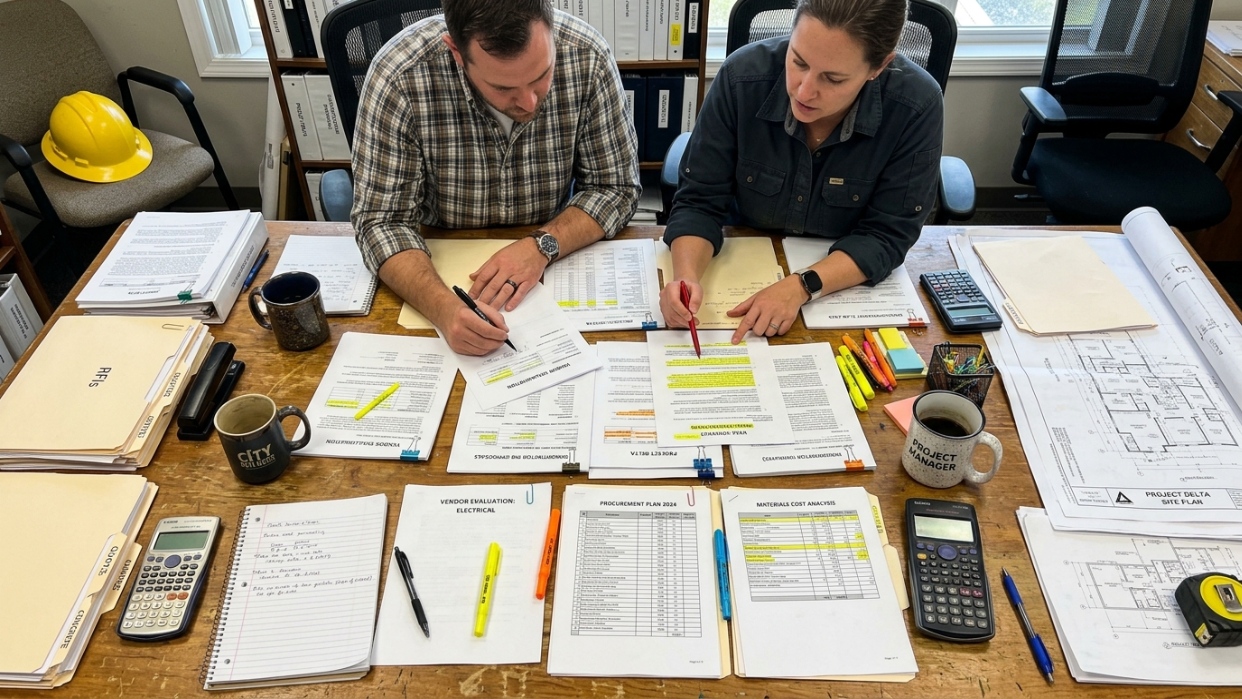
The 6 Stages of Contractor Vendor Sourcing
Stage | Primary Goal | Common Risk if Skipped |
|---|---|---|
Needs Assessment | Define scope and requirements | Inaccurate bids |
Market Research | Identify vendor options | Overpaying |
Prequalification | Verify capability and compliance | Vendor failure |
Bidding & Tendering | Compare pricing and terms | Poor vendor fit |
Negotiation & Contracting | Establish protections | Margin erosion |
Onboarding & Integration | Align workflows and expectations | Project confusion |
The Contractor Vendor Sourcing Process
Research across multiple practitioner sources reveals a consistent six-step process. While the specifics vary by project size and company, the structure holds whether you are a $5 million specialty contractor or a $500 million general contractor.
Step 1: Needs Assessment
Every sourcing effort starts with defining what the project actually requires. This means collaborating with estimators, project managers, and field supervisors to nail down specifics: material types, quantities, quality benchmarks, delivery timelines, and any sustainability or compliance requirements.
Vague needs assessments lead to vague bids, which lead to change orders and disputes. The more precisely you define requirements upfront, the better your vendor responses will be.
Step 2: Market Research and Identification
With requirements defined, you research the market to build a list of potential vendors. Sources include industry directories, trade association networks, manufacturer referral programs, and yes, relationships from past projects.
This phase is where many contractors stop too early. They call two or three familiar names and move on. Practitioners on industry forums consistently point out that limiting your search to known vendors means you miss better pricing, newer capabilities, and stronger delivery terms available elsewhere. A broader construction sourcing strategy pays off here.
Step 3: Prequalification and Evaluation
This is where construction vendor sourcing diverges sharply from generic procurement. In most industries, prequalification means checking references and verifying a business license. In construction, the stakes demand much more.
Critical prequalification criteria include:
Financial health and bonding capacity: Can the vendor handle the financial demands of your project without going under mid-job?
Safety record: OSHA reports, incident rates (EMR), and safety program documentation. A vendor’s safety record tells you a lot about their operational discipline.
Insurance and licensing: Verified certificates of insurance, proper trade licenses, and workers’ compensation coverage.
Past performance and references: Not just whether they completed similar projects, but whether they did so on time, on budget, and without major disputes.
Large commercial operators take this seriously. AvalonBay, for example, uses third-party firms like Alliant Insurance Services to issue vendor scorecards that include separate safety and financial risk ratings along with a list of open issues. This is prequalification based on data, not gut feel.
A warning worth repeating: Many general contractors postpone prequalification until after they have already placed or won bids. Even though this is common practice, it creates serious exposure. If your selected vendor cannot meet bonding requirements or has a poor safety record, you face delays, profit losses, and potential legal consequences.
Step 4: Bidding and Tendering
With a prequalified shortlist in hand, you solicit bids or proposals. The goal is not simply to find the lowest number. It is to find the best combination of price, capability, reliability, and terms.
Vendor management is not just about picking the lowest quote. It is about ensuring the right subcontractors are doing the right work, at the right time, for the right price. Contractors who chase the cheapest bid repeatedly learn this lesson the hard way through rework, delays, and claims.
Step 5: Negotiation and Contracting
Once you select a vendor, contract negotiation establishes the scope, expectations, deliverables, timelines, and partnership terms. Clear contracts reduce risk on both sides and set the foundation for a productive working relationship.
This stage is also where you should address price escalation protections (more on this below) and payment terms that align with your project cash flow.
Step 6: Onboarding and Integration
The final step is integrating the vendor into your project workflow. This means clearly communicating roles, responsibilities, safety requirements, reporting expectations, and coordination protocols.
Successful onboarding ensures vendors understand what is expected from day one. Skipping this step, which happens constantly on fast-tracked projects, leads to confusion, rework, and strained relationships before the first delivery even arrives. For guidance on making these relationships last, read about building contractor vendor partnerships.
Why Contractor Vendor Sourcing Matters in 2026
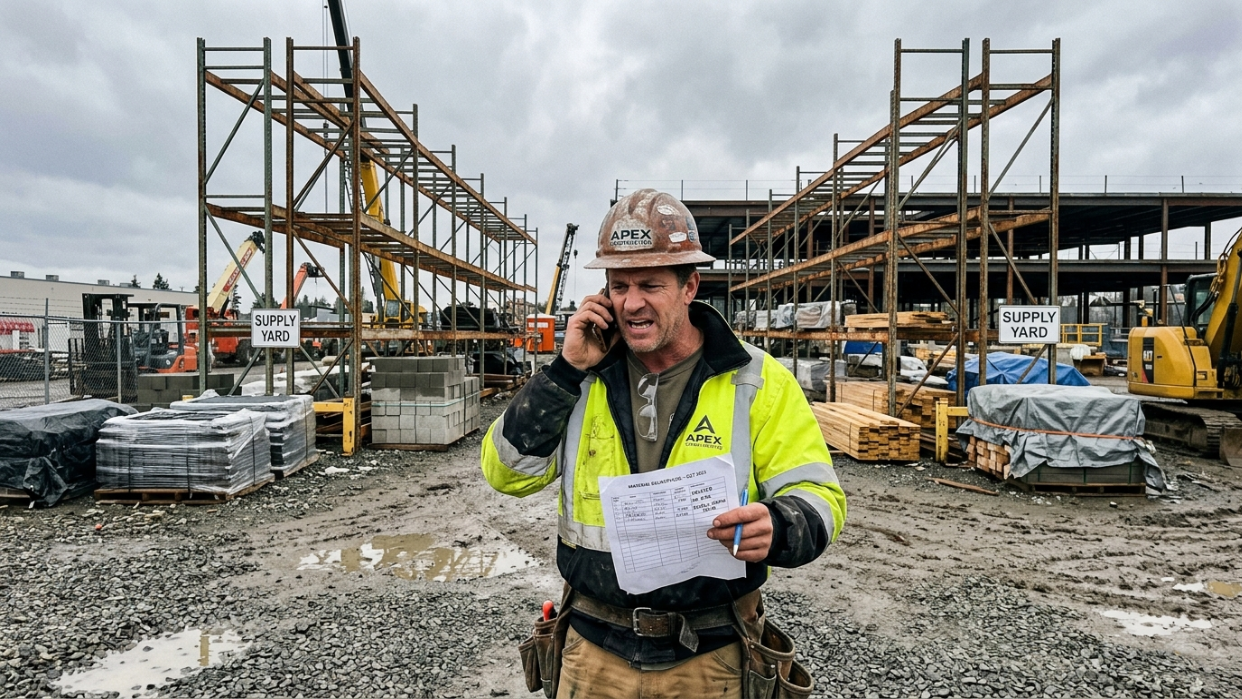
The construction industry in 2026 faces a combination of pressures that make formalized vendor sourcing not just helpful but essential.
Material Price Volatility and Tariffs
Construction input prices have risen 2.8% year over year, but that average obscures the real pain points. Aluminum has surged more than 30% and steel 17% in 2025 alone, driven largely by elevated import tariffs and constrained supply. According to analysis published in the Journal of Construction Engineering and Management, tariffs can increase overall construction costs by 4% to 8% depending on material exposure and sourcing strategies.
Contractors who source from a single supplier, or who lock in pricing without escalation protections, absorb these swings directly out of their margins.
Supply Chain Fragility
According to a survey by Autodesk and Deloitte, nearly half of engineering and construction firm executives classify their supply chains as “fragile due to geopolitical tensions.” This is not a temporary disruption. It is the new operating environment.
Fragile supply chains mean longer lead times, more frequent stockouts, and less predictable delivery schedules. All of which make vendor diversification and prequalification more important than ever. Contractors who understand procurement risk strategies are better positioned to absorb these shocks.
Labor Shortages Compressing the Vendor Pool
The construction industry needs an estimated 499,000 new workers in 2026. That shortage does not just affect your own crews. It shrinks the pool of available subcontractors, meaning fewer qualified vendors to choose from and more pressure to accept whoever is available.
Practitioners on industry forums describe a troubling consequence: some GCs and owners are increasingly relying on past partners with poor or below-average performance records simply because they are familiar and available. Labor shortages are creating a tolerance for mediocrity that would have been unacceptable five years ago.
The Downstream Cost of Poor Sourcing
Project abandonment rates surged 88.2% year over year as of August 2025, according to Deloitte’s analysis. While not every abandoned project traces back to sourcing failures, vendor problems, whether late deliveries, cost overruns, or safety incidents, are a consistent contributor to project distress.
The Financial Impact of Poor Vendor Sourcing
Many contractors underestimate how sourcing inefficiencies compound across a project. A small procurement issue can create downstream schedule and labor costs that far exceed the original material savings.
Vendor Sourcing Problem | Potential Financial Impact |
|---|---|
Late material delivery | Crew downtime and schedule delays |
Poor subcontractor quality | Rework and warranty claims |
Single-source dependency | Emergency pricing increases |
Weak contracts | Margin loss from escalation |
Inadequate prequalification | Legal and compliance exposure |
Common Contractor Vendor Sourcing Mistakes
Knowing the process is one thing. Avoiding the traps is another. These are the mistakes that cost contractors the most money and time.
Skipping Prequalification Until Post-Bid
This is the single most common and most expensive mistake. Contractors send bids based on vendor pricing, win the job, and then discover their chosen vendor cannot meet bonding requirements, carries inadequate insurance, or has a safety record that disqualifies them from the project. By then, your options are limited and your leverage is gone.
Over-Relying on Lowest Price
The cheapest bid is rarely the cheapest outcome. A vendor who bids 8% below everyone else but delivers late, provides substandard materials, or requires constant supervision will cost you far more in the end. Practitioners on Reddit and construction forums regularly share stories of projects derailed by the “lowest bid wins” mentality.
Single-Source Dependency
Relying on one vendor for a critical material category is a gamble that pays off until it does not. When that single supplier faces a stockout, a price increase, or a capacity issue, you have no fallback. In 2026’s volatile environment, single-source dependency is a liability.
Ignoring Price Escalation Clauses
When material prices swing wildly, the contractor usually absorbs the hit. Too many contractors sign fixed-price contracts without any escalation language, then watch their margins evaporate when steel or aluminum costs jump mid-project. Work with your attorney to include material price escalation provisions in every contract on long-duration projects.
Tracking Vendors in Spreadsheets (or Not at All)
As one practitioner guide from ProcurePro put it: most contractors still rely on spreadsheets, if they track vendor performance at all. Rows of names, random notes, and half-remembered phone calls about late arrivals. The gap between knowing that good sourcing matters and actually having a system to manage it is the industry’s biggest blind spot.
How to Improve Your Vendor Sourcing
Moving from informal to strategic vendor sourcing does not require a massive technology investment or a dedicated procurement department. It requires intentionality and a few key practices.
Adopt a Multi-Vendor Strategy
Most contractors do best with two to three vendors per major material category. This gives you backup options without spreading your volume so thin that you lose negotiating power. It also keeps vendors competitive, because they know they are not your only option.
Consolidate Volume for Better Pricing
Start by consolidating your purchasing volume and committing to longer-term agreements. Suppliers give better pricing to contractors who bring consistent, predictable orders. If you are splitting orders across six suppliers when two could handle the volume, you are leaving money on the table.
For contractors looking to quantify these opportunities, a construction cost benchmarking approach can reveal where your spending is fragmented.
Join a Group Purchasing Organization
A contractor group purchasing organization (GPO) pools the purchasing volume of multiple member companies to negotiate better pricing, rebates, and terms from suppliers and manufacturers. The math is straightforward: a single contractor buying $200,000 in safety products per year has limited leverage. A network of contractors collectively buying $20 million in the same products commands attention.
The savings are real. Strategic sourcing through GPOs and category management can save 10% to 20% compared to transactional buying. Standardizing product sourcing through GPO contracts specifically has been shown to cut costs 10% to 20% while improving compliance with product specifications. For a full breakdown, see this contractor group purchasing organization guide.
Data from vendor buying groups shows that the savings extend beyond unit pricing. Members often gain access to national pricing programs, rebate structures, and pre-negotiated terms that would take years to establish independently. For details on maximizing those returns, explore this guide on contractor vendor rebates.
Invest in Technology
Over 80% of large general contractors already use some form of ERP system, and by 2030, contractors expect to source roughly 50% of materials online. You do not need to jump to a full enterprise system overnight, but moving beyond spreadsheets to a basic vendor management system or procurement platform will pay for itself quickly.
A practitioner guide from Field Materials put it bluntly: the old way of buying construction materials, relying on the spot market and messy spreadsheets, is a losing strategy. Their actual order data showed mechanical teams experiencing material cost increases of roughly 6.6%, well above official inflation figures. Without tracking systems, those increases go unnoticed until the project P&L tells the ugly truth. For contractors exploring procurement systems, even basic digital tools can surface these hidden costs.
Implement Vendor Performance Scorecards
You cannot improve what you do not measure. Track key metrics for every vendor: on-time delivery rate, defect/rejection rate, pricing consistency, safety compliance, and responsiveness. Review these quarterly at minimum.
Simon-Kucher research found that 93% of builders consistently buy from preferred suppliers, which means most contractors already have de facto preferred vendor lists. The question is whether those preferences are based on actual performance data or just habit and inertia.
Contractor Vendor Sourcing Best Practices
The most successful contractors treat vendor sourcing as an ongoing operational system rather than a one-time purchasing task.
Standardize Vendor Evaluation Criteria
Use the same scorecard for every vendor review. This makes comparisons easier and reduces subjective decision-making.
Core evaluation criteria should include:
Pricing consistency
Delivery reliability
Safety record
Financial stability
Communication responsiveness
Warranty support
Capacity and staffing
Start Procurement Earlier
Lead times for major materials remain unpredictable in 2026. Contractors that begin sourcing during estimating rather than after award reduce schedule risk significantly.
Build Relationships Before You Need Them
Many contractors only contact vendors when a project starts. The better approach is maintaining ongoing relationships with suppliers and subcontractors before urgent procurement needs arise.
Diversify Geographic Supply Chains
Contractors relying heavily on one region or importer are more exposed to tariff disruptions, transportation delays, and stock shortages.
Review Vendor Performance Quarterly
Vendor sourcing should not end after onboarding. Quarterly reviews help identify trends before they become project-wide problems.
Contractor Vendor Sourcing Is a Margin Protection Strategy
The contractors who treat vendor sourcing as a strategic function, not an administrative chore, consistently outperform those who do not. In an environment where tariffs can add 4% to 8% to your costs, where nearly half of industry executives describe supply chains as fragile, and where labor shortages are compressing your options, systematic sourcing is not optional. It is how you protect the margins you have earned.
The shift from transactional buying to strategic sourcing does not happen overnight. But every step counts: prequalifying vendors before you bid, maintaining two to three options per category, building escalation protections into your contracts, and pooling volume through group purchasing to access pricing you could never negotiate alone.
Ready to see how group purchasing can strengthen your vendor sourcing? Learn how CNBA works with contractors to negotiate better pricing, rebates, and vendor terms through collective buying power.
Key Takeaways
Vendor sourcing directly impacts contractor profitability
Prequalification reduces legal and financial risk
Multi-vendor strategies improve supply chain resilience
Price escalation clauses protect margins during volatility
Digital procurement tools outperform spreadsheet tracking
Contractor buying groups can reduce sourcing costs by 10%–20%
Frequently Asked Questions
What is the difference between vendor sourcing and procurement?
Vendor sourcing is the upstream process of identifying, evaluating, and selecting the right vendors. Procurement is the broader lifecycle that includes sourcing but also covers the actual purchasing, order management, invoicing, and payment. Think of sourcing as choosing the right partner, and procurement as managing the entire transaction from start to finish.
How many vendors should a contractor work with per material category?
Two to three vendors per major category is the sweet spot for most contractors. This provides enough competition and backup options to protect against supply disruptions without fragmenting your volume so much that you lose pricing leverage.
What is a prequalified vendor list?
A prequalified vendor list is a roster of vendors who have already been vetted against specific criteria: financial stability, safety record, insurance coverage, licensing, and past performance. Contractors who maintain prequalified lists can move faster when new projects come in because the due diligence is already done.
How do group purchasing organizations help with vendor sourcing?
GPOs aggregate the buying volume of multiple member contractors to negotiate better pricing, rebates, and terms from suppliers. Individual contractors gain access to pricing tiers and contract terms that would be impossible to achieve on their own. GPO savings typically range from 10% to 20% on standardized product categories. For a detailed look at how these groups operate, read the contractor procurement groups guide.
Why is prequalification so important in construction vendor sourcing?
Construction carries unique risks that other industries do not. A vendor with poor safety practices can cause injuries on your jobsite, creating liability for you. A vendor with weak financials might abandon a project mid-way. And a vendor without proper licensing or insurance can expose you to legal and regulatory consequences. Prequalification catches these issues before they become your problem.
What are price escalation clauses and why do they matter?
Price escalation clauses are contract provisions that allow for price adjustments when material costs change significantly during a project. Without them, the contractor bears the full risk of material price swings. Given that aluminum surged over 30% and steel rose 17% in 2025 alone, these clauses are essential protection on any project lasting more than a few months.
How is contractor vendor sourcing changing in 2026?
Three forces are reshaping the practice. First, tariffs and material price volatility are making diversified sourcing and price protections non-negotiable. Second, supply chain fragility is pushing contractors toward multi-vendor strategies and earlier procurement planning. Third, technology adoption is accelerating, with contractors increasingly moving toward digital procurement platforms and away from manual, spreadsheet-based tracking.

Recent Comments