
TL;DR
Fleet card rebate programs promise 3¢ to 12¢ per gallon in savings, but the actual value depends on your net cost after fees, how well the card’s network matches your routes, and whether your fleet volume justifies the overhead. Voyager offers the best combination of network coverage and low fees for most contractors. Coast is the strongest pick for construction fleets under 100 vehicles. The biggest mistake contractors make is chasing headline rebate numbers without calculating what they actually keep after hidden fees.
Fuel represents 20% to 30% of operating expenses for fleet-dependent companies, and equipment fuel costs can run even higher. For a 50-vehicle fleet averaging 1,500 gallons per vehicle per month, the difference between a 3¢ and a 15¢ per-gallon rebate is $72,000 per year. That gap is real money, but only if the rebate you’re promised is the rebate you receive.
Most fleet card comparison guides stop at headline rebate rates. This guide calculates real-world net savings, flags the hidden fees that eat into those savings, and evaluates each program specifically for construction and trades contractors.
Fleet fuel is one of several categories where contractor vendor rebates deliver measurable savings when structured correctly.
If you’re looking for the best fleet card rebate program for contractors, the right choice depends on your fleet size, fueling locations, and monthly fuel volume—not simply the highest advertised rebate.
For most construction businesses:
Fleet Situation | Best Choice | Why |
|---|---|---|
Under 20 vehicles | Coast | Simple pricing and universal Visa acceptance |
Mixed fleet nationwide | Voyager | Huge acceptance network with low fees |
Large fleets | WEX | Higher rebate potential and maintenance network |
Heavy diesel fleets | Fuelman | High rebates if you stay in-network |
Western contractors | CFN Cardlock | Cost-plus pricing often beats retail fuel |
New businesses | RoadFlex | No personal guarantee |
Mostly Shell stations | Shell Business | Zero fees and simple rebates |
Fuel + tolls + parking | Edenred Essentials | Consolidated expense management |
The best fleet card isn’t the one with the biggest rebate. It’s the one that produces the highest net savings after monthly fees, network limitations, and out-of-network charges are included.
At-a-Glance Comparison Table
Program | Rebate/Gallon | Network Coverage | Monthly Fees | Best For | Trustpilot Rating |
|---|---|---|---|---|---|
Voyager | 3–8¢ | 97%+ of stations | $0 (via select partners) | Mixed fleets, any size | 4.8/5 |
Coast | 3–9¢ | Universal (Visa) | $4/active user | Construction fleets, 10–100 vehicles | ~4.5 (Capterra) |
WEX | 1–15¢ | 95% of stations | ~$4/card | Large fleets (20+ vehicles) | Mixed |
Shell Business | Up to 6¢ | 14,000 Shell stations | $0 | Shell-dense routes | N/A |
Fuelman | 8–12¢ | ~60K stations | $39–$99/account | High-volume diesel (10K+ gal/mo) | 2.4/5 |
CFN Cardlock | 30–40¢* | 3K cardlock + 65K retail | Varies | Western US, off-road diesel | N/A |
RoadFlex | Competitive | Universal (Visa) | $0 | New businesses, no credit history | N/A |
Edenred Essentials | Up to 4¢ | Broad | $3/card | All-in-one (fuel + tolls + parking) | N/A |
*CFN uses cost-plus pricing rather than traditional rebates.
Fleet Card Features Comparison
Feature | Voyager | Coast | WEX | Fuelman | CFN |
|---|---|---|---|---|---|
Universal Acceptance | ✔ | ✔ | ✔ | Mostly | Partial |
Personal Guarantee Required | Sometimes | No | Usually | Usually | Varies |
Mobile App | ✔ | ✔ | ✔ | ✔ | Limited |
Driver Controls | Excellent | Excellent | Excellent | Good | Good |
Maintenance Network | Moderate | Limited | Excellent | Good | Limited |
Dyed Diesel Support | No | No | Partial | Partial | Excellent |
IFTA Reporting | Partial | Limited | Excellent | Good | Good |
Best for Contractors | Excellent | Excellent | Very Good | Volume Fleets | Western Contractors |
How Fleet Card Rebate Programs Actually Work
Before comparing specific cards, it helps to understand the three rebate models you’ll encounter. If you’re new to some of this terminology, our fleet fuel card glossary covers the key terms.
Flat per-gallon rebates give you a fixed discount (say, 6¢/gallon) regardless of how much you buy. Simple, predictable, easy to budget around. Shell and Coast use this model.
Volume-tiered rebates increase your per-gallon discount as you pump more fuel each month. WEX is the classic example: you might get 1¢/gallon at low volumes but 15¢/gallon once you hit 5,000+ gallons monthly. The catch is that most fleets never reach the top tier.
Cost-plus pricing skips the rebate concept entirely. Instead of a retail price minus a discount, you pay a wholesale cost plus a small markup. CFN Cardlock uses this model, and it can beat pump prices by 30–40¢ per gallon on diesel.
One critical detail: rebates almost never appear at the pump. They show up as statement credits on your monthly bill. That delay matters for cash flow planning.
The Net Savings Formula
The number that actually matters is this:
Net Monthly Savings = (Rebate per gallon × Total gallons) − (Monthly fees + Transaction fees + Penalty fees)
Even a modest 5¢/gallon discount on 2,000 gallons a month saves you $1,200 a year. But if your card charges $4 per card across 20 vehicles ($80/month) plus occasional out-of-network fees, your real savings shrink fast.
How to Choose the Right Fleet Card in 5 Minutes
Most contractors can eliminate half the available options by answering five questions.
Step 1: How many gallons do you buy each month?
Under 2,000 gallons
2,000–10,000 gallons
Over 10,000 gallons
Higher-volume fleets often qualify for larger rebate tiers.
Step 2: Where do your crews buy fuel?
National routes
Regional routes
Local only
Choose the card whose network matches your fueling locations.
Step 3: Do you need diesel tracking?
Contractors operating heavy equipment should prioritize cards offering:
Dyed diesel tracking
Off-road fuel reporting
IFTA support
Step 4: Do you want credit or charge card terms?
Some providers require payment in full every cycle while others offer revolving credit.
Step 5: Are hidden fees acceptable?
Always compare:
Monthly fees
Transaction fees
Inactivity fees
Late fees
Setup fees
The contractor who asks these five questions usually ends up choosing a better fleet card than the one who simply picks the highest rebate.
8 Best Fleet Card Rebate Programs for Contractors
1. Voyager (by U.S. Bank)

Best for: Mixed fleets of any size that need near-universal acceptance with minimal fees.
Rebate structure:
3–8¢ per gallon at select locations
Rebate rate varies by brand and location
Applied as statement credits
Pricing:
Through select partners: zero card fees, zero transaction fees, zero late payment fees
Pricing varies by fleet partner, so two contractors can get different deals on the same card
Key features:
Accepted at more than 97% of gas stations and truck stops nationwide, including major brands and independents
Free fraud coverage if card skimming occurs
Strong reporting and controls for fleet managers
Works well for mixed fleets (pickups, dumps, service vans)
Tradeoffs:
Rebates are modest compared to Fuelman’s advertised rates
Partner-dependent pricing means you need to shop around for the right Voyager provider
Not the best option if your fleet is concentrated near in-network discount stations for competitors
Real user perspective: Voyager holds a 4.8 out of 5 Trustpilot rating, and practitioners call it “an operational powerhouse for mixed fleets.” That reputation is built on reliability rather than eye-catching rebate numbers.
Bottom line: Voyager wins on consistency. The combination of near-universal acceptance and genuinely zero fees (through the right partner) makes it the safest default choice. Your rebate per gallon won’t be the highest on paper, but you’ll actually keep what you earn.
2. Coast Fleet Card
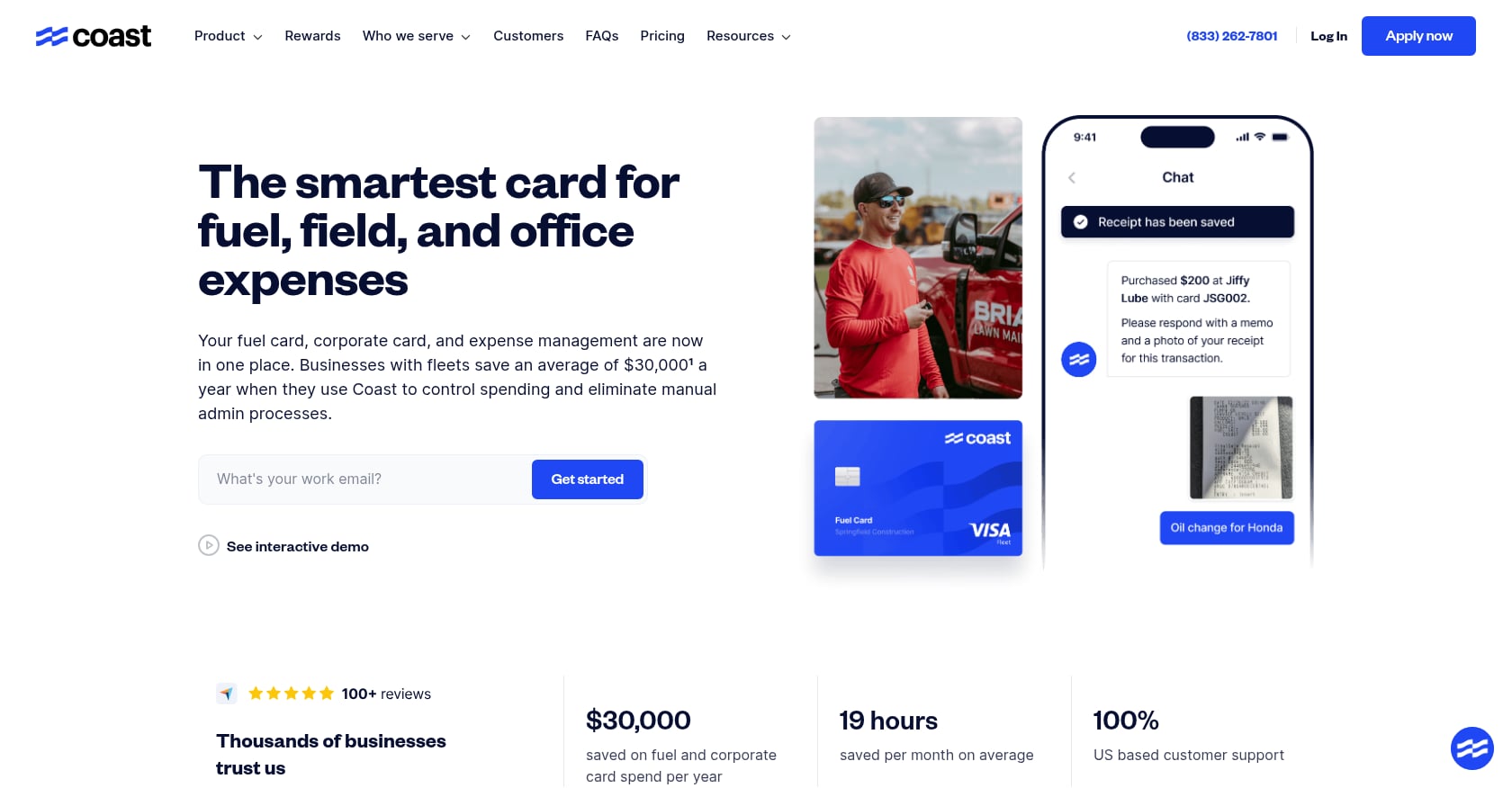
Best for: Construction and trades fleets with 10–100 vehicles that want simple pricing and no personal guarantee.
Rebate structure:
3–9¢ per gallon at over 30,000 partner stations
1% cashback on non-fuel purchases
Rebates applied as statement credits
Pricing:
$4 per active user per month
No setup fee
No personal guarantee required
Key features:
Accepted anywhere Visa is accepted, giving universal coverage
No personal guarantee, which is unusual for fleet cards
Clean expense management interface
QuickBooks Online integration (not Desktop)
Tradeoffs:
Does not support QuickBooks Desktop, only QuickBooks Online
Full payment required each billing cycle (charge card, not credit)
Not available in Nevada, North Dakota, or South Dakota
Not designed for sole proprietors
Real user perspective: On Capterra, a construction general manager noted Coast “has made it very easy to cover fuel costs and manage those expenses efficiently.” Another construction office administrator reported their “overall experience with Coast has been excellent.” Practitioners on TruckingWay called it “the best option on the market right now” for vocational fleets, specifically naming “a construction company with a mix of pickups and dumps” as an ideal use case.
Bottom line: Coast is purpose-built for the kind of fleet most contractors run. The no-personal-guarantee feature alone makes it worth considering, and the Visa backbone means your drivers won’t get stuck at a station that doesn’t accept the card. The $4/user/month fee is transparent and easy to model against your rebate savings.
For contractors evaluating multiple vendor programs at once, a vendor comparison checklist can help structure the decision.
3. WEX Fleet Card
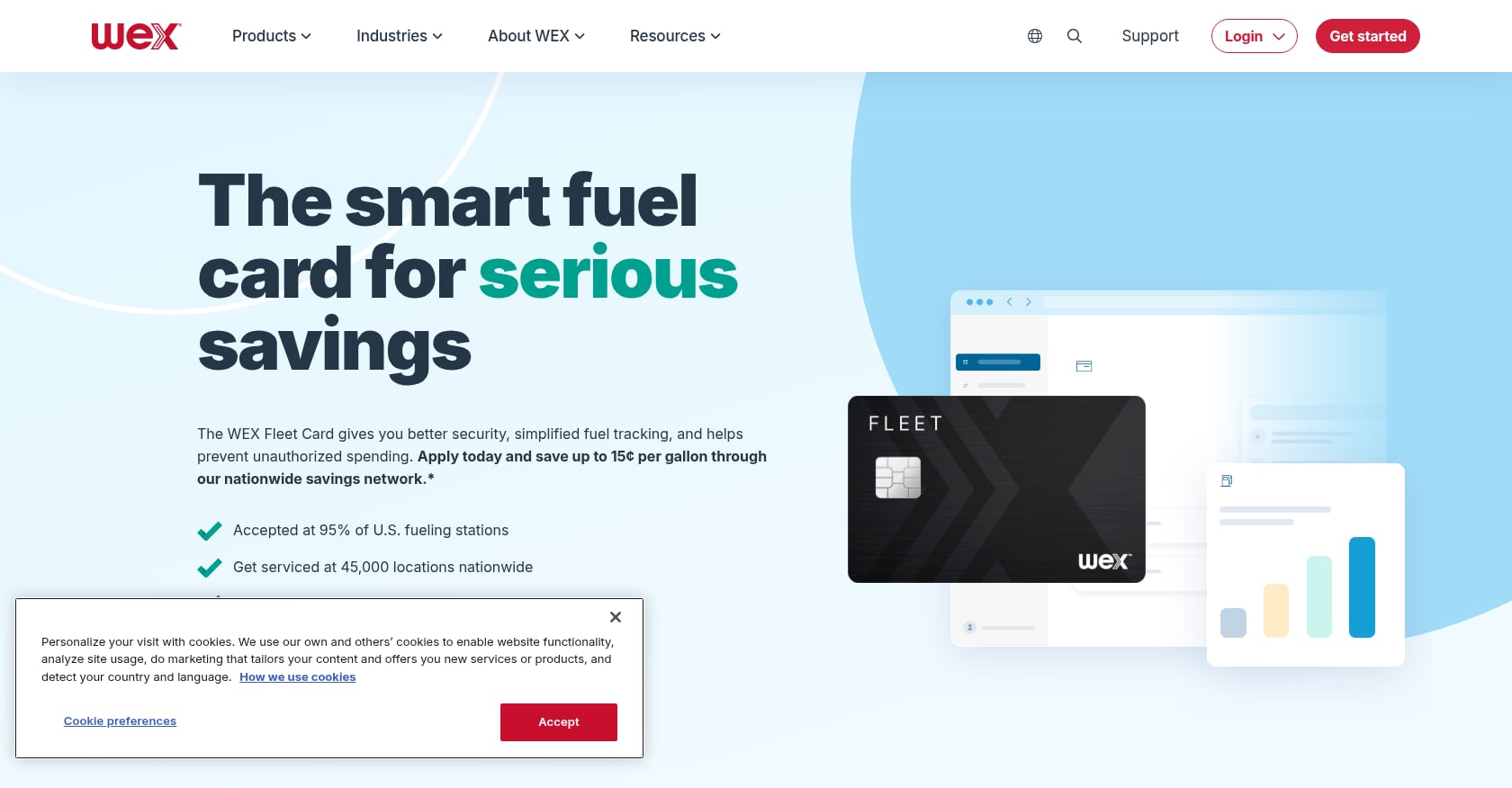
Best for: Large fleets (20+ vehicles) that need maintenance network integration and are willing to trade simplicity for maximum potential savings.
Rebate structure:
1–3¢ per gallon out-of-network
Up to 15¢ per gallon at “Savings Network” or “EDGE” in-network locations
Top-tier rebates typically require 5,000+ gallons per month
Pricing:
Approximately $4 per card per month
Occasional setup fees reported by independent comparisons
Some users report a $40 application fee not clearly disclosed upfront
Key features:
Accepted at 95% of fuel stations
Access to 45,000+ maintenance locations (a standout for construction fleets)
Strong spend controls and reporting
Ability to track fueling frequency and station costs by crew member
Tradeoffs:
Per-card fees add up quickly for smaller fleets (20 cards = $80/month before you pump a gallon)
Customer service complaints are common in reviews
Cards occasionally stop working without explanation
Real user perspective: On Contractor Talk, a user managing 400 trucks noted they’ve “used WEX for many years due to the fact that it’s accepted almost anywhere. The only issue we have is that a handful of cards seem to just quit working from time to time without explanation.” Another forum user praised the visibility: “I liked being able to see how often each crew member was filling up and how much it cost.” On the negative side, WalletHub reviews mention “nothing but hidden fees, absolutely terrible customer service.”
Bottom line: WEX works best when you have the fleet volume to justify the overhead. The maintenance network access is genuinely valuable for construction, where vehicles take a beating. But if you’re running fewer than 20 vehicles, the per-card fees will eat into your savings. Contractors managing larger operations may find this integrates well with their fleet management approach.
4. Shell Business Card
Best for: Regional fleets concentrated in areas with high Shell station density that want a zero-fee branded option.
Rebate structure:
Up to 6¢ per gallon on Shell fuel purchases
15–20% off services at participating Jiffy Lube locations
Pricing:
No setup fees
No annual fees
No per-card fees
Key features:
Simple, transparent pricing
Maintenance discount at Jiffy Lube adds supplementary value
Consistent fuel quality from a single brand
Basic spend controls and reporting
Tradeoffs:
Limited to approximately 14,000 Shell stations in the US
The 6¢/gallon maximum is modest compared to high-volume options
Only useful as a secondary card unless your routes reliably pass Shell stations
Limited reporting compared to WEX or Voyager
Real user perspective: Shell doesn’t generate the volume of online reviews that WEX or Fuelman do, partly because the straightforward pricing leaves less to complain about. The trade-off is clear: simplicity and zero fees versus limited network and modest rebates.
Bottom line: Shell works as a secondary card for fleets that regularly pass Shell stations. The zero-fee structure means every penny of that 6¢ rebate goes to your bottom line, with no monthly overhead to offset. But it’s not a standalone solution for most contractors.
5. Fuelman (by Corpay/FleetCor)

Best for: High-volume diesel fleets (10,000+ gallons monthly) that can steer drivers to in-network stations, but only with heavy due diligence.
Rebate structure:
Fixed 8–12¢ per gallon at in-network locations
Rebates applied as statement credits, not at the pump
Advertised rates are among the highest in the industry
Pricing:
Basic plan: $39/month for five cards ($7.80/card effective)
Pro plan: $59/month (adds fraud protection, enhanced reporting)
Enterprise plan: $99/month (advanced analytics)
Per-card costs significantly higher than competitors charging $2–4/card
Key features:
50,000+ accepting gas stations
20,000 maintenance facilities
Fixed rebate structure creates predictable savings for budgeting
Multiple plan tiers for different fleet sizes
Tradeoffs (significant):
The Federal Trade Commission alleged that FleetCor (Fuelman’s parent company) charged customers “hundreds of millions of dollars in mystery fees”
1.1-star rating on PissedConsumer, with recurring complaints about hidden fees, poor customer service, and unexpected account closures
Account-level pricing ($39–$99/month) is expensive for small fleets
Inactivity fees can punish seasonal construction operations
Real user perspective: On Trustpilot, a verified reviewer documented being “explicitly promised a discount of $0.08 off per gallon. However, once the final billing statements arrived, the actual discount applied was only $0.02 per gallon.” Customer reviews consistently highlight three issues: hidden fees, poor customer service, and unexpected account closures.
Bottom line: Fuelman’s headline rebate numbers are attractive, but the gap between promised and delivered savings is well-documented. The FTC action against FleetCor is not a rumor or a disgruntled review; it’s a federal regulatory complaint. If you still want to pursue Fuelman, negotiate hard, read every clause, and monitor your statements monthly. For fleets pumping less than 10,000 gallons monthly, the math almost certainly doesn’t work.
6. CFN Cardlock

Best for: Western US contractors with heavy off-road diesel consumption who want wholesale-level pricing.
Rebate structure:
Cost-plus pricing rather than traditional rebates
Can beat pump prices by 30–40¢ per gallon on diesel
Dyed diesel (non-taxed off-road fuel) tracked separately
Pricing:
Varies by provider
Cost-plus model means you pay a wholesale base plus a small markup
Key features:
3,000+ discount cardlock locations (primarily California, Arizona, Oregon, Washington, Nevada)
65,000+ retail stations nationwide for backup coverage
Dyed diesel access saves 32¢ to 90¢ per gallon in road tax exemptions, depending on state
Purpose-built for heavy equipment and trucking
Tradeoffs:
Cardlock locations concentrated in Western states
Not a realistic primary option for contractors in the Southeast
Fewer locations than universal cards
Cardlock stations require drivers to learn self-service fueling process
Real user perspective: CFN is a staple among Western US contractors and trucking companies. The cost-plus pricing model is straightforward and tends to generate fewer complaints about hidden fees than rebate-based programs.
Bottom line: If your fleet operates in the Western US and burns significant off-road diesel, CFN’s cost-plus pricing will likely outperform any rebate-based card. For Southeastern contractors, this is a secondary option at best, useful only when projects take crews out West.
7. RoadFlex
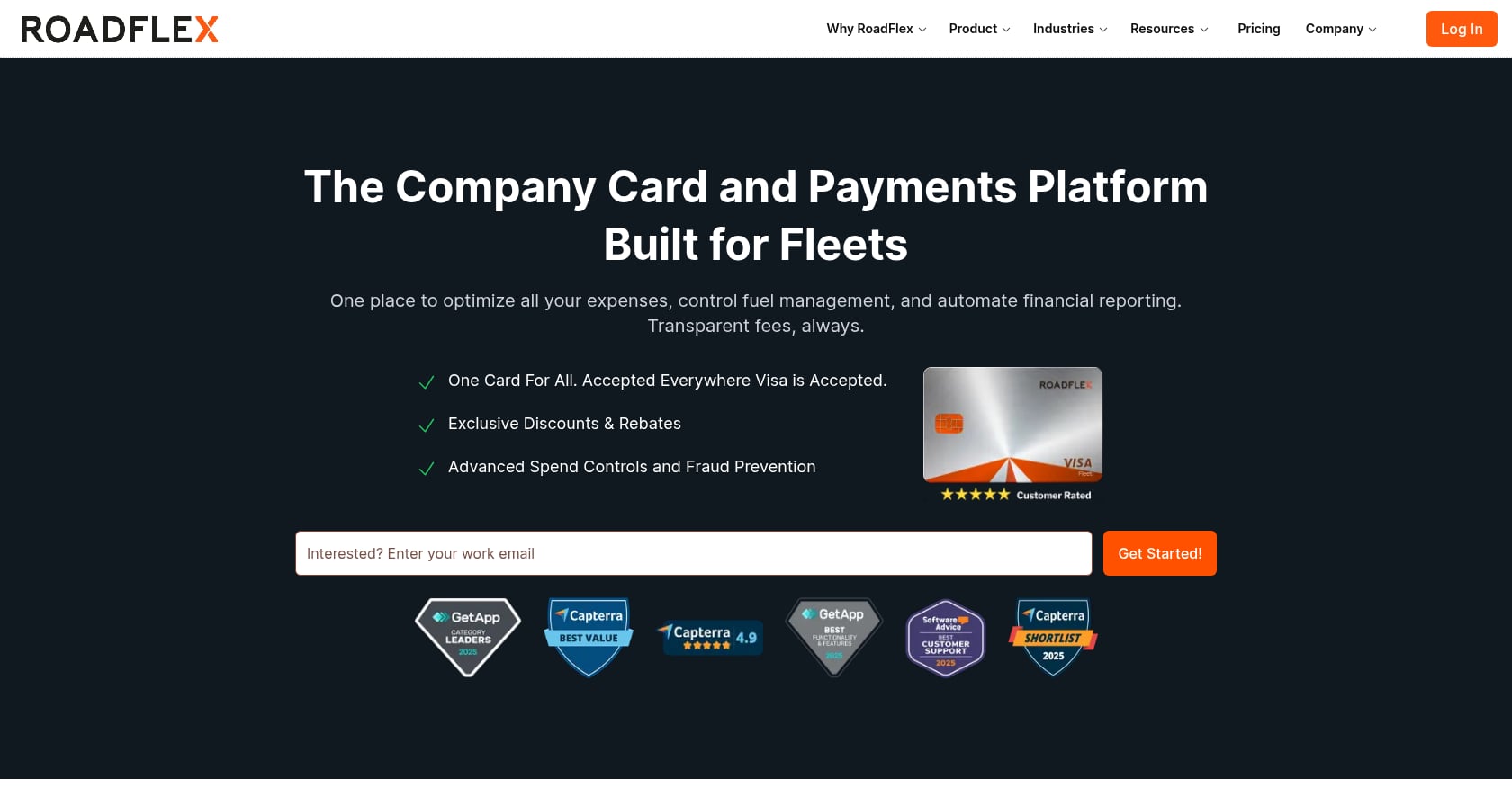
Best for: New or growing construction companies that need fleet card access without a personal guarantee or established business credit.
Rebate structure:
Competitive discounts at all fuel stations
Company claims users save an average of 11% in fuel costs in the first year
Pricing:
Advertises zero fees
Visa acceptance
Key features:
No personal guarantee required
Universal Visa acceptance
Designed for businesses with limited credit history
Simple onboarding process
Tradeoffs:
Newer company with less track record than established providers
“11% savings” claim is company-reported, not independently verified
Fewer management features than WEX or Voyager
Limited maintenance network integration
Real user perspective: RoadFlex is relatively new, so the volume of independent reviews is thinner than established competitors. Early adopters on practitioner forums note the easy signup process as a standout feature.
Bottom line: RoadFlex fills a specific gap. If you’re a newer contractor who can’t get approved for WEX or doesn’t want to sign a personal guarantee, it’s worth evaluating. Just verify the actual per-gallon savings against Voyager or Coast before committing.
8. Edenred Essentials

Best for: Fleets that want a single payment tool covering fuel, tolls, parking, EV charging, and maintenance.
Rebate structure:
Up to 4¢ per gallon in fuel rebates
Value comes more from consolidation than per-gallon savings
Pricing:
$3 per card per month
Key features:
Covers fuel, tolls, parking, EV charging, and maintenance on one card
Broader spend coverage than most competitors
Growing network acceptance
Consolidated reporting across multiple expense categories
Tradeoffs:
Per-gallon rebate (up to 4¢) is among the lowest on this list
Less established in the construction fleet market
If fuel savings is your primary goal, other cards deliver more per gallon
EV charging benefit is irrelevant for most construction fleets today
Real user perspective: Edenred is strongest when a fleet wants one payment tool for multiple road costs rather than maximum fuel rebates.
Bottom line: Edenred makes sense for fleets spending heavily on tolls, parking, and maintenance in addition to fuel. The fuel rebate alone won’t compete with Voyager or Coast, but the operational simplicity of consolidating five expense categories onto one card has real value for construction expense management.
How to Calculate Your Real Fleet Card Rebate Savings
Most contractors compare fleet card rebate programs by looking at the advertised cents-per-gallon number. That’s like comparing construction bids by looking only at the line-item total without reading the exclusions. Here’s how to calculate what you’ll actually keep.
Worked Example: A 20-Vehicle Fleet
Assume a fleet of 20 vehicles, each consuming 1,000 gallons per month (20,000 total gallons monthly).
Voyager (via zero-fee partner):
Rebate: 5¢/gallon (midpoint estimate) × 20,000 gallons = $1,000/month
Monthly fees: $0
Net monthly savings: $1,000
Annual net: $12,000
WEX (at out-of-network rates):
Rebate: 2¢/gallon (realistic out-of-network) × 20,000 gallons = $400/month
Monthly fees: $4/card × 20 cards = $80/month
Net monthly savings: $320
Annual net: $3,840
Fuelman (Basic plan):
Rebate: 8¢/gallon (advertised) × 20,000 gallons = $1,600/month
Monthly fees: $39/month (Basic, 5 cards) × 4 plans to cover 20 cards = $156/month
Net monthly savings: $1,444 (if you actually receive 8¢)
Annual net: $17,328 (but see Trustpilot warnings about actual vs. promised rates)
At 2¢/gallon (what some users report actually receiving): $400 − $156 = $244/month, or just $2,928 annually.
Break-Even Savings by Fleet Size
Fleet Size | Monthly Fuel | 5¢ Rebate | Annual Gross Savings |
|---|---|---|---|
5 Vehicles | 5,000 gal | $250 | $3,000 |
10 Vehicles | 10,000 gal | $500 | $6,000 |
20 Vehicles | 20,000 gal | $1,000 | $12,000 |
50 Vehicles | 50,000 gal | $2,500 | $30,000 |
100 Vehicles | 100,000 gal | $5,000 | $60,000 |
The Break-Even Question
Every fleet card with monthly fees has a break-even point. For Fuelman’s $99/month Enterprise plan at a realistic 8¢/gallon rebate, you need to pump at least 1,238 gallons monthly just to cover the subscription. At the 2¢/gallon some users report receiving, break-even jumps to 4,950 gallons.
This kind of analysis is part of a broader effort to reduce contractor overhead across every spending category.
Fleet Card Rebate Mistakes Contractors Make
Chasing Headline Rebate Numbers
The highest advertised rebate means nothing if the actual rebate falls short. Fuelman’s Trustpilot reviews show a consistent pattern of promised rates not matching billing statements. Always ask for a written schedule of rebate rates by location type, and verify against your first three months of statements.
Ignoring Inactivity Fees During Slow Seasons
Inactivity fees are charged when a card goes unused for one to three months. This is a particular problem for seasonal construction operations. A fleet of 30 cards sitting idle from December through February could generate hundreds in fees. Ask about inactivity policies before signing.
Skipping the Network Density Check
A card offering 12¢/gallon means nothing if none of the in-network stations are near your job sites. Before choosing any fleet card rebate program, map your 10 most common fueling locations against the card’s network. A 5¢ rebate at a station your drivers already use beats a 12¢ rebate at a station 20 minutes out of the way.
Not Modeling Off-Network Usage
Even with a card that covers 95% of stations, that remaining 5% can include out-of-network transaction fees of $0.50 to $2.00 per fill-up. For a fleet making 200 transactions monthly, even a 10% off-network rate could cost $100–$400 in surprise fees.
Skipping the Personal Guarantee Review
Many fleet cards require a personal guarantee, meaning you’re personally liable if the business defaults. Coast and RoadFlex stand out for not requiring one. This matters more than most contractors realize until they need it to matter. A systematic vendor selection process should include personal guarantee terms as a core evaluation criterion.
The Two-Card Strategy
Sophisticated fleet operators don’t pick one card. They pair two.
The logic is straightforward: no single card offers the best deal at every fueling location. A common strategy is pairing a universal card (Voyager or Coast) for broad everyday coverage with a specialized card (CFN for off-road diesel, or Shell for branded station discounts) for specific situations.
For example, a contractor running pickups and service vans on roads alongside excavators and dozers on job sites might use Voyager for all on-road fueling and CFN for off-road dyed diesel. The Voyager card covers the 97% of stations drivers encounter on routes, while CFN’s cost-plus pricing saves 30–40¢ per gallon on equipment fuel where road taxes don’t apply.
This pairing approach works especially well for contractors managing mixed fleets. If you’re already thinking about fleet-wide purchasing strategy, the construction fleet purchasing guide covers how to structure vendor relationships across fuel, maintenance, and vehicle acquisition.
Hidden Fees That Destroy Rebate Value
A fleet industry veteran with 20+ years of experience, writing in FleetOwner, described 10 distinct fee types that drain fleet budgets. The most common ones that catch contractors off guard include:
Out-of-network transaction fees: $0.50–$2.00 per transaction at non-participating stations
Late payment penalties: $35–$150+ per occurrence
Account setup fees: $25–$50 (sometimes not disclosed until after signing)
Monthly minimum purchase requirements: Fees triggered when you don’t hit a spending floor
Per-card monthly fees: Range from $0 to $8 depending on provider and tier
Inactivity fees: Charged after 1–3 months of non-use per card
Paper statement fees: Yes, some programs charge for mailing you a bill
Over-limit fees: Triggered when a driver exceeds preset spending controls
It is not uncommon for fleets spending more than $1 million per month on fuel to pay over $10,000 in hidden fees to their legacy provider each month. Smaller fleets aren’t immune either. The fees just hurt proportionally more.
The National Association of Fleet Administrators reports that 83% of fleets experience regular fuel theft, and construction leaders estimate that up to 22% of fleet payments are lost to fraud or theft. Strong fleet card controls (driver PINs, vehicle matching, time-of-day restrictions, gallon limits) address this. But you need to verify these controls are included in your plan tier, not sold as an add-on.
Construction-Specific Features Worth Asking About
Generic fleet card comparisons skip features that matter specifically to contractors. When evaluating fleet card rebate programs, ask about these:
Job cost allocation: The ability to tie fuel spending to specific projects. If your concrete crew is working on Project A and your paving crew is on Project B, properly configured fleet cards allocate costs to the correct job. This feeds directly into your project profitability analysis.
Off-road diesel tracking: Cards like CFN track dyed diesel separately, which matters for construction cost management since equipment fuel costs can represent 42% of machine operating costs according to EquipmentWatch data.
IFTA reporting: For contractors running vehicles across state lines, cards with built-in IFTA (International Fuel Tax Agreement) reporting save hours of manual tracking each quarter.
Maintenance integration: WEX’s 45,000+ maintenance locations and Shell’s Jiffy Lube discount are more valuable for construction fleets than office-based businesses, simply because construction vehicles accumulate miles and wear faster.
Conclusion
Fleet card rebate programs range from genuinely valuable to borderline predatory. The difference comes down to three things: whether the network matches your actual routes, whether the fees stay transparent after signup, and whether the rebate you receive matches the rebate you were promised.
For most contractors, Voyager or Coast will deliver the most reliable net savings. Larger fleets with volume to justify WEX’s overhead should model the numbers carefully. Fuelman’s headline rates are tempting but demand skepticism given documented discrepancies between promised and actual rebates.
The smartest approach is calculating your net effective savings (rebates minus all fees) at your actual fueling locations before signing anything. Then revisit the math quarterly.
Fleet card rebates are just one category of supplier discounts available to contractors. A structured approach to vendor programs across fuel, materials, and equipment can compound these savings significantly.
Fleet Card Rebate Program Decision Matrix
If you want… | Choose… |
|---|---|
Lowest fees | Voyager |
Simplest pricing | Coast |
Highest potential rebate | WEX |
Best diesel savings | CFN |
No personal guarantee | Coast or RoadFlex |
Largest acceptance network | Voyager |
Maintenance integration | WEX |
Multi-expense card | Edenred |
Frequently Asked Questions
What is a fleet card rebate program?
A fleet card rebate program gives businesses a per-gallon discount on fuel purchases made with a designated fleet card. Rebates typically range from 1¢ to 15¢ per gallon and are applied as credits on your monthly statement rather than as instant discounts at the pump. The actual savings depend on your fuel volume, which stations you use, and the fee structure attached to the card.
How much can a contractor realistically save with fleet card rebates?
A 20-vehicle fleet pumping 1,000 gallons per vehicle per month can save $12,000 or more annually with a 5¢/gallon rebate and zero monthly fees (like Voyager through the right partner). A 50-vehicle fleet at the same usage with a 3¢/gallon rebate still saves $27,000 per year. The key is calculating net savings after all fees, not just the headline rebate rate.
Do fleet card rebate programs charge hidden fees?
Many do. Common hidden fees include out-of-network transaction charges ($0.50–$2.00 each), late payment penalties ($35–$150+), setup fees, inactivity fees, and monthly minimums. The FTC filed an administrative complaint against FleetCor (Fuelman’s parent) alleging “hundreds of millions of dollars in mystery fees.” Always request a complete fee schedule in writing before signing.
Which fleet card rebate program is best for small construction fleets?
Coast is the strongest option for construction fleets with 10–100 vehicles. It charges a flat $4 per active user monthly with no personal guarantee, offers 3–9¢/gallon rebates, and works anywhere Visa is accepted. Multiple construction industry users on Capterra confirm positive experiences. Voyager is a close second for fleets that can access a zero-fee partner.
What are inactivity fees and why do they matter for contractors?
Inactivity fees are charged when a fleet card goes unused for one to three months. They typically range from $2 to $10 per card monthly. For seasonal construction operations that slow down or stop during winter months, a fleet of 30 idle cards could generate $60–$300 in monthly fees during the off-season. Always ask about inactivity policies and whether seasonal suspension is available.
Can I use two fleet cards at the same time?
Yes, and many experienced fleet operators recommend it. A common strategy pairs a universal-acceptance card (Voyager or Coast) for everyday fueling with a specialized card (CFN for off-road diesel, or Shell for branded station discounts). This gives drivers the best available discount at every stop type without being locked into a single network.
How do volume-tiered rebates differ from flat-rate rebates?
Flat-rate rebates give you the same cents-per-gallon discount regardless of volume (Shell’s 6¢/gallon, for example). Volume-tiered programs like WEX increase your rebate as monthly consumption rises, potentially reaching 15¢/gallon at 5,000+ gallons. Volume tiers reward larger fleets but leave smaller operations stuck at the lowest discount level.
What is cost-plus pricing on fleet cards?
Cost-plus pricing, used by CFN Cardlock, charges you a wholesale fuel cost plus a small fixed markup instead of offering a rebate off the retail price. This model can beat pump prices by 30–40¢ per gallon on diesel at cardlock stations. It’s especially valuable for off-road dyed diesel, which is exempt from road taxes and can save an additional 32¢ to 90¢ per gallon depending on state tax rates.

Recent Comments