
TL;DR
A contractor vehicle maintenance program is a structured system for scheduling, tracking, and performing maintenance on every vehicle and piece of equipment a construction company operates. Contractors with formal programs see 30-40% fewer unplanned breakdowns and save $4-$8 for every dollar spent on preventive maintenance. The best programs cover on-road trucks, off-road heavy equipment, and trailers under a single system, with scheduling based on mileage, engine hours, and calendar intervals. For contractors running vehicles over 10,001 lbs GVWR, a maintenance program is also a DOT compliance requirement, not just a best practice.
Contractor Vehicle Maintenance Program: Quick Answer
A contractor vehicle maintenance program is a documented system that schedules inspections, preventive maintenance, repairs, compliance tracking, and service history for every vehicle and piece of equipment in a construction fleet.
An effective program typically includes:
Preventive maintenance schedules
Daily vehicle inspections
DOT and FMCSA compliance tracking
Work order management
Parts inventory management
Fuel monitoring
Maintenance history records
Cost tracking and reporting
For most construction companies, preventive maintenance reduces unplanned breakdowns by 30–40%, extends equipment life by 20% or more, improves fuel efficiency, and lowers overall fleet operating costs compared to reactive repairs.
What Is a Contractor Vehicle Maintenance Program?
A contractor vehicle maintenance program is a structured schedule for inspecting, servicing, and repairing all vehicles and equipment a construction company operates. It replaces the common “fix it when it breaks” approach with planned service intervals, documented inspections, and tracked repair histories across every asset in the fleet.
The program typically covers three categories of assets:
On-road vehicles: Pickup trucks, dump trucks, flatbeds, service trucks, semi-tractors
Off-road equipment: Excavators, loaders, dozers, compactors, pavers
Trailers and attachments: Lowboys, flatbed trailers, tool trailers
Why does this matter? Because a broken dump truck or a downed paver doesn’t just cost repair money. It delays an entire crew. For a contractor running a 200,000 sq ft asphalt project, one day of fleet downtime cascades across the entire schedule. According to the Associated General Contractors of America, nearly 70% of construction firms reported project delays tied to equipment availability in 2023.
The goal of a formal maintenance program is straightforward: keep vehicles running, keep costs predictable, and keep the company compliant. It’s one of the most effective operational efficiency strategies a contractor can implement.
Key Components at a Glance
Component | Purpose | Typical Frequency |
|---|---|---|
Preventive Maintenance | Prevent breakdowns | 250–500 engine hours or 5,000–10,000 miles |
Driver Inspections | Identify safety issues | Daily |
DOT Annual Inspection | Regulatory compliance | Every 12 months |
Oil Analysis | Detect internal wear | 250–500 hours |
Tire Inspection | Improve safety and fuel economy | Weekly |
Fluid Checks | Prevent overheating and failures | Daily |
Maintenance Records | Compliance and resale value | Every service |
What a Program Includes
A complete contractor vehicle maintenance program has six core components. Some contractors start with just two or three and build from there, but all six matter.
Preventive Maintenance Schedules
This is the backbone. Every vehicle and piece of equipment gets assigned service intervals based on mileage, engine hours, or calendar time (more on this below). The schedule dictates when oil gets changed, filters get swapped, brakes get inspected, and hydraulic systems get serviced.
Daily and Pre-Shift Inspections
For DOT-regulated vehicles (anything over 10,001 lbs GVWR), drivers must complete Driver Vehicle Inspection Reports (DVIRs) before and after each trip. Even for vehicles below that threshold, daily walkarounds catch problems early. A five-minute visual check on tire pressure, fluid levels, and lights prevents $5,000 roadside failures.
Work Order Tracking and Repair Documentation
Every service event, whether a routine oil change or an emergency hydraulic repair, gets documented. This creates a maintenance history for each asset that informs future decisions about repair vs. replace, identifies chronic problem areas, and provides audit-ready records.
Parts Inventory and Procurement
Filters, belts, hydraulic hoses, brake pads, and fluids need to be on hand or sourced quickly. The best programs track parts consumption and establish relationships with suppliers for consistent pricing. Contractors who track purchasing efficiency KPIs across their maintenance parts spend less per unit and experience fewer delays waiting for parts to arrive.
Compliance Record-Keeping
DOT inspection records, DVIR logs, annual inspection certificates, and OSHA-required documentation all need organized storage. Carriers must retain DVIR records for at least three months. Annual DOT inspection records should be kept for the life of the vehicle.
Fuel Management
Routine maintenance increases fuel economy by as much as 10% across a mixed fleet, according to the U.S. Department of Energy. Tracking fuel consumption per vehicle also serves as an early warning system. A sudden spike in fuel use often signals an engine or drivetrain problem before it becomes a breakdown. Pairing maintenance programs with fleet fuel card programs makes this tracking significantly easier.
Preventive vs. Predictive vs. Reactive Maintenance
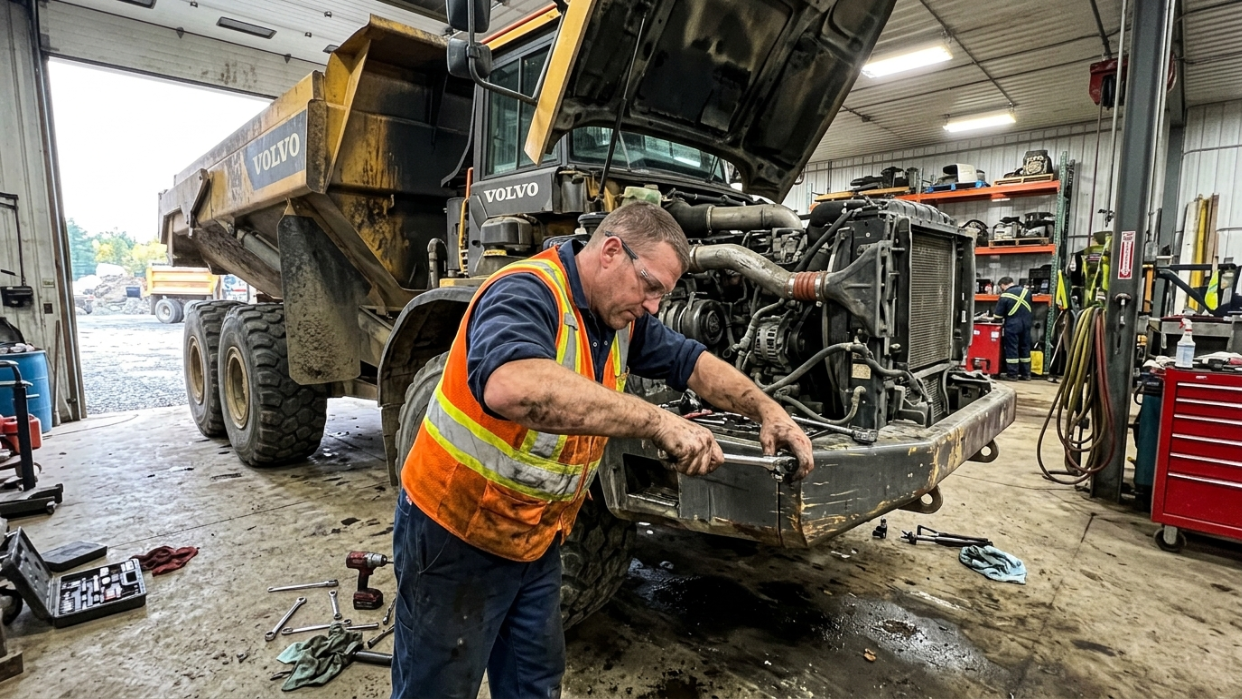
Every contractor vehicle maintenance program sits somewhere on a spectrum between three approaches. Understanding the differences, and the cost implications, is critical.
Reactive Maintenance (Break-Fix)
Run it until it breaks, then fix it. This is how most small contractors start. It feels cheaper because there are no scheduled service costs. But reactive repairs cost 3 to 9 times more than preventive maintenance. A reactive engine failure runs $15,000-$35,000, compared to $800-$1,500 for the scheduled oil analysis and service that would have caught it early.
Preventive Maintenance (PM)
Scheduled service based on predetermined intervals. This is the standard for well-run fleets. Organizations that adopt preventive maintenance programs typically save 12-18% on total maintenance costs compared to those relying on reactive maintenance, according to the U.S. Department of Energy. Fleets with structured PM programs see 30-40% fewer unplanned breakdowns and 20% longer vehicle lifespans.
Predictive Maintenance
Condition-based service triggered by telematics data, sensor readings, and oil analysis. This is the gold standard, though it requires more technology investment upfront. One construction fleet managing 45 heavy equipment assets switched from preventive to predictive maintenance and saw a 34% reduction in maintenance costs ($287,000 saved annually) with 62% fewer unplanned breakdowns over 18 months.
Budget Allocation Benchmarks
Best-in-class fleets allocate 75-85% of their maintenance budget to preventive work and only 15-25% to reactive repairs. Average fleets operate closer to 60/40. The gap between those two ratios represents hundreds of thousands of dollars annually for a mid-size contractor.
For contractors looking to benchmark their own spending against industry standards, a cost benchmarking framework can help identify where maintenance dollars are being wasted.
Metric | Data Point |
|---|---|
Reactive vs. PM cost multiplier | 3-9x more expensive |
PM savings rate | 12-18% of total maintenance costs |
PM compliance target (world-class) | 95%+ |
Fleet maintenance as % of operating costs | 10-20% |
Maintenance cost per mile range | $0.20-$1.10 depending on strategy |
Maintenance Strategy Comparison
Strategy | Cost | Downtime | Best For |
|---|---|---|---|
Reactive | Highest | Highest | Very small fleets |
Preventive | Moderate | Low | Most contractors |
Predictive | Lowest long-term | Lowest | Large fleets with telematics |
Why Construction Fleets Are Different
Generic fleet management advice falls short for contractors. Construction company fleets present distinct challenges that a warehouse delivery fleet or a sales rep car program simply doesn’t face.
Mixed-Fleet Complexity
This is the fundamental challenge. A single contractor might operate F-350 service trucks, Class 8 dump trucks, a CAT 336 excavator, a Bomag roller, and three lowboy trailers. Each asset type requires completely different maintenance logic.
Highway trucks benefit most from mileage-based scheduling. Equipment with high idle time (bucket trucks, concrete pumps, excavators) should use engine hours, where 1 hour roughly equals 25-33 miles of road wear. Low-usage or seasonal vehicles need calendar-based triggers, at minimum every 90 days, because fluids and seals degrade regardless of usage.
The best programs use all three trigger types simultaneously and service whichever one fires first.
Multi-Site Operations
Construction equipment is spread across multiple job sites, sometimes dozens of miles apart. This makes centralized maintenance harder and increases dependency on mobile service units or driver-performed inspections. A paving crew’s roller breaking down in a parking lot 45 minutes from the shop is a fundamentally different problem than a delivery van failing at the depot.
Harsh Operating Conditions
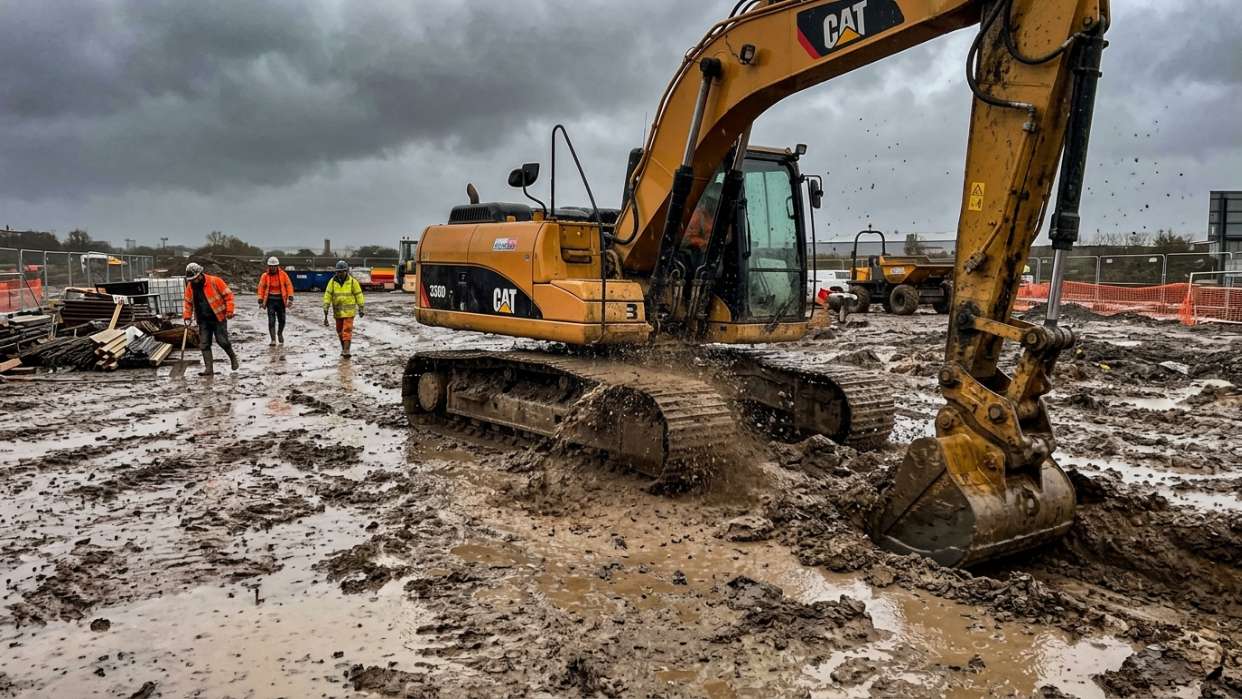
Dust, mud, extreme heat, and constant vibration accelerate wear on every component. Contamination causes 75% of hydraulic failures, making hydraulic system care disproportionately important for concrete and asphalt contractors running heavy equipment. Air filter intervals that work fine for an over-the-road truck are far too long for a dozer pushing dirt 10 hours a day.
Seasonal Demand Fluctuations
Paving season, concrete pour windows, and weather-dependent site work create peaks and valleys in fleet utilization. Equipment sits idle for weeks, then runs flat out for months. This cycle demands flexible maintenance scheduling and creates a window for heavy service work during off-peak months.
Building strong vendor partnerships with maintenance providers who understand these seasonal swings gives contractors priority scheduling when it matters most.
The Connection to Project Delivery
This is what generic fleet articles miss entirely. For a contractor, vehicle uptime directly determines the ability to mobilize crews and hit time-sensitive pours or paving windows. A delayed concrete truck doesn’t just cost a repair bill. It costs a crew standing idle at $150/hour. It costs a pour that has to be rescheduled. It can cost a liquidated damages penalty on a late project.
Total cost of ownership, not just repair cost, is the metric that separates proactive fleet managers from reactive ones.
DOT and FMCSA Compliance Essentials
This section matters more than most contractors realize. DOT compliance kicks in when a vehicle’s gross vehicle weight rating (GVWR) exceeds 10,001 lbs, or when the combined GVWR of the truck plus trailer crosses that threshold.
Many contractors, including fencing crews, electricians, and landscapers, hit this threshold without knowing it. A Ram 3500 (GVWR: 14,000 lbs) pulling a tool trailer is a commercial motor vehicle under federal law. So is every dump truck, concrete mixer, and flatbed in a contractor’s fleet.
What Compliance Requires
Annual DOT inspections are mandatory under 49 CFR §396.17. Every qualifying vehicle must pass a comprehensive inspection by a qualified inspector once per year. Inspection certificates must be kept with the vehicle.
Driver Vehicle Inspection Reports (DVIRs) must be completed by drivers operating commercial motor vehicles over 10,000 lbs used in interstate commerce. This includes dump trucks, lowboys, and flatbeds common in construction fleets. Carriers must retain these records for at least three months.
Common Violations for Construction Fleets
The violations that hit construction contractors hardest are brake defects, lighting failures, overloaded axles, unsecured loads, and missing driver or vehicle paperwork. A single out-of-service violation averages $4,200 in penalties.
According to the FMCSA, around 10% of large vehicle crashes can be attributed to mechanical failures. A proper contractor vehicle maintenance program doesn’t just save money on fines. It saves lives.
The Hidden Risk
Contractors often don’t think of themselves as “fleets” in the way a trucking company does. But DOT doesn’t care about self-perception. If the vehicle is over 10,001 lbs GVWR and operates on public roads, the requirements apply. The maintenance program must include a compliance tracking component, or the contractor is exposed to violations they didn’t see coming.
How Maintenance Programs Reduce Costs
Fleet maintenance costs are one of the largest expenses for contractors, often accounting for 10-20% of total operating costs. A structured program attacks this cost from multiple angles.
Lower Repair Costs
The math is simple. Every $1 spent on preventive maintenance saves $4-$8 in emergency repairs, towing, and downtime costs. For a contractor spending $500,000 per year on fleet maintenance, shifting from a 60/40 preventive-reactive split to an 80/20 split can save $100,000 or more annually.
Reduced Cost Per Mile
Maintenance cost per mile ranges from $0.20 to $1.10 depending on strategy and vehicle type. Contractors tracking this metric across their fleet quickly identify which vehicles are costing more to maintain than they’re worth, driving better replace-vs-repair decisions.
Fuel Savings
Well-maintained engines, properly inflated tires, and clean air filters collectively improve fuel economy by up to 10%. On a fleet burning $300,000 in fuel annually, that’s $30,000 back in the contractor’s pocket.
Insurance Discounts
Many insurers offer 10-20% premium discounts for construction and fleet operations that implement GPS tracking and real-time monitoring of high-value assets. A documented maintenance program strengthens the case during policy renewal negotiations.
Resale Value
Vehicles and equipment with documented maintenance histories command significantly higher resale or trade-in values. Buyers pay more for a truck with a complete service record than one with a “we maintained it, trust us” story.
For contractors focused on controlling overhead across every line item, fleet maintenance is one of the most controllable categories. It pairs naturally with broader overhead reduction strategies that address insurance, fuel purchasing, and supplier pricing simultaneously.
PM Scheduling: Construction-Specific Intervals
Getting the intervals right is where contractor vehicle maintenance programs succeed or fail. Standard automotive service schedules don’t account for the abuse construction vehicles endure.
Heavy Equipment PM Tiers
Most OEMs and industry best practices follow a tiered system based on engine hours:
PM Level | Interval | What’s Included |
|---|---|---|
PM1 | 250 hours | Oil and filter change, fluid level checks, visual inspection |
PM2 | 500 hours | PM1 plus fuel filters, hydraulic filter sample, belt inspection |
PM3 | 1,000 hours | PM2 plus hydraulic fluid change, coolant test, brake inspection |
PM4 | 2,000 hours | PM3 plus full system overhaul checks, undercarriage assessment |
On-Road Vehicles
Highway trucks follow mileage-based schedules, but the intervals should be shorter than OEM recommendations for construction use. A dump truck running on and off unpaved job sites needs oil changes at 7,500 miles, not 10,000. Air filters may need replacement every 15,000 miles instead of every 30,000.
Seasonal and Low-Use Equipment
Pavers, striping machines, and other seasonal equipment need calendar-based triggers. Fluids degrade, seals dry out, and batteries discharge regardless of whether the machine runs. A minimum 90-day inspection cycle prevents the nasty surprise of a machine that won’t start when paving season opens.
Getting Started: Building a Minimum Viable Program
Fleet managers at small and mid-size firms spend an average of 32 hours a month on fleet administration, often with little training and no dedicated tools. Building a program doesn’t require enterprise software from day one. It requires structure.
Step 1: Complete Asset Inventory
List every vehicle and piece of equipment, including VIN or serial number, year, make, model, current mileage or hours, and which job site or facility it’s assigned to. This sounds basic, but practitioners on fleet management forums report that many contractors can’t produce a complete list of what they own.
Step 2: Assign PM Schedules by Asset Class
Group assets by type (on-road truck, heavy equipment, trailer) and assign the appropriate interval triggers. Use the tiered PM system above for equipment. Use mileage-based intervals for trucks. Calendar triggers for everything.
Step 3: Implement Daily Inspection Forms
Digital or paper, every operator should complete a pre-shift inspection. For DOT-regulated vehicles, this is legally required. For everything else, it’s how you catch problems before they become breakdowns.
Step 4: Establish Vendor and Parts Sourcing
Identify your go-to suppliers for filters, fluids, tires, and common wear parts. Negotiate pricing based on volume. Contractors who participate in supplier discount programs or buying alliances often secure 10-25% lower per-unit costs on maintenance consumables, simply because of collective purchasing volume.
Step 5: Build a Compliance Calendar
Map out annual DOT inspections, registration renewals, and certification deadlines for every qualifying vehicle. Missing an annual inspection date is one of the most common and most preventable violations.
Step 6: Track Total Cost of Ownership
Move beyond tracking individual repair invoices. Calculate the total cost of owning and operating each vehicle, including maintenance, fuel, insurance, depreciation, and downtime. This metric tells you when a vehicle costs more to keep than to replace. For contractors looking to build this discipline into their operations, a comprehensive contractor fleet management approach ties all these elements together.
The Procurement Connection
Here’s what separates a good maintenance program from a great one: treating parts and service purchasing as a strategic function rather than an afterthought.
Mid-size contractors with fleets of 15-50 vehicles and equipment generate significant purchasing volume in filters, lubricants, tires, batteries, hydraulic components, and outsourced repair services. That volume has negotiating power, especially when combined with other contractors through a buying alliance or group purchasing program.
Volume-based purchasing agreements, national pricing programs, and preferred vendor arrangements reduce per-unit maintenance costs on the consumable items that drive recurring spend. A contractor changing oil on 20 pieces of heavy equipment every 250 hours goes through thousands of gallons of lubricant annually. The difference between retail and negotiated pricing on that volume alone can be five figures.
One signal of how seriously mid-size contractors take this: job postings for Director of Fleet and Maintenance roles at companies like Casella Construction describe full P&L responsibility for $16M+ maintenance organizations. These companies treat fleet maintenance as a profit center, not just a cost line. Getting procurement right is a big part of why.
Frequently Asked Questions
What is a contractor vehicle maintenance program?
It’s a structured system for scheduling, tracking, and performing all maintenance on a construction contractor’s vehicles and equipment. It covers on-road trucks, off-road heavy equipment, and trailers, with service intervals based on mileage, engine hours, and calendar time.
How much does a maintenance program save?
Every $1 spent on preventive maintenance saves $4-$8 in emergency repairs and downtime costs, according to data from the U.S. Department of Energy. Contractors switching from reactive to structured preventive programs typically save 12-18% on total maintenance spend.
Do contractors need to comply with DOT maintenance requirements?
Yes, if any vehicle has a gross vehicle weight rating (GVWR) over 10,001 lbs, or if the combined GVWR of a truck and trailer exceeds that threshold. This includes most dump trucks, flatbeds, concrete mixers, and many pickup trucks when towing. Non-compliance penalties average $4,200 per out-of-service violation.
What’s the difference between preventive and predictive maintenance?
Preventive maintenance follows a fixed schedule (every 250 hours, every 10,000 miles). Predictive maintenance uses sensor data, oil analysis, and telematics to service equipment based on actual condition. Predictive costs more to implement but delivers greater savings, with some fleets reporting 34% lower maintenance costs after switching.
How should contractors schedule maintenance on mixed fleets?
Use three trigger types simultaneously: mileage for highway trucks, engine hours for heavy equipment (1 hour equals roughly 25-33 miles), and calendar intervals for seasonal or low-use vehicles. Service whichever trigger fires first.
What percentage of the maintenance budget should be preventive?
Best-in-class fleets allocate 75-85% to preventive maintenance and 15-25% to reactive repairs. If your fleet is spending 40% or more on reactive work, there’s significant room for improvement and cost savings.
How do maintenance programs affect insurance costs?
Many insurers offer 10-20% premium discounts for fleets that implement GPS tracking, telematics, and documented maintenance programs. A well-maintained fleet with fewer accidents and breakdowns presents a lower risk profile during underwriting.
Can small contractors with just a few trucks benefit from a formal program?
Absolutely. Even a five-vehicle operation benefits from scheduled oil changes, documented inspections, and compliance tracking. The 32 hours per month that small fleet managers spend on ad hoc administration drops significantly with basic structure in place, and the cost savings from preventing even one major breakdown often justify the effort in the first year.
What is the difference between fleet maintenance and fleet management?
Fleet maintenance focuses on keeping vehicles mechanically reliable, while fleet management includes maintenance, fuel, driver safety, routing, utilization, compliance, and lifecycle planning.
How often should heavy equipment be serviced?
Most heavy equipment follows service intervals of approximately 250, 500, 1,000, and 2,000 engine hours, although manufacturers may recommend different schedules depending on operating conditions.
Should contractors outsource fleet maintenance?
Many contractors outsource specialized repairs while performing inspections and routine preventive maintenance in-house. The best approach depends on fleet size, technician availability, and equipment complexity.
What maintenance records should contractors keep?
Contractors should retain inspection reports, repair histories, preventive maintenance records, DOT inspections, work orders, warranty documentation, and parts replacement records for every fleet asset.
What is preventive maintenance compliance?
Preventive maintenance compliance measures the percentage of scheduled maintenance completed on time. High-performing fleets typically maintain compliance rates above 95%.

Recent Comments