TL;DR
PPE inventory management is the process of tracking, ordering, storing, distributing, and replacing personal protective equipment across your organization. For construction contractors, it’s a critical function that prevents safety incidents, avoids OSHA fines up to $161,323 per violation, and stops the budget bleed caused by emergency orders and overstocking. The 2025 OSHA proper-fit rule has made this even more complex by requiring contractors to stock multiple sizes of every PPE category.
Quick Answer: PPE Inventory Management at a Glance
PPE inventory management is the process of tracking personal protective equipment from purchase to disposal to ensure workers always have compliant safety gear when they need it. For construction contractors, an effective system includes inventory tracking, minimum stock levels, expiration monitoring, fit management, multi-jobsite visibility, automated reordering, and audit documentation. Good PPE inventory management reduces OSHA compliance risks, prevents project delays, lowers emergency purchasing costs, and improves workforce safety.
PPE Inventory Management Checklist
Inventory Function | Why It Matters | Best Practice |
|---|---|---|
Track inventory | Prevent shortages | Cloud inventory system |
Monitor expiration dates | OSHA compliance | Automatic reminders |
Track PPE by employee | Proper-fit documentation | Employee issue logs |
Set reorder points | Avoid emergency purchases | Minimum stock levels |
Track usage by jobsite | Better forecasting | Weekly reporting |
Conduct audits | Verify inventory accuracy | Monthly physical counts |
Standardize vendors | Lower costs | Preferred supplier program |
Dispose of expired PPE | Worker safety | Document disposal |
What Is PPE Inventory Management?
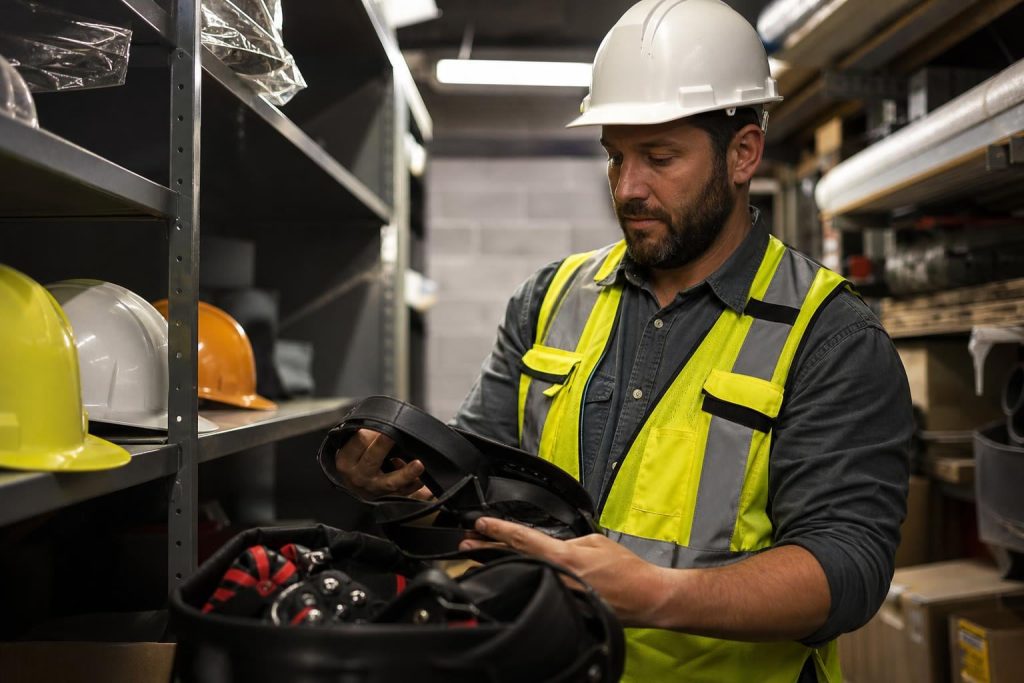
PPE inventory management is the systematic process of ordering, receiving, storing, distributing, tracking, replacing, and disposing of personal protective equipment within an organization. It covers everything from hard hats and safety glasses to respirators, harnesses, and high-visibility vests.
The term sounds straightforward, but it describes an ongoing cycle that demands foresight, organization, and real-time visibility into what you have, where it is, and when you’ll need more.
One distinction matters more than any other in construction: PPE is a consumable. Gloves wear out. Respirator filters expire. Hard hats degrade from UV exposure. Unlike tools or heavy equipment that get checked out and returned, PPE gets used up and thrown away. This fundamentally changes how you track it. Instead of monitoring individual asset locations, you’re tracking consumption rates, burn rates by crew or site, and reorder thresholds.
Responsibility for PPE inventory typically falls across multiple roles. Safety officers define what’s required. Procurement staff handle ordering. Site managers distribute gear and monitor usage. When these functions operate in silos, problems multiply fast.
Exploring ways to reduce your PPE supply costs through discount programs? Start here.
Why PPE Inventory Management Matters in Construction

Worker Safety Comes First
A missing respirator isn’t a minor inconvenience on a construction site. It’s a potential injury, a potential fatality, and a guaranteed project delay. Every day, crews depend on helmets, goggles, gloves, harnesses, and hearing protection to do their jobs without getting hurt. When PPE runs out and there’s no backup stock, you have two options: send workers home (losing productivity) or let them work unprotected (risking everything).
Regulatory Compliance Is Non-Negotiable
OSHA’s construction PPE standards under 29 CFR 1926.95 aren’t suggestions. They carry real penalties. Serious violations cost $16,131 each. Willful or repeated violations can reach $161,323 per instance. Poor PPE inventory management, where workers lack required gear because nobody tracked stock levels, is one of the fastest ways to trigger these fines.
Cost Control Affects Your Bottom Line
The global PPE-in-construction market hit an estimated $10.82 billion in 2024 and is projected to reach $16.30 billion by 2030. Even at the individual level, OSHA’s economic analysis estimates the average cost to outfit a single construction worker at $29.74. Multiply that across hundreds of employees, factor in replacement cycles, and PPE becomes a significant line item.
Poor inventory management inflates that number. Overstocking ties up capital in gear that may expire before it’s used. Understocking triggers rush orders at premium prices. Either way, money gets wasted. A solid approach to construction operational cost savings starts with knowing exactly what you have and what you need.
Audit Readiness Protects You Legally
Modern PPE inventory systems create digital logs of every assignment, distribution, and expiration date. When a safety inspector asks for proof that all workers had required gear on a specific date, you can generate that report in minutes instead of scrambling through paper records. This transparency reduces legal risk and demonstrates the kind of proactive safety culture that regulators respect.
How PPE Inventory Management Works
Most contractors follow the same inventory lifecycle regardless of company size.
Purchase PPE from approved vendors.
Receive and inspect inventory.
Store PPE correctly.
Assign equipment to employees.
Track usage and consumption.
Inspect reusable PPE.
Replace damaged or expired equipment.
Dispose of unusable PPE.
Analyze usage trends.
Reorder before shortages occur.
Thinking about PPE inventory as a continuous cycle rather than a one-time purchase helps eliminate stockouts while reducing excess inventory.
Common Types of PPE Tracked in Construction
Construction sites require a wide range of protective equipment. Here are the primary categories that any PPE inventory management system needs to cover:
Head protection. Hard hats and safety helmets, including Type I (top impact) and Type II (top and lateral impact) models. OSHA has signaled intent to expand the Type II recommendation into a formal requirement, which would affect procurement planning.
Eye and face protection. Safety glasses, goggles, face shields, and welding helmets. Different tasks require different protection levels, so most contractors stock multiple types.
Hand protection. Work gloves rated for cut, puncture, and abrasion resistance. The new ANSI/ISEA 105-2024 standard introduced a universal pentagon pictogram for labeling, which changes how buyers identify and specify gloves.
Foot protection. Steel-toe or composite-toe boots and safety shoes rated for the specific hazards on site.
Hearing protection. Earplugs and earmuffs for high-noise environments like pile driving, demolition, or heavy equipment operation.
Respiratory protection. Disposable masks, half-face and full-face respirators, and replacement filters. These have strict expiration dates and fit-testing requirements.
Fall protection. Harnesses, lanyards, self-retracting lifelines, and anchors. While these are more durable than other PPE categories, they still require regular inspection and have defined service lives.
High-visibility clothing. Vests and jackets in fluorescent colors with reflective striping, required on roadway projects and many commercial sites.
Protective clothing. Coveralls, rain gear, and flame-resistant garments for specialized work environments.
For a complete breakdown of what OSHA requires on your sites, see this jobsite safety equipment checklist.
PPE Items That Should Be Individually Tracked vs Bulk Tracked
Not every PPE item needs the same tracking method.
PPE Item | Individual Tracking | Bulk Tracking |
|---|---|---|
Hard hats | ✔ | |
Safety harnesses | ✔ | |
Self-retracting lifelines | ✔ | |
Respirators | ✔ | |
Face shields | ✔ | |
Gloves | ✔ | |
Earplugs | ✔ | |
Disposable masks | ✔ | |
Safety glasses | Usually | Sometimes |
High-visibility vests | Often | Sometimes |
Reusable PPE generally benefits from employee assignment and inspection records, while consumables are usually tracked by quantity.
OSHA Requirements That Affect PPE Inventory
The 2025 Proper-Fit Rule Changes Everything
The single biggest regulatory change affecting PPE inventory management in recent years took effect on January 13, 2025. The revised standard under 29 CFR 1926.95© now explicitly requires employers in the construction industry to ensure that PPE properly fits each individual worker.
This killed the “one-size-fits-most” approach. Contractors now need to stock a range of sizes for hard hats, safety vests, gloves, eye protection, and harnesses. If a piece of PPE doesn’t fit a worker properly, it’s a violation, even if the worker is technically wearing gear.
The inventory implications are significant. Where you might have stocked three sizes of gloves before, you may now need five or six. Hard hats need different suspension adjustments. Harnesses need to accommodate a wider range of body types. This multiplies your SKU count, increases storage requirements, and makes demand forecasting more complex.
Employer Payment Obligations
OSHA requires employers to provide and pay for most required PPE. Workers cannot be charged for safety glasses, hard hats, hearing protection, or respirators that are necessary for their job tasks. This makes PPE a direct, recurring cost that contractors must budget for.
Documentation Requirements
Employers should maintain records of PPE fit assessments, purchases, distribution logs, and employee training. This documentation demonstrates compliance during OSHA audits and inspections. A comprehensive guide to PPE compliance in construction covers these documentation requirements in detail.
What’s Coming Next
OSHA is actively developing a heat injury and illness prevention standard that could impact PPE requirements for outdoor construction, particularly around ventilated helmets and cooling vests. Contractors in the Southeast and other hot-climate regions should watch this closely, as it will add new categories to their PPE inventory planning.
PPE Inventory Records Contractors Should Keep
A complete PPE inventory system should maintain documentation beyond inventory counts.
Recommended records include:
PPE purchase history
Employee issue logs
Fit assessment records
Respirator fit testing
Inspection records
Replacement history
Expiration dates
Disposal records
Vendor invoices
Training documentation
These records simplify OSHA inspections and support internal safety audits.
Key Challenges for Contractors
Decentralized Jobsites and Scattered Supplies
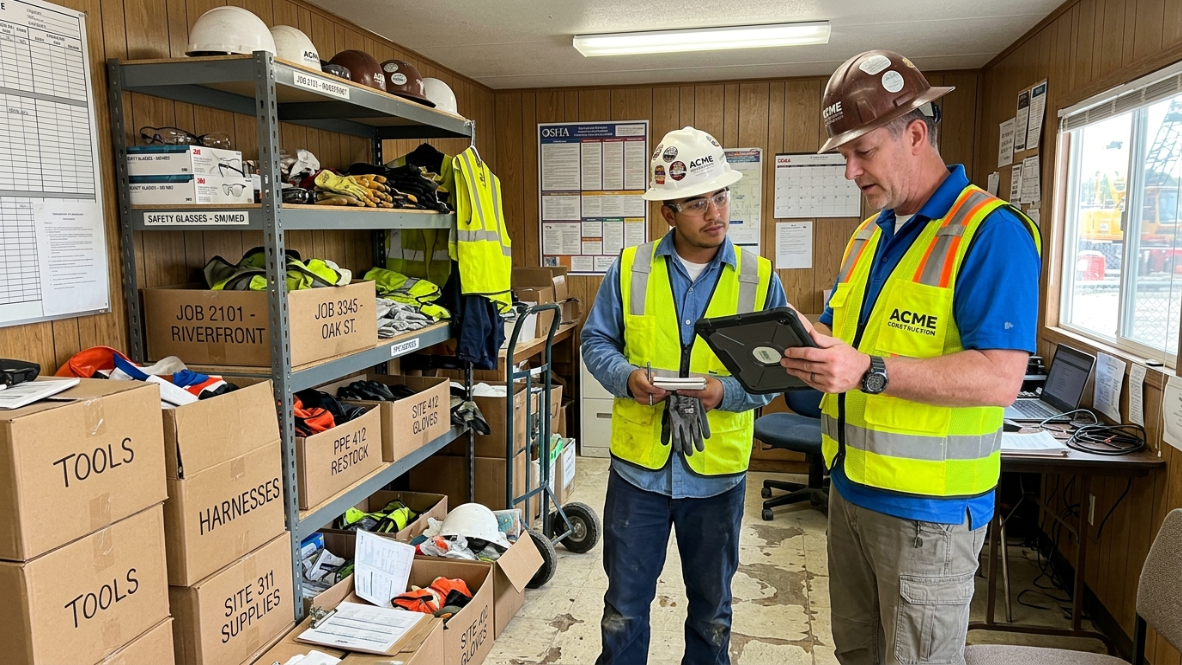
This is the number one pain point practitioners describe. Construction PPE inventory doesn’t sit in one warehouse. It’s spread across main offices, satellite tool sheds, jobsite trailers, crew vehicles, and laydown yards. Without clear visibility across all locations, one site can be drowning in surplus while another runs dry.
One real-world example illustrates this perfectly: a contractor had crews on Site A running out of respirators while Site B had surplus stock sitting unused. Consolidating those separate inventory lists into one system would have prevented expensive emergency shipments. This pattern repeats across the industry constantly.
Expiration and Service Life Tracking
Hard hats degrade from UV exposure and have manufacturer-defined service lives (typically 2 to 5 years depending on material). Respirator filters have expiration dates. Safety harnesses require regular inspection and eventual retirement. Failing to track these dates means workers could be using gear that no longer provides adequate protection, which creates both safety hazards and compliance violations.
Without a centralized system that flags upcoming expirations, companies rely on manual checklists or individual memory. Under busy conditions, both fail.
Seasonal Demand Fluctuations
Construction PPE needs shift with the seasons in ways that aren’t always obvious until a shortage hits. Summer brings increased dust exposure (more respirator usage), higher glove consumption from sweaty hands reducing grip life, and demand for sun protection and cooling gear. Winter requires thermal gloves, cold-weather balaclavas, and insulated high-visibility jackets.
Practitioners on Reddit’s r/SafetyProfessionals forum frequently discuss how teams may consume 30% more gloves in summer without anyone noticing until stock runs out. Without historical consumption data to analyze, these seasonal patterns remain invisible.
Cross-Department Silos
Procurement orders what safety specifies. Operations distributes what procurement delivers. But these three groups often use different tracking systems, or no system at all. Safety might know what’s needed but not what’s in stock. Procurement might know what was ordered but not what was actually consumed. This fragmentation is where waste, stockouts, and compliance gaps breed.
Theft and Loss on Open Jobsites
Construction sites are not locked warehouses. PPE stored in open trailers or laydown areas can walk off the site. Gloves and safety glasses are particularly prone to disappearing. Without distribution tracking, it’s impossible to distinguish normal consumption from loss.
Signs Your PPE Inventory System Needs Improvement
Many contractors don’t realize they have an inventory problem until projects are delayed.
Warning signs include:
Frequent emergency PPE purchases
Workers borrowing PPE
Expired equipment found during inspections
Overstocked shelves with unused inventory
Different jobsites buying the same PPE independently
Missing inspection records
No visibility across multiple locations
Repeated OSHA findings
Rising PPE costs despite stable workforce size
If several of these issues exist, your inventory process likely needs modernization.
Best Practices for PPE Inventory Management
Start with a Risk Assessment Per Role and Task
Before you can manage PPE inventory, you need to know exactly what PPE each role requires. A comprehensive risk assessment identifies all potential hazards and matches them with the necessary protective equipment. Consider the number of employees, their specific roles, the frequency of PPE use, and the duration of exposure. This assessment becomes the foundation for everything else: what to stock, how much, and where.
Use a Unified Tracking System
The spreadsheet era needs to end. Safety professionals on Reddit actively discuss moving away from manual tracking, with one community member in r/SafetyProfessionals recommending platforms like TESSALINK for their inspection sheet creation and tracking capabilities. The key principle: don’t treat PPE in isolation. Track PPE alongside other consumables (spare parts, tools, fasteners) in one system. This integrated view means different departments share the same inventory information.
Digital systems using barcodes, RFID tags, or QR codes record the issuance, return, and replacement of safety equipment. This creates accountability, improves lifecycle management, and generates the consumption data you need for accurate forecasting.
Set Reorder Points and Minimum Stock Levels
Every PPE item should have a defined minimum quantity. When stock drops to that level, a reorder triggers automatically (or at minimum, an alert goes out). This prevents the scramble of discovering you’re out of respirator filters on a Monday morning when crews need them.
Reorder points should account for supplier lead times and your average consumption rate. If you go through 200 pairs of gloves per week and your supplier needs 5 business days to deliver, your reorder point needs to cover at least that gap plus a safety buffer. Tracking these numbers is part of good procurement KPIs and metrics.
Track Consumption Rates, Not Just Units on Hand
Knowing you have 500 pairs of safety glasses in stock is only useful if you also know you’re consuming 80 pairs per week. Consumption rate tracking, broken down by site, crew size, and season, is what turns reactive ordering into proactive planning. Over time, this data reveals patterns: which sites burn through gloves fastest, which seasons spike respirator usage, and which PPE categories have the highest loss rates.
Schedule Regular Audits
Monthly audits (or per-project audits on shorter jobs) validate your tracking system’s accuracy, identify discrepancies between digital records and actual stock, and highlight usage trends. A quick physical count compared against system records catches problems early. Audits also surface expired gear that needs to be pulled from circulation.
Build Strong PPE Supplier Relationships
Reliable suppliers ensure consistent quality and on-time delivery. Strong relationships also pay off during supply shortages (remember 2020?) when preferred customers get priority allocation. When evaluating and onboarding new PPE vendors, look for those who can handle multi-site deliveries, stock the range of sizes your workforce needs, and provide documentation that supports your compliance records.
Train Crews on Their Role in the Inventory Cycle
Workers are the first line of defense in PPE inventory management. They’re the ones who know when gloves are wearing thin, when a hard hat took an impact, or when supplies in the jobsite trailer are running low. Training should cover not just proper PPE use, but also reporting damaged or lost equipment, returning unused items, and flagging low stock before it becomes a crisis.
PPE Inventory KPIs to Track
Tracking a few key performance indicators makes inventory decisions much easier.
KPI | Target |
|---|---|
Inventory accuracy | 98%+ |
Stockout rate | Less than 2% |
Emergency purchases | Near zero |
PPE expiration waste | Less than 5% |
Order fulfillment time | Under 24 hours |
Inventory turnover | Based on PPE category |
Cost per worker | Tracked monthly |
Audit completion rate | 100% |
Monitoring these metrics helps identify waste before it becomes expensive.
How Procurement and Vendor Programs Reduce PPE Costs
PPE is a recurring expense that compounds across every project. For contractors running multiple jobsites simultaneously, even small per-unit savings add up to meaningful numbers over the course of a year.
Bulk purchasing through buying alliances gives individual contractors access to volume pricing they couldn’t negotiate alone. Instead of each contractor buying 500 pairs of gloves at retail, an alliance aggregates demand across dozens of members and negotiates pricing that reflects that combined volume.
Preferred vendor pricing programs lock in discounted rates across PPE categories, eliminating the need to re-negotiate with every order. This saves procurement staff time while ensuring consistent pricing. Learn more about how construction vendor discounts work for multi-site operations.
Volume discounts for multi-site operations reward contractors who consolidate their PPE purchasing through fewer suppliers rather than scattering orders across many. A single supplier handling all your hard hat, glove, and vest needs across five jobsites can offer better terms than five different local suppliers handling one site each.
The most effective approach connects PPE procurement to your overall construction supply cost reduction strategy. PPE isn’t an isolated spend category. It’s part of the same procurement infrastructure that handles fasteners, concrete supplies, fuel, and every other consumable your operation requires.
Looking for better pricing on PPE across your jobsites? Explore supplier discount programs designed for contractors.
PPE Disposal and Lifecycle Management
One aspect of PPE inventory management that most guides skip is disposal. Used or expired PPE creates waste that needs responsible handling. Contaminated respirators, worn-out gloves exposed to chemicals, and degraded hard hats all have disposal considerations.
Some PPE can be recycled (clean safety glasses lenses, certain hard hat shells), but most disposable PPE ends up in landfills. Contractors operating in jurisdictions with strict waste regulations need to factor disposal logistics and costs into their inventory planning. At minimum, every PPE management system should track items from receipt through disposal, creating a complete lifecycle record.
Related Terms
PPE (Personal Protective Equipment): Any equipment worn to minimize exposure to workplace hazards, including physical, electrical, chemical, and biological dangers.
Hazard assessment: The formal evaluation of workplace conditions to identify risks and determine what PPE is required. Required by OSHA before selecting PPE.
Consumable inventory: Items that are used up during normal operations and must be replaced regularly, as opposed to durable goods that are returned and reused.
Reorder point (ROP): The inventory level at which a new order should be placed to replenish stock before it runs out, calculated using consumption rate and supplier lead time.
SKU (Stock Keeping Unit): A unique identifier for each distinct product variant. The proper-fit rule has increased SKU counts for PPE because contractors must stock multiple sizes.
Vendor Managed Inventory (VMI): An arrangement where the supplier monitors stock levels and automatically replenishes them, removing the burden from the contractor’s team.
Just-in-Time (JIT) Inventory: A strategy that minimizes stock on hand by timing orders to arrive exactly when needed. Risky for PPE given the safety implications of stockouts.
PPE Inventory Management Best Practices Checklist
Use this checklist to evaluate your current system.
Perform annual PPE hazard assessments.
Standardize approved PPE brands.
Track inventory by jobsite.
Assign reusable PPE to employees.
Set minimum stock levels.
Monitor expiration dates.
Audit inventory monthly.
Review consumption trends quarterly.
Train employees on PPE reporting.
Maintain OSHA documentation.
Frequently Asked Questions
What is PPE inventory management in simple terms?
PPE inventory management is the process of tracking how much personal protective equipment you have, where it’s located, when it needs to be replaced, and when to reorder more. It covers the full cycle from purchasing through distribution, use, and disposal.
How does the 2025 OSHA proper-fit rule affect PPE inventory?
The rule under 29 CFR 1926.95© requires that all PPE properly fits each individual worker. This means contractors must stock multiple sizes of hard hats, gloves, vests, eye protection, and harnesses. The practical result is more SKUs to manage, more storage space needed, and more complex forecasting.
What are the penalties for PPE non-compliance?
OSHA penalties for PPE violations range from $16,131 for serious violations up to $161,323 for willful or repeated offenses. These are per-violation amounts, so a single inspection finding multiple workers without proper gear can result in compounding fines.
How often should contractors audit their PPE inventory?
Monthly audits work well for ongoing operations. Contractors with shorter projects should audit at the start and end of each job. The goal is to verify that digital records match physical stock, identify expired items, and spot consumption trends before they cause shortages.
Should PPE be tracked differently than tools and equipment?
Yes. PPE is a consumable, meaning it gets used up and discarded rather than returned. Tracking should focus on consumption rates (how fast items are being used) rather than individual asset locations. This is a fundamentally different approach than tracking durable equipment like power tools.
What PPE categories have expiration dates that contractors need to track?
Hard hats (2 to 5 year service life depending on material and UV exposure), respirator filters and cartridges (manufacturer-specified dates), safety harnesses (per manufacturer and inspection schedules), and any PPE with chemical exposure limits. Some manufacturers also recommend replacing safety glasses after impact events even if no visible damage exists.
Can small contractors benefit from PPE buying programs?
Absolutely. Small and mid-size contractors often pay the highest per-unit PPE prices because they lack purchasing volume. Buying alliances and group purchasing organizations aggregate demand across members, giving smaller contractors access to the same volume pricing that large firms negotiate independently.
What’s the best way to handle PPE across multiple jobsites?
Use a centralized, cloud-based tracking system that gives visibility into stock levels at every location. Assign minimum stock levels per site based on crew size and task requirements. Conduct regular cross-site inventory reviews to redistribute surplus before ordering new stock. The goal is eliminating the situation where one site orders emergency shipments while another has excess gathering dust.
Recent Comments