
TL;DR
Fleet fuel cards are specialized payment cards that let contractors track, control, and reduce fuel spending across vehicles and equipment. Fuel represents 20% to 30% of operating costs for fleet-dependent construction companies, and up to 42% of heavy equipment costs. This guide defines every term contractors need to understand, from per-gallon rebates and floating PINs to dyed diesel savings that can cut a dollar off every gallon for off-road equipment.
Fleet Fuel Cards for Contractors: Quick Answer
A fleet fuel card is a payment card designed specifically for commercial vehicles and construction equipment. Unlike a standard business credit card, fleet fuel cards provide fuel purchase controls, driver tracking, per-gallon discounts, fuel theft prevention tools, IFTA reporting, and job-cost allocation.
For contractors, the biggest benefits are:
– Lower fuel costs through rebates and wholesale pricing
– Reduced fuel theft through PIN controls and spending limits
– Easier job costing and accounting
– Automated tax and compliance reporting
– Access to dyed diesel for off-road equipment
– Better visibility into vehicle and equipment fuel usage
Most contractors purchasing more than 1,000 gallons of fuel per month can generate meaningful savings through a fleet fuel card program.
Contractor Fuel Card Benefits at a Glance
Benefit | Typical Impact |
|---|---|
Fuel rebates | 2¢–45¢ per gallon |
Dyed diesel savings | 30¢–$1.00 per gallon |
Fuel theft reduction | Significant reduction through controls |
Administrative savings | Automated reporting and reconciliation |
Job costing accuracy | Project-level fuel tracking |
Compliance support | Automated IFTA and IRS reporting |
Why Contractors Need to Understand Fleet Fuel Cards
Fuel is one of the largest line items in any construction budget. The American Transportation Research Institute estimates that fuel costs represent 20% to 30% of operating expenses for companies that depend on vehicle fleets. For heavy equipment specifically, the numbers are worse. An EquipmentWatch analysis found that fuel comprises nearly 42% of machine operating costs.
Construction companies face a unique problem. Unlike a trucking company running fixed routes, contractors operate across multiple job sites with dozens of drivers, mixed vehicle types, and equipment that burns both on-road and off-road diesel. Tracking who bought what fuel, where, and for which project is nearly impossible with a standard credit card.
That’s where fleet fuel cards for contractors come in. They’re purpose-built to give construction businesses per-transaction visibility, spending controls, and per-gallon discounts that generic business cards simply don’t offer.
This glossary covers every term contractors need to evaluate fuel card programs confidently. Fleet fuel cards are one piece of a broader cost management toolkit for construction businesses, and understanding the vocabulary is the first step.
Fleet Fuel Card: The Core Definition
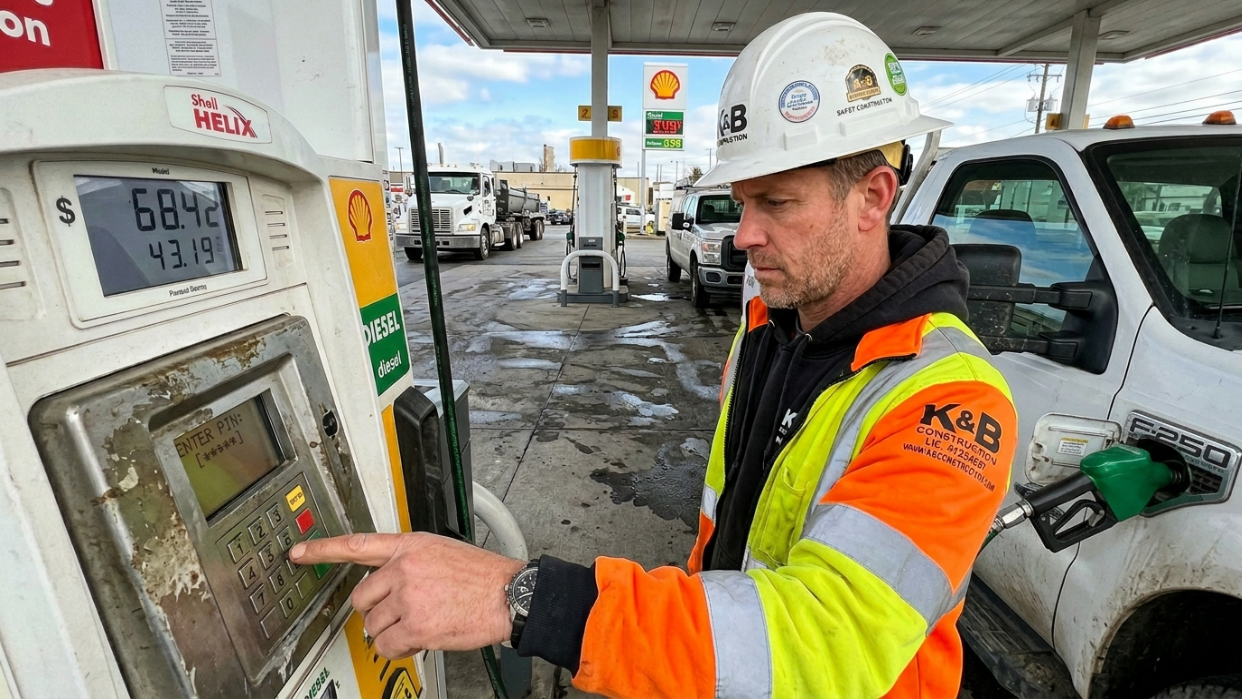
Fleet fuel card: A payment card designed specifically for commercial vehicles and drivers, used to purchase fuel at gas stations, truck stops, or cardlock locations. Unlike a standard business credit card, a fleet fuel card tracks detailed transaction data including gallons purchased, price per gallon, station location, driver identity, and sometimes odometer reading.
Why this matters for contractors: When a crew member swipes a fleet fuel card, the transaction captures far more than a dollar amount. It records which driver fueled which vehicle, how many gallons went in, and at what price. That data feeds directly into accounting, fraud prevention, and job-cost allocation. Standard credit cards record none of this.
Fleet fuel card vs. business credit card: The distinction is important. Business credit cards offer broad purchasing power and percentage-based cash back. Fleet fuel cards restrict purchases (typically to fuel and maintenance only), provide gallon-level data, support driver-level tracking through PINs, and offer per-gallon rebates instead of percentage rewards. For contractors managing construction expenses across multiple job sites, the granular data alone justifies the switch.
Feature | Fleet Fuel Card | Business Credit Card |
|---|---|---|
Purchase restrictions | Fuel-only or fuel + maintenance | Any merchant |
Driver-level tracking | Yes (PIN, vehicle ID, odometer) | No |
Gallon-level data | Yes | No |
Per-gallon rebates | 2¢ to 45¢/gal | Rare; % cash back instead |
Fraud controls | Time-of-day, location, product type | Spending limit only |
IFTA reporting | Automatic | Manual receipt collection |
Card Types and Network Terms
Understanding network types is essential before comparing specific providers. The type of network determines where cards are accepted, what fees apply, and how pricing works.
Closed-Loop Fuel Card
A fuel card that works only within a specific brand’s network. Shell fleet cards, for example, are accepted only at Shell stations. Closed-loop cards often offer deeper discounts at their branded locations but limit flexibility. Best for contractors who operate in regions dense with a particular brand.
Open-Loop Fuel Card
A fuel card that runs on a major payment network like Visa or Mastercard, making it accepted virtually anywhere. Coast and AtoB are examples. Open-loop cards offer maximum convenience but may provide slightly smaller per-gallon discounts compared to closed-loop alternatives. Contractors who work across wide geographic areas or rural job sites tend to prefer open-loop cards because coverage gaps are rare.
Cardlock Station
An unattended, commercial-only fueling station. Cardlock stations (like CFN or Pacific Pride locations) serve fleet vehicles and heavy equipment without the retail markup of regular gas stations. They use cost-plus pricing and often provide access to dyed diesel. Contractors running large fleets or fueling off-road equipment should prioritize cards that include cardlock access.
Extended Network Fee
A surcharge applied when a card is used at a station outside the provider’s primary network. This fee typically ranges from $1 to $3 per transaction. Fuelman, for instance, charges roughly $3 for out-of-network fills. Practitioners on various review platforms report that these fees can add up quickly for contractors who travel between regions. Always check the provider’s network map against your typical job site locations before signing up.
Cost-Plus Pricing
A pricing model where fuel is sold at the wholesale rack price plus a small, fixed markup (often 5¢ to 15¢ per gallon). This is common at cardlock stations and can beat retail pump prices by 30¢ to 40¢ per gallon. For contractors fueling large equipment at high volumes, cost-plus pricing through CFN or similar networks offers significant operational cost savings.
Savings and Pricing Terms
Fleet fuel cards for contractors generate savings through several mechanisms. Knowing these terms helps you compare offers accurately.
Per-Gallon Rebate
A fixed discount applied to every gallon purchased. Most fleet fuel cards offer rebates ranging from 2¢ to 12¢ per gallon, with some diesel-focused programs advertising savings up to 42¢ per gallon at truck stops. The rebate is typically credited to your account monthly.
Volume-Tier Pricing
A pricing structure where your per-gallon rebate increases as your monthly fuel volume grows. Buy more gallons, get a bigger discount. This is standard across most providers. A contractor purchasing 5,000 gallons per month will almost always get a better rate than one purchasing 500.
The Savings Math
Even modest rebates compound quickly at fleet scale. A 50-vehicle fleet averaging 1,500 gallons per vehicle per month saves $27,000 annually at just 3¢ per gallon. At higher volume tiers where rebates push to 8¢ or 10¢ per gallon, annual savings exceed $72,000.
That said, fleet fuel cards are primarily recommended for companies purchasing over 1,000 gallons of fuel each month. Sole proprietors or very small operations with one or two trucks may get more value from a standard business credit card with flat cash-back rewards.
These fuel savings fit within a broader strategy of reducing contractor overhead across all expense categories.
Common Fleet Fuel Card Fees Explained
Fuel card providers advertise discounts aggressively, but contractors should understand all potential fees before choosing a program.
Monthly Card Fees
Providers may charge:
Per card
Per driver
Per vehicle
Per account
Network Fees
Using stations outside a preferred network may trigger additional charges.
Late Payment Fees
Many providers impose substantial penalties for late payments.
Setup Fees
Some providers charge one-time onboarding or account activation fees.
Minimum Purchase Requirements
Certain programs require minimum monthly fuel volume to qualify for advertised discounts.
Fee Comparison Checklist
Before signing any agreement, ask for:
Full fee schedule
Network map
Discount structure
Contract length
Cancellation terms
How to Calculate Fleet Fuel Card ROI
Use the following formula:
Annual Savings = Monthly Gallons × Rebate Per Gallon × 12
Example:
Monthly Fuel Volume | Rebate | Annual Savings |
|---|---|---|
1,000 gallons | 5¢ | $600 |
5,000 gallons | 5¢ | $3,000 |
10,000 gallons | 8¢ | $9,600 |
25,000 gallons | 10¢ | $30,000 |
Remember that rebate savings are only one part of the equation. Most contractors also gain value through:
Fuel theft reduction
Lower administrative costs
Better job costing
Dyed diesel tax savings
Promotional Rate
Some providers (WEX is a common example) offer an enhanced rebate during the first 90 days. Read the fine print. The rate after the promotional period is what actually matters for your annual budget.
Controls and Security Terms
Fuel theft and misuse are the number one reason contractors switch to fleet fuel cards. Fraud losses across the fleet industry totaled over $16 billion in 2024, a 33% increase year-over-year, according to WEX data. Construction is especially vulnerable because crews operate independently across scattered job sites.
Practitioners on Reddit’s r/Construction subreddit frequently cite fuel theft prevention as the primary trigger for investigating fleet cards. The discussion thread ranks on Google’s first page for this topic, which tells you how widespread the concern is.
Why Fuel Theft Is a Growing Problem
Fuel theft has become one of the fastest-growing operating risks for contractors.
Common forms include:
Fueling personal vehicles
Fuel card sharing
After-hours fueling
Phantom transactions
Unapproved equipment fueling
For construction companies operating across multiple job sites, even small losses can compound into thousands of dollars annually.
The combination of driver PINs, gallon limits, time-of-day controls, and telematics verification can dramatically reduce exposure to these losses.
Fuel-Only Restriction
A card setting that blocks all purchases except fuel (and sometimes windshield fluid or oil). This prevents employees from using fleet cards for personal purchases at gas station convenience stores. Most providers offer this as a toggle in their management dashboard.
Floating PIN
A setup where fuel cards are assigned to vehicles (stored in the glove box or on the key ring) while individual crew members receive their own PIN numbers that can activate any card. This means you can track which driver fueled which vehicle at all times without needing a separate card for every employee.
For most construction companies, fuel card vendors recommend a floating PIN setup because crew members frequently switch between vehicles and equipment. It solves the common problem of cards following drivers to unauthorized vehicles.
Odometer Capture
A feature that requires drivers to enter their vehicle’s odometer reading at the pump before fueling begins. This data enables miles-per-gallon tracking and makes it easy to spot anomalies, like a truck that supposedly burned 80 gallons to travel 50 miles.
Gallon Limit vs. Dollar Limit
Two types of per-transaction caps. A gallon limit restricts how many gallons can be purchased in a single fill-up (useful for preventing someone from filling a second vehicle). A dollar limit caps the total transaction amount. Gallon limits are generally more effective for fraud prevention because fuel prices fluctuate.
Time-of-Day Restriction
A control that limits when a card can be used. If your crews work 6 AM to 6 PM, there’s no reason a fuel card should process a transaction at midnight. This simple setting eliminates a common fraud window.
Phantom Fill-Up
A fraud type where a transaction is processed at a pump but little or no fuel is actually dispensed. This can involve collusion with station attendants or manipulation of pump equipment. Odometer capture and gallon-limit controls are the primary defenses.
Real-World Example
Steve Doss, Cost Control Manager at Hammer Construction, described the impact of implementing WEX’s ClearView monitoring: “ClearView gives us the ability to quickly identify trends and patterns and eliminate the extra risk of theft. Driver mentality has changed from, ‘They will never miss a few gallons here or there.’”
Common theft patterns include employees filling personal vehicles with company cards, passing the fuel hose to a friend’s car after filling the company truck, and fleet managers forgetting to cancel cards for employees who left months ago. Strong cost control strategies start with eliminating these basic vulnerabilities.
Reporting and Compliance Terms
Fleet fuel cards generate data that serves accounting, tax compliance, and project management. These terms describe how that data works.
Level III Data
The most detailed category of transaction data, including gallons purchased, price per gallon, fuel type, station address, driver ID, vehicle ID, and sometimes odometer reading. Level III data is what separates fleet fuel cards from regular credit card statements. It’s the foundation for meaningful expense analysis.
IFTA Reporting
The International Fuel Tax Agreement requires companies operating commercial vehicles across state lines to report fuel purchases by jurisdiction. Fleet fuel cards automate this by tracking exactly how much fuel was purchased in each state, eliminating manual receipt collection. For contractors running trucks between job sites in multiple states, automatic IFTA reporting alone can save hours of administrative work each quarter.
GL Code Assignment
The ability to tag fuel transactions with general ledger codes at the time of purchase or during reconciliation. This connects fuel spend directly to your accounting system. For construction companies, it means fuel purchases can flow into the right expense category without manual data entry.
Job-Cost Allocation
Taking GL coding one step further, job-cost allocation ties fuel spending to specific projects. If a concrete crew is working on Project A and a paving crew is on Project B, their fuel cards can be configured to allocate costs to the correct job. This is critical for contractors because project bids depend on accurate cost tracking. Most competitor guides ignore this feature, but it’s one of the most valuable capabilities for construction businesses that need precise cost benchmarking across projects.
IRS-Compliant Fuel Reports
Fleet fuel card providers generate reports that meet IRS documentation requirements for fuel deductions. Instead of collecting and organizing hundreds of paper receipts, contractors get consolidated monthly reports with all required data fields.
Dyed Diesel and Off-Road Fueling
This section covers what might be the single biggest savings opportunity for contractors, and the one most fuel card guides overlook entirely.
Dyed Diesel (Red Dyed Diesel / Off-Road Diesel)
Dyed diesel is chemically identical to regular diesel but is dyed red to indicate it’s for off-road use only. The critical difference: it’s exempt from state and federal road taxes. Depending on your state, using red dyed diesel in off-road equipment saves 30¢ to $1.00 per gallon.
For contractors running excavators, loaders, generators, skid steers, and other heavy equipment, this isn’t a minor savings. It’s potentially the largest single cost reduction available through a fuel card program.
Access and Permit Requirements
Some states require permits to purchase off-road diesel. Because of these regulatory requirements, most fuel stations will only sell red dyed diesel to customers using fleet fuel cards, since the card company has typically verified permits and paperwork for the account. This means getting a fleet fuel card isn’t just about discounts for off-road diesel, it’s often the only practical way to purchase it at the pump.
CFN Cardlock for Off-Road Fueling
CFN Cardlock stations are particularly well-suited for contractors fueling off-road equipment. They track dyed diesel separately from taxable fuel, offer cost-plus pricing, and provide unattended 24/7 access. CFN’s cost-plus model can beat retail pump prices by 30¢ to 40¢ per gallon before accounting for the additional tax exemption on dyed diesel.
Contractors looking to reduce construction costs should investigate dyed diesel access as a first step. The savings on a single large equipment fleet can exceed what most fuel card rebate programs deliver.
Fuel Card Considerations by Contractor Type
General Contractors
Focus on:
Multi-project cost allocation
Employee controls
Broad fuel network coverage
Excavation Contractors
Focus on:
Dyed diesel access
Cardlock networks
Heavy equipment fueling
Concrete Contractors
Focus on:
Local station coverage
Driver tracking
Fuel theft prevention
Utility Contractors
Focus on:
Multi-state acceptance
IFTA reporting
Mobile workforce controls
Landscaping Contractors
Focus on:
Small fleet affordability
Fuel-only restrictions
Seasonal reporting
Fleet Management Integration
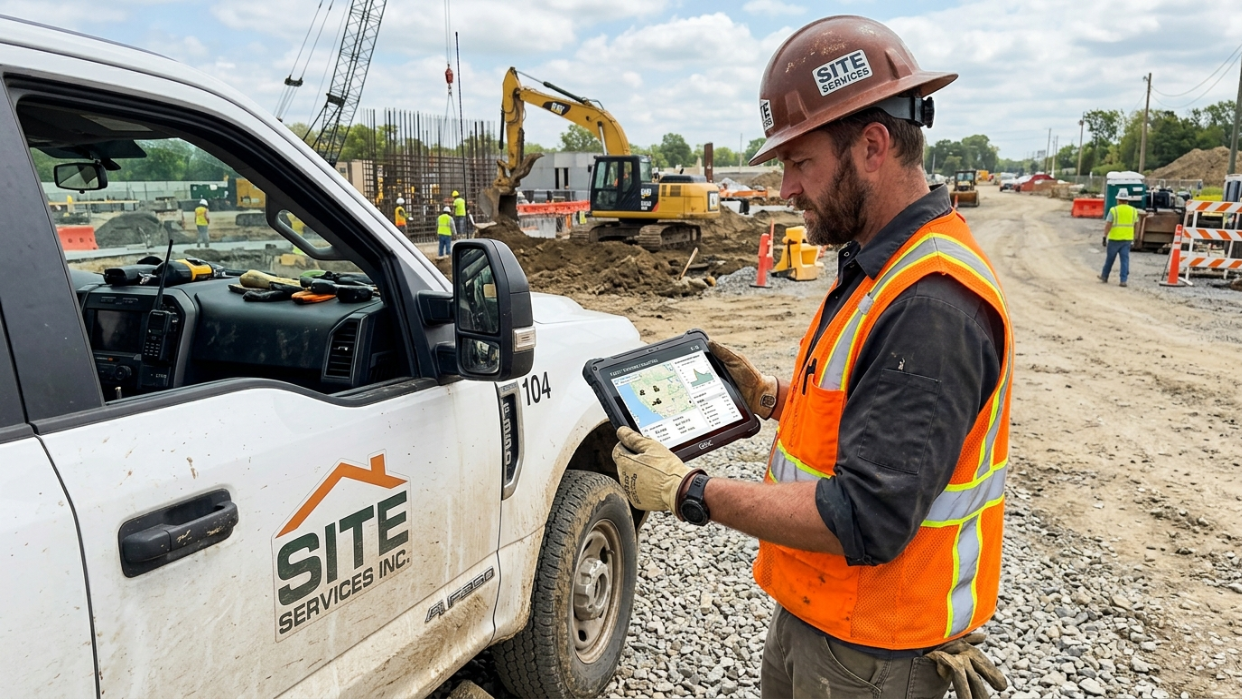
Fleet Management Integration
The ability to connect fuel card data with other fleet management systems, including telematics, GPS tracking, maintenance scheduling, and equipment management software.
Telematics Pairing
Linking fuel card transactions with vehicle telematics data (GPS location, engine hours, idle time) to create a single dashboard. When your fuel card data shows a 40-gallon purchase and your telematics confirms the vehicle was at a job site in the right location at the right time, you have automatic fraud verification. When the data doesn’t match, you have an immediate red flag.
API Connection
Many modern fuel card providers offer APIs (application programming interfaces) that push transaction data directly into accounting software, fleet management platforms, or construction project management tools. Coast users on Capterra report satisfaction with Samsara API integration specifically. This kind of connectivity eliminates manual data entry and enables real-time spending visibility. It’s a building block for broader operational efficiency strategies in construction.
How to Choose the Right Fleet Fuel Card
Choosing between fleet fuel cards for contractors comes down to five factors:
1. Fleet size and monthly fuel volume. Cards like Fuelman and WEX reward high-volume purchasers with steeper discounts. If you’re under 1,000 gallons per month, a simpler open-loop card or even a business credit card may work better.
2. Fuel type. If your fleet includes significant off-road equipment, you need a card with dyed diesel access and cardlock station coverage. CFN and Voyager excel here.
3. Geographic coverage. Contractors working across multiple states need broad network acceptance. WEX covers 95% of U.S. stations; Voyager covers 97%. Closed-loop cards like Shell only work at their branded locations.
4. Integration needs. If you already use telematics or fleet management software, check for API compatibility. Coast and WEX both offer integrations, but compatibility varies.
5. Fee structure. Monthly card fees range from $0 (Shell, Voyager through some distributors) to $4 per user (Coast) to $99 per month for premium Fuelman plans. Watch for extended network fees, late payment penalties, and setup charges. Users on consumer review platforms report that Fuelman’s billing practices and fee transparency have been consistent pain points, with one user documenting $448.60 in fees and interest from paying a balance just two days late.
Here’s a quick comparison of major providers:
Provider | Network Size | Savings Range | Monthly Fees | Strength |
|---|---|---|---|---|
WEX | 95% of U.S. stations | 3¢ to 15¢/gal | $2/card (FlexCard) | Broadest coverage |
Coast | Anywhere Visa accepted | 3¢ to 9¢/gal + 1% non-fuel | $4/user | Modern controls, mixed fleets |
Fuelman | 40,000 to 60,000 stations | 8¢ to 12¢/gal | $39 to $99/month | Deep analytics, diesel focus |
AtoB | Anywhere Mastercard accepted | Avg 42¢/gal diesel at truck stops | $3/active card | Maximum diesel discounts |
Voyager/CFN | 320,000+ locations | 3¢ to 8¢/gal | Often $0 | Integration, cardlock access |
Shell Fleet | 14,000+ Shell stations | Up to 6¢/gal | $0 | Shell-dense regions |
Fleet fuel cards are one component of a broader vendor program strategy. Contractors who treat fuel procurement with the same rigor as materials sourcing consistently find savings they didn’t expect.
Explore how contractor supplier discounts extend beyond fuel to equipment, materials, and services.
Best Fleet Fuel Cards for Contractors by Use Case
Not every contractor needs the same type of fuel card. The best choice depends on fleet size, equipment mix, geographic coverage, and reporting requirements.
Contractor Need | Recommended Card Type |
|---|---|
National fleet coverage | WEX |
Mixed fleet with modern software integrations | Coast |
Heavy diesel usage | AtoB |
Cardlock and off-road fueling | Voyager/CFN |
Shell-heavy operating area | Shell Fleet |
Large fleet with advanced analytics | Fuelman |
Choose Based on Fleet Type
Small Contractor (1–10 Vehicles)
Prioritize:
Low fees
Easy setup
Open-loop acceptance
Simple reporting
Mid-Sized Contractor (10–50 Vehicles)
Prioritize:
Job-cost allocation
Driver tracking
Fraud controls
Accounting integrations
Large Contractor (50+ Vehicles)
Prioritize:
Volume rebates
Telematics integrations
Advanced reporting
Cardlock network access
Frequently Asked Questions
What is the minimum fleet size for a fuel card to make sense?
Most fuel card programs are designed for companies purchasing at least 1,000 gallons per month. Below that threshold, monthly card fees and administrative setup may outweigh per-gallon rebates. Smaller operations with one or two vehicles often get better value from a business credit card with flat cash-back rewards on gas purchases.
How do fleet fuel cards prevent employee fuel theft?
Through a combination of controls: PIN requirements, fuel-only purchase restrictions, gallon limits per transaction, time-of-day restrictions, and odometer capture. When a driver has to enter a personal PIN and an odometer reading before fueling, and the card rejects transactions outside work hours, most common theft methods become impossible.
Can I use a fleet fuel card for off-road equipment like excavators and generators?
Yes, but you need a card that supports dyed diesel purchases at cardlock stations. Not all fleet fuel cards offer this. CFN Cardlock and Voyager are the strongest options for off-road diesel access. Some states require permits for off-road diesel purchases, and the fuel card company typically handles permit verification.
How much can a contractor actually save with fleet fuel cards?
At 3¢ per gallon, a 50-vehicle fleet averaging 1,500 gallons per vehicle per month saves $27,000 annually. Higher volume tiers pushing rebates to 8¢ or 10¢ per gallon can yield $72,000 or more per year. Add dyed diesel tax savings of 30¢ to $1.00 per gallon for off-road equipment, and total annual savings can reach six figures for larger operations.
What is the difference between closed-loop and open-loop fuel cards?
Closed-loop cards (like Shell Fleet) work only at a specific brand’s stations. Open-loop cards (like Coast or AtoB) run on Visa or Mastercard networks and work almost anywhere. Closed-loop cards sometimes offer larger rebates at their branded stations, while open-loop cards provide flexibility for contractors working in varied locations.
Do fleet fuel cards help with tax reporting?
Yes. Fleet fuel cards automatically generate IRS-compliant reports with transaction-level detail, eliminating the need to collect and organize paper receipts. Cards that track state-by-state purchases also automate IFTA reporting for interstate commercial vehicles, saving significant administrative time each quarter.
What are the most common fee traps with fleet fuel cards?
Extended network fees ($1 to $3 per out-of-network transaction), late payment penalties, monthly minimum purchase requirements, and tiered plan costs that lock you into a higher fee structure. Read the fee schedule carefully before signing. Ask specifically about out-of-network charges and what happens if a payment arrives one or two days late.
Can fuel card data be tied to specific construction projects?
Yes. Most fleet fuel card platforms support GL code assignment and job-cost allocation. You can tag each card or driver to a specific project so fuel costs automatically flow to the correct job’s budget. This is essential for contractors who need accurate per-project cost tracking to protect margins on future bids.

Recent Comments